pdfDoW⌕ Searchable transcript
DOW-UAP-D097 Project-Sign-Progress-Report 1948
DOW-UAP-D097 Project-Sign-Progress-Report 1948 — a DoW document (1948) from the U.S. Government's AARO / PURSUE UAP disclosure releases. Hosted here in full.
Page-by-page transcription
Searchable text extracted from the original 45-page scan. The page images are the authoritative source; the text is machine OCR and may contain artifacts. Also available as downloadable JSON.
45 pages · machine OCR from the original scan
PAGE 1 / 45
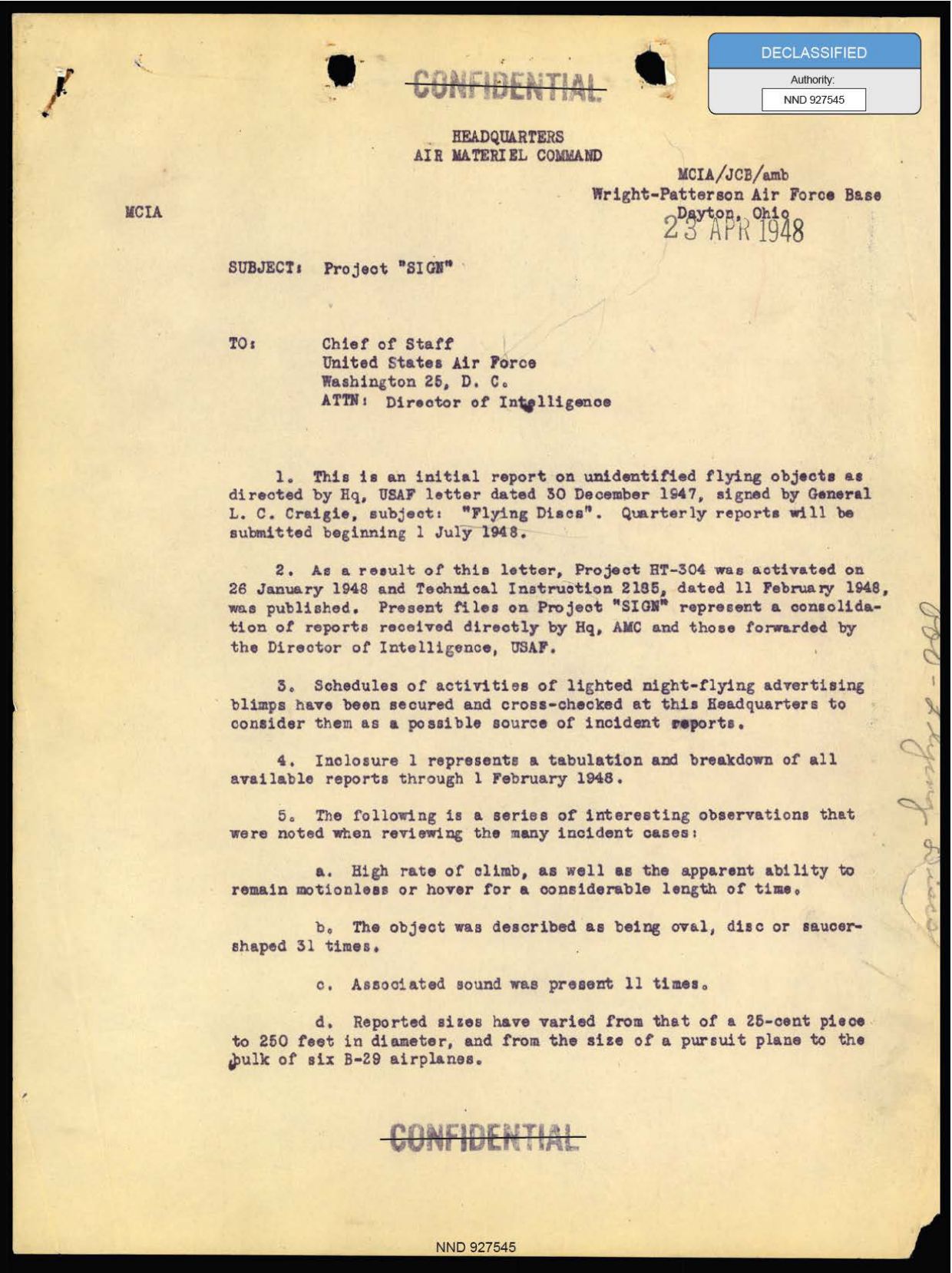
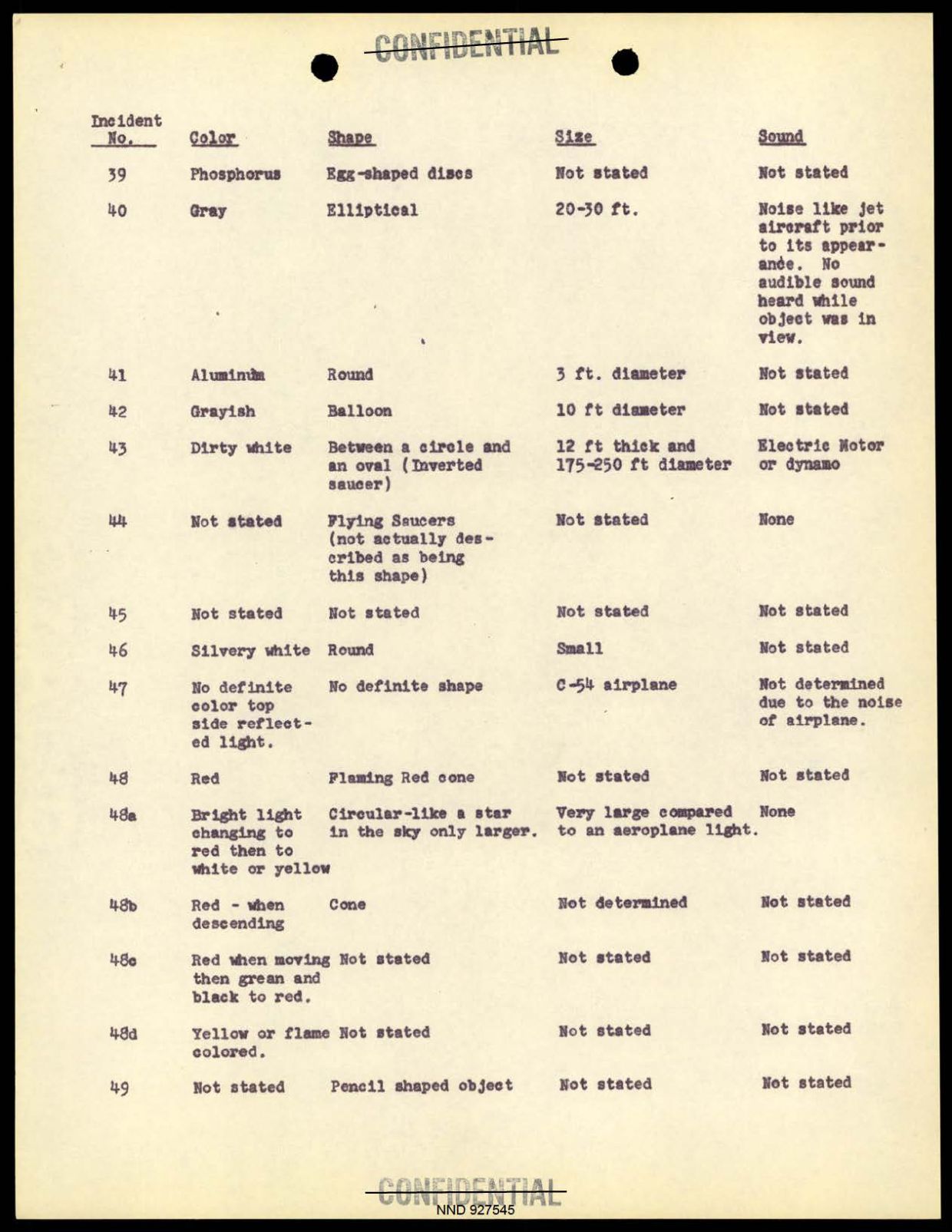
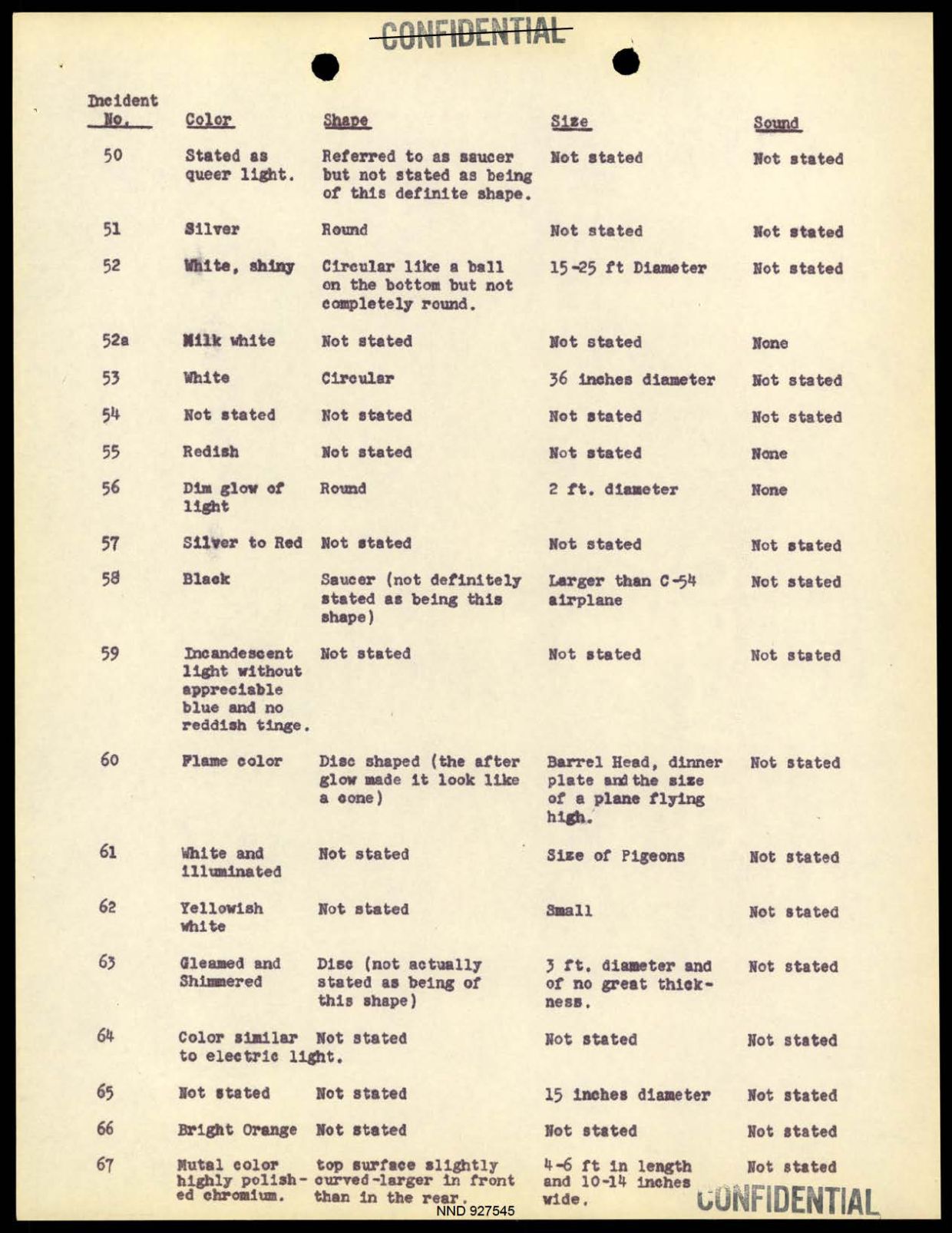
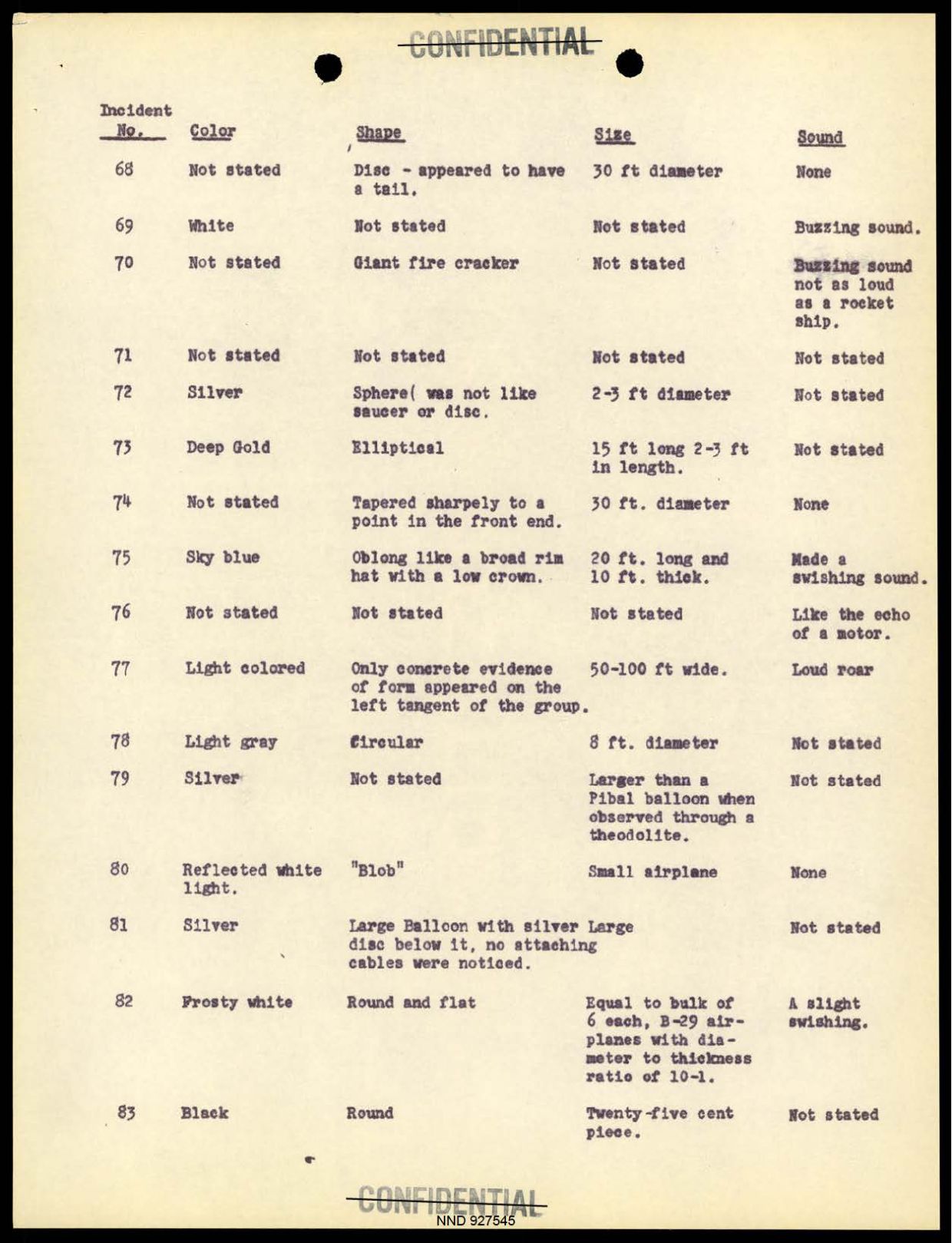
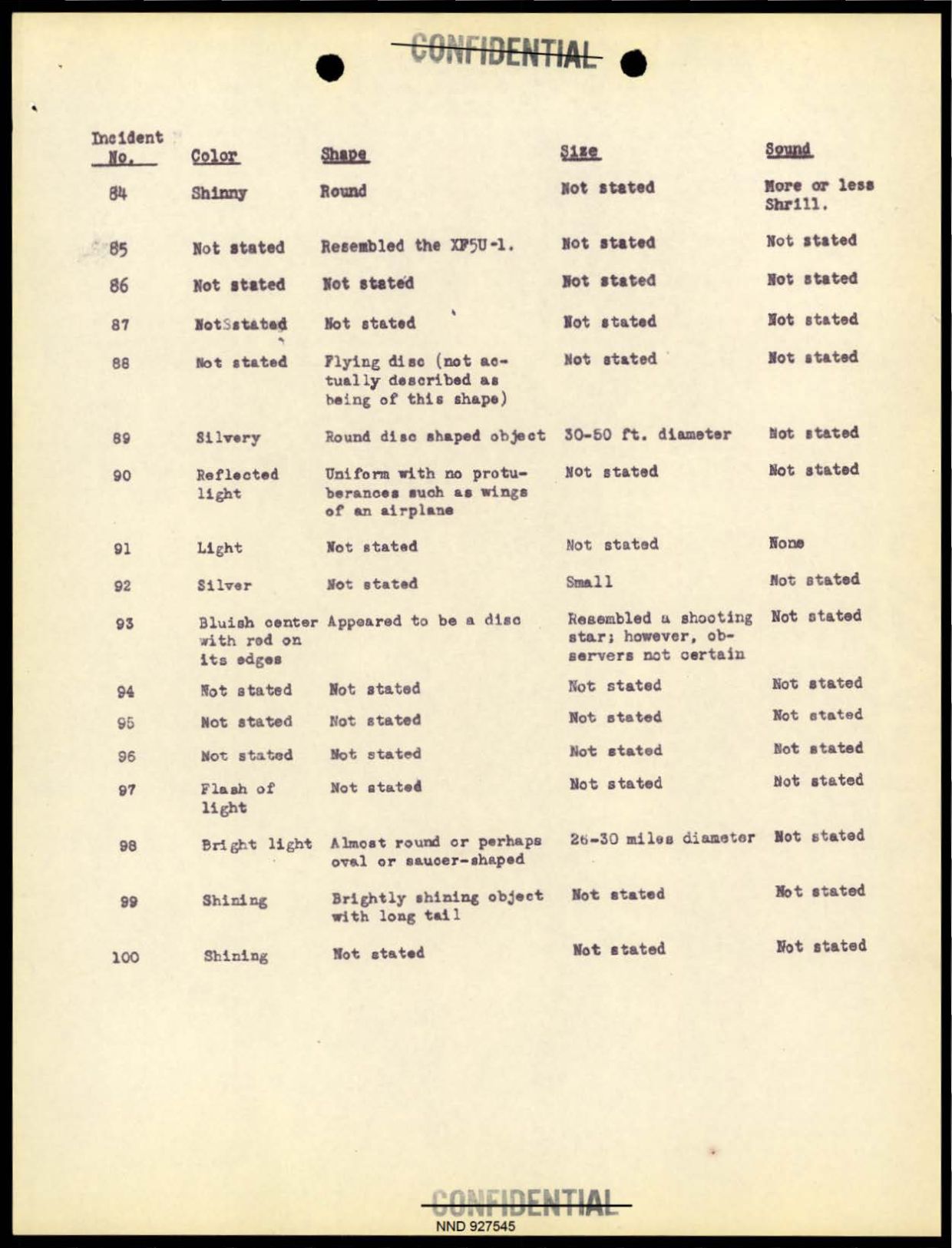
Authority: NND927545 • •I HEADQUARTERS AIR KATERI BL COWAND MClA/JCB/amb Wright-Patterson Air Force Base KCIA 2DjytAPH 0i948 SUBJECT, Projeot "BIOi" • TOs Chief of Staft United Statea ilr Poree Waahington 26, D. Co ATTN s Director ot Int-,lligenoe l. Thie ie an initial report on unidentified flying objecta aa direoted by Rq, USAY letter dated SO Deoember 1947, signed by General L. C. Craigie, subjeot1 •r1~Jng Diaea~. Qtarterly reports will be submitted beginning 1 July 1948. 2. Ae a reeult of thia letter, Pro~ot HT-304 was a.otiTated on 26 January 1948 and Technical Inatruotion 2185, dated 11 Pebruaiy 1948, wns published. Present ti.lea on Projeot •s10~• represent a oonaolida tion ot reports received directly by Hq, AMC and thoee forwa.rded by the Direotor ot Intelligence, USAF. ~. Schedules of activities of lighted night-flying adTertising blimps have been secured a.nd crosa-oheoked at thi.a Headquarters to consider them as a possible souroe ot incident nporta. 4. Inoloaure l represents a tabulation am breakdoWll of all available reports through l February 1948. 5o The following ia a series of interesting observation• that were noted when rev19Wing the many incident 0ase11 a. Rigll rate of olimb, aa well aa the apparent a.bi lity to remain mot1onleu or hover for a oonBiderable length of tiu o bo The objeot was described aa being oval, d1ac or 1auoer- t ehaped ~l times. o. Assooiated sound was preae?It ll tim.H o d. Reported sizes have varied from that of a 26-oent pitoe to 260 feet in diameter, and from the aise or a purauit plane to tht ePulk of six B-29 airpl.&nea. , NND 927545
PAGE 2 / 45
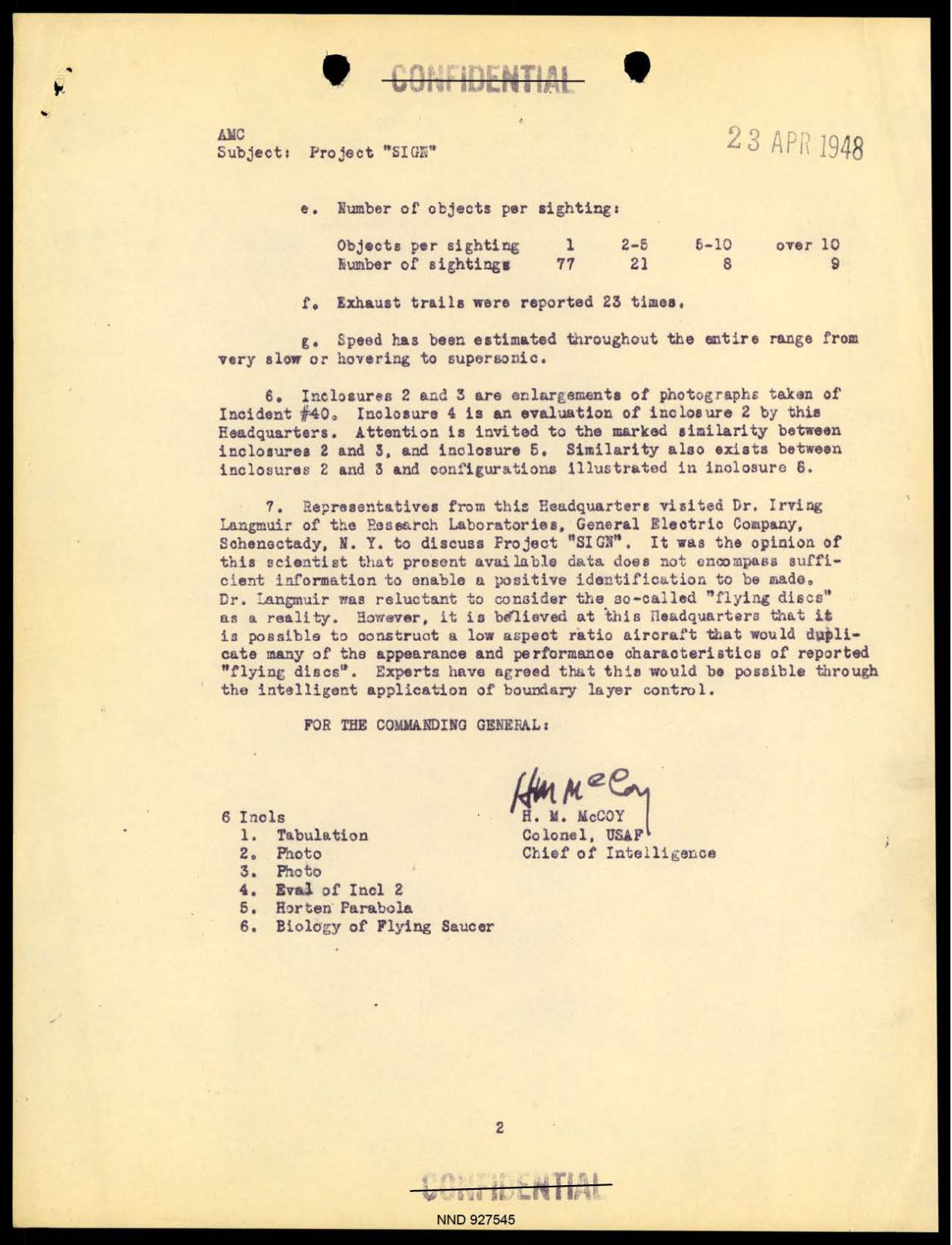
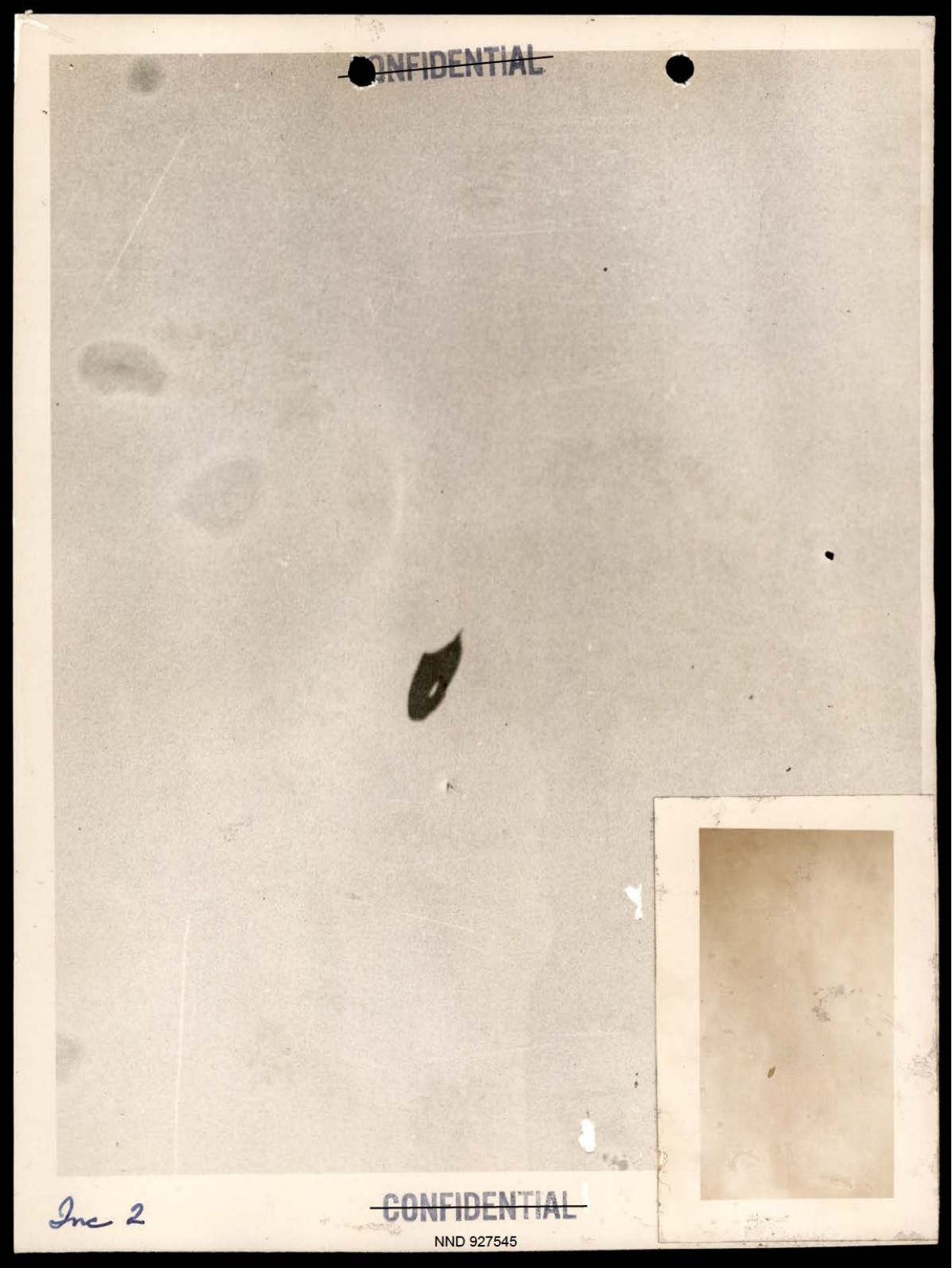
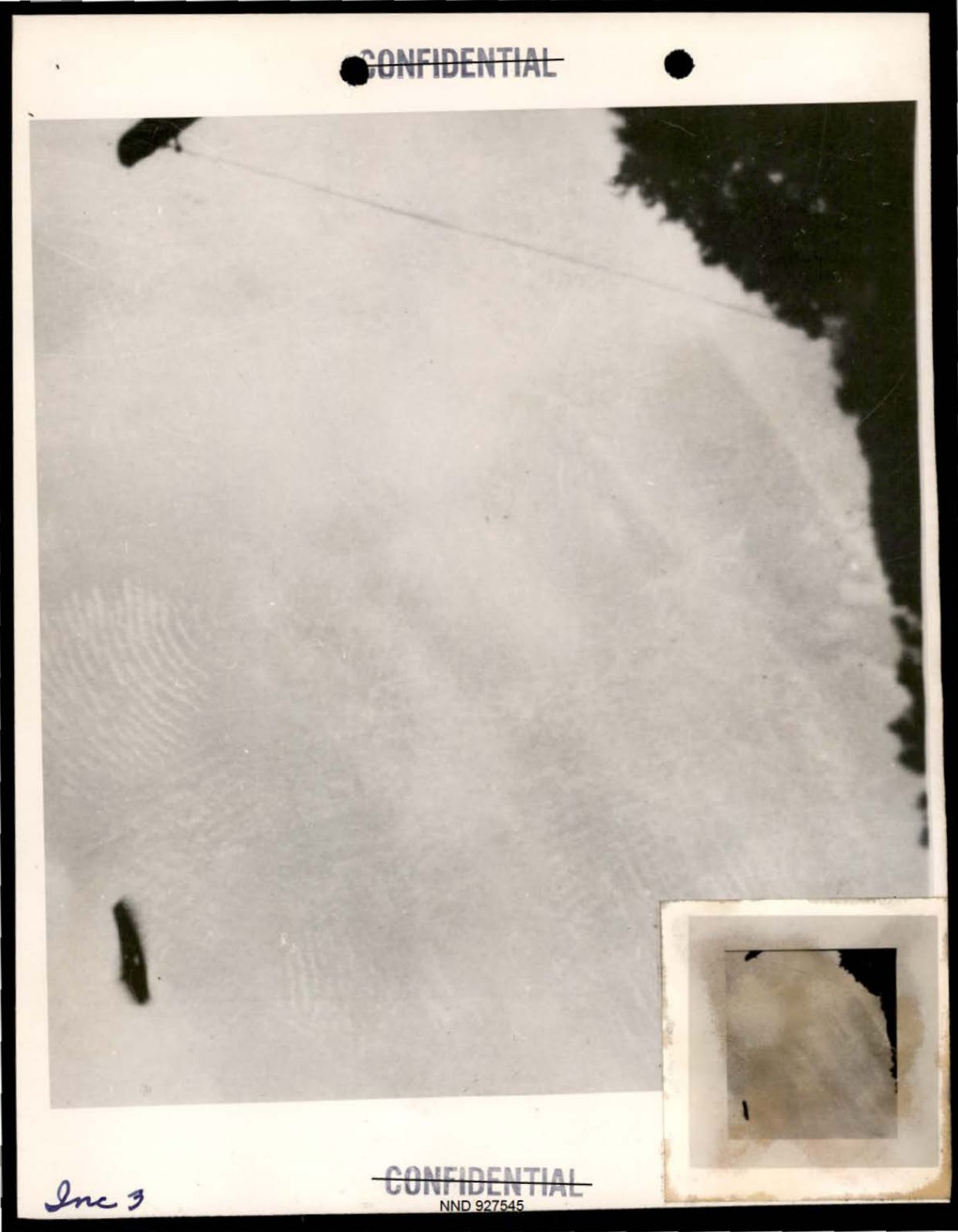
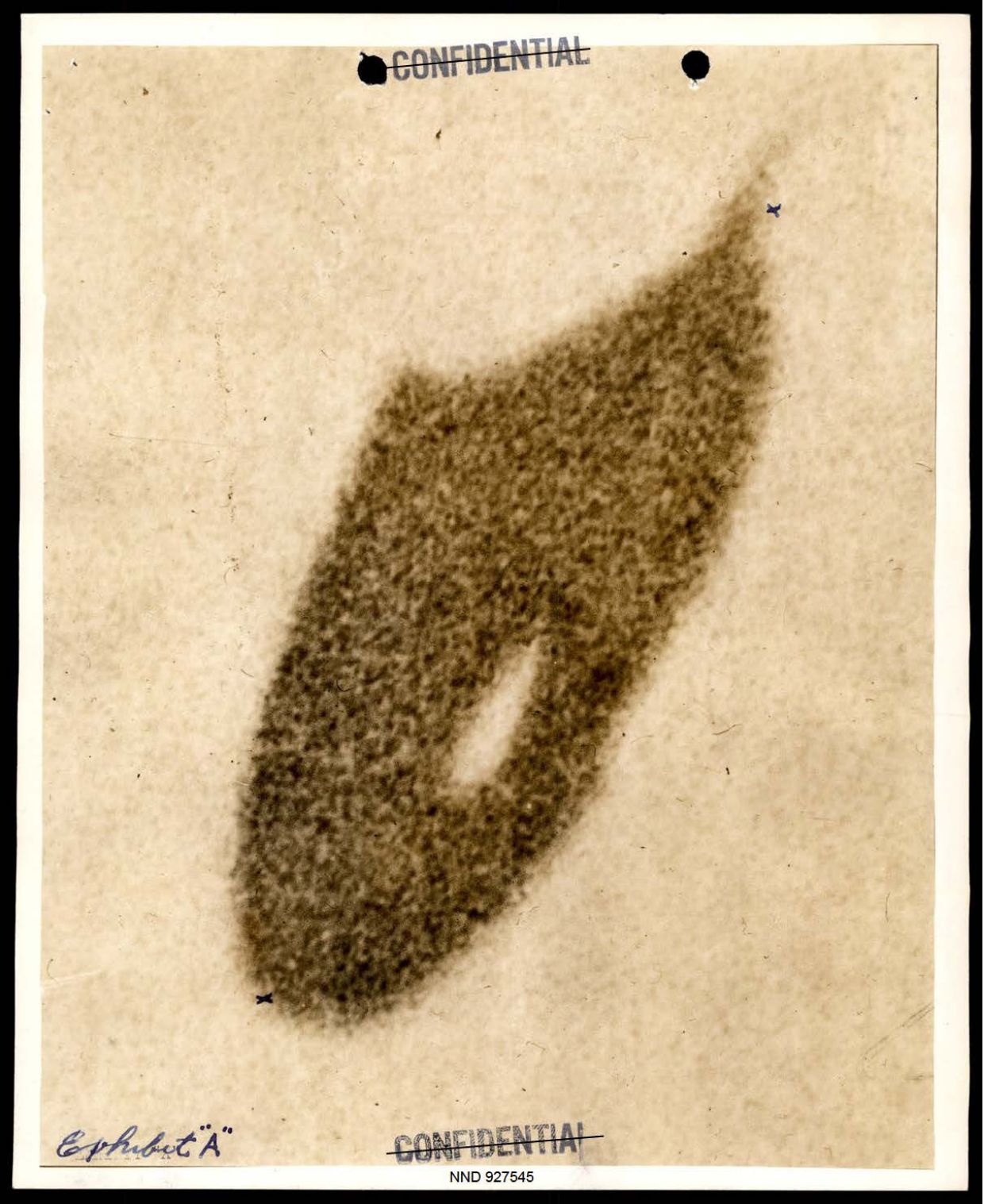
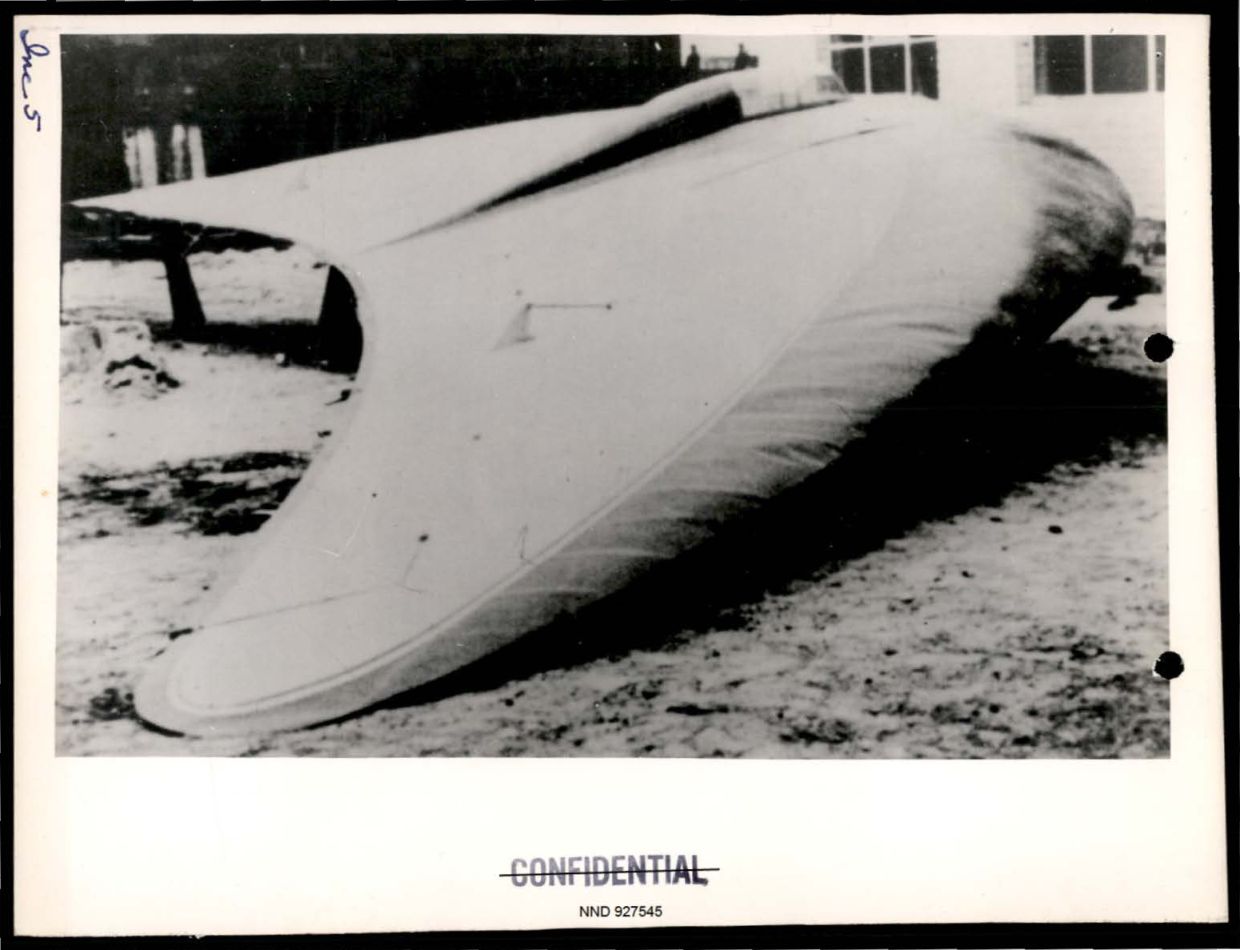
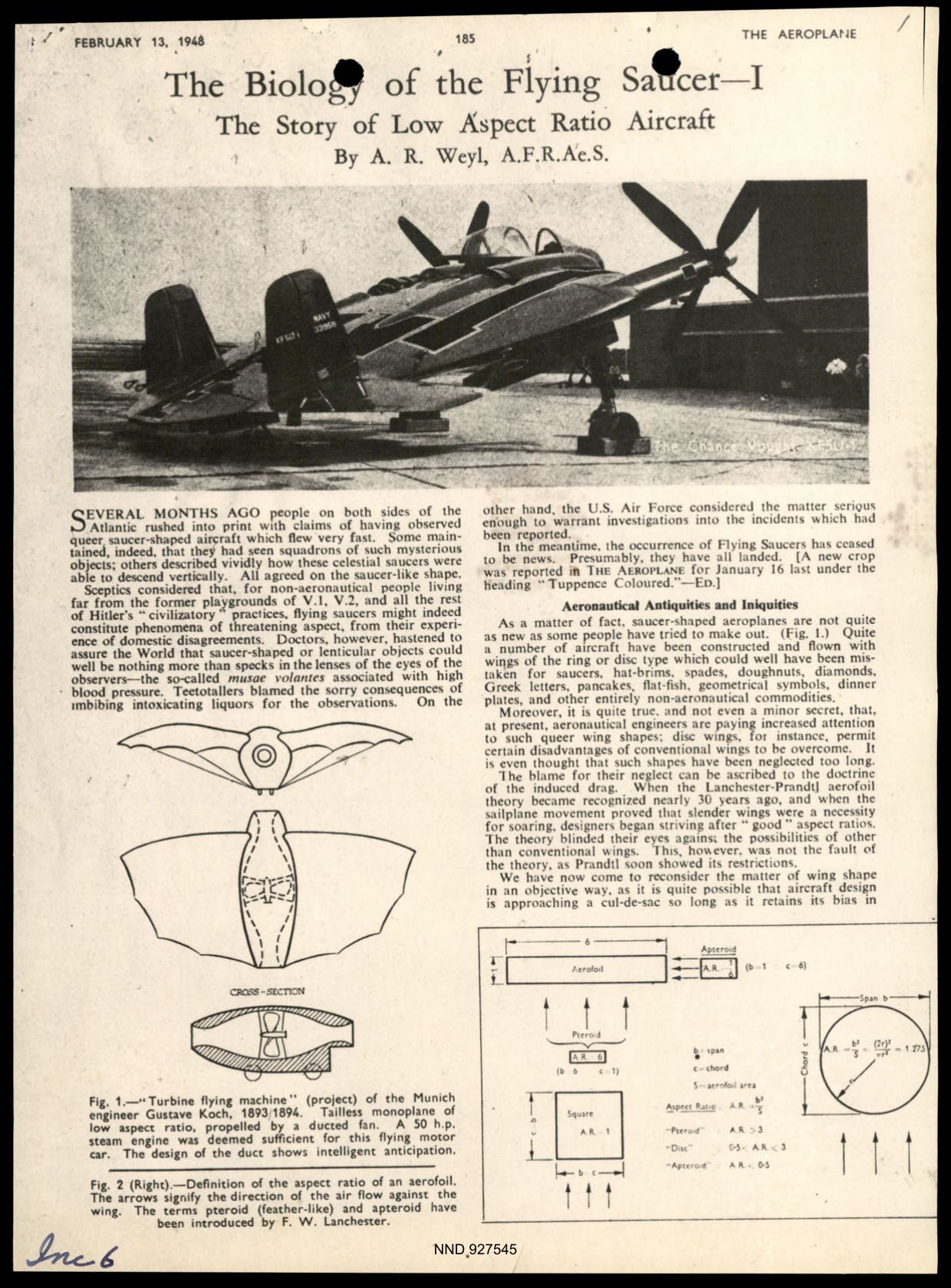
2 3 APir 1948 over 10 9 • .. AMC Subject, Project "SIG!i" e. »umber of objects per aighting, Objects per sighting l 2-6 6-10 Number of eightioga 77 21 8 t. Exhaust traile were reported 23 times. g. Speed has been eetime.ted throughout the entire range from very alow or hovering to supersonio. 6. Incloaures 2 and 5 are anlargementa of photographt taken of Incident f40o Inoloaure 4 1s an evaluation of inolosure 2 by thie Headquarters. Attention 1s iovited to the marked aimilarity between incloaurea 2 ands. and inoloaure 6. Similarity also exiata between inclosures 2 and 3 and oonfigur&tiona illustre.ted in inolosure 6. 7. Representatives from tbie Headquartere visited Dr. Ining Langmuir of the P~sea.rch Laboratories. General Electric Comp&ny. Schenectady, N. Y. to discuss Project "SIGN". It was the opinion of this acienti st that prosent a.vai l!I. ble data does not encompass suffi ci ent information to enable a positive identific~tion to be ma.deo Dr. :.a.n&muir was relucts.nt to consider the so-called "flying discsM as a reality. However, it io be'lieved at this neadquarters that it is possible to oonstruot a low aspeot ratio airoraft that would d~pli oate many of the appearance and performance oharaoteriatics of reported "flyint discs~. Experts have agreed that thie would be possible through the intelligent application of boun:lary layer control. FOR THE COMMANDING GENERAL: ~Me~ 6 Inols H. M. ticC~!1. J l. Tabulation Co lone1. US&F 2. Photo Chief ot Intelli gence 3. Photo 4. Eval of Incl 2 6. Horten Parabola 6. Biology of I'lying Se.ucor 2 ~ NND 927545
PAGE 3 / 45
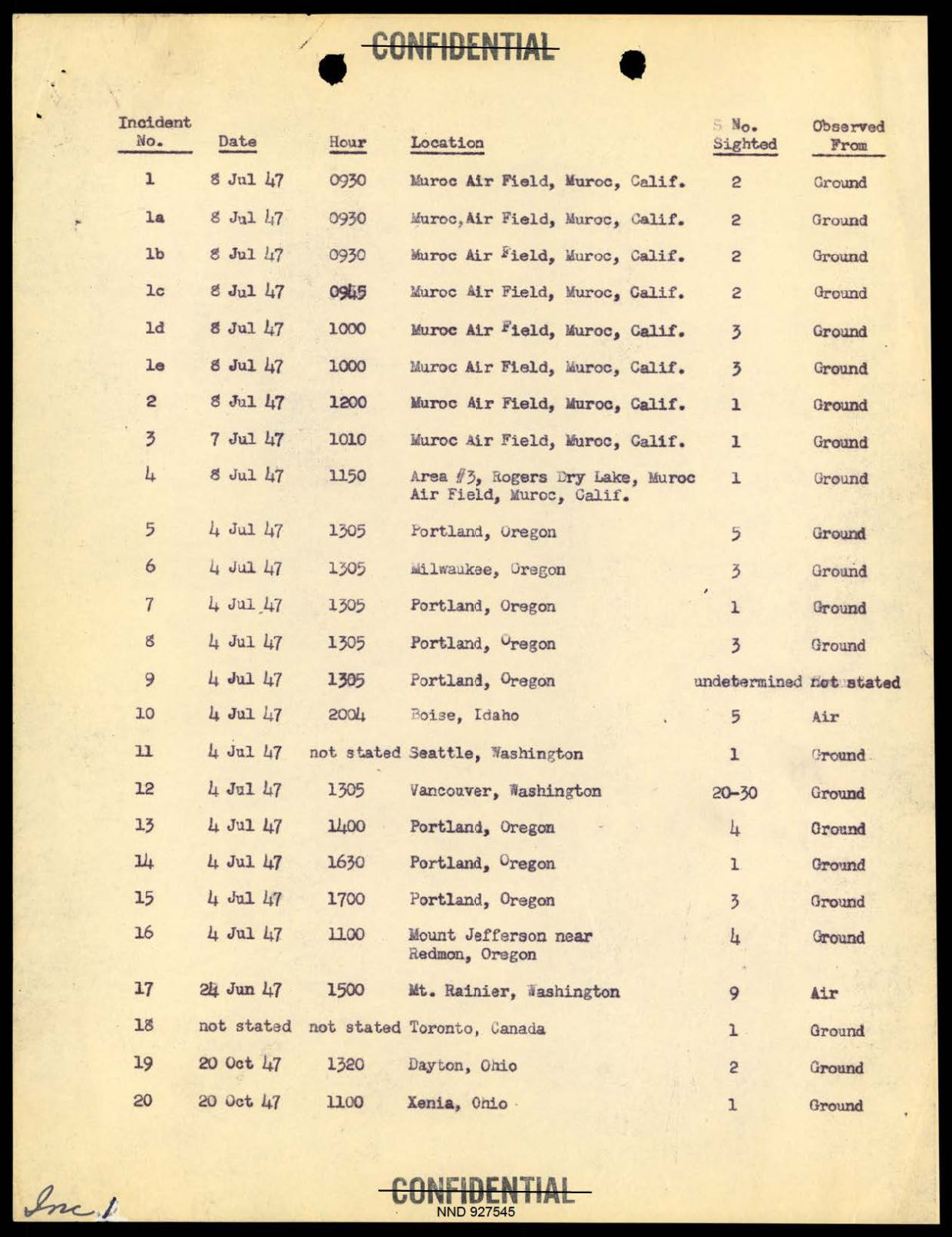
/ •
CONFIDENTIAL -
Incident
No.
Date
1
g Jul 47
;
la
g Jnl 47
lb
e Jul 47
le
g Jul 47
ld
g Jul 47
le
g Jul 47
2
g Jnl 47
~
7 Jul 47
4
$ Jul 47
5
4 Jul 47
6
4 Jul 47
7
4 Jlll .47
~
4 Jul 47
9
4 Jul 47
10
4 Jul 47
ll
4 Jul 47
12
4 Jul 47
1~
4 Jul 47
14
4 Jul 47
15
4 Jul 47
l.6
4 Jul 47
17
2ll. Jun 47
l!S
not stated
20 Oot 47
20
19
20 Oct 47
Hour
0930
0930
0930
09tl9
1000
1000
1200
1010
1150
1305
1305
1305
1305
1305
2004
N<>•
Obser,ed
Location
Sighted
P'rom
Muroc ilT Field, M'uroc, Calif.
Muroc,Air Field, Muroc, Cali£.
Muroc Air li'ield, li&uroc, Cali.f.
Muroc .lir Field, lluroc, Calif.
lmroc Air Field, Muroc, Calif.
Uuroc A.Lr Field, itiuroc, Calif.
Muroc Air Field, Mu.roe, Call!.
Iifuroc Air Field, Vuroc, Calif.
Area 113, Rogers Dry Lake, Muroc
Air Field, Muroc, Calif.
~ortland, Oregon
1llli.lwaukee, Oregon
Portland, Oregon
Portland, Uregon
Portland, Oregon
undetermined wt atated
Roi se, Idaho
5
Air
2
Ground
2
Ground
2
Ground
2
Ground
3
Ground
3
Ground
1
Ground
1
Ground
l
Ground
5
Ground
3
Grotmd
1
Ground
3
Ground
not stated Seattle, Xashington
l
r.:.round
1305
Vancouver, Washington
20-30
Ground
1400
Portland, Oregon
4
Ground
16}0
Portland, Oregon
1
Ground
1700
Portland, Oregon
3
Ground
ll.00
Mount Jefferson near
4
Ground
Redmon, Oregon
1500
14t. Rainier, a.shington
9
11r
not stated Toronto, Canada
1
Ground
1320
Dayton, Ohio
2
Ground
1100
Xenia, Onio •
l
Ground
CONFIDENTIAL
NND 927545
PAGE 4 / 45
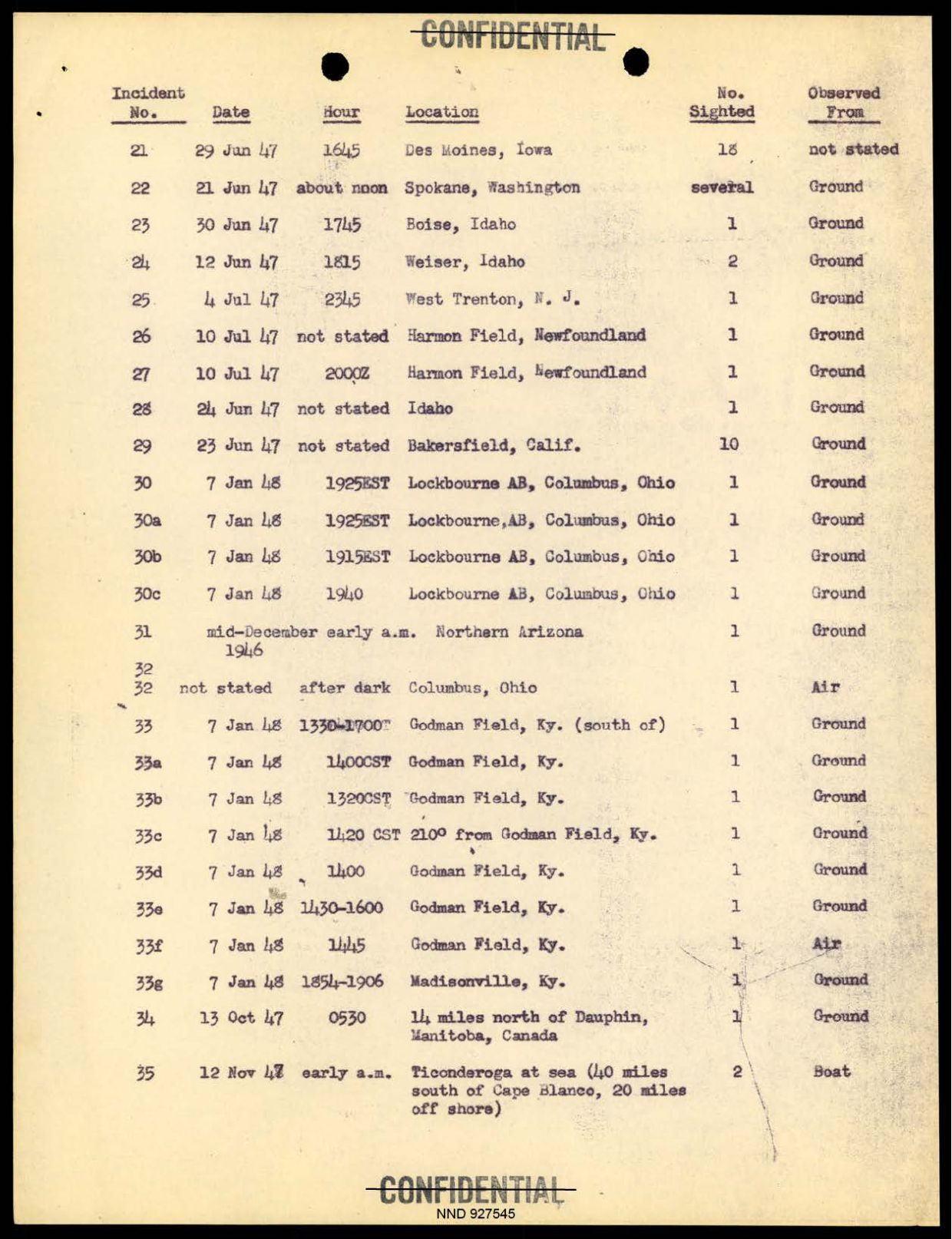
31 CO~FIDENTIAL e No. Sighted l~ 1 2 l l l l 10 1 l l 1 l 1 1 1 1 1 1 1 1 l , ~ l ,l I. ~ \ \ \ I Observed From not stated Ground Ground Ground Ground Ground Ground Ground Ground Oroum Ground Ground Ground llr Ground Ground . Ground Ground Ground ~ Ground Ground Boat Incident No. Date 21 29 Jun 47 22 21 Jwi 47 23 30 Jun 47 24 12 J\111 47 25 4 Jul 47 26 10 Jul 47 ~ 10 Jul 47 2g 24 Jun 47 29 23 Jun 47 30 7 Jan 4! 30a 7 Jan 4g 30b 7 Jan 4a 30c 7 Jan 4g 1946 32 32 not stated 33c 33d 33e 331' 33g 34 35 7 Jan 41! 7 Jan~ 7 Jan~ 7 Jan 4g 7 Jan 4a 7 Jan 4g 7 Jan~ 7 Jan~ 13 Oct 47 12 Nov 41 dour 1645 about noon 1745 1&5 2345 not stated ~ not stated not stated Location Des Moines, 1owa Spokane, ·1ashingt,on Boise, Idaho Weiser, Idaho Vfest Trenton, t~ . J. Harmon Field, Newfoundland Hamon Field, bewfoundland Idaho Bakersfield., Calif. l~T Lockbourne AB, Co1umbus, Ohio 1925EST Lockbourne,!B, Columbus., Ohio 1915EST Lockbourne AB, Columbus, Ohio 1940 Lockbourne il, Columbus, Ohio mid-December early a.m. Northern Arizona after dark Columbus, Ohio 133&.l'T,OO"' Oocbnan Field, Ky. (south of) l4000ST Godman Field, Ky. 1320CS'J.' · 0odman Field, Ky. J..420 CST 2100 from Oodman Field, Ky. J..430-1600 11!54-19()6 05}0 GQ'l.Jr a.m. Gedman Field, Ky. Godman Field, Ky. Godman Field., Ky. lladi.eomi-1.le, Ky. l4 mi1es north of Dauphin, J.lanitoba, Canada ticonderoga at sea (40 miles south of Cape dlanco, 20 miles o£f shore) CONFIDENTIAL NND 927545
PAGE 5 / 45
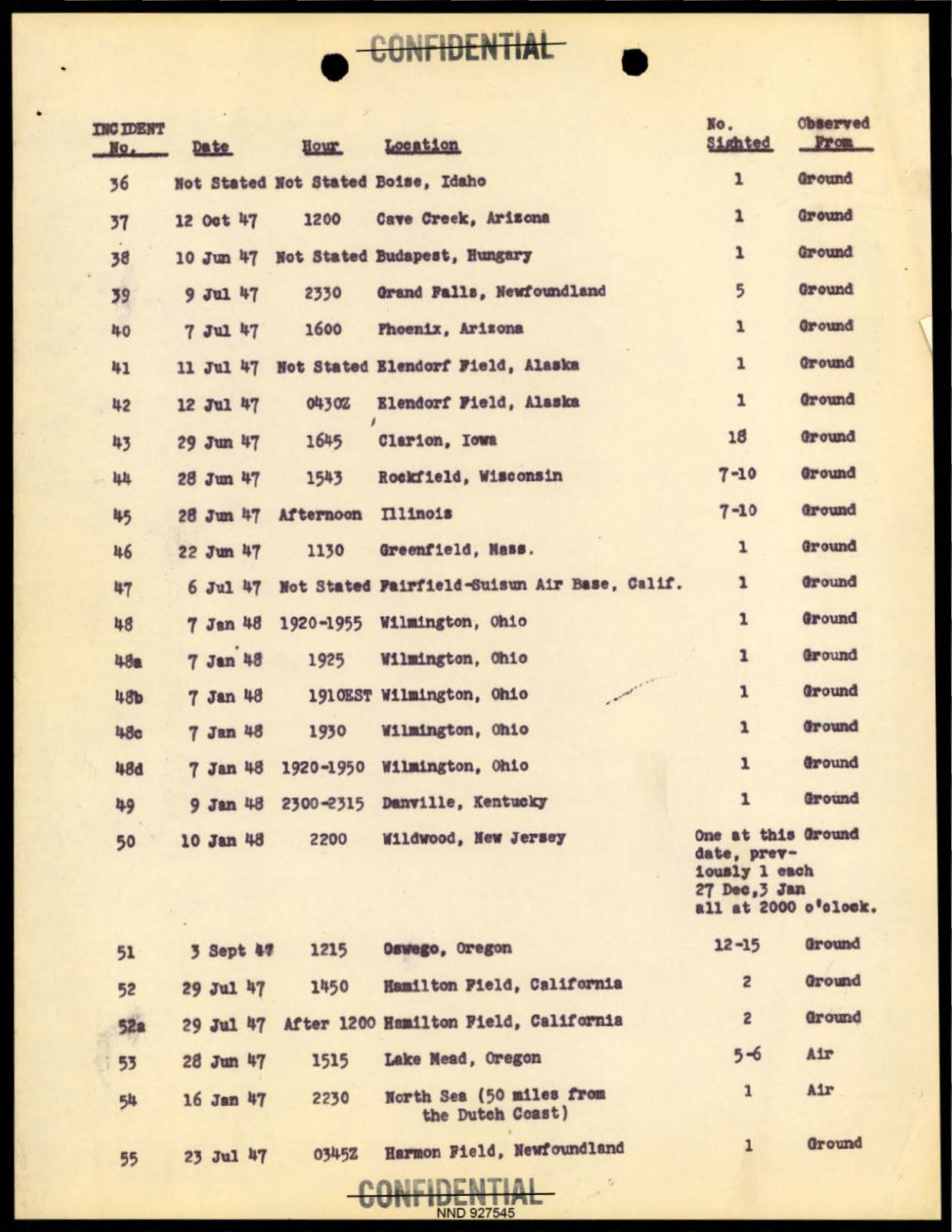
vu~FIDENTIAL - . lo. a...nect DIOIDD'f Is, ;w. 12111:. r,ooat1cm SMaatfd rra ,6 Jot Stated lot Stated !oilt, Idaho 1 Ground ,1 12 oot 47 1200 Oa•• Creek, Ar1■ ona 1 Qro\md ,s 10 Jun 47 lot Stated !udape1t, Bung&J"1 1 Ground ,9 9 Jlll 47 2,,0 Onnd Palla, levtoundland 5 OJ"ound 40 7 Jul 47 1600 Phoenix, Ar11ona 1 Oroun<S 1 Qro,md •n 11 JUl 47 lot Stated lltndort J1eld, llatlta 42 12 lUl 47 04,0'L BltndOl't J1eld, Alatll:a 1 Oroun4 I 18 Oro\lDd 43 29 Jun 47 1645 Clll"1on, Ion 28 Jun 47 1~, Roekt1tld, W1■cou1n 7-10 Ground " 7-10 Ql"0\1DC2 28 .Jun 47 Afternoon n11no11 -5 46 22 Jun 47 11,0 Ortent1eld, 1111, 1 Ground 47 6 Jul 47 lot Stated 1a1rt1tld-6uilm Air S.le, 01111. 1 Oround 48 7 Jan 48 1920-1955 V1la1Jllton, Ohio 1 Ground . 48a 7 Jan ,s 1925 111111.ngton, Ob1o 1 Ground _,,,.,.• 1 Qrowu1 481> 7 Jan 48 1910&ST V11111ngton, Ohio 4& 7 Jan~ 19,0 Y1la1Dgton, Ob1o 1 Orcnmd -84 7 Jan 48 1920-1950 111.111ngton, Ohio 1 ll'ound ~ 9 Jan 48 2,00-2,15 J>aJffi11e , ltntllolq 1 Qroimd One at tb11 Orouad 50 10 Jan Ji8 2200 11lcSVood, In Jei-■r, date, PNT 1wa17 1 ..oh 27 Deo,, JUI all at 2000 o1oloek. 'Sept lf 1215 on.ao, oneon 12-15 Ground 51 52 29 Jul 47 1450 1181111 ton 11eld, Cal1torn1a 2 Oroad 2 Ground ,,. 29 1111 •n Atter 1200 llllilton Jield, ca11tarn1a 53 28 Jan IJ7 1515 Lake Jllead, ore1on 5~ Air 1 Air 16 Jan IJ7 22:50 Jorth Sea (50 ail•• troa 54 tbe Dutch coa,t) l Orolll\d BIJ'llCffl Pield, ltvtoundland 2:, Jul 47 o,45Z 55
PAGE 6 / 45
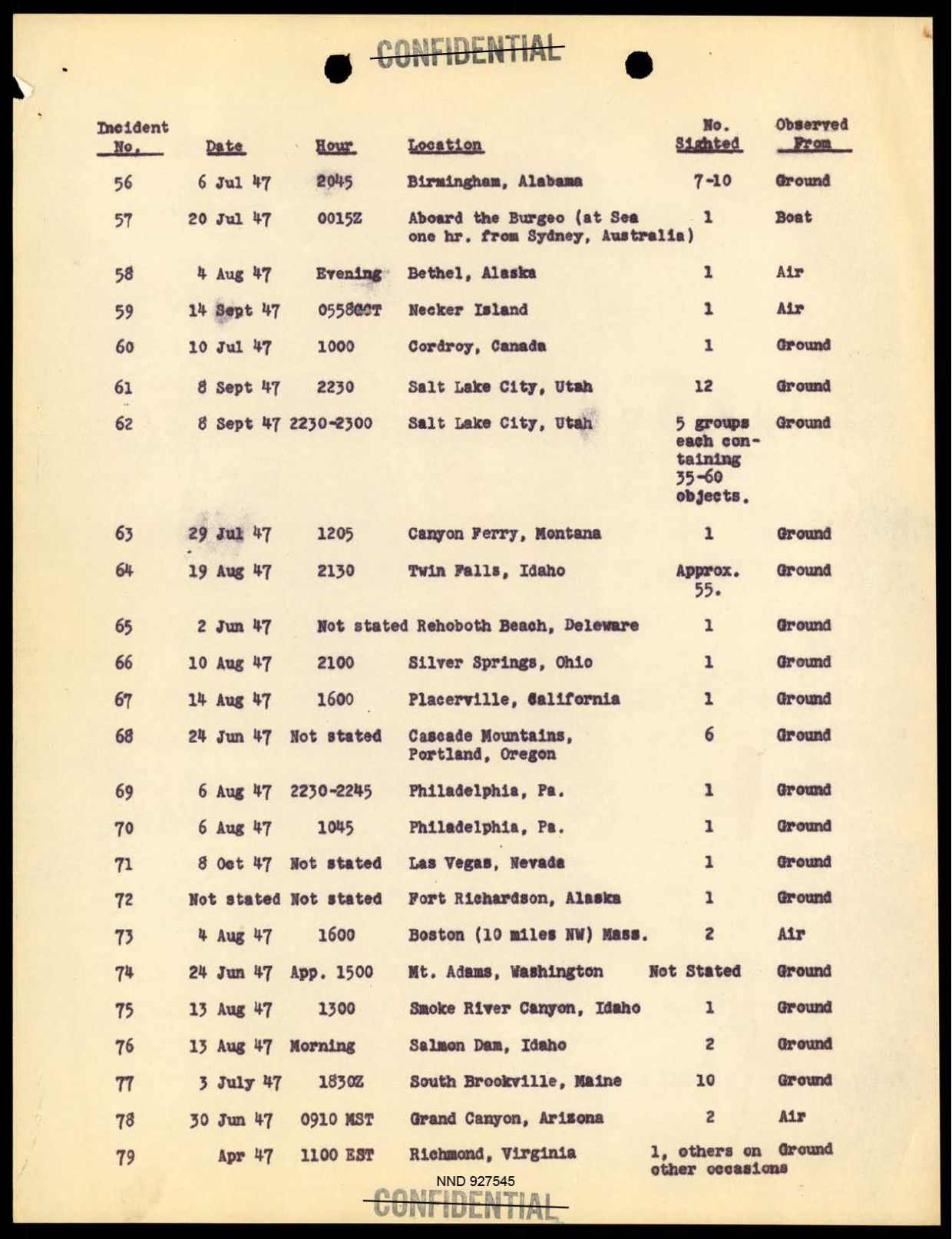
-CQ~F~DENTIAL - - IAo1c1ent ?fe, 15a. us. Looat1on lo. simaa Ob1enec! D:99 56 6 Jul 47 2945 1-10 Gi-oan4 57 20 lul 47 0015Z Abou-c! the BUl'aeo (at sea one hr. troa 874ne7, Autft11a) 1 Boat 58 4 Aug 47 BYeJWII Bethel, Alaska 1 Ail" 59 14 Se»t 47 055ae1T Reeter Ialand 1 ill' 60 10 Jul 47 1000 Oor4707, Canac!a 1 OPOUDCS 61 8 Sept 47 22:,0 Salt Lllce CltJ, Unb 12 Ground 62 8 Sept 47 22:S0~:S00 Salt Like Cit7, Utah 5 Sl'0'QP8 Ground eaoh oan ta1D1Dg :S5~0 01:tJecta. 6:s 29 JuJ. 47 1205 can,on 1em, llontana l Ol'om:ad 64 19 Aug 47 2130 Tv1n Jalll, Idaho A.pprox. 55. Ol'oun4 65 2 Jun 47 lot stated Rehoboth Beaoh, Delevan 1 Ground 66 10 Aug 47 2100 811Yer 8pr1.ngt, Ohio l Ol'ound 67 llJ. Aug 47 1600 Placemlle, lalitornia 1 Ground 68 24 Jun 47 Hot 1tattd Cuoa4e lountaiJ:aa, Pwtlan4, 01-egon 6 Ground 69 6 Aug 47 22,0-2245 Ph1l.a4elph1a, Pa. 1 Ol'Ound 70 6 iug 47 1045 Ph1lt4elph1a, Pa. l Ol'oand 71 8 Oot 47 lot 1tatecl Laa Vega■, leYa4a 1 Ol'Ound 72 lot atate4 Jot 1tatec1 Port R1obardl0J1, Alllb 1 Ol"oand 7J 4 Aug 47 1600 Boston (101111e1 n) •••· 2 A1r 74 24 .JW'l 47 App. 1500 •t. A~IU, ftlh!ngton lot stated Ground 75 1, Aug 47 1300 saote Rl•er aaix,on, Idabo l Ground 76 1:5 Aug 47 Jlornlng Salaon Du, Ic!aho 2 Ornnd 77 :S 11117 47 1s,~ South BrookYille, Dine 10 Gl'O\IDl2 78 :,o Jun ~7 0910 JIST Oran4 ClllQ'on, AP1aoaa 2 ill' 79 Apr 47 1100 ES! R1oba0nd, V11"g1n.1a 1, other■ on Grcnmd other ooou1ona
PAGE 7 / 45
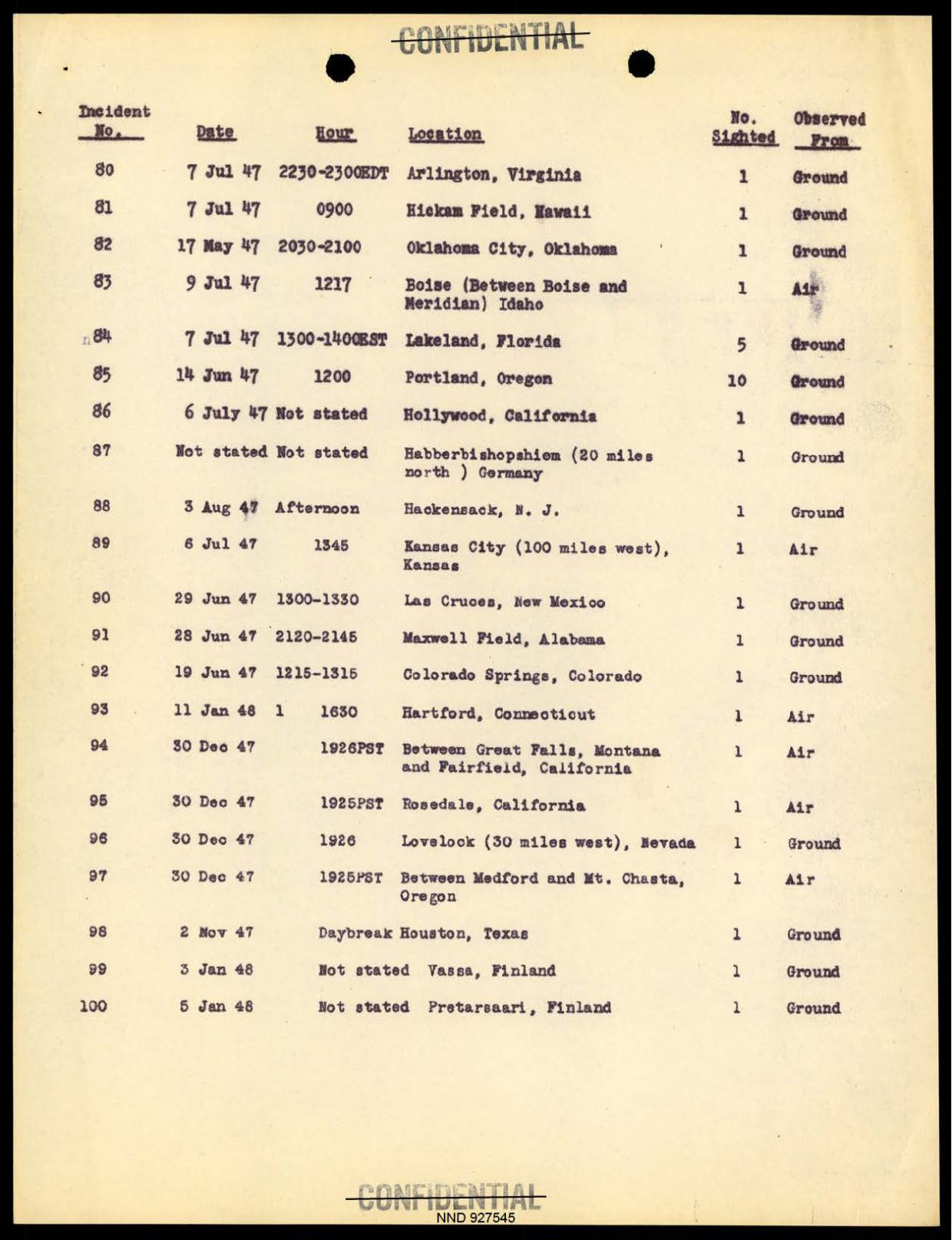
80
85
90
95
100
coNriBcNTIAL
lno1dent
Jo.
°'8tl"Ytd
19,
em..
Looat1op
SUhtn
rrw
1
Ground
81
7 Jul 47
0900
Biokaa Jield, lava11
1
82
171117 47 2030-2100
0klahOllll CitJ, OklahOJII
1
Ground
83
9 hl 47
1217
Bo1 ■t (Between Boise and
1
hr1d1&n) Idaho
z,84
7 Jul 47 l:500•140<Bft Lakeland, Jlorida
5
Cll'ound
1200
Portland, oregon
10
Qromd
86
6 lulJ ~7 lot ■tated
Hollywood, Cal1tonia
l
Qro,md
87
lot ,tated •ot 1tated
HabMrbi1hopehiOJ1 {20 mile,
1
Ground
zx, r tb ) Gorm.any
88
S J.ug if Atternoon
Baokenaaok, a. J.
l
Ground
89
6 Jul 47
lS45
lanaae City (100 miles west),
l
Air
Ke.neaa
29 Jun 47
1500-15:SO
Lae Cruoe ■, !low Mexico
l
Groun4
91
28 Jun 41
2120-2146
Maxwell Pield, Alabama
1
Ground
• 92
lg Jun 47
l2l5-1Sl6
Colorado Springe, Colorado
l
Grcrund
ll Jan 48
l
1650
Harttord, Coumot1cut
l
Air
!O Deo 47
l926PSf Between Great l'alle, Montana
l
and Pairfield, Ca!1tornia
SO Dec 47
l926PSf Rosedale, Oalitornia
l
A.ir
SO Deo 47
1926
Lov•look (30 m1lea weat), leTae1&
l
Ground
97
30 Dec 47
1926PST Between Medtord and •t. Chaata,
l
A1r
Oregon
98
2 l(oT 47
Daybreak Houston, Texas
l
Ground
~ Jan 46
lot stated Vasea, 11nland
l
Ground
5 Jan 46
lot 1tated Pretaraa&rl, F1nla1'ld
l
Ground
PAGE 8 / 45
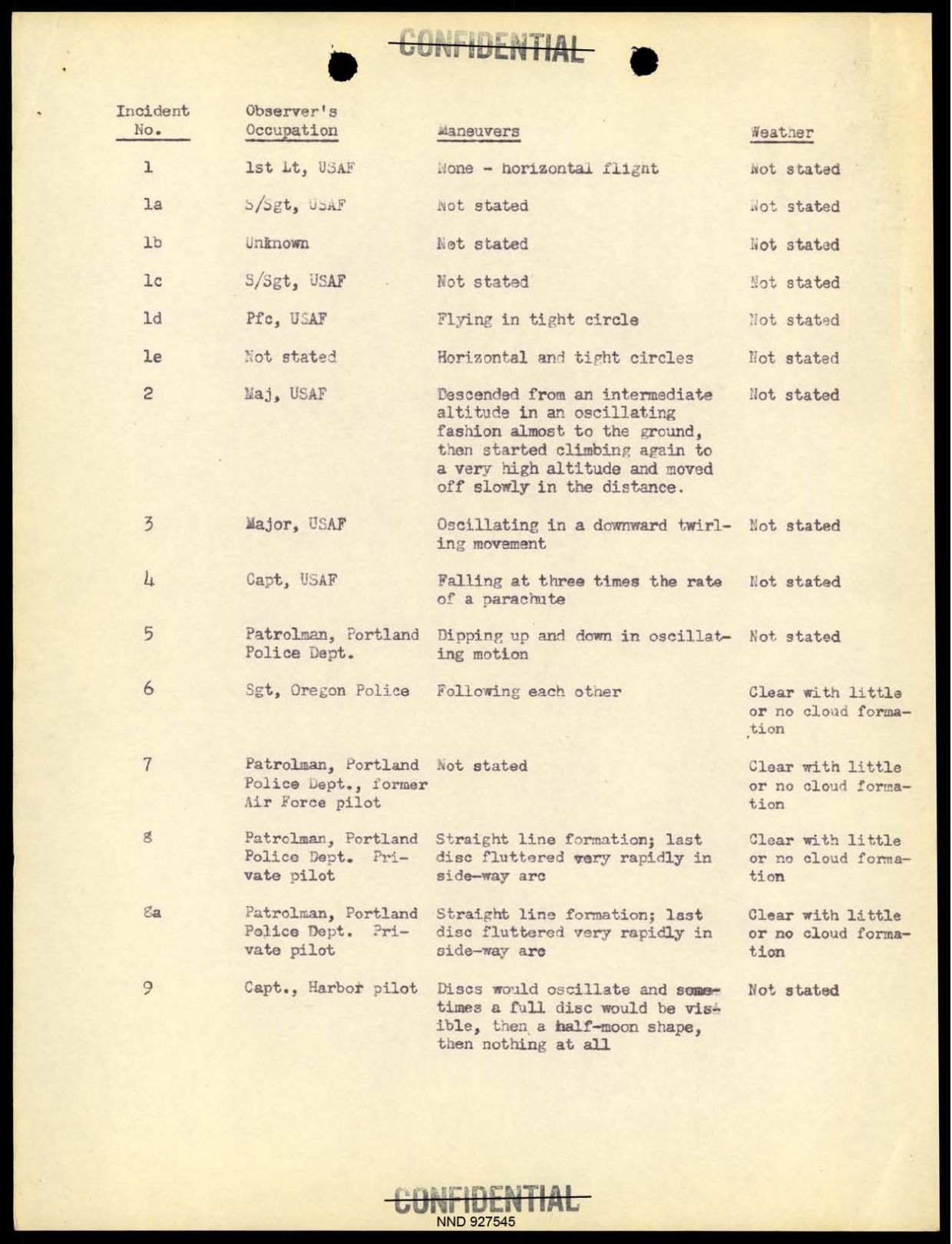
• Incident Observer' s No . 1 la lb le l d le 2 3 4 5 6 7 9 Occupation 1st Lt, UJAF :,/::,gt, 0::i,v' Uninown s/sgt, USAF Pfc, USAF ~fot stated :Uaj, USAF liajor, USAF Capt, USAF Patr olman, ?ortland Police Dept. Sgt, Oregon Police Patr olman, Por tland Police Dept., former Air Force pilot Patrolman, Portland Police Dept. Pri vate pilot Patrolman, Portland Police Dept . ?ri vate pilot Capt., Harbot pilot Jo1aneuvers 1lone - horizontal fl1gnt 1"ot stated t-:et stated Not stated Flying in tight circle Horizontal anrl tipht circles Descended from an intennediate altitude in an oscillating fashion almost to the ground, then started climbing again to a very high altitude and moved off slowly in the distance. Oscillating in a downward twirl ing movement Falling at three times the rate of a parachute Dippi nP, up and down in oscillat- ing motion Following each otner Not stated Str aight line formation; last disc fluttered very rapidly in side-way arc Strai~ht line fonnation; last disc fluttered very rapidly in side-way- are Discs wo'.lld oscillat e and SOl11131-' times a full disc would be vis~ ibl e, then a half-moon shape, t hen nothing at all Heatner IiOt stated .,ot stated l1ot stated ~!ot stated !fot stat'3d !lot stated Not stated Not stated ?!ot stated Not stated Clear with little or no cloud forma tion Clear with little or no cloud forma tion Clear with little or no cloud for.na tion Clear with little or no cloud forma tion Not stated CUiqfiDE~~TIAL NND 927545
PAGE 9 / 45
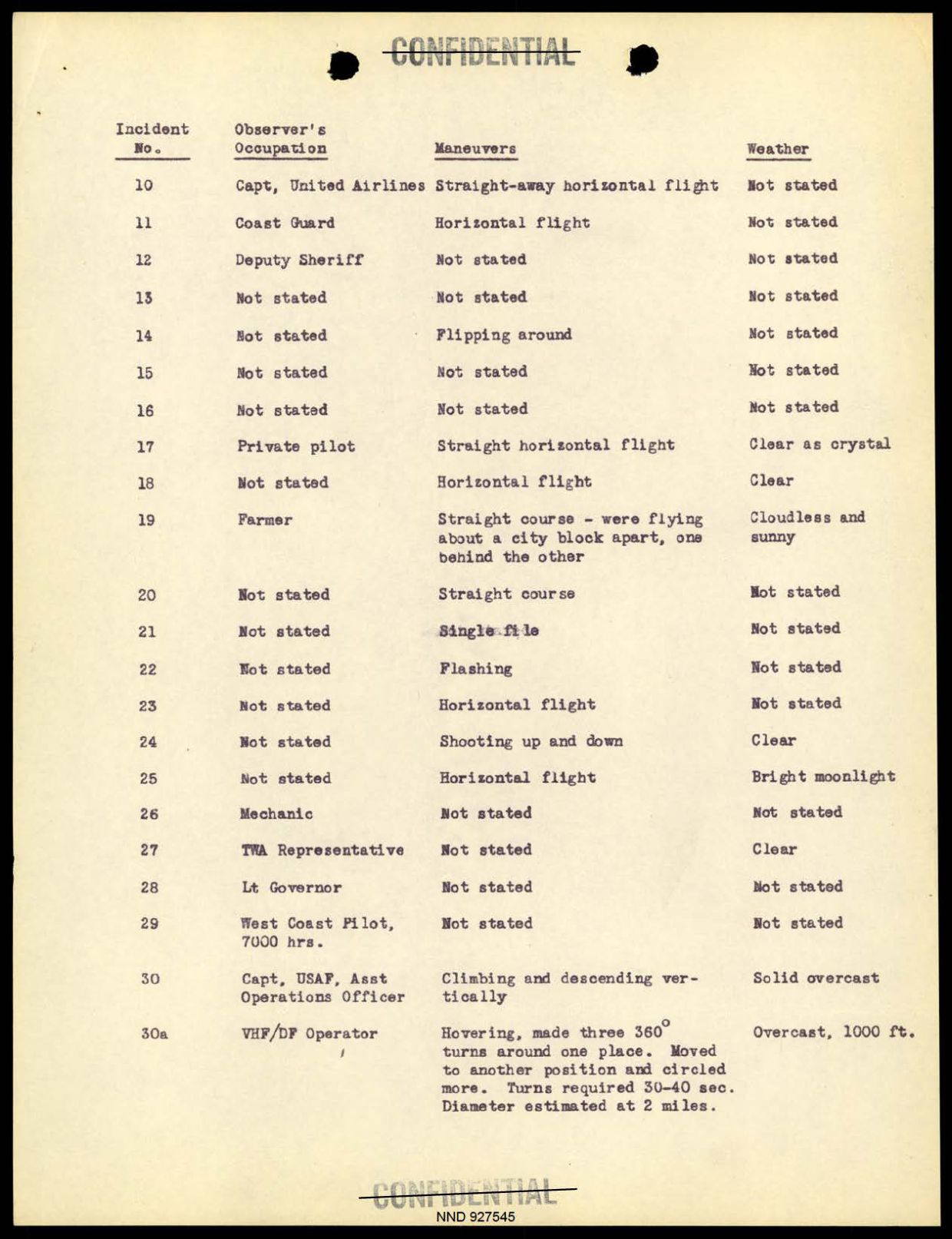
10 15 20 25 30 • Incident ObaerTer' s •oo Ocoupad.on Ka.neunra Weather Capt, United Airlines Straight-away horizontal flight lot stated ll 12 lS 14 16 17 18 19 21 22 23 24 26 27 28 29 30a Coast Guard Deputy Sheriff !lot stated Sot ste.ted Jot stated Mot stated Private pilot llot stated Farmer lot stated lot stated Wot stated !lot stated lot stated Not stated llecba.nic TWA Representative Lt Governor ffest Coe.st Pilot. 7000 hrs. Ca.pt. USAF. Asst Operations Officer VHF/DJ' Operator Horizontal flight Mot stated Not stated FUpping around Not stated Hot stated Straight horizontal flight Horizontal flight Straight course - were flying about a city block apart. one behind the other Straight course Single file Flashing Horizontal flight Shooting up and down Hori&ontal flight lot atated llot stated lot stated Bot stated Climbing and descending ver tioally Hovering, made three 360 0 turns around one place. Moved to another position and circled more. Turns required 30-40 seo. Diaaeter estimated at 2 miles. Kot stated Not stated Bot stated Mot stated Iot stated Mot stated Clear as crystal Clear Cloudless and sunny lot stated Rot stated Bot stated •ot stated Clear Bright moonlight Not stated Clear Kot stated lot stated Solid overcast Overcast. 1000 ft.
PAGE 10 / 45
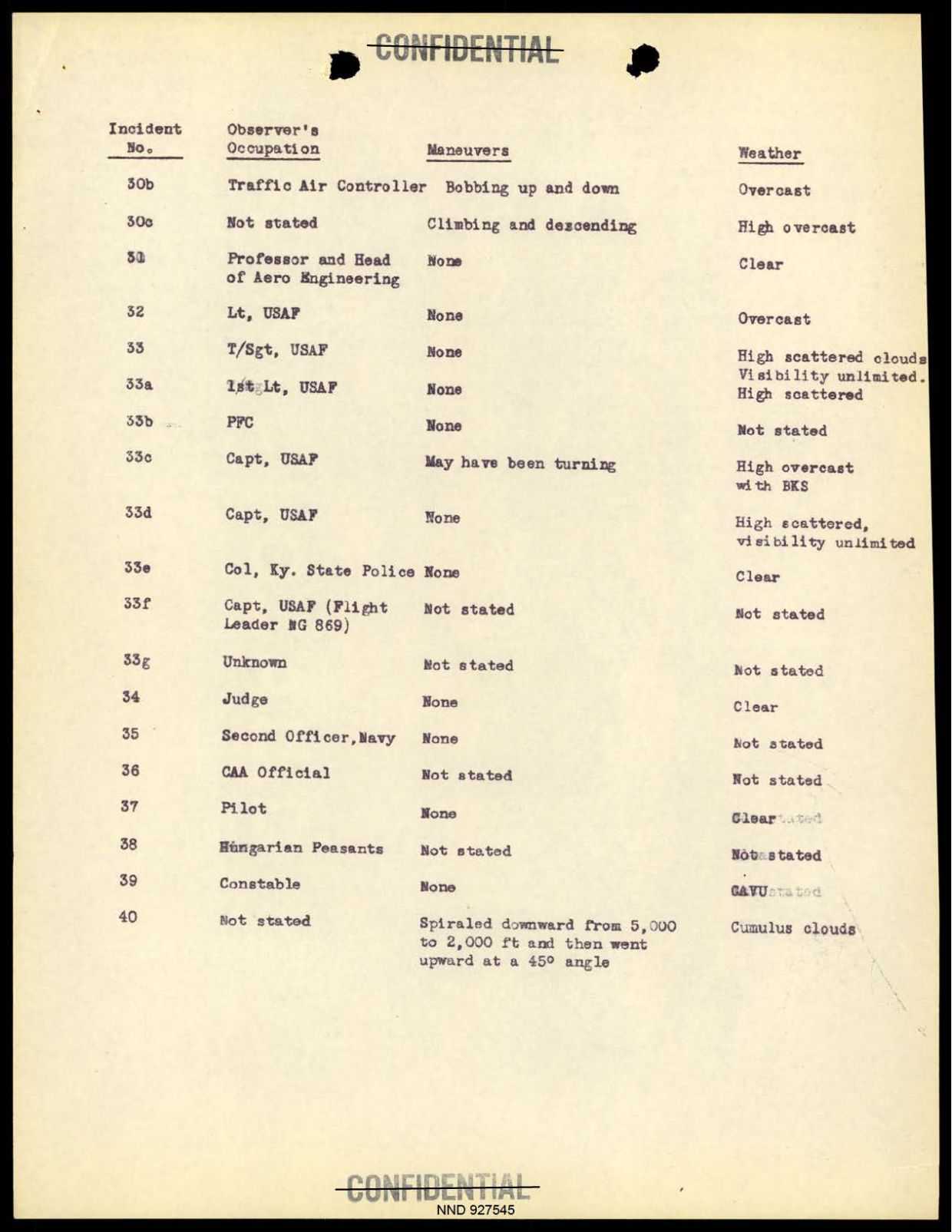
Incident
loo
SOb
30o
32
33a
33c
33d
3:Sf
:S3g
34
35
36
37
38
39
40
-
cor~FIDENTIAL
Observer's
Occupation
Maneuvers
Traffic Air Controller Bobbing up and down
lot a~ated
Climbing and de~oending
Profe11or and Bead
Mone
or Aero Kn.gineering
Lt, USAP
Bone
T/Sgt, USAF
Jone
1,it.,Lt, USAF
Bone
PFC
lone
Capt, USA1
Kay have been turning
Capt, Us.Ar
None
Col, Ky. State Police Kone
Capt, USAF (Plight
Not stated
Leader •a 869)
Unknown
Mot stated
Judge
Bone
Second Officer.Wavy
Mone
CAA Official
Sot stated
Pilot
Kone
Hungarian Peasants
Not stated
Constable
Not stated
Spiraled downward f'rom 5,000
to 2,000 f't am then went
upward at a 450 angle
Weather
Overcast
High overcast
Clear
Overcast
High acattered olouds
Visibility unlimited.
High scattered
lfot stated
High overcast
with BIS
High ecattered,
vi ei bility unlimited
Clear
.Not stated
Not stated
Clear
!lot atated
Rot stated
Clear ..,-.'!
!lot stated
a.tVU.
~ d
Cumulus clouds
PAGE 11 / 45
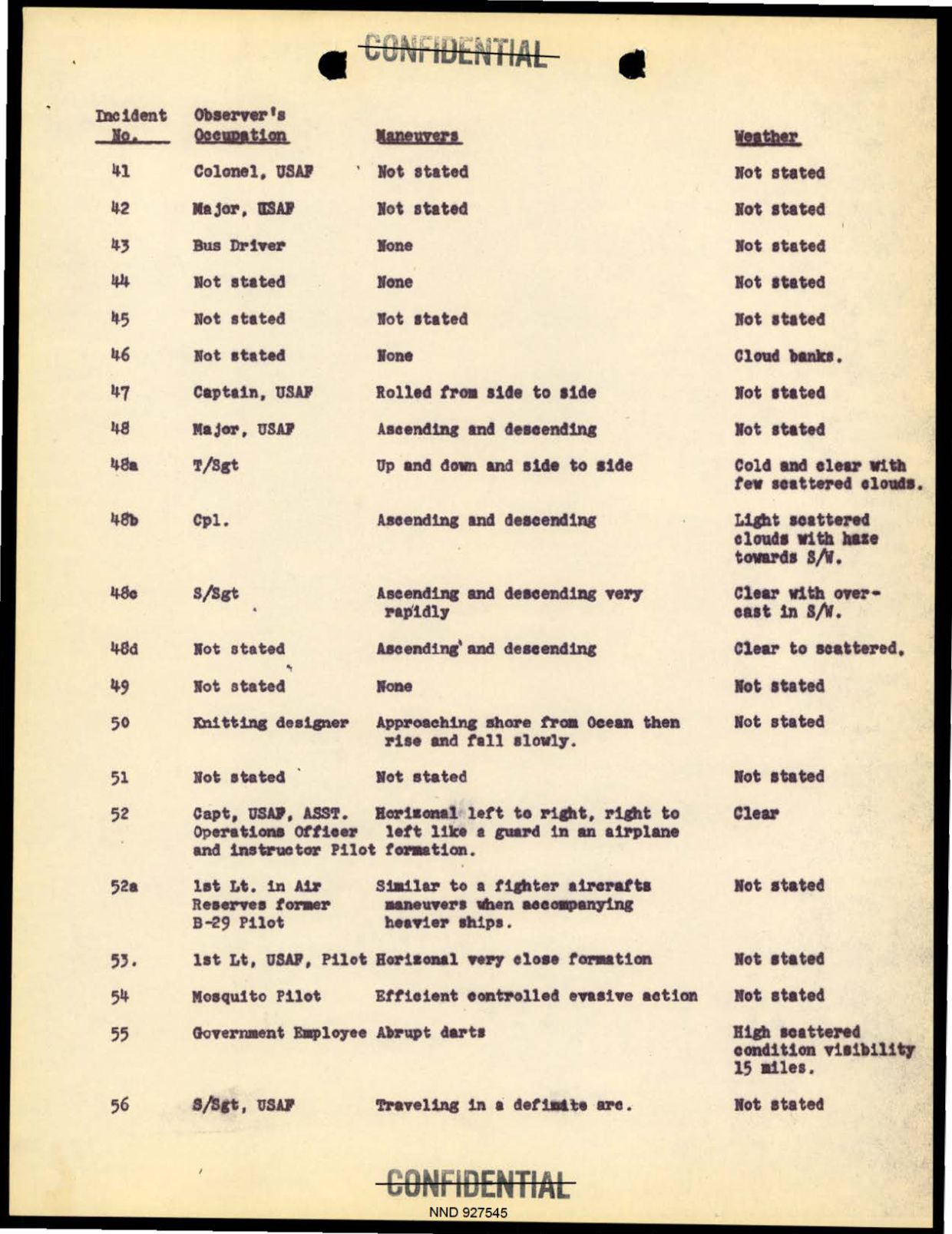
(;J~iadJENTIAL
41
e
Ine14ent
lg,
1'1
Obaenv'•
QoogtS,on
Colonel. USU
•entuur•
. lot atated
42
..jor, USU
Jo\ atated
4,
Bua Dl'"1"1"
lone
"4
lot 1tated
lone
Jot ltated
IJ5
lot 1tated
lot 1tated
Jot atated
46
Wot 1tat.d
lone
Cloud Nnb.
~7
Captain, usu
lolled frOII 11a. to lid•
Jot ttate4
48
KaJor, USAJ
uoerMlillg 1na deNen41na
lot atawd
48a
!/Bgt
Up and down and 114• w lid•
Cold and eleu Wi'll
t.. 11attffff 1101141.
Cpl.
.lao•Ddtnc and 4eaoendbll
r.t&bt aoattezaed
oloudl 1'11:la bait
tOIIU'dl S/1.
leeendina and deaoendiag ••'17
np'idl7
Clear nth onr•
eut 1Jl S/1.
48d
49
lot stated
..
lot stated
laoendlng' and deaeendine
lone
lot lbttd
50
En.1.ttlng deatan.er
Approaohil!a llhON traa Ooean then
Pile and tall 1lovly.
lot stated
51
Jot 1tated
lot stated
lot 1tawd
52
Capt, USU, ASS'!.
Bon.aonal lett to ri&ht, ri&ht to
Opentiona ottieu
1•tt lib• cuard 1n an a1Pplane
~
inawuotor Pilot fOl'Mtian.
CltlP
52•
lit Lt. 1n Air
Il•••ne• t01:1Mr
B-29 Pilot
SSll1lar to a ti&hter aiNNtta
aueu.•r• llben ue~
heaT1.eP 1h1p1.
lot stated
lit Lt, UW, Pilot Boruoul ftJl7 elon tCll'Mtim
lot 1tated
Moaquito Pilot
lot 1tat1d
G<JTernaent Bllplo1•• A)rupt 4atl
Bieh toattered
oond1\1on Tie1\111'7
15 a.ilea.
'rNTel1ng in a detillt't1t are.
lot 1tated
CONFIDENTIAL
NND 927545
PAGE 12 / 45
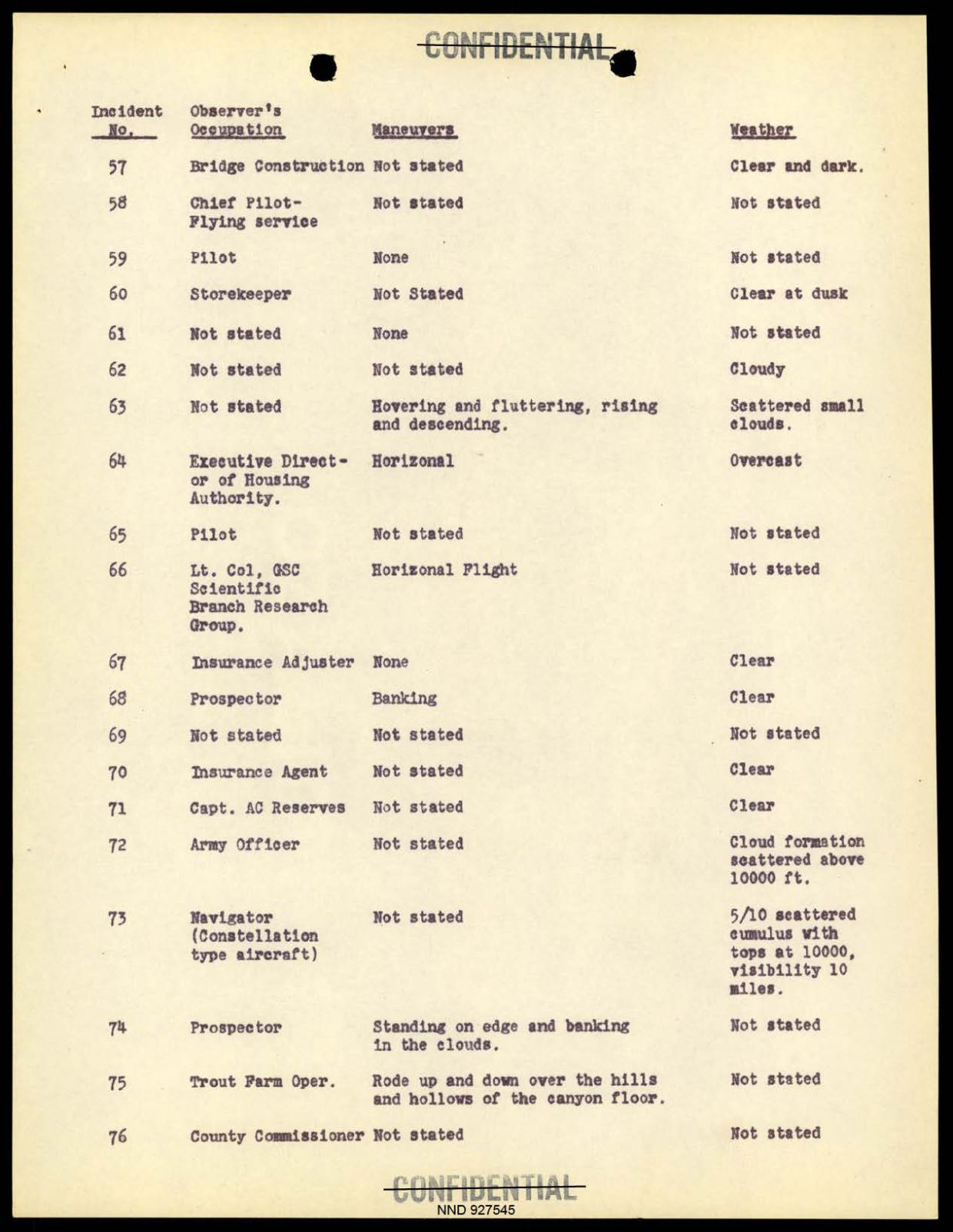
- Incident Ol>aeryer's 110. Opomtion IM!¥I8 £1 Yt•Hitr 57 Bridge Corustruct1on Bot stated Clear and dark. 58 Chiet Pilot- Not atated lfot auted Plying 1er-,1oe 59 Pilot Hone Rot stated 60 Storek:eepel" lot Stated Clear at duak 61 Kot stated lfone Wot stated 62 lot stated Not stated Cloudy 63 Hot stated BOYel"ing and fluttering, 1'1S1ng and deecendtng. Scattered aull olouda, 64 Executive Direct Hor11onal OnNalt or ot Housing Authority. 65 P1lot lfot stated Not 1tated 66 Lt. Col, QSC Sc1ent1t1c Horizonal Pl1.g?\t lfot 1tated Branch Research Group. 67 Insurance Adjuster None Clear 68 Prospector Banking Cleu 69 Not stated Hot stated Not 1tated 70 Insurance Agent Not stated Clear 71 Capt. AC Reser-,es Not stated Clear 72 A1!S1 0tf1ce1' Not stated Cloud to1'118t1on 1oattered abOYe 10000 tt. 73 lavigator (Conatellat1on type ail"cNft) Not stated 5/l.O acattered cuaulus vith tops at 10000, Y111b111ty 10 a11H. 74 Prospector Standi.nc on edge and banking 1n the clouda. Mot 1tated 75 Trout Parm Oper. Rode up and dovn oyer the hills and hollow ot the canyon tloor. Mot stated County COlllliaaioner Hot stated Rot stated It NND 927545 76
PAGE 13 / 45
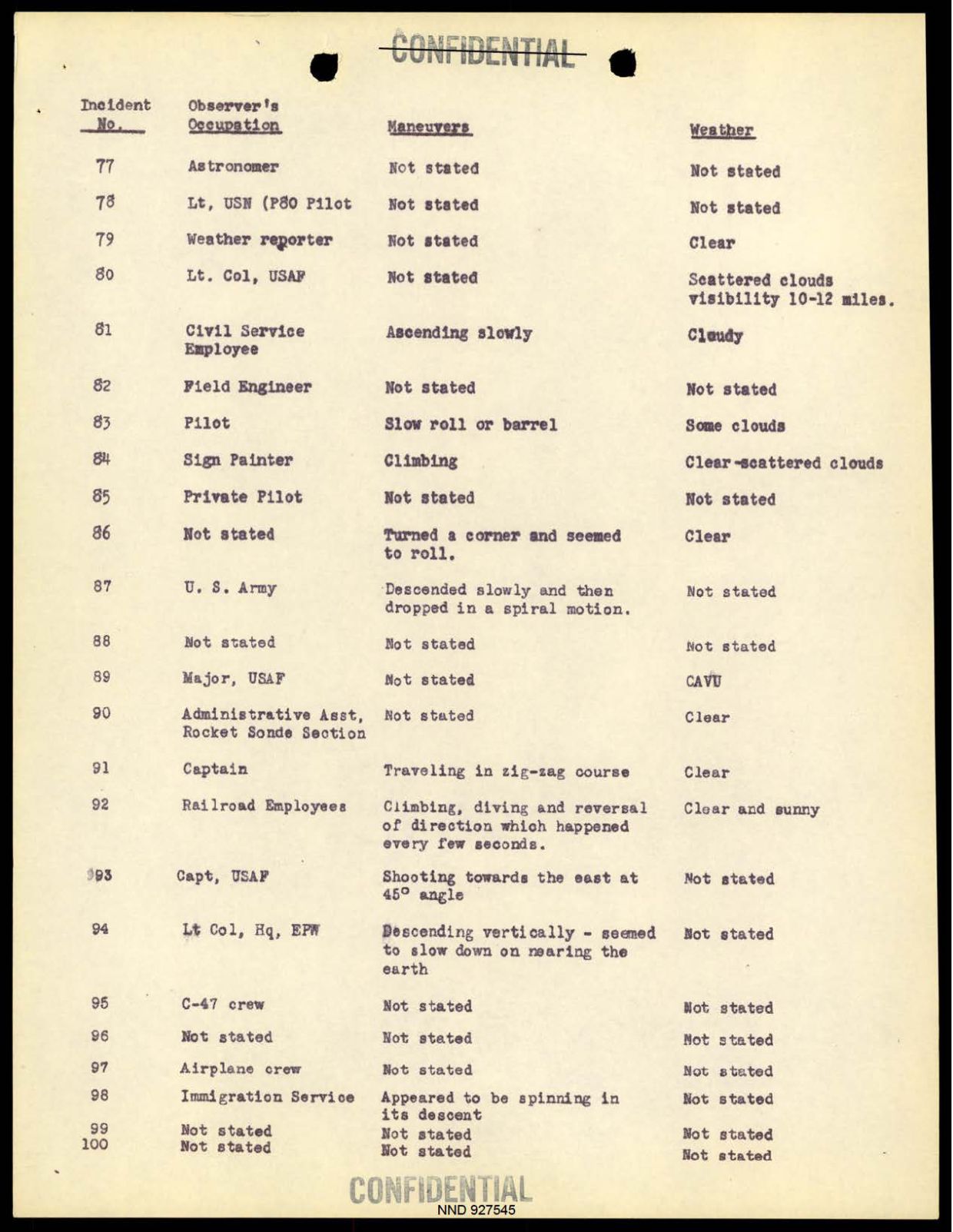
In.ctdent
Ko,
77
78
79
80
81
82
83
~
85
86
87
88
89
90
91
92
95
96
97
98
99
100
Ob ■erTer'•
Qo9upgt109
Astronomer
Lt, USI (P80 Pilot
Weather r-,o7tff
Lt. Col. USAP
C1T11 Service
bplo,ee
P1eld Bngtn,er
Pilot
Sign Painter
Pl'1Tate Pilot
Hot 1tated
U. S. Army
Not stated
Major, USAF
Administrative Asst,
Rocket Sonde Section
Captain
Railroad Employees
Capt, USAP
L~ Col, Hq, EPlf
C-47 orew
Bot stated
Airplane crew
Immigration Service
Not stated
lfot stated
Manemrp
Not stated
lot 1t1ted
Rot 1t1ted
Jot ltated
A1oendtng slowly
Bot stated
Slow roll or barrel
Cl1Jlb1ng
lot stated
'l'm"ned a corner and seemed
to roll.
Descended slowly and then
dropped in a spiral motion,
Not stated
dot stated
Not at~ted
Traveling in zig-zag course
Climbing, diving and reversal
of direction whioh happened
enry few aeoonds.
Shooting toward, the eaat at
45° angle
Descending vertically - aeaned
to slow down on nearing the
earth
Not sta.ted
Bot stated
Not stated
Appeared to be spinning in
its descent
Bot atated
?lot stated
I L
NND 927545
J!eather
lot stated
lot ■ tated
Clear
Scattered clouds
Y111b111t7 10-12 ailea.
lot stated
S<ae clouds
Clear...cattered cloud•
lot stated
Clear
~ot stated
Not stated
Clear
Clear
Cle ar alld 1unny
Not stated
•ot 1tated
Not stated
Not stated
tiot &tnted
lot stated
lot stated
Not ata.ted
PAGE 14 / 45
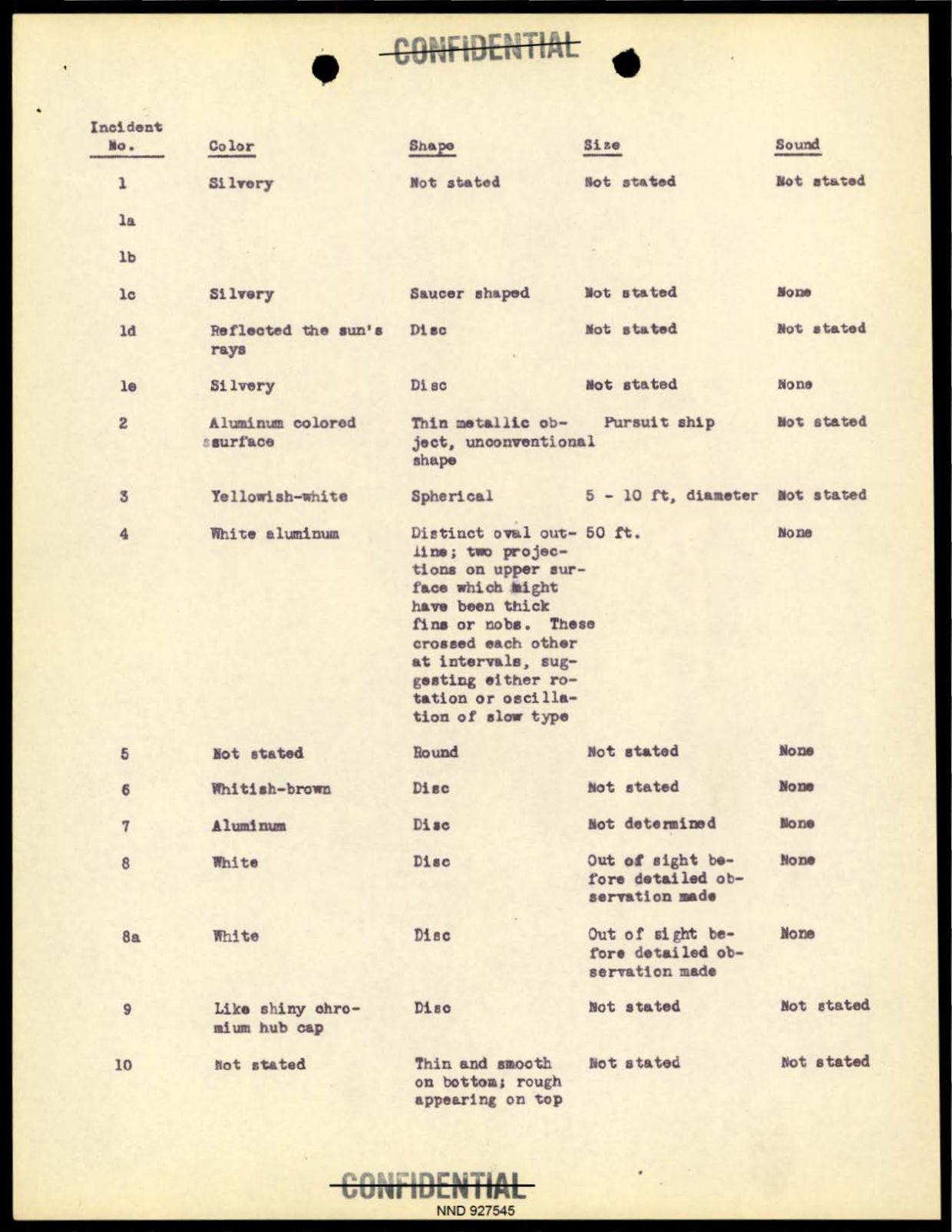
• Incident llo. l la lb lo ld le 2 s 4 5 6 7 8 Sa 9 10 Color Silnr, S11Tery Retleoted the •un' • raya Silvery Ahai.num colored 1urface Yellowiab-llfhite lihi'te aluminum lot 1tated 1'h1tiah-brown J.lumima White 1'hite Like shiny ohro aium hub cap .bot 1tated Shape Size Not stated Not stated Saucer shaped lot stated Diac llot stated Diec •ot stated Thin metallic ob jeot, unconventi on ah11pe al Purauit eh1p Spherical 5 - 10 t't, dtaaeter Dietinct oftl out- 50 tt. J.1m; ta> projec tiona on upper sur face which llight han been thick fine or nob1. Tne,e croaaed each other at intervals, 1ug ge1ting either ro tation or oaci lla• tion ot alow type Round .Not 1tated Diac Jllot atated Di1e Mot determined Dile Out ol light be fore det&iled ob Hrfttion •d• Diec Out of 11 ght be ror• detailed ob aen-at1on made Di,o Mot 1tated Thin a.nd a.ooth Not stated on bottoa, rough appea.rinc on top NND 927545 Sound Mot atated ■om ltot atated None Mot stated lot 1tated .llom Jllom lone !tone Mone !lot stated Jot etated
PAGE 15 / 45
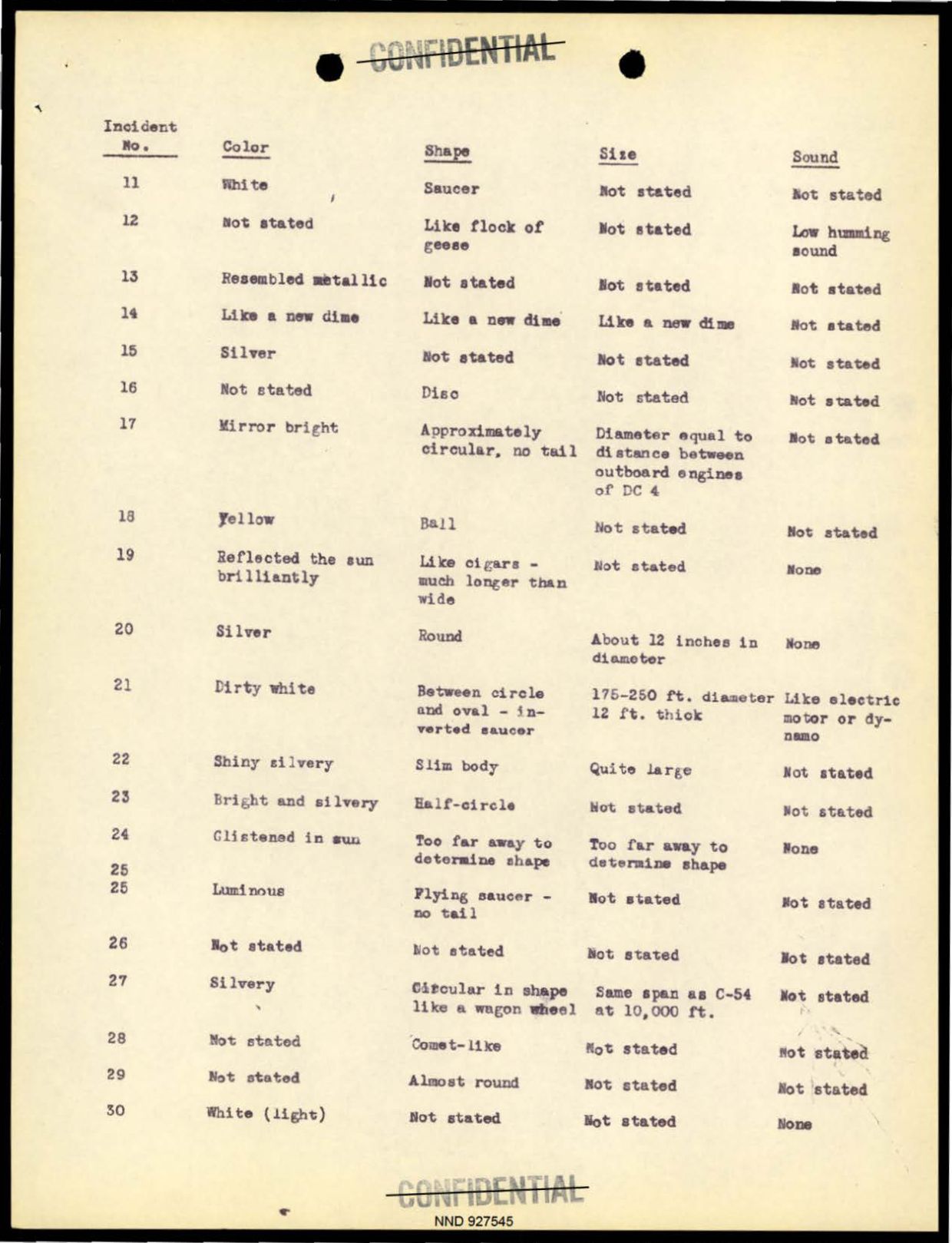
II~· ,DENTIAL Inoident llo. 11 12 13 lt 15 16 17 18 19 20 21 22 24 25 25 26 27 28 29 50 Color ffbi t e mot atated Resembled •tallic Lin a new di•• Sil•er Not stated ltirror brit ht Jellow Reflected the 1un brilliantly Silnr Dirty 1'hite Shiny d l nry Bri ght and sil•ery Gli&tened in av.n Luminous lot 1tated Silvery ' Not etated !lot stated White (.light) Shape Saucer Like tlock ot geese llot 1tated Like a nn dime lilot atated Approximately circular. no tail Like ci ga.ra 11uch longer than wide Round Betwe.n circle nnd on.l - in ••rt•d aa.ucer Slim body Ral t-circle Too far away to dotenune ahe.pe Plying saucer DO tai l lilot etated Citoular in shape like a wagon wheel ·eomet-11ke Almo1t round dot stated NND 927545 She Jlot stated •ot stated lot 1tated Like .. run, di• lot atated Not stated Diameter equal to di atan ce between outboard enginea of DC 4: llot s t ated Jlot atated About 12 inches in diameter 175-250 t't. dia:aeter 12 ft. t hiok Quite large Not atated Too far away to detenain. ahape lot atated Jiot sta'ted Same apan •• C-54 at 10. 000 rt. Not stated lot stated lot atated Sound ~t stated Low hmmdng aound l ot atated lot etated llot stated lfot auted lot atated Not stated Mom Mone Like electric motor or dy nmo Not stat ed lone lot atated lot atated Wot stated lot stated !lone
PAGE 16 / 45
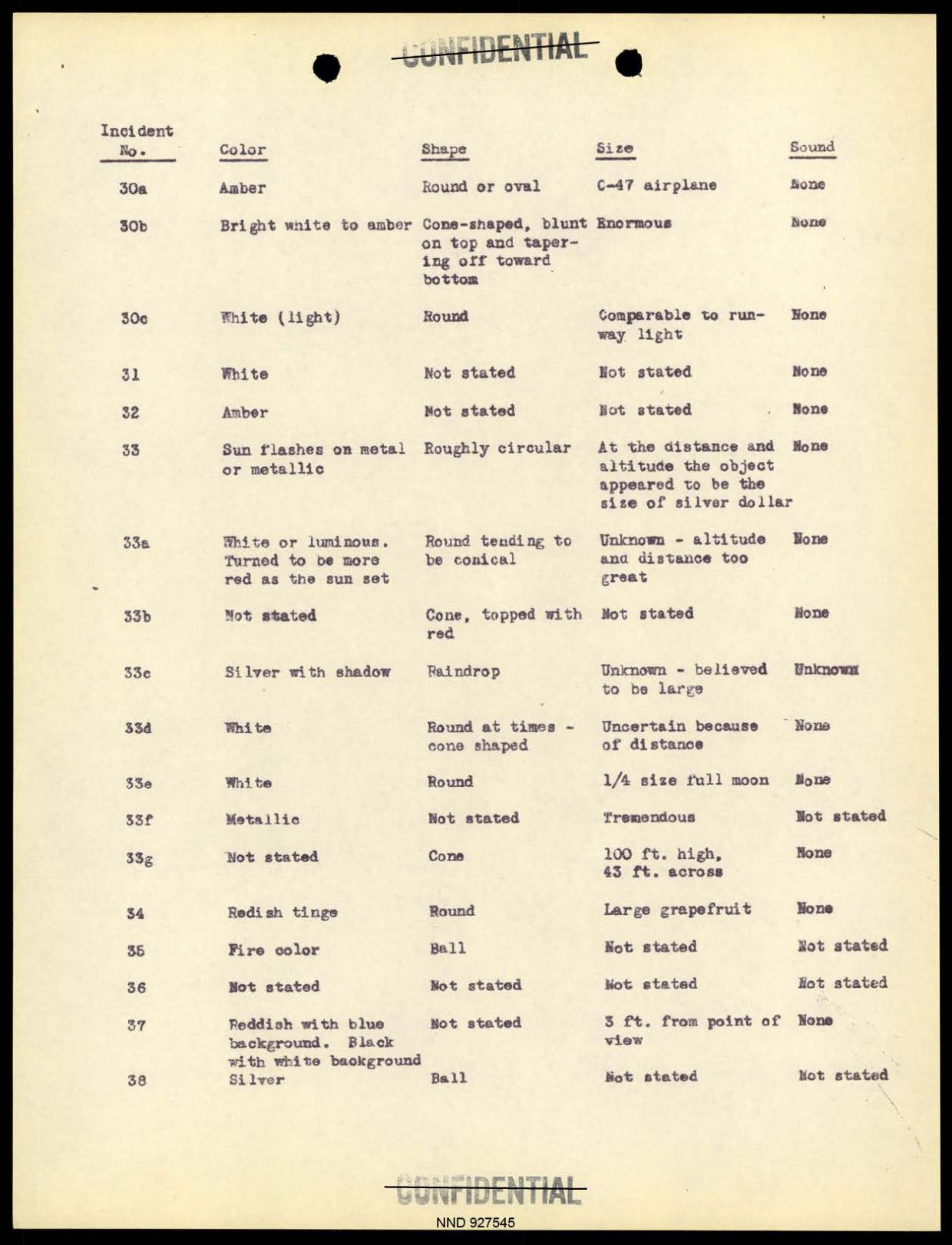
vbV~r IDENTIAL lnoident No. Color Sha.pc Size Sound 30& Amber Round or oval C-47 airplane Jliono !Ob Bright white to amber Cone-shaped. blunt on top and taper ing orr toward bottom ' Rnonnou• 30c White lligbt) RoWlld Comparable 'to way light run- Bone 31 White Not stated lot stated ltone 52 Amber Mot stated tiot stated !lone 33 Sun flashes on metal or metallic Roughly circular At the distance and lone altitude the object appeared ~o be the size of a11Ter dollar ffll.1te or luminous. ·rurnod to be more red aa the aun aet Round teudi og to be conical Unknown - altitude a.na distance too great Iona ~ot auted Cone. red topped with Jot stated lone :53e Si lver with shadow Raindrop Unlcnown - believed to be lar~ lJnJcnoa 53d 1'h1. te Round at time• cone ~haped - Uneert&in because of distance 53e lfhi.te Round l/4: she full moon lone 33.f l(atallio Bot stated Tremendous SSg "lfot stated Cone 100 ft. high. 43 .rt. acrose !lone Redish tinge Round Large gre.pef'ruit Ion• 35 Fire oolor Ball liot stated llot atatecl 36 )lot stated Bot stated Mot at&.ted Bot stated 38 Reddish with blue background.. Black with white baokground SilTer lot stated Ball S ft. from point of view .Not ate.ted lone Mot stated NND 927545
PAGE 17 / 45
GONfHltJ'TiAL Incident lo, 001or Shape ~ Soupd 39 Phosphoru1 Ba-shaped diaoa lot 1tated lot atate4 ~o Gray El11pt1cal 20-,0 tt. Ho11e like Jet airoratt prior to 1ts appell" ~.. No audible sound beai-d 11h11e object va1 1n Yiev. Aluaim"- Round 3 tt. diameter lot atate4 "1 ~2 OH.yilh Balloon 10 tt diaeter lot 1tate4 1'-3 Dirty 1'lite Between a o1.role IJ1d 12 tt thiolc and llectJ"ie Jlotor an oval (ln-.erted 175-250 tt diameter ordynaao sa~er) 44 lfot atat.d Jlyina Saueers Wot 1tated none (not actually des oribed as being this shape) lJ-5 Hot stated Rot stated Hot stated Bot stated 46 Silvery vh1te Round Small lot stated 47 No detin1te Bo detim.te shape C-51'. airplane lot deterained oolor top due to the noise ai(!e l"etleot- ot airplane. ed 11ght. lf.8 Red PllUli.ng Red cone Wot stated Rot stated IJ.8a Bright light CirculU'-like a •tU' Ve17 lai-ge cOlll)U'ed Hone ohangi.ne to 1n tbe ak7 only luga. to an aeroplane 11,;bt. red then to White OI" J"•llow 48b Red - ldltn Cone Hot detel'llintd Jot 1tated descending Red men IIO"fin8 lot atated Kot 1tated lot ■tated then grean and black to red. lot stated lot 1tated 48d Yellow or tlame Rot 1tated colored. 49 Not atated Pencil shaped ob3eot !lot ■ tated lot stated t
PAGE 18 / 45
cot~FIDENTIAL
Incident
10.
color
Shape
Si•e
sound
50
Stated aa
queer 11.&ht.
Referred to aa aauoer
but not stated as being
ot thie detinite shape.
Kot stated
Jfot atated
51
11lver
Bomd
Not stated
•ot •tated
52
llhite. ah1Dy
Circular like a ball
en the bott011 but not
completely round.
15-25 tt Diameter
!lot atated
521
■ilk mite
Bot atated
•ot stated
lone
53
Whit.
C1roular
36 inches diameter
Rot stated
54
Rot atated
Not etated
Rot eta,ed
Not stated
55
RecUab
lot stated
Bot atated
None
56
Dia glow ot
light
Round
2 :tt. d1aaeter
Hone
lfot stated
Kot atated
58
Blaok
Saucer (not det1n1tel7
1tated •• being tbia
shape)
Larger than C~4
airplane
Not stated
59
Incandescent
11Cht without
appreciable
blue and no
redd1eh tinae.
Hot stated
Not atated
Hot stated
60
Plame oolor
Diec shaped (the 11'ter
glow •de 1t look like
a oone)
Barrel Bead, dinner
plate am the aise
ot a plane tl71,ng
hi&h.
Wot stated
61
White ancS
111Ullinated
Bot stated
Sue ot Pigeons
lfot 1tated
62
YelloV1ah
vhite
Bot stated
811811
Mot stated
Gleuaed and
Shialered
D1so (not actuall7
stated aa being ot
this shape)
, rt. a1aaeter and
ot no great th1ok•
neaa.
lot stated
64
Color 111111ar Kot stated
to eiectr1c 11.&ht.
lot stated
Hot stated
65
lot ltated
Bot stated
15 1nohea diaaeter
lot stated
66
Bright onnge lot stated
lot atated
Hot stated
67
Jllutal col01"
top 1urtaoe al1ghtly
IJ.-6 tt 1n le~h
ll'ot stated
57
h1ghl7 po111h- ournd-larger 1n front
4
ed chi-Ollium.
than 1n the rear .
:~e:O-l 1nchea liOMflDENTIAL
NND 927545
PAGE 19 / 45
•
flDENllAL e
Incident
68
ColOJ'
Hot stated
Shape
I
D1eo - appeare~
a tail.
to have
UU.
30 tt d1aaeter
sounc1
lone
69
White
lot 1tated
Not stated
Bussing sound.
70
Not stated
Giant til'e cracker
Kot stated
Bu11DI aound
not aa loud
aa a rocket
Ship.
71
Rot 1t1ted
Hot 1t1ted
lot atated
Not stated
72
Silver
Sphere( nt not like
1auoer or diac.
2·3 tt diameter
Rot 1tated
Deep Gold
1111pt1oal
15 tt long 2·3 tt
1n length.
lot atated
74
Bot stated
Tapered lbarpely to a
point in the tront end.
,o tt. diaaettr
Hone
75
Slq blue
Oblong like a broad rill
hat with a low crown.
20 tt. lona am
10 t,. thiolr.
Kade a
av1shiq sound.
76
Not stated
Jot 1tated
Hot stated
Lite the eoho
ot • aotor.
77
Light colored
Only oonerete evidence
50•100 tt lfide.
or tora appeared on the
lett tangent ot the group.
Loud roar
78
Light gray
e1rou1ar
8 tt. diueter
Bot ■ tated
79
S1lftl'
Bot atated
Lu•er than a
Pibal balloon When
obaened through a
theodolite.
Not atated
80
Retleoted vh1te
light.
"Blob
11
SMll ail"plane
Hone
81
S11Yer
'
Large Balloon With silver Large
d11c below it, no attaebing
cables vere noticed.
lot etated
82
Proat7 ltbite
Round and tlat
Equal to b\11.k ot
6 eaob, B-29 air·
planes tdth dia ..
•t•r to tluomeas
ratio ot 10-1.
A 1l1gbt
mahing.
83
Black
Round
'tVtnt,-.f'ive cent
piece.
lot atated
PAGE 20 / 45
,.DENTIAL e Incident 110, 84 color Sb1Jm7 Ship, Road lot ltated lore~ le11 SbJ-111. 85 Bot 1tated Reseabled the D5U•l. Jot 1tated lot 1tated 86 Not 1tated lot atate(! IOt ltated lot stated 87 JotS1t&ted Bot stated lot ata.ted lot atated 88 lot stated 1lying di ec (not ao tual ly deaoribed aa being ot thi• aha.pe) )lot 1t1.ted lot atated Ro\lDd di,o ahaped object 50-60 rt. diameter bot at&ted Refleote4 light Unitonn with no protu berano•• euoh •• wing• of an airplane Hot atatad Bot 1tt.t1d Light lot atated Not stated looe 92 Silver lot ,tated S-11 lloli ata.ted 94 Bluish center Appeared to be a ·.rlth rod on its edgH !ot atatad lot 1tated di10 Reaembled ~ shooting at~r; however. ob aervera not oertain Not stated Not etated Not ,tated 95 Not stated Not stated Kot stated Bot stated 96 Not st:i.ted Hot etated Not stated Not atated 91 Flaah of light Kot atat•• Hot stated Hot atated 98 Bright light Ahaoat round or perhaps oval or aauoer-ahaped 2ti-30 miles diametor lot etated 99 Shining Brightly ehining object with long td 1 lot atated Bot atated 100 Wot ,tated lot atated !lot stated NND 927545
PAGE 21 / 45
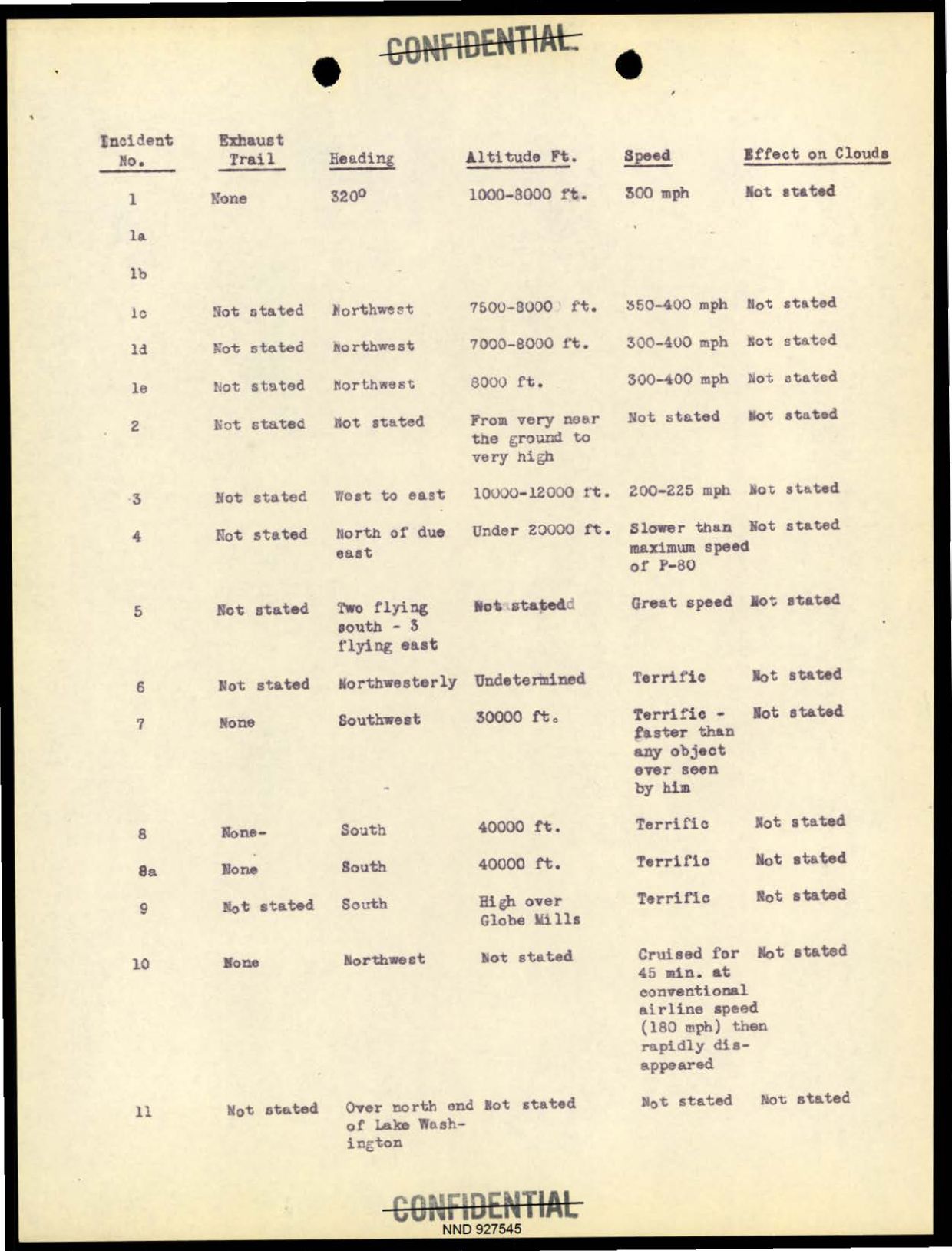
-COt~f\DENTlAL: e - Incident No. Exhaust Trail Heading Altitude Ft. Speed lffect on Cloud• l t:one 320° 1000-sooo rt. ~00 mph lot at&ted la. lb le Not stated liorthwest 7500-8000 ft. ~50-400 mph Hot stated ld f.ot stated northwest 7000-8000 f't. 300-400 mph tlot atatod le tlot stated tiorthwest 6000 rt. 300-400 mph ~ot stated 2 tot stated Not at&ted From very near the ground to vory high Not ste.tod llot atated 3 Not ata.ted frost to east 10000- 12000 rt. 200 225 mph )lo-r; stated 4 Not stated North of due east Under 20000 ft . Slower than Hot stated lllAXimUDl speed or P- 80 5 Bot stated Two flying aoutb - S flying ea,t Bo'\ stated.d Great speed lot atated 6 Not stated llorthweaterly Undetermined Terrifie lot stat.d 7 None Southweat 50000 fto Terrific - faster than any object ever seen by him lot stat.cl 8 8a 9 Rone- Jlone Not atated South South S01..-th 40000 tt . 40000 rt. High over Globe Mille Terrific ?errifio Terrific lot atated Not ,tated lot stated 10 !Jone Northwest llot stated Cruised for Not atated 46 min. at oonventional airline apeed (180 mph) then rapidly dis appeared 11 Not stated OTer north end lot stated ot Lake 1'o.sh ington llot stated .ttoi; ata.ted CG."f,DENTIAL NND 927545
PAGE 22 / 45
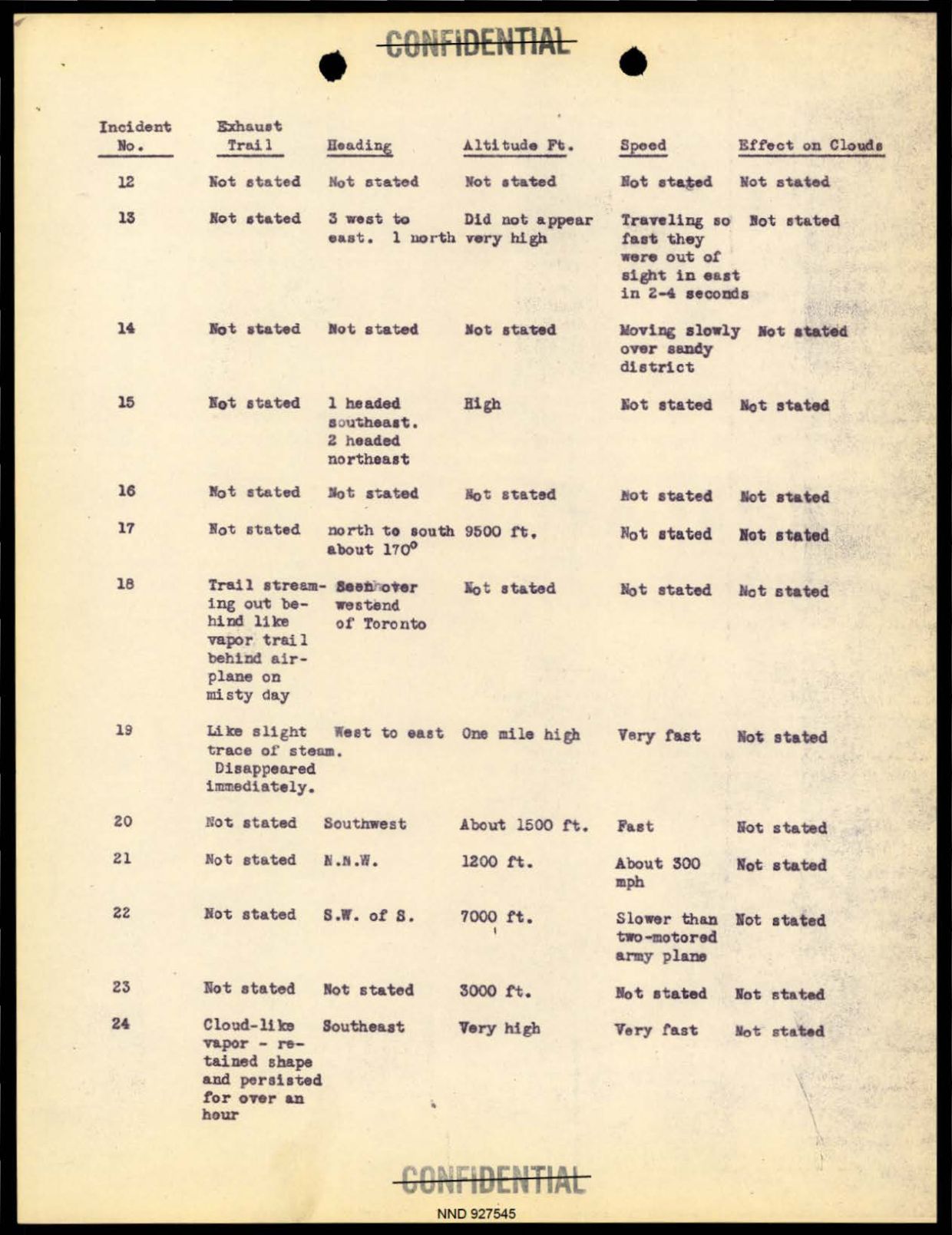
Incident Bo. 12 14 15 16 17 18 19 20 21 22 23 • F1DENTIAl E:xhauat Trail Wot atated Bee.ding Hot stated .lltitude Ft. Not atated lot atated 3 west to eaat. l north Did not appear Tery high lot atated lot atated Iot 1te.ted lfot 1tated l beaded s outhea1t. 2 headed north1a1t .lot atated High lot 1tatad lot ete.ted north to IOUth 9500 rt. about 17<i' Trail atreaa- aeenronr Jiot atated 1ng out be- weatend him like of Toronto vapor trail 'beh1m air plane on misty day Lim alight eat to east One 11.ile high trace ot steam. Disappeared 1m::nediat•ly. Not atated Southwest About 1500 rt. Rot stated ~.N.W. 1200 ft. Bot stated S.W. ot S. 7000 tt. Not stated !lot stated 5000 tt. Cloud-lie 8outheut Very high n.por - re tained shape a.nd persiated tor onr an hour Spoed Effect on Cloud.a lot •~d Hot at&t.<l Tranlini BO taat they •ere out ot llot ,te.ted eight in eaat in 2-4 aeoonda JloT1ng slowly llot atat.d onr aandy dletr1ct Sot atated lot atat.d !tot atate4 llot atated Not 1tated lot 1tated Not stated Hot stated Very taat Bot stated Faat llot stated About SOO lot atated mph Slower than lot atated two-motored U1lY plane lfot ate.ted lot stated Very tut Mot atat.d \ NND 927545
PAGE 23 / 45
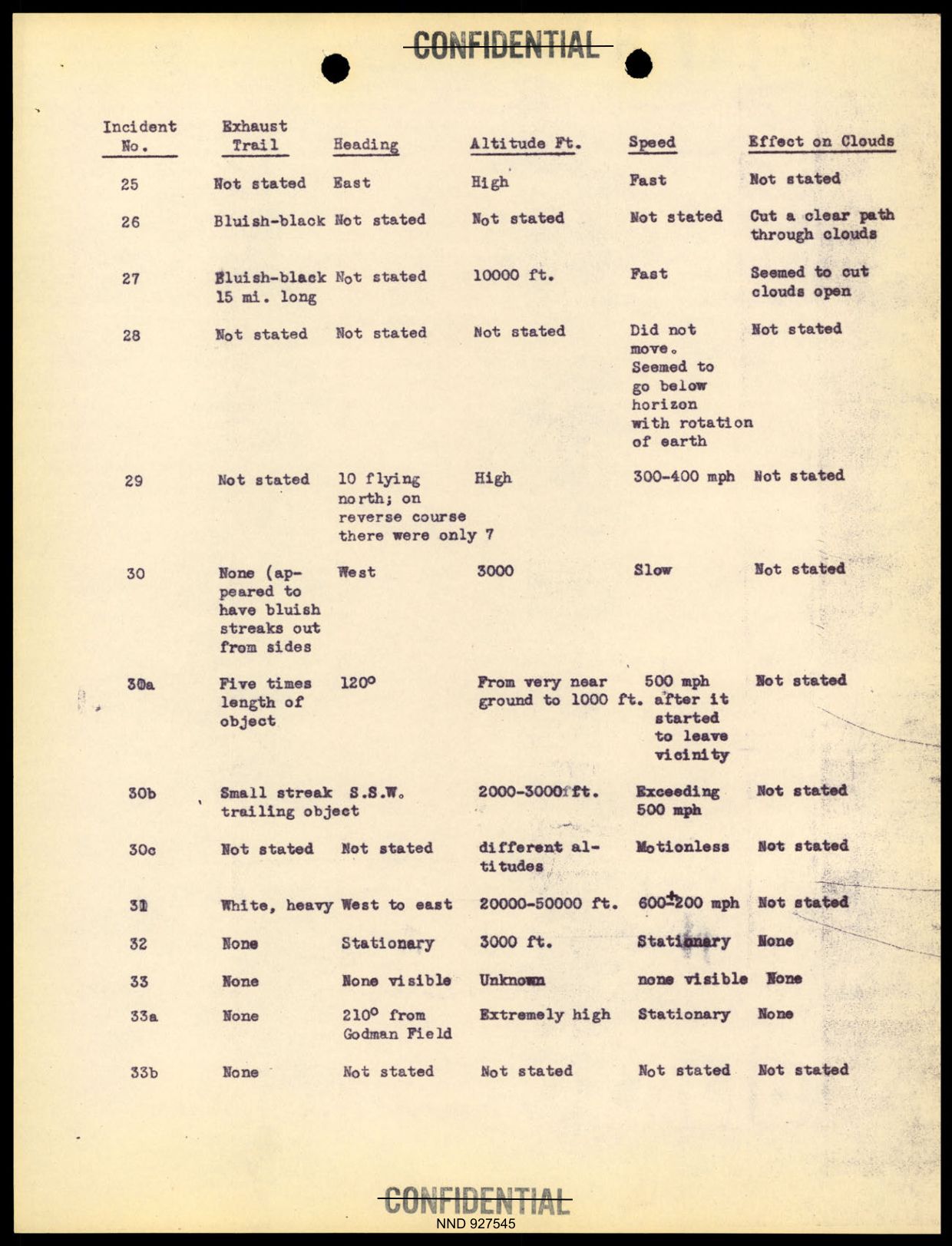
• CONFIDENTIAL e Incident Ho. 25 26 27 28 29 30 ..' S0b 300 SI 32 33 33a B.xhaust Trail Heading Altitude Ft. Wot stated Bast High Bluish-black Not sta.ted Bot stated Bluish-black Not stated 10000 ft. 15 mi. long Not stated Not stated Not stated Not stated 10 flying High north; on reverse course there were only 7 None (ap- West 3000 peared to ha.ve bluish streaks out t'rom aides Five times 1200 Prom .,ery near length ot g?'Ound to 1000 object Small streak 8.8.Wo trailing object Wot stated Kot atated di!teNn.~ al• titudea ; White., heavy West to eut 20000-50000 ft. lone Stationary 3000 tt. lone lone visible Unknolm Jfone 210° from Extremely high Godman Field None Not stated Not stated Speed Effect on Clouds Fast Not stated llot stated Cut a clear path throup cloud• Fast Seemed to out 0loud1 open Did not moveo Seemed to go below horizon Bot stated with rotation of earth 300-400 mph Bot ate.ted Slow Bot stated 500 mph Jlot stated rt. a,tter 1t atartecl to le&"ff n.e1n1ty bceeding Bot ate.ted. 600 aph Jfotionlesa lot stated ~-~----- 600-~00 mph Bot 1ta1;ecl • • Stat1anary "lone nom n.aible Ione Stationary !lone Not stated Bot sta:t;ed NND 927545
PAGE 24 / 45
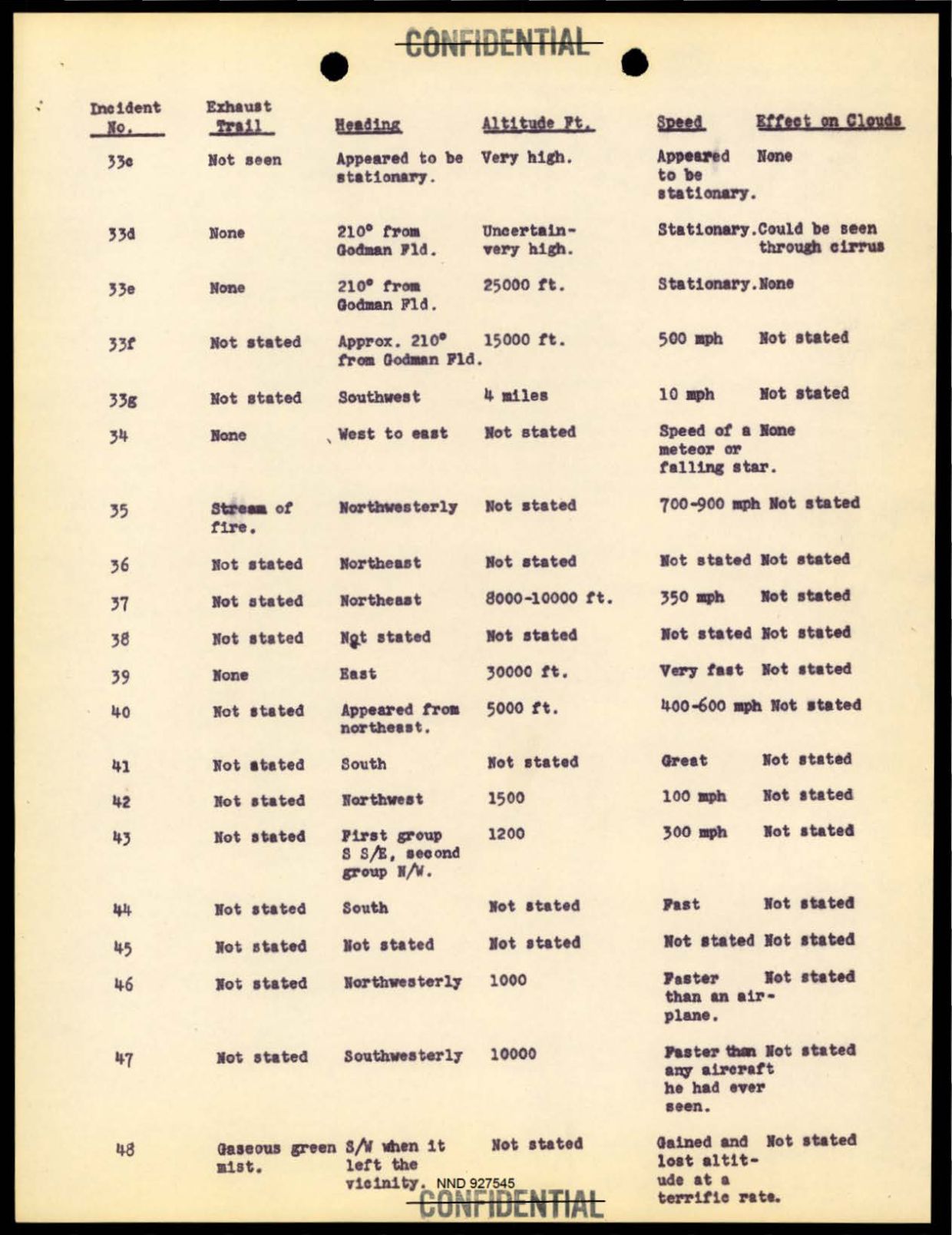
COhFIDENTIAL -
..
Ino14ent
Ezhautt
Jo.
Trf1l
lta4w
uutud• rt,
Sptfd
lf(n\ op Cln4f
)lot •••n
Apptlll'ed to be Very h11b.
Appeued
lont
■ tat1onaJ7 .
to 1M
''°
1tat1ozw-y.
?lont
210• t'Poa
Uncei-tain-
Stationary.Could be seen
''d
GodMn Jld.
••PJ higb.
throuab oi.ffU
,,.
lone
210• t'Poa
25000 tt.
Stationary.lone
Oodllan Pld .
,,r
lot atated
Approx. 210•
15000 tt.
500 IIPh
lot atate4
frt• Oodllan Jld.
,,s
Not ■tated
Southw■ t
~ aile•
lOJll)h
lot atated
,4
llcmo
, Vest to nat
lot stated
Speed ot a lcmt
aeteor ar
tallinC atar.
IOJ"tbwaterl7
Rot atated
700-900 IIPh lot atated
,5
81.N• ot
tire.
lortbeaat
lot atated Jot atated
,6
lot atated
Jot atated
,1
lot 1tated
lortheut
aooo-10000 tt.
350111'h
lot ■ tated
JIOt stated
lot ■ tated lot 1t1t.d
,e
lot 1tated
lfa,t stated
Ion•
Bait
,0000 tt.
V0'7 ta1t lot 1tated
39
40
Kot 1tated
Appeared troa
5000 tt.
~0-600 aph lot 1tated
nOJ'tbeaat.
41
Jot atated
South
lot 1tated
Great
lot 1tated
lOOaph
lot 1tated
42
lot ,tated
Borihweat
1500
4,
lot 1tated
11rat group
1200
,oo mph
Jot 1tat14
S S/£, 8HOnd
group 1/V.
lot 1tated
South
lot 1tat1d
hat
lot 1tate4
44
lot atat•d lot 1tatecS
Jot stated
lot stated
lot stat•d
45
, ••tel"
lot 1tated
Jot stated
lortbwtatff1,1
1000
46
than an air•
plane.
10000
J'uter 11ml lot 1tate4
Jot etated
80'1thfllterl7
IJ7
•ftT aiNratt
h• ba4 rnr
•••n.
Gained an~ lot stated
Ga1eous green 5/V llhtn 1t
Mot stated
101t alt1t•
a11t.
lett the
'f'101D.1t7 • NND 927545
udt at a
te1"1"1t1o nte.
60111 1uENTIAL
PAGE 25 / 45
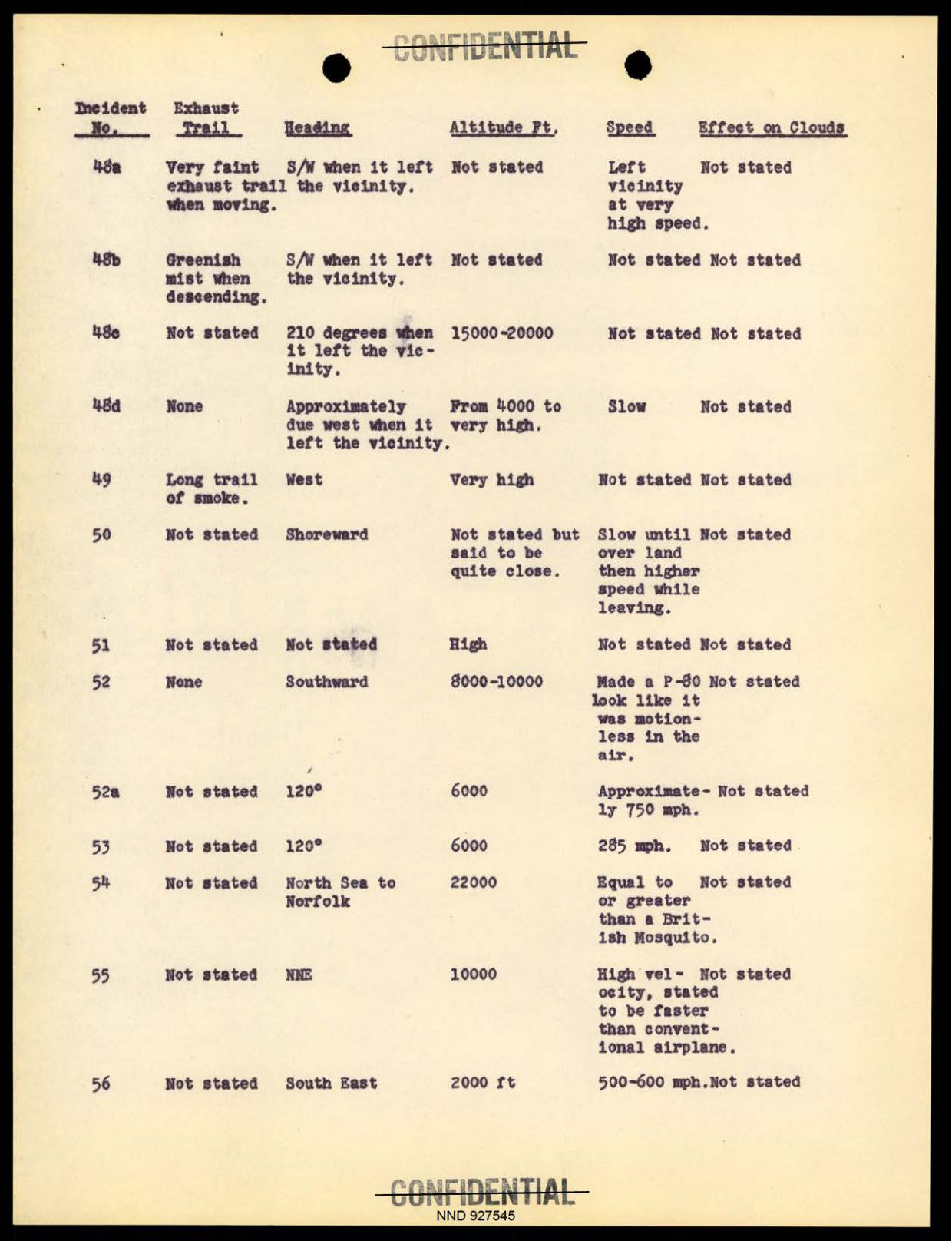
n u NTIAL ?no1dent 10, Exhauat n:,11 leaflN Att1\Jde Pt. Spefd Btteot on ClOlldl 4aa ver, tatnt S/1 llhen 1t lett emaut trail the Y1t1n1tJ. llben 1IO'fing. lot 1tate4 Lett Jfot stated T10in1t)' at nr, h1gb 1peed. Gl'eenlah 111st 1hen deaoending. S/W ldlen it lttt the TlO1n1ty. lot 1tated lot stated Not stated lot 1tatect 210 degree, lllben 1 t lett the Tic - 1.nity. 15000-20000 lot stated Hot stated ~d lone Approxblately 1l'011 4000 to due nat lalen 1t Ter1 hi&b. lett the T1o1n1ty. Slow Not stated 49 Lon, trail ot Doke. Vest Very hi&h lot atated lot stated 50 Kot stated Shor•wrd Rot atated but •aid to be quite close. Slov until Bot stated OTer land then higher speed lfbile leaving. 51 Hot atated lot 1tated High Hot stated l ot stated 52 Bone Soutbnrd ; 8000-10000 JCade a P-80 Hot stated look llke 1t wu motion leH 1n the air. 52& Wot stated 120• 6000 Approxiaate- Not stated lT 150 aph. 53 Bot stated 120• 6000 285 aph. Not stated 5~ Bot 1tatecS Borth Sea to lortolk 22000 Equal to Not stated or greater than • Brit 1ab Mosquito. 55 lot 1tated DE 10000 Rip yel• Not ■ tated oc1t7• 1tated to be taster than conyent 1onal airplane. 56 •ot lt&ted Soutb saat 2000 tt 500-600 mph.Mot atated CONF1DENTIAL NND 927545
PAGE 26 / 45
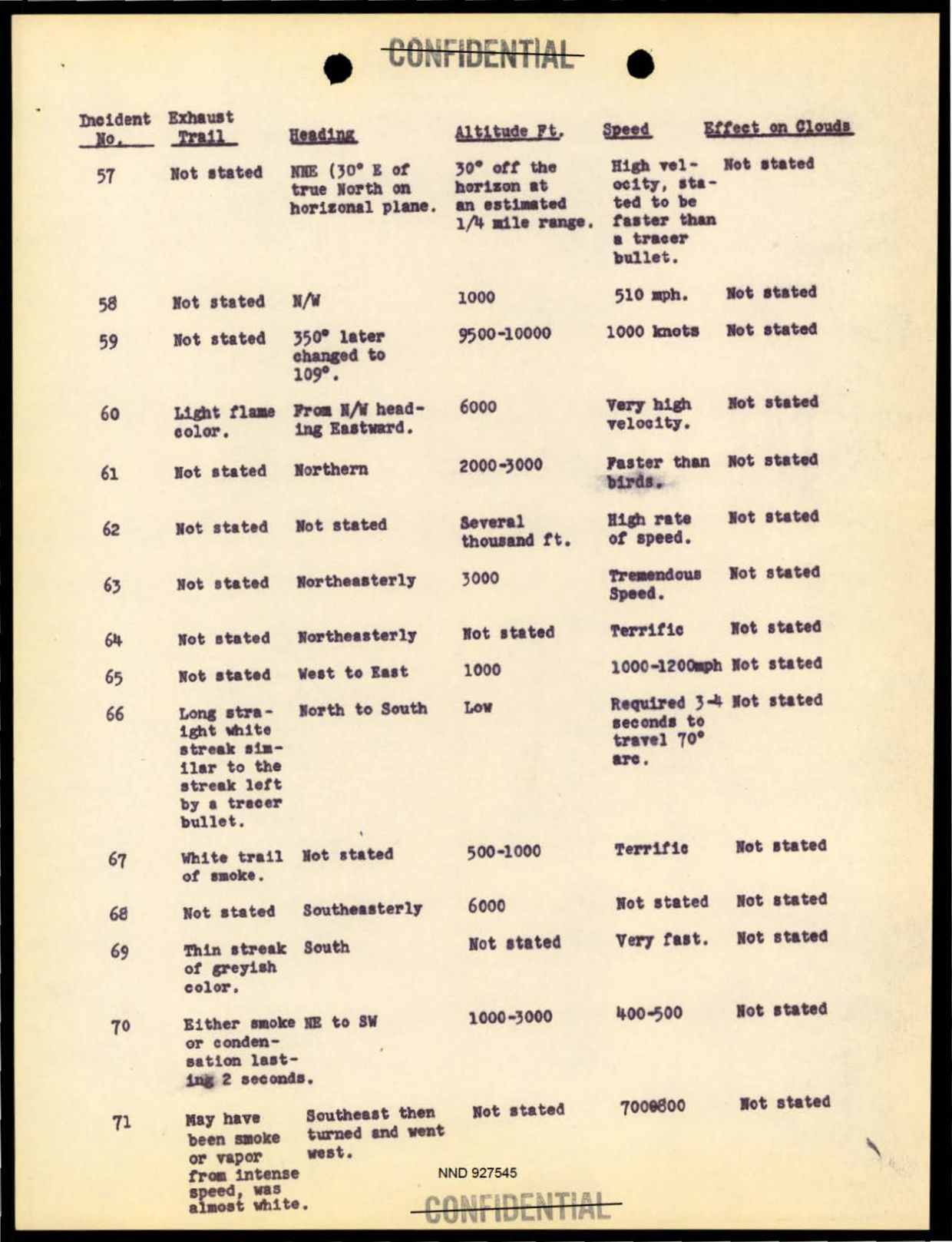
»ioldent lo, 57 58 59 60 61 62 64 65 66 67 68 69 70 71 rlDENTIAL • CO~ Bxbauat m11 lltfflPI il\1'1\4• ,t. lo\ 1tated DZ <,o• I ot ,o• ott the true IOJ'th on llor1son at bor1.Sonal plane. an ••t1111ted 1,A 1111• rap. lot 1tattd 1/W 1000 9500-10000 lot attted ,50- later ohaJll•d to 1or. Liabt tlae JPrca 1/1 bead- 6000 oolor. 1DI Eutwrd. 2000-,000 lot 1tated lorthern &e-nral Jot atattd lot atated thOUlud tt. lot 1tattd lortheaaterly 3000 Jot 1tated lortbeaaterly lot atated 1000 lot atattd Weit to la1t Low Lone atl'a- lorth to South tsht '4\itt 1treak 11.ll ilar to th• 1treak left by• traoer bullet. 500-1000 White bail lot 1tattd of l■Okt. 6000 Wot 1tated Southea1terl1 lot 1tateO Thin 1treaJc South of gl"e7ill\ color. 1000-,000 Bitber 1aokt 1B to SV or conden eat1on laat- SAI 2 1eoonda. Jilt)' hav• Southeaat then wot atated been IIIOkt t\ll"Jled and vnt or npor net. tr• 1nttnae NND 927545 ltt1s\ on 212'94• Jli,tl .el.. lot 1tated 001t7, 1ta wd toM taatu t:bUl • tnoer \,ullet. 510 apb. lot 1tattd 1000 lmota lot atat.4 raster than 1'0t 1tated ,ua,. Jl1&b rate lot 1tated of 1peed. TrandOUI Jot stated Speed. terr1tlo Jot 1tattc1 1000•120011>h lot stated Required ,-4 lot 1tattd 1econd1 to tnffl 70• an. Tnr1tlo lot 1tated lot 1tated lot 1tattd Vff"f t11t. lot stated a.oo,oo 1ot 1tated 7ooteoo lot stated ■i,eed WI aiaoet wit•.
PAGE 27 / 45
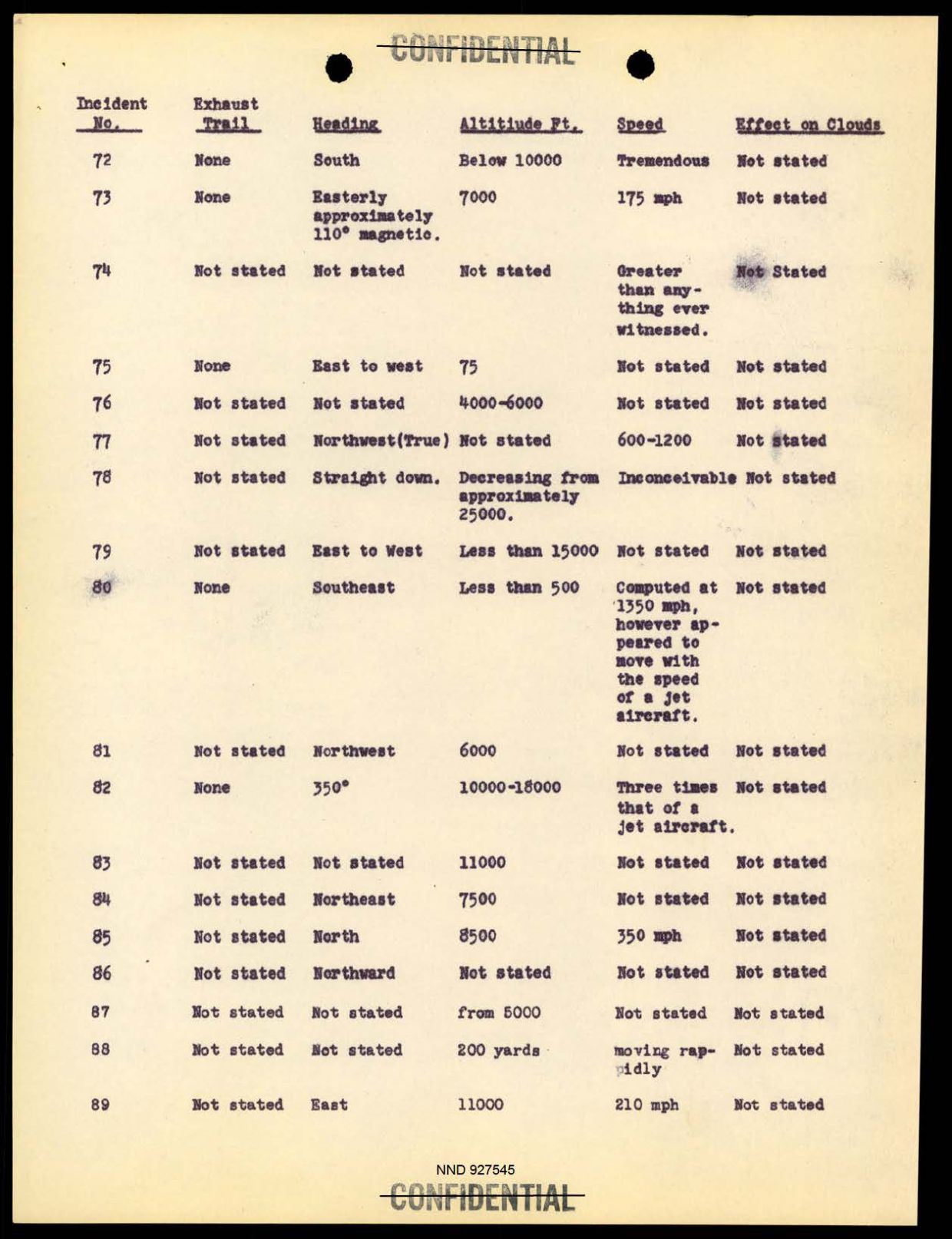
Incident lo. llxhauat ffiil - Bgd1ng ~hr r~eE·~flAl: iiUuii i i 41t1t1»4e Pt, • Sp••4 Vtftt op Qlouf• 72 Iona South Below 10000 'flteaendou Jot 1tated 1, lone Ba1terl7 approxillatel1 110• -,netio. 7000 175 IIPh Rot 1tated lot stated •ot 1tated Jlot ■ tated Oreata thd&ft7• thm, n•r Witneaaed. 75 lone Baat to wet 75 lot ,tated loi atated 76 lot stated Bot 1tated 4000-6000 lot atated Jot stated 77 lot stated Jfortihwat(Trut) •ot stated 600-1200 lot •ta'-4 78 lot stated 8va1&ht down. Deorna1Jlg tr• approi111atelJ 25000. Inaono~nblt lot stated 79 Jot atated Batt to lfe1t LIii t.ban 15000 Jot atated Kot 1tated 80 Jone southeast Lesa than 500 CCIIIPUttd at ·1:550 IIPh, hOWffJI IP• pelNd to aOTe "1th tbt speed ot • Jet 11.Jlcntt. lot atawd 81 lot stated • ortlnreat 6000 lot stated Bot stated 82 lone ,5t• 10000-18000 Tbree t1M1 lot 1tated that ot a Jet atrontt. 8:5 lot 1tated lot atated 11000 lot stated lot atated 84 lot atate4 lortbeaat 7500 lot atahd lot 1tated 85 Bot atated Borth 8500 35011Ph lot atated 86 Jfot etated IOJ1thard lot stated lot 1tated Rot atated 87 lot stated Not etated trom 6000 lot stated lot atated 88 lot stated lot 1tated 200 yards 110vhig ra, ?idly liot stated 89 llot etated Eaet 11000 210 mph JIJot stated NND 927545 CONFIDENTIAL
PAGE 28 / 45
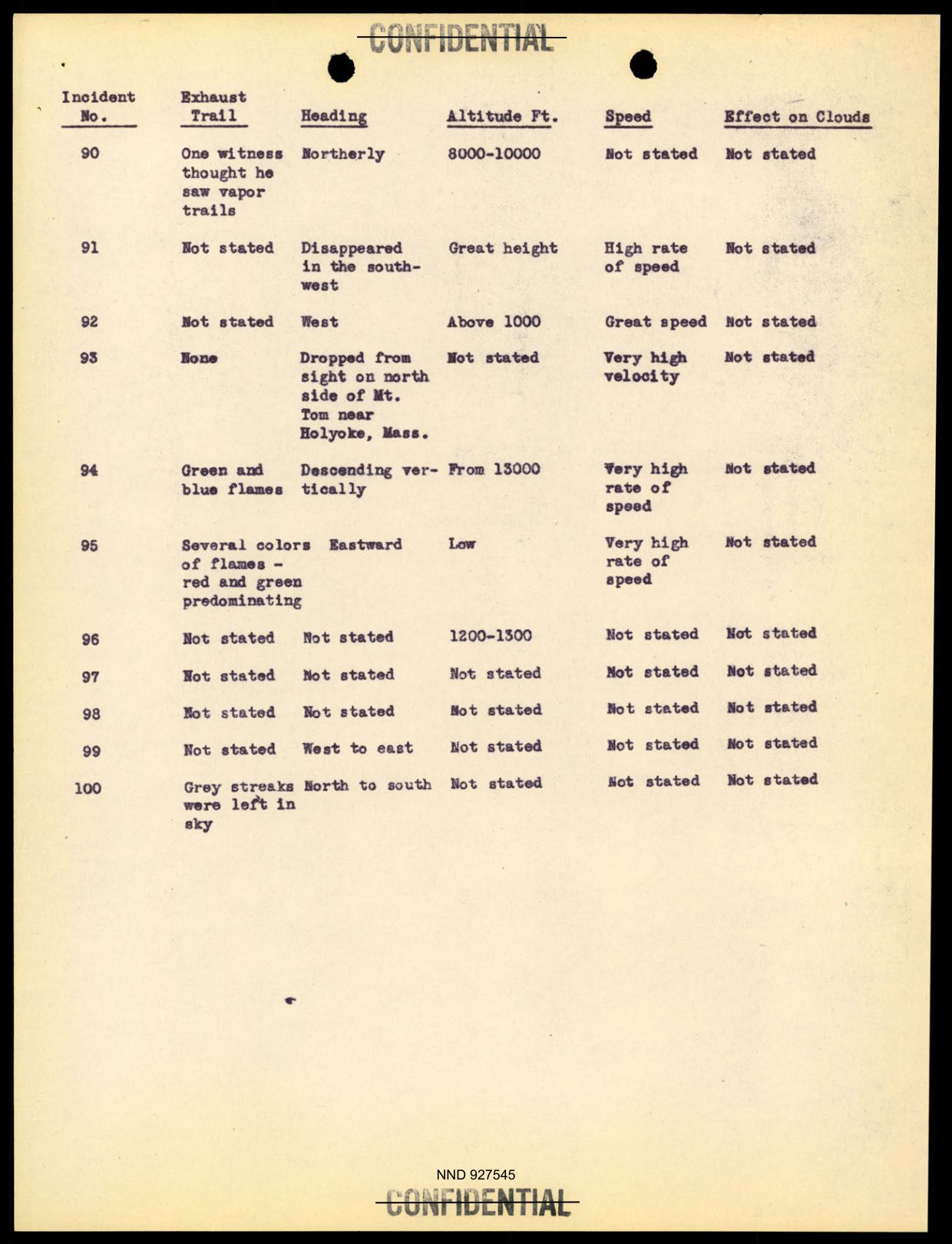
11JcnTIAl
Incident
Bxh&uat
lo.
Trail
Beading
lltitude Ft.
Speed
Ureot on Cloud•
90
One w1tneH lor'therly
8000-10000
lot atated
lot atated
thought be
eaw Tapor
traile
91
lot stated
Diaappeared
Great height
High rate
lot atated
in the aoutb-
ot apeed
weat
Jlot stated
W.at
Abon 1000
Oreat a pffd lot • tated
Dropped troa
Iot atated
Ver, high
lot atatecl
sight on north
Telooity
aide of •t.
Tom near
Holyoke. MaH.
Green and
Deaoending Ter- Prom lSOOO
'fery high
liot atated
blue tleaea tioally
rate ot
apeed
95
Se..-eral color• Saatwa.rd
Very high
Jlot atated
ot r1..... -
rate or
red and green
apeed
predominating
96
lot stated
Bot stated
1200-1500
lot atated
Hot atatecl
97
Wot stated
1'ot atated
Mot stated
!lot etated
Mot atated
98
lot stated
Jlot atated
lot at&ted
lot atated
lot stated
99
Mot atated
lreat to eaat
tilot stated
lot stated
llot atated
100
Grey streaks Borth to aouth lot atated
.llot stated
lot atated
were left in
eky
..
NND 927545
PAGE 29 / 45
lfOtE: Inc1dent f 18 It has now been d•tinit•ly determined that both tho photograph and story were t. hou:, perpetrated tor publioity e.nd aooey. Incident #8• The peraon malting t he report on thil 1nc1deat was detsrainod to be &n excitable person, ••r/ talkt.tive, and poaseaaing a.n ex aggerated.. iugination and 1nol1ned to iJlpreaa people with his continuous uhatter. NND 927545
PAGE 30 / 45
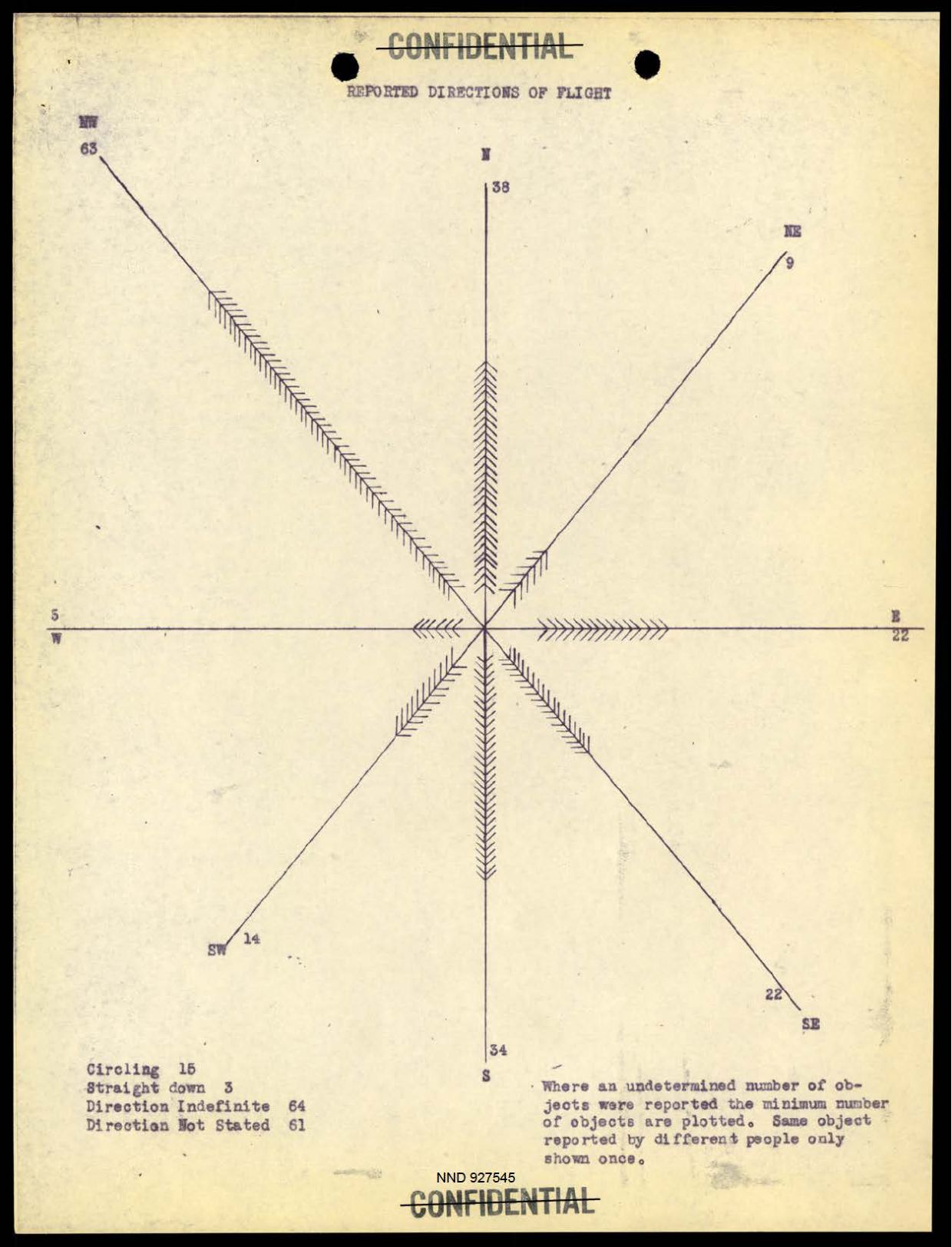
CONFIDENTIAL REPORTED DIRECTIOIS OF PLIGHT D 5 I Circling 16 Straight down 5 Direction Indefinite 64 Direction lot Stated 61 2Z 34 s • 1'he re an undetermined number ot ob jecta ware reported the minimum number of object& are plottedo Same object reported by di!'terent p,ople only shown oncto NND 927545 CONFIDENTIAL
PAGE 31 / 45
,
NND 927545
PAGE 32 / 45
(no extractable text)PAGE 33 / 45
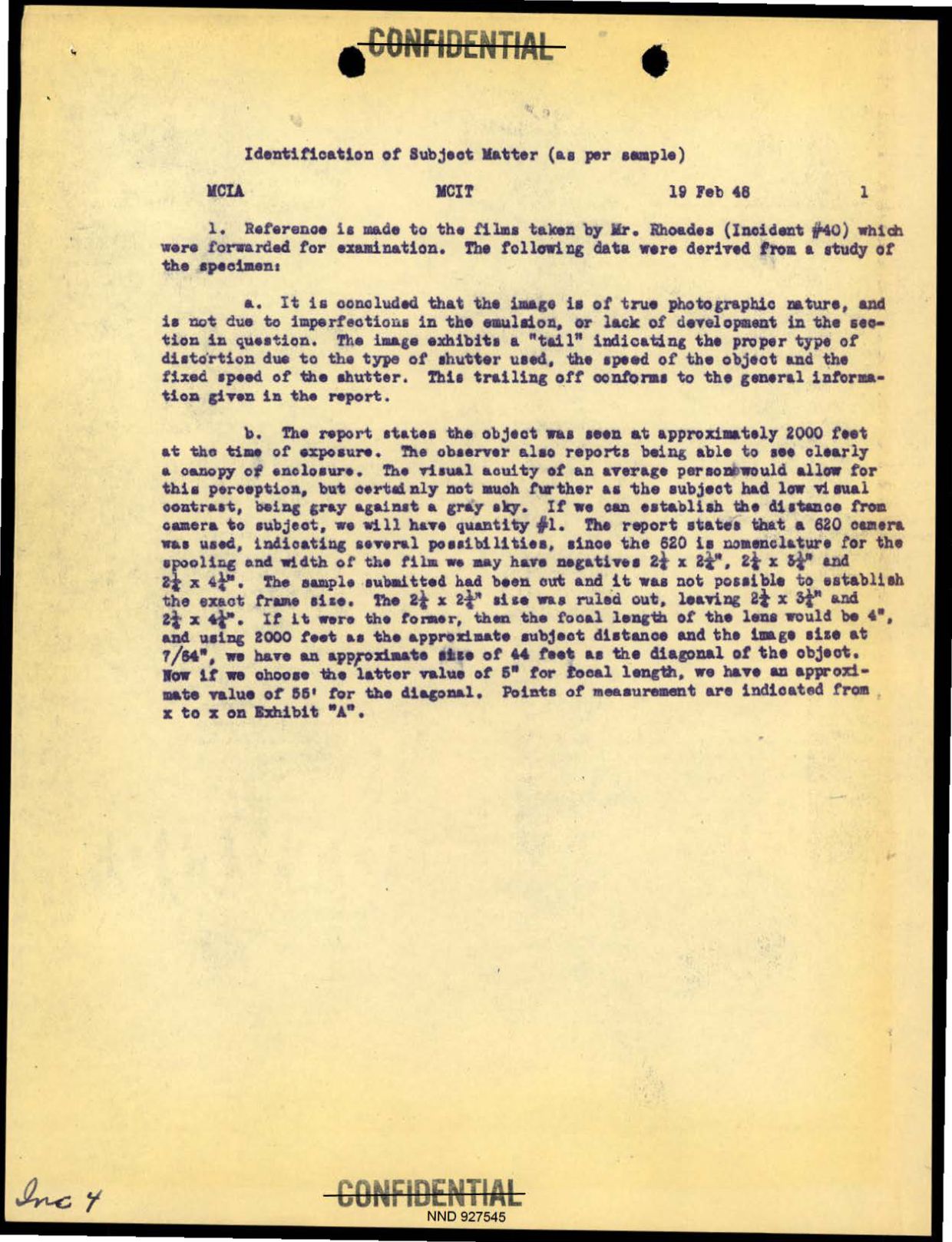
eCONFIDENTIAL • Identit1c&tlon ot Subjeot llatter (a, per ••Pl•) IIOU 11CIT 19 Feb 48 l l. Reterenoe 1a ade to th• £11&1 tann b7 llr. Rhoad•• (In.oident f,40) which ••re tonrarded tor exuination. Tb• tollcnriq data ••r• dtri·Hd. froa a atucly ot the 1peciaen1 a. It ia oonoludecl that th• me• ii of tne pbotogn.phio m.ture, and 1• not due to 1~rteotion1 in th• nul.S.011. or lack o1 deTel opaent in the ■ to tion in quHtion. Th• im.c• •xhibit1 a "tt.11" indicating th• pn,per t)'~ ot di1to·rtion due to the tne ot 1hutter u1ed, tht apt.cl of the o'bj•ot and tht fixed •peed. of the abutter. Thll trailing ott oontona, to th• g.ntral intor•• tS.oD giT~ 1n th• report. l>. Th• nport 1tatH th• objeot na •••n a.1- approxiat•ly 2000 t••t at tho ti• ot expoaure. !he obaerHl" allO report, bein& abl• to Ht oltarl1 t. oanow of •nolo1v•. !h• Tiaual aouity ot an aTerag• perao!lf'woulcl allow tor thi• peroeptioa, bu't oH•te:l Illy not auoh t'\ll'ther •• 'the 1ubjeot Md low fl nal ooutraat, being cn.y againat a C!'&T •~• It•• ou e1tabl1ah the 41,teoe troe o&aora ~o 1ubjeot, •• Will h&Te quntlty ,fl. !he report 1tate1 tha.t a 820 oaatrt. n.1 u,.ct, in4ioat1ng Hnn.l po111Mlli1••• ti.not tht 620 ia ooa111cle.tur• for the •pe>oli~ a.114 width ot the til.a •• aay h&Ye mptiT•I 2t' X 2t", 2f X ~ a.n4 2-t x 4f'. The aaapl• aubaitte4 ha.cl been out and it wa1 not po11ible to Ht&blilh the 1xaot traat dse. !be 2t x 2f' Iii• waa rul•d out, 1-anrc 2¼ x st" a.nd i¼ x ~. It 1 t ftre th• ro,...r, them. the tooal leqtii ot the 101 would be ••• an4 uelisg 2000 teet ... the approid.u.te aubj•ot diatanoe and the lagt dH at 1/M•, .. ban an app,onaat• ••se ot '4 t••• a, the cllagonal of the objeot. low 1t wa ohoo ■• the latter n.lue ot a• tor t.,eal length, •• h&Te an approxi• •te T&lue ot' &&• tor th• cliagon&l. Poln-t:1 ot meaauNaent are 1ndioated troa . x to x on lxhibit •••• CONFIDENTIAL NND 927545
PAGE 34 / 45
•
" NND 927545
PAGE 35 / 45
•
NND 927545
PAGE 36 / 45
THE AEROPLAtlE
18S
I
FEBRUARY 13, 194&
#
The Biolo!
of the Flying Saf cer- I
The Story of Low Aspect Ratio Aircraft
By A. R. Weyl, A.F.R.Ae.S.
other hand. the U.S. Air Force considered the matter seriQU\
S
EVERAL MONTHS AGO people on both side.. of the
enough to warrant inve..tigations into the incidenis which had
Atlantic rushed into print wnh claims of having ob~erved
queer saucer-shaped aircraft which new very fast. Some main
been reported.
tained, indeed. that they had seen ,quadron\ of , uch mysterious
In the meantime. the occurrence of Flying Saucer\ ha.. ceased
ob{"ccts; others described vividly how these celestial saucers v.ere
to be new\. Presumably. the~ have all landed. [A new crop
ab e 10 descend vertically. All agreed on the \aucer-hl.e , hapc.
wa<; reported in Tur AER0PLANF for January 16 la~t under the
heading •• Tuppence Coloured."-Eo.]
Sceptics considered that, for non-aeronautical people ltv1ng
far from the former playarounds of V. I. V.2, and all the rest
Aerooaudc-al Aotlquities and lniquititt
of Hitler's "civilizatory • practices. flying saucer<; might indeed
As a matter of fact. saucer-\haped aeroplane.. are not quite
constitute phenomena of threatening aspect, from their experi
Quite
ence of domestic disagreements. Doctors, however. hastened to
as new as some people have tried to mal.e out. (Fig. I.)
assure the World that saucer-shaped or lenticular objects could
a number of a1rernft have been constructed and nown with
well be nothing more than specks in the lenses of the eyes of the
wi11gs of the ring or disc type which could well have been mis
observers- the so-called m11sae 1·0/ames associated with high
ta ken for saucers. hat-brims. ~pades, doughnut~. diamonds.
blood pressure. Teetotallers blamed the sorry consequence.. of
Greek letter,. pancal.e\, nat fhh. geometrical symbols. dinner
imbibing intoxicating liquors for the observations.
On the
plates, and other entirely non-aeronautical commodities.
Moreover. it is quite true. .and not even a minor secret, that,
at present. aeronautical engineers are paying increased attention
to s uch queer wing shapes: disc wings. for instance. permit
ceriain disadvantages of conventional wing\ to be overcome. It
1s even thought that such shares have been neglected too long
1 he blame for rheir neglect can be ascribed to the doctrine
of the induced drng.
When the Lanche..ter-Pranc.ltJ aerofoil
theory became recoi,1nized nearly 30 }ears ago, and \\hen the
!>a1lplane movement proved that slender wings were a necessity
for soaring. designer, began striving after .. good .. aspect ratios.
The theory blinded their eye~ agains, the poss1bili11es of other
than convenrional wings. Thi~. hO\\Cver. was not the fault C"f
the theory.,\\ Prandtl soon sho\\ ed its restrictions.
We have now come 10 reconsider the matter of wing shape
in an objective way. as it is quite possible that aircraft design
is approaching a cul-de-sac ~o long as it retains it~ bias in
--6----~
Apttro.l
1L- I._
' _°'
, -r.:--i,
I
c 6)
- _____,_ _'°' _1 ______, ==~ (b
OCl5S• stCTIO!'I
\
,pa"
C chor4
t
\
)(•-,lod a,u
Fig. 1.-" Turbine flying machine" (project) of the Munich
engineer Gustave Koch, 189311894.
Tailless monoplane of
SquHC'
low aspect ratio. propelled by a ducted fan.
A SO h.p.
...~ ,
steim engine wu deemed sufficient for this flying motor
car. The design of the duct shows intelligent anticipation.
L
...._______.
AR • 0-1
I- b ,__j
l t t
Fig. 2 (Right).- Definitlon of the aspect ratio of an aerofoil.
The arrows signify the direction of the air flow against the
t t t
wing. The terms pteroid (feather-like) and apterold have
been introduced by F. W . Lanchester.
NND 927545PAGE 37 / 45
\
I
THE AEROPLANE
186
FEBRUARY 13, 1948
C..HlUr of the "well-tried " convention,
.. normal " wings.
For the c reasons. a study of. the hi\lory of the u'IC of low
asp,.-ct. rat,o) m wing de:.11n will be of interest.
Sp1ruually, the fathers of uch acronauucal exhibits were
Ens!"hmen. 1 hey were people of good reputation ttnd by
no _me.ins suspect o( aerodynamic perversion.
F. W. Lanchcstcr was undoubtedlf the first acrodynamici,t
to g,~e thought to aeroplane winis ot circular or squ.irc ,hapc.
lo ht) bool.. publl\hcd m 1907, he referred c'<prcssivcly 10 ~uch
"aptcrold" wmii hnpc~ {F1a. 2) i,nd advanced the view that
Nc11.ton's law wa, valid for these. 1he correctncs; of thi~
Fig. 3.-A simple experiment In annular .ierofolls.
vie\\ wa~ c~pcrimentally proved 30 ~cars later.
In a prev1ou\ article on " Stalling Characteristics of Taille-.s
Aeropl.rne~ •• ( lttE AFROl'LANI:. for August IS. 1947), tl,e early
mtcrc-.t tal..cn by F. <i:iow Sir Frederick) Handley Pa~e m the
stalling quahucs of wmgs of low aspect rauo was mentioned.
He showed, 10 a pap~r read an April. 1911. that marginal vortices
and pressurc-equalmng flow around the tips were respon~iblc
for the delay of flow separation which h.id been obmved at
high incidence).
He stated. in this connection:-•· . .. With planes of high
aspect ratio _(I.e.. with slender wings of normal span chord
rnllo), \here " not the same facility for the " feedmg m " of
f_rcsh air at the plane sides (i.e .. nt the wing tips) 10 act as a
l~nk between the plane and the live stream. and therefore the
live stream leaves the plane's b11ck at .in earlier st11i;e than in
the ca,e of the plane of lower aspect ratio...."
He then
sho11.,ed_ some experimental evidence for the delay of flow
separauon with decrease of the aspect ratio and for the greater
Fig. 4.-Prlnclple or th• Huth annular-biplane system.
maximum lift of such wing~.
. When Lanches.tcr published his bool.., man was ju~t begin
main wing. the tailless aeroplane is created.
For all these
nma to_spre~d his wmgs. and in order 10 fly with a minimum
arrangements. the condition is that, in the case of a wina com
ellpend1ture m power, wini:s of fair aspect ratio were a neccs
s11y.
Neverthele\s, there were a few early aeroplanes. notably
pmed of normal (unstable) aerofoil ~lions. the stabilizin&
aerofoil exens a certain leverage in relation to the centre of
the little :· Demo1~lle •• monoplane of Santos Dumont (1909
gravity of the aircraft.
19 !0l, which had an aspect ratio of only 2 and proved to be
quIle \Ucces,ful.
Another possibility is to combine two lifting winas so that
they will stabilize and balance each other. For this purpose, all
One o( the earlie~t attempts at a genuine •· apteroid" 11cro
plane was an experiment by a German architect, Flick-Remig
that is required is that the front wing shall possess, at all inci
dence, of.flight, a greater effective incidence than the rear wiog.
( 1910). It had a span of 7j ft .. and performed in hops only.
In other words. the centre of gravity must be nearer to the
le.iding wing than to the traili9g wing, and the whole arrange
Annular Aerodynamks
ment must be balanced accordmgly. In this way, we arrive at
A ,1mple experiment with ~ome paper and a pair of sci,sor;
the conception of a stable tandem aeroplane.
shows that the ~inl..ing speed of a circular disc loaded with a
If we now take such a tandem arrangement and sweep the
paper clip is decreased when a hole of suff1e1ent diameter is cut
leading wing back and the trailing wina correspondingly forward
out in the centre (Fig. 3). This justifies the development from
so that the tips of both wings merge into each other, we obtain
the circular d1-.c wmt; to the annular aerofoil. The theory of
an annular or ring-shaped wing system. Aerodynamically, it is
the phenomenon i~ still somewhat obscure.
of minor importance if the shape is actually circular or oval,
(Having tried thl\ experime01. we can confirm that the char
or 1f triangular or quadrangular shapes con,titute the wing. For
acteristics of an annular aerofoil are certainly very different
,implicity's ..ake, in all such cases considered here, the term
from those of the plain d1-.c aerofoil. Our own experiment,
.. annular" 1, applied.
11.cre admittedly somewhat lim1ted in scope and we were unable
As mentioned, the aerodynamics of such shapes cannot yet
!O form more than an imprc~10n of the relauve sinking ,peed,:
be considered as fully established. But it i, proved that longi
II did, howev~r. arpcar to be le,~ with the annular aerofoil. Our
tudinally stable wing systems can be obtnined with such shapes.
mam conclu\lon, w•!re that cutting a 2.25-in. diameter hole in
Some type~ relying on such wings have shown quite remarkable
a .5 37S-in. diameter disc. resulted in a much flatt.er glide; the
llying qualiue~. It is also pos,ible that, with annular wings. the
,tall 11.,1, not ,o abrupt. and the stability in the glide wa,
induced drai; i, less than with conventional wings of equiva
1mpm,cd. We were so fascinated with the e>tperiment th.it we
lent aspect ratio.
hope to repeat u ,U a later date on a more ..c:1entific levcl.- Eo.)
In common with circular wing,. annular wings have the
fhe conven11onal aeroplJne " constituted of two ba\ic aero
remarl..able property that the lift force ,teadily increases with
frnh: a "ing (,, h1ch ,uppl1e~ the lift) and ri tail (,, hich balances
incidence up to fairly high values without a stall.
For all
and ~tabilize~ the wing). We I.now that \Uch an arrangement
I.no" n arrangements the maximum lift seem, 10 occur at
o.f the 111.0 aerofoil compnnenh i, by no mean, the only pos
incidences exceeding 30 degree,.
A, ,uch high angle~ of
\tblc one.
The balancing .ind st11b1lmng aerofoil (tailplane)
incidence are not likely 10 be reached an flight unintentionally.
need not to be aft of the lifting wing a, a tail.
It can be
It 1s obv1ou, "hy annular wings have become renowned for
arranged anywhere 1n relation to the wing. e.g .. above It, belo11.
their good-natured flying charac1eri,1il:,.
it. or in front of it.
Another property of annular wings (first establi,hed by
If the balancing aerofoil i, in front of the main win~. the aero
Tilghman Richard,) i, that the centre of pre,sure of ,uch wing
plane i~ of the tail-first type. and if it i, attached to the
,y,tcm, i, nearly stationary in flight, or that a travel of the
centre of pre,wre can be obtained which i, po,itively stable
unul incidences of the order of 18 degree are reached.
In
fact. no case of longitudmal in,tabihty ha, ever been reponcd
w11h an annular wing. although the centre of gravity has often
been located d:ingerou,ly far back.
The fi~t annular-wing aeroplane dates bacl.. 10 1908.
It
h,1d little succe\\.
Two type, 11.ere con~tructed m ,ucces\ion
tu the de,1gns of a capable German aeronautical engineer, Fritz
Huth. who "as by profe\\1on a teacher at a technical ,;chool
( f-tg,. 4 and 61.
The ,econd type. which had a less elaborate
a1r,crcw drive. flew in May. 1910: it wa,. however. ,o devoid
of performance. in spite of a SO b.h.p. engine. that it was soon
,1f1erv.ards d1..carded as a hopeless proposition.
Britain'~ Fir..1 Doughnut
The Bri11,h concepuon of the idea has been for more
,ucccs,ful.
A, it i, cun,1i1u1ed, until now. the best tried
reprc,cntativc. it~ hi,1ory may be given somewhat more
c,1cn,1vcly.
Ihe ori~mal idea for an annular-wing aeroplane came from
(,. A Kitchen. m about 1910; he con,tructed a b1pl.1ne with
Fig. S. Kitchen's doughnut of 1911 .
rini:-,haped wmg,, but made no progrcs, "ith it. The stable
NND 927545PAGE 38 / 45
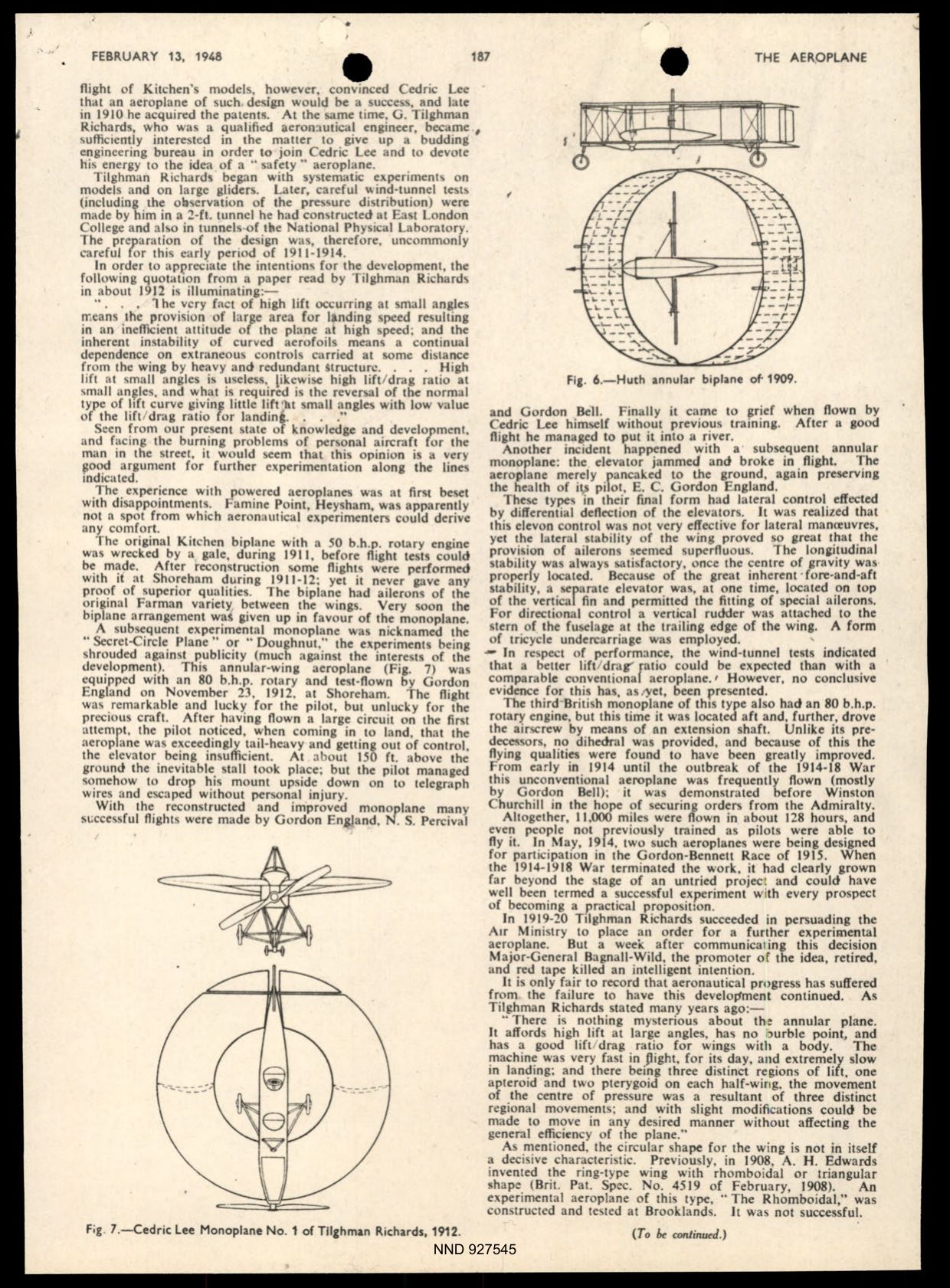
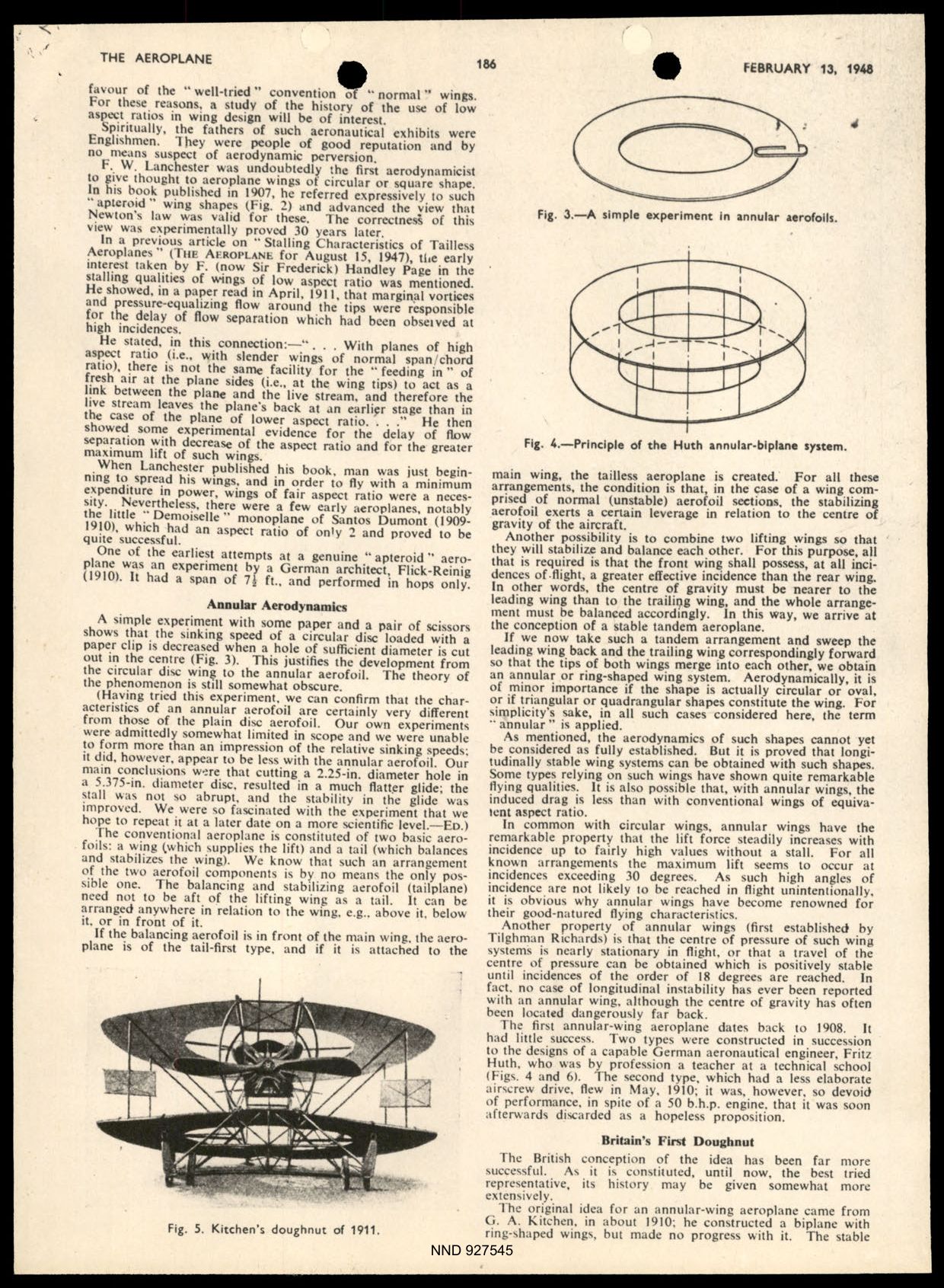
FEBRUARY 13, 1948 187 THE AEROPLANE flight of Kitchen's models. however. convinced Cedric Lee that an aeroplane of such de~ign would be- a succes,. 11nd late in 1910 he acquired the patents. At the same time, G. Tilghman Richards, who was a qualifii:d aeron:iutical engineer, became , ~uffic1ently interested in the mailer to give up a budding engineering bureau in order to join Cedric Lee and 10 devote ·JUI· tl?,!i m hib energy 10 tbe idea of a ·• safety " aeroplane. Tilghman Richards began with systematic experiment, on __.._ models and on large gJiders. Later, careful wind-tunnel test~ (including the observation of the pressure distribution) were made by him in a :!-ft. tunnel he had constructed at East London College and al~o in tunnels-of tile National Physical Laboratory. The preparation of the design was, therefore, uncommonly ~-ardul for this early period of 1911 -1914. In order to ap(>reciate the intention~ for the development, the following quota11on from a paper read by Tilghman Richards in about 1912 is illuminating: ... . . 1 he very fnct of high lift occurring at small angles rreans the provision of large area for l•nding speed resulting in an inefficient altitude of the plane at high speed: and the inherent instability of curved aerofoils means a continual dependence on extraneou, controls carried at some distance f_rom the wing by heavy and redundant Structure. . . . High lift at small angles il> u~eles~. likewise high lift/ drag ratio at ,mall an,les, and what is required is the reversal of the normal type of hft curve i:iving little lift •lit small angles with low value of the lift/ drag ratio for landini. . . ." Seen from our pre.sent state of knowledge and development, and facing the burning problems of personal aircraft for the man in the street. it would seem that this opinion is a very i;o~ argument for further experimentation along the lines indicated. _The. experience with _powered aeroplanes was at first beset with disappointment~. Famine P_oint, Heysham, was apparently not a spot from which aeronauucal experimenters could derive any comfort. The original Kitchen biplane with a 50 b.h.p. rotary engine was wrecked by a gale, during I 9 I I. before flight tests could b~ m~de. After recort~truction some flight~ were performed wtth 11 at Sho!eham <!~ring 1911-12: yet it never gave any pr~~f of superior q~ah11es. The biplane had ailerons of the or1gmal Farman variety between the wings. Very soon the biplane arrangement w!1s given up in favour of the monoplane. A subs~quent experimental monoplane was nicknamed the " Sccret-C1rct1: Plane ".~r "Doughnut,'' the experiments being shrouded agamst pubhclly (much against the interests of the dev~lopmen!), This annular-wing aeroplane (Fig. 7) was equipped with an 80 b.h.p. rotary and test-flown by Gordon England on November 23, 1912. at Shoreham. The flight was _remarkable and luck>; for the pilot, but. unlucky for the precious craft. After havmg flown a large circuit on the first attempt. the pilot noticed, when coming in to land that the aeroplane was exceedingly tail-heavy and getting out ~f control the elevator. bei!Jg insufficient. At about 150 ft. above th~ ground the inevttable stall took place: but the pilot managed ~~mehow to drop his mount upside down on to telegraph wire~ and escaped without personal injury. Wtth the reconstructed and improved monoplane many s\iccessful flights were made by Gordon England, N. S. Percival -:'x: - -' Fig. 6.-Huth annular biplane of 1909. and Gordon Bell. Finally it came to i;ricf when flown by Cedric Lee himself without previous training. After a good fliaht he managed to put it into a river. Another incident happened with a subsequent annular monoplane: the elevator jammed anct broke in flight. The aeroplane merely pancaked to the ground, again preserving the health of i~ pilot, E. C. Gordon England. These types in their final form had lateral control effected by differential deflection of the elevators. It was realized that this elevon control was not very effective for lateral manceuvres. yet the lateral stability of the wing proved so great that the provision of ailerons seemed superfluous. The loneitudinal stability was always satisfactory, once the centre of gravity was properly located. Because of the great inherent ·fore-and-aft stability, a separate elevator was, at one time, located on top of the vertical fin and permitted the fitting of special ailerons. For directional control a vertical rudder was attached to the stern of the fuselage at the trailing edge of the wing. A form of tricycle undercarriage was employed. - In respect of performance, the wind-tunnel tests indicated that a better lift/ drag' ratio could be expected than with a comparable conventionaf aeroplane., However, no conclusive evidence for this has, as,yet, been presented. The third British monoplane of this type also had an 80 b.h.p. rotary engine. but this time it was located aft and. further, drove the airscrew by means of an extension shaft. Unlike its pre d~cssors, ~~ dihedral was provided. and because of this the flying qualities were found to have been greatly improved. From early in 1914 until the outbreak of the 1914-18 War this unconventional aeroplane was frequently flown (mostly by Gordon Bell): it was demonstrated before Winston Churchill in the hope of securing orders from the Admiralty. Altogether, 11,000 miles were flown in about 128 hours, and eve~ people not previously trained as pilots were able to fly 11. In May, 1914. two such aeroplanes were being designed for parlicipation in the Gordon-Bennett Race of 1915. When the 1914-1918 War terminated the work. it had clearly grown far beyond the stage of an untried project and could have well been termed a successful experiment with every prospect of becoming a practical proposition. In l?l~-10 Tilghman Richards succeeded in persuading the Air Mm1stry 10 place an order for a further experiRlental aeroplane. But a week after communica1ing this decision Major-General Bagnall-Wild, the promoter of the idea, retired, and red tape killed an intelligent intention. It is only fair to record that aeronautical progress has suffered fr~m the failure to have this develop'ment continued. As Tilghman Richards stated many years ago: .. There i~ no!hing myMerious about th~ annular plane. It affords high ltft at large angles, ha~ no >urble point and has ~ good lift/ drag . rati_o for wings with a body. ' The !Tiachm~ was very fast in p,ght. for its day, and extremely slow m lan~mg: and there bei!)g three dislinct regions of lift, one aptero1d and two pterygo1d on each half-wing. the movement of the centre of pressure was a resultant of three distinct regional movements; ,tnd with slight modifications could be made 10 move in any desired manner without affecting the general efficiency of 1he plane." As _mentioned. th«: c!rcular shape for the wing is not in itself ~ dec1s1ve cha".\c1enst1c. ?reviously. in 1908, A. H. Edwards invented the ring-type wing with rhomboidal or triangular shape_ (Brit. Pat. Spec. No. 4519 of February, 1908). An experimental aeroplane of this type, "The Rhomboidal,'' was constructed and tested at Brooklands. It wa~ not successful. (To ~ conlit1u~d.) Fig 7.-Cedric Lee Monoplane No. 1 of TIighman Richards, 1912. NND 927545
PAGE 39 / 45
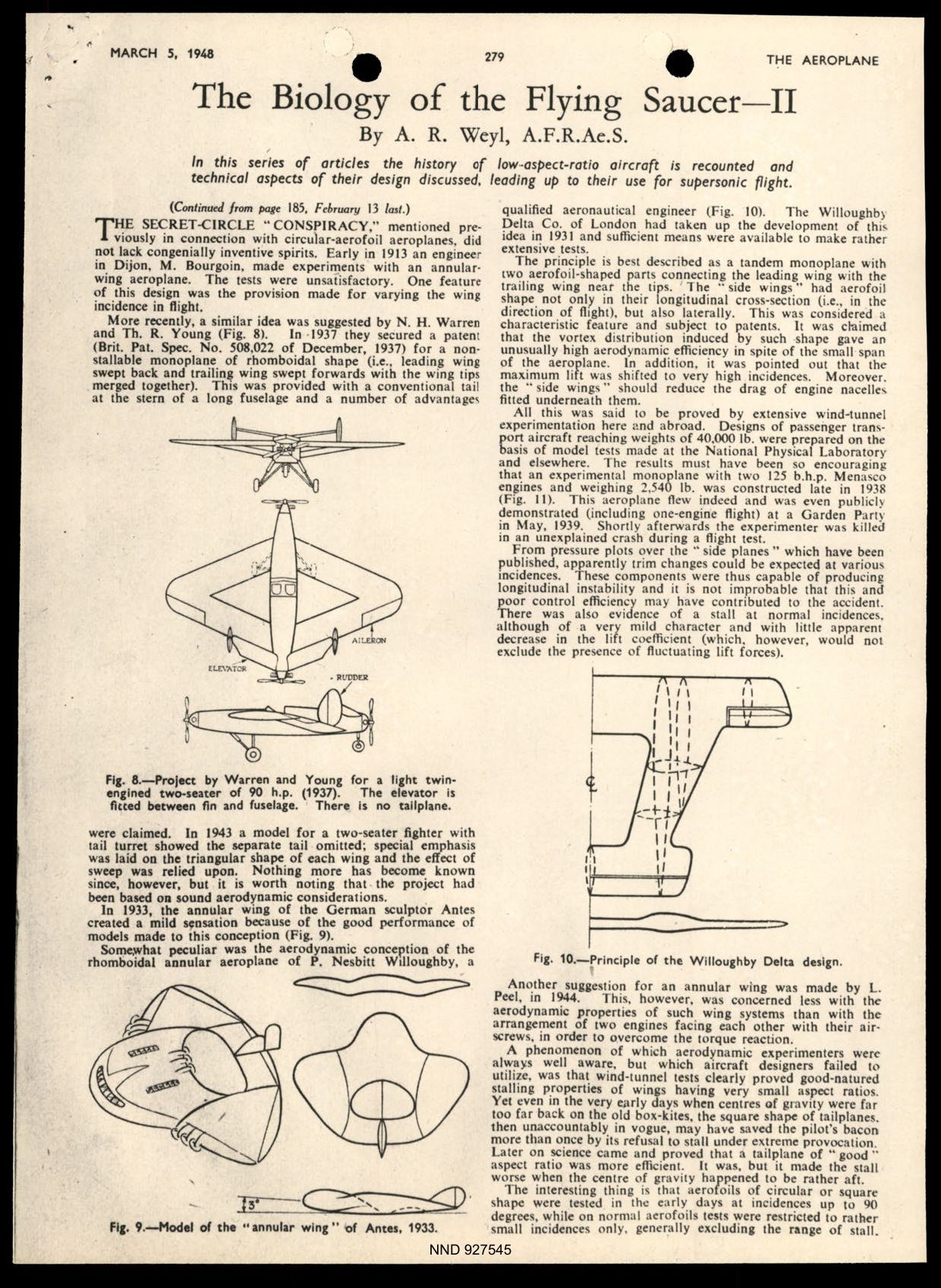
.. ,. MARCH S, 1948 279 - THE AEROPLANE - .. The Biology of the Flying Saucer- II By A. R. Weyl, A.F.R.Ae.S. In this series of articles the history of low-aspect-ratio aircraft is recounted and technical aspects of their design discussed. leading up to their use for supersonic flight. T (Continued from J>Olt 185, February 13 /rut.) HE SECRET-CIRCLE "CONSPIRACY;• mentioned pre viously in connection with circu)ar-aerofoil aeroplanes. did not lack congenially inventive spirits. Early in 1913 an engineer in Dijon. M. Bourgoin. made experiments with an annular wing aeroplane. The tests were unsatisfactory. One feature of this design was the provision made for varying the wing incidence in flight. More recently, a similar idea was suggested by N. H. Warren and Th. R. Young (Fig. 8). In 1937 they secured a patent (Brit. Pat. Spec. No. 508,022 of December, 1937) for a non stallable monoplane of rhomboidal shape (i.e., leading wing swept back and trailing wing swept forwards with the wing lips merged together). This was provided with a conventional tail at 1he stern of a long fuselage and a number of advantage~ Fis. 8.-Project by W arren and Young for a liJht twln en1lned two-seater of 90 h.p. (1937). The elevator is fitted between fin and fuselage. There Is no tailplane. were claimed. lo 1943 a model for a two-seater fighter with tail turret show~ the separate tail omitt~d; special emphasis was laid oo the triangular shape of each wing and the effect of sweep was relied upon. Nothing more bas become_ known since however but it is worth noting that the proJect had been'based oa ;ound aerodynamic considerations. lo 1933 the annular wing of the German sculptor Antes created a mild s~nsation bc<:ause ?f the good performance oC models made to this coocepuon (Fig. 9). Some.what peculiar was the aerodynamic ~onceP.tion of the rhomboidal annular aeroplane of P. Nesbitt W11loughby, a = Fis, 9.--Model of the "annular wing " ~f Antes. 1933. qualified aeronautical engineer (Fig. 10). The Willoughb} Delta Co. of London had taken up the development of th,., idea in 1931 and sufficient means were available to make rather extensive tests. The principle is best described as a tandem monoplane with two aerofoil-shaped parts connecting the leading wing with the trailing wing near the tips. The "side wings" had aerofoil shape not only in their longitudinal cross-section (i.e., in the direction of flight). but also laterally. This was considered a characteristic feature and subject to patents. It was claimed that the vortex distribu1ion induced by such shape gave an unusually high aerodynamic efficiency in spite of the small span of the aeroplane. In addition. it was pointed out that the maximum lift was shifted to very high incidences. Moreover. the "side wings" should reduce the drag of engine nacelle, filled underneath them. All this was said to be proved by extensive wind-tunnel experimentation here and abroad. Designs of passenger trans pon aircraft reaching weights of 40,000 lb. were prepared on the basis of model tests made at the National Physical Laboratory and elsewhere. The results must have been so encouraging that an experimental monoplane with two 125 b.h.p. Menasco engines and weighing 2,540 lb. was constructed late in 1938 (Fig. 11). This aeroplane flew indeed and was even publicl~ demonstraled (including one-engine flight) a1 a Garden Party in May, 1939. Shortly afterwards the experimenter was killed in an uneitplained crash during a flight test. From pressure plots over the "side planes" which have been published, apparently trim changes could be eitpected at various aocidences. These components were thus capable of producing longitudinal inslability and it is not improbable that this and poor control efficiency may have contributed to the accident. There was also evidence of a stall at normal incidences. although of a very mild character and with little apparent decrease in the lift c~fficient (which. however, would not exclude the presence of fl uctuating lift forces). 1 1 Fig. 10.-frinciple or the W illoughby Delta design. Another suggestion for an annular wing was made by L. Peel, in 1944. This. however. was concerned less with the aerodynamic properties of such wing systems than with the arrangement of two engines facing each other with their air screws. in order to overcome the torque reacuon. A phenomenon of which aerodynamic experimenters were alwa)ls well aware. but which aircraft designers failed 10 u1ilizc, was that wind-tunnel tests clearly proved good-natured stalling p_roperties of wings having very small aspect ratios. Yet even m the very e_arly days when centres of gravity were far too far back on the old box-kites, the square shape of tailplanes. then unaccountably in vogue, may have saved the pilot's bacon more than once by its refusal to stall under eittreme provocation. Later on science came and proved that a tailplane of "good" aspect ratio was more eflkient. It was, but it made the stall worse when the centre of gravity happened to be rather aft. The interesting thing is that aerofoils of circular or square shape were tested in the early days at incidences up to 90 degrees, while on normal aerofoils tests were restricted to rather small incidences only. generally ucluding the range of stall. NND 927545
PAGE 40 / 45
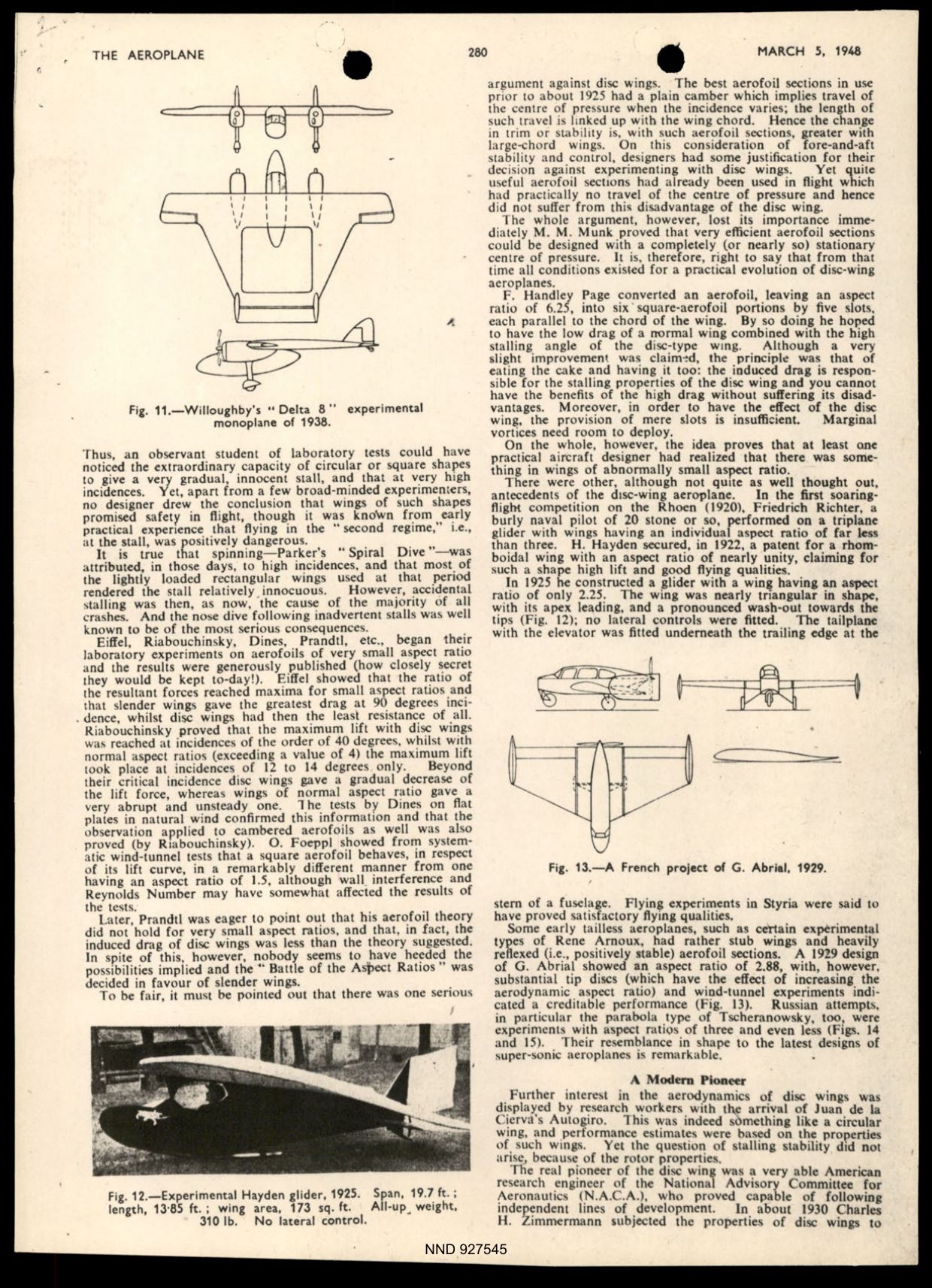
e MARCH S, 1948 THE AEROPLANE 280 c > \ I \ I I I I I I I \,' I I \,' Fig. 11.-Willoughby's "Delta 8" experimental monoplane of 1938. Thus, an observant student of laboratory tests could have noticed the extraordinary capacity of circular or square shapes 10 give a very gradual, innocent stall, an~ that at v!!rY high incidences. Yet, apart from a few broad-minded experimenters, no designer drew the conclusion that wmgs of such shapes promised safety in flight, t~oug_h it w~s known f~om ..~rly practical experience that fly1Dg 10 the second regime, 1.e., at the stall, was positively dangerous. It is true that spinning- Parker's "Spiral Dive "-was attributed. in those days, to high i~cideoces, and that most_of the lightly loaded rectangular wmgs used at that period rendered the stall relatively. innocuous. Howeve_r, :iccidental ~tailing was then, as now. the cause of the maJonty of all crashes. And the nose dive following inadvertent stalls was well known to be of the most serious consequences. . Eiffel, Riabouchinsky, D ines, . Prandtl, etc., began the_1r laboratory experiments on aerofoils of very small aspect rauo and the results were generously published (how closely secret they would be kept to-day!). Eiffel showed that the ratio of the resultant forces reached maxima for small aspect ratios_an~ that slender wings gave the greatest drag at ~ degrees 10c1 . <lence, whilst disc wings had then t_he leas) res\stanc_e of _all. Riabouchinsky proved that the maximum 11ft with d15:C Wl1'!8S wa~ reached at incidences of the order of 40 degrees. whilst with normal aspect ratios (exceeding a value of 4) the maximum lift took place at incidences of 12 to 14 degrees only. Beyond their critical incidence disc wings gave a gradual decrease of the lift force whereas wings of normal aspect ratio gave a very abrupt ; nd unsteady one. 1 he tests by Dines on flat plates in natural wind confirmed this info_rmauon and that the observation applied 10 cambered aerofoils as well was also proved (by Riabouchiosky). 0. Foeppl s_howed frof!l system atic wind-tunnel tests that a square aerofoil behaves, ID respect of its lift curve in a remarkably different manner from one having an aspec't ratio of 1.5, although wall interference and Reynolds Number may have somewhat affected the results of the tests. . Later, Prandtl was eager to point o~t that his aer~fo1l theory did not hold for very small aspect ratios, and that, ID fact, the induced drag of disc wings was less than the theory suggested. In sP.ite of this, however, nobody seems to have he~ded the possibilities implied and the " ~attle of the Aspect Ratios" was decided in favour of slender wings. . To be fair, it must be pointed out that there was one senou~ I Fig. 12.-Experimental Hayden glider, 1925. Span, 19.7 rt. : length, 13·85 rt.; wing area, 173 sq. rt. All-up_ weight, 310 lb. No lateral control. argument against disc wings. The best aerofoil sections in use prior 10 about 1925 had a plain camber which implies travel of the centre of pressure when the incidence varies; the length of such travel is linked up with the wing chord. Hence the change in trim or stabiluy is. with such aerofoil sections, greater with large-chord wings. On this consideration of fore-and-aft stability and control, designers bad some justification for thcir decision against experimenting with disc wings. Yet quite useful aerofoil secuons had already been used in flight which had practically no travel of the centre of pressure and hence did not suffer from thi~ disadvantage of the disc wing. The whole argument, however, lost its importance imme diately M. M. Munk proved that very efficient aerofoil sections could be designed with a completely (or nearly so) stationary centre of pressure. It is. therefore, right to say that from that time all conditions existed for a practical evolution of disc-wing aeroplanes. F. Handley Page converted an aerofoil, leaving an aspect ratio of 6.25, into six square-aerofoil portions by five slots. each parallel to the chord of the wing. By so doing he hoped to have the low drag of a oormal wing combined with the high stalling angle of the disc-type wmg. Although a very slight improvement was claim~d, the principle was that of eating the cake and having it too: the induced drag is respon sible for the stalling properties of the disc wing and you cannot have the benefits of the high drag without suffering its disad vantages. Moreover, in order to have the effect of the disc wing, the provision of mere slots is insufficient. Marginal vortices need room to deploy. On the whole, however, the idea proves that at least one practical aircraft designer had realized that there was some thing in wings of abnormally small aspect ratio. There were other. although not quue as well thought out, antecedents of the disc-wing aeroplane. In the tint soaring flight competition on the Rhocn ( 1920), Friedrich Richter, a burly naval pilot of 20 stone or so, performed on a triplane glider with wings having an individual aspect ratio of far kss than three. H. Hayden secured, in 1922, a patent for a rhom boidal wing with an aspect ratio of nearly unity, claiming for such a shape high lift and good flying qualities. In 192S he constructed a glider with a win, having an aspect ratio of only 2.25. The wing was nearly tnangular in shape, with its apex leading, and a pronounced wash-out towards the tips (Fig. 12); no lateral controls were fitted. The tailplane with the elevator was fitted underneath the trailing edge at the c ==---=- Fig. 13.-A French project of G. Abrial, 1929. stern of a f11selage. Flyinf experiments in Styria were said 10 have proved satisfactory flying qualities. Some early tailless aeroplanes, such as certain experimental types of Rene Arnoux, had rather stub wings and heavily reflexed (i.e., positively stable) aerofoil sections. A 19?9 design of G. Ab rial showed an aspect ratio of 2.88, with, however, substantial tip discs (which have the effect of increasing the aerodynamic aspect ratio) and wind-tunnel experiments indi cated a creditable performance (Fig. 13). Russian attempts, in particular the parabola type of Tscheranowsky, too, were experiments with aspect ratios of three and even less (Figs. 14 and IS). Their resemblance in shape to the latest designs of super-sonic aeroplanes is remarkable. . A Modttn Pioneer Further intcre~t in the aerodynamics of disc wings was displayed by research workers with th.e arrival of Juan de la Cicrv:i's Autogiro. This was indeed s<>mcthing like a circular wing, and performance estimates were based on the properties of such wings. Yet the question of stalling stability did not arise, bccau~e of the rotor properties. The real pioneer of the disc wing was a very able American research engineer of the National Advisory Committee for Aeronautics (N.A.C.A.), who proved capable of following independent lines of development. In about 1930 Charles H. Zimmermann subjected the properties of disc wings to NND 927545
PAGE 41 / 45
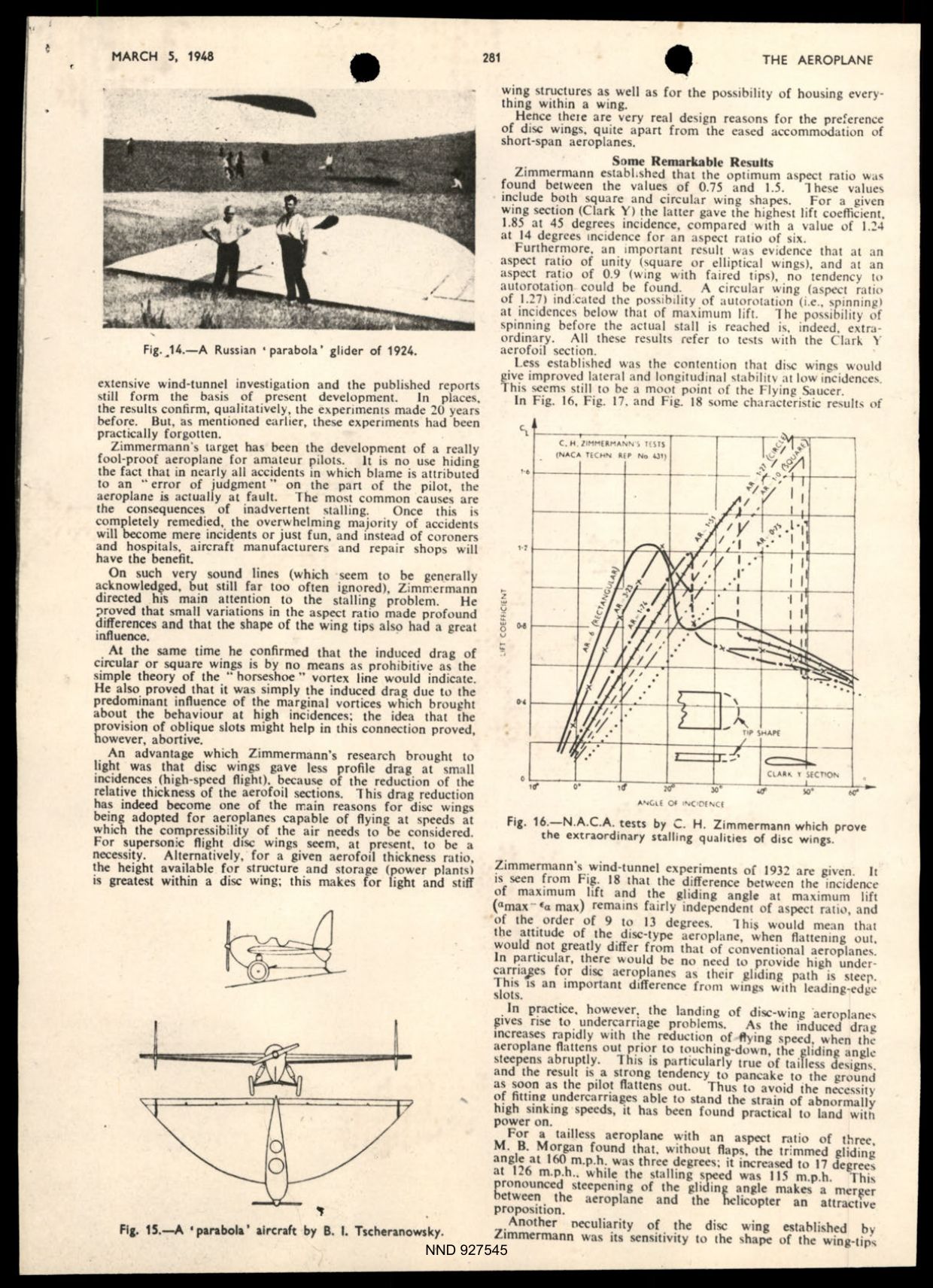
MARCH S, 1948
281
THE AEROPLANf
e
wing , tructures as well as for the pos\lbility of housing every·
thing w11hm a wing.
Hence 1hc1e are very real design reasons for the preference
of disc wings, quite a pan from the ea~cd accommoda11on of
short-span aeroplanes.
Some Rernurkable Results
Zimmermann establ.shed that the optimum a~pcct rauo "'"~
found bet,..een the values of 0.75 and 1.5.
l he,c value,
include both ,quare and ctrcubr wmg ,hapes.
For a g1Hn
wing sccuon (Clark Y) the latter gave the h1gh~t hft coefficient.
1.85 at 45 degrees incidence, compared "uh a value of t.:!4
at 14 degree, mc1dencc for an aspect ratio of six.
Funhcrmore. an important result "'•'\ evidence that at ~,n
a,pect ra110 of unity hquare or elhpllcal .... ,ng,), and :11 an
a,pect rauo of 0.9 (" mg "11h faired ups), no tendcnc)' 111
autorotauon could be found.
A circular " mg (:1,ix-ct raw,
...
/---
of 1.27) ind c.llcd the po\\1hili1y of ~1urnrntation (1.e., ,rinningl
at incidence\ below that of maximum lif1.
1 he 1nm1biht)' of
,pinning before the actual ,tall is reached is. indeed, e,tra·
ordinary.
All these rcwh, r.:fer to te,t• "ith the ( lar~ ,
Fig. _14.-A Russian • puabola' glider of 1924.
aerofoil section.
Less establi,hed "as the contenuon th:11 d1..c wing would
11ive improved la11:ral and longuudmal ,1.1h1htv at low incidence,
extensive wind-tunnel investigation and the publbhed reports
1 hi, ..ecm, ,11II 10 be a moot point of the Flyin!l Saucer.
\till form the ba,is of prc~ent development.
In places.
In Fig. 16, Fig. 17. and Fig. 18 some charactcri,tic result, ,,f
the re,ults confirm, qual1tat1vel)', the experiments made '.!O year~
before. But, as mentioned earlier, these experiments had been
praet1C111ly forgotten.
Zimmermann's target has been the development of a really
7
fool-proof aeroplane for amateur pilots.
It is no u<,c hiding
the fact that in n.:arly all accidents in which blame is attributed
to an .. error of /'udgment" on the part of the p1lo1, th.:
aeroplane is :ietual y at fault.
The moq common causes arc
the consequences of inadvertent ~tailing.
Once this
1~
completely remedied, the overwhelming majority of accident
will become mere incidents or just fun, and instead of coroners
and hospitals. aircr.1ft manufacturer) and repair shop) will
I!
have the benefit
I I
On such very sound lines (which seem to be generally
acknowled$ed, but still far too often ignored), Zimrrcrmann
I I
directed his main attention to the stalling problem.
He
:;.,
;>roved that small variations in the aspect ratio made profound
't
differences and that the shape of the wing tips also had a great
0-,
influence.
...
~.
~
At the same time he confirmed that the induced drag of
circular or square wings is by no means as proh1b111ve as the
simple theory of the " horseshoe " vortex line would indicate.
He also proved that it was simply the induced drag due to the
predominant influence of the marginal vortices which brou~ht
••
about the behaviour at high incidence~: the idea that the
provision of oblique slots might help in this connection proved,
however, abortive.
An advantaae which Z1mmermann's research brought to
liaht was that disc wings gave less profile drag at small
CIA°', IIC,,O,.
incidences (high-speed flight). because of the reduction of the
-1....____..._
.,,.
JO'
-:
relative thickness of the aerofoil sections. 1 his drag reduction
has indeed become one of the rr.ain reasons for di.c wings
being adopted for aeroplanes capable of flying at ~reeds at
which the compressibility of the air needs to be considered.
Fl&, 16.-N.A.C.A. tests by C. H. Zimmermann which prove
the extraordinuy sull1ng qual1t1es of disc wines,
Fo r supersonic flight disc wings seem, at P.rcscnt, to be a
necessity.
Alternatively, for a given aerofoil thickness ratio,
!he height avail_able f<?r st,:ucture _and stora1te (J?Ower plant_sl
Zimmem1ann·~ _wind-tunnel experiments of 1932 are given.
It
1s greatest within a disc wmg; this ma.,es for light and sutr
1~ seen from F,,. 18 that the difference between the mc1deoce
of ma,umum hft and the gliding angle at m:i1t1mum hft
("ma'< •a ma'<) rem:im'I fairly independent of aspect ratt,,, and
of the o rder of 9 to 13 degree,.
1 h1~ would me:in th.11
the attitude of the . disc-type aeroplane, when flattening out,
would not greatly differ from that of convcnuonal aeroplane,
In particular, there "'ould be no need 10 provide h1g_h under·
cama;ies for disc aeroplane, a .. their gliding path 1s steer
Thi, 1s an important difference from "''"IJS w11h lead1ng-cd~~
,lots.
. In P!'3Ctice, however: the landing of disc-wing aeroplane,
~•vcs rise to undercarriage problem,.
As the induced dra~
mcrcascs rapidly "ith the reduction of !tying ~recd, when the
aeroplane flattens out prior to touchina·do" n, the ihdtnti angle
.iecpens abruptly.
This 1s particularly true of ta1llc..s de"gn,.
and the result •~. a strong tendency to pancake 10 the ground
a, so~n as the p1lo_t fl:\ltcn, out.
Thu~ to avoid the nccc\,il)
of litt1!)2 _undercamal\cs able to sta nd the strain of abnormally
high sink mg ~pecds, 1t has been found practical to land "Jtll
power on.
For a ta11le~s aeroplane " ith an aspect ratio of three,
M. B. Morgan found that. without flaps, the trimmed l\liding
angle at 160 m.p.h. was three degree,: it increased to 17 degree,
at 126 m.p.h .. while the \tailing speed was I IS m.p.h.
Thi,
pronounced , teepcning of the g)idintt anttle makes a mer~er
hct""ce~. the aeroplane and
the helicopter an attrac11ve
,
propos111on.
.Another occulia_rity of . !he di~ wing cstahlished
b~
Fie, 15.-A ' puabola ' aircraft by B. I. Tschennowsky
NND 927545
.
Zimmermann wns us scns111v11y to the , hape of the wing•ur,,
PAGE 42 / 45
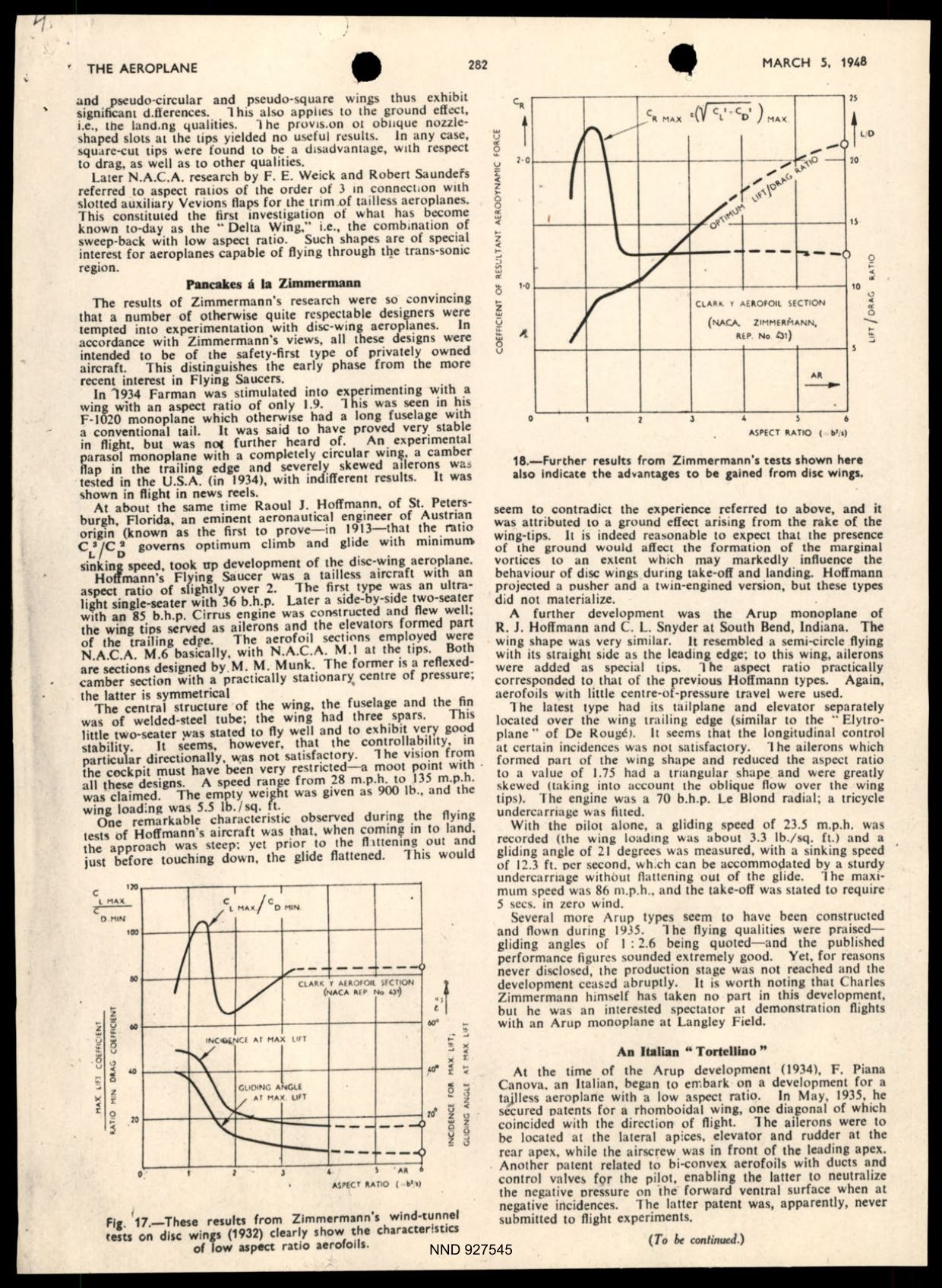
-- 10 282 ' THE AEROPLANE and _pseudo-circular and pseudo-square wings thus exhibit ~ignificam d.fferences... 1 his also applies to the ground eff.:ct, 1.e., tbe tand.ng <juahues. 1 he prov1s.on 01 ob11que nozzle shaped slots at the lips yielded no useful r.:sults. In any case, squo1re-cut tips Vvere found to be a disadvantage, w11h respect to drag, as well as to other qualities. Later N.A.C.A. research by F. E. Weick and Robert Saundefs referred to aspect ratios of the order of 3 1n conncct,on w11h slotted auxiliary Vevions flaps for the trim of tailless aeroplanes. This constituted the first investigation of what has b.x:ome known to-day as the .. Delta Wing.'' i.e., the combination of sweep-back with low aspect ratio. Such shapes are of special interest for aeroplanes capable of flying through the trans-sonic region. • Pancakes Ii la Zimmermann The results of Zimmermann's research were so ~onvincing that a number of otherwise quite respectable designers were tempted into experimentation with disc-wing aeroplanes. In accordance with Zimmermann's views, all these designs were intended to be of the safety-first type of privately owned aircraft. This distinguishes the early phase from the more recent interest in Flying Saucers. In '1934 Farman was stimulated into experimenting with a wing with an aspect ratio of only 1.9. 1 his was seen in his F-1020 monoplane which otherwise had a long fuselage with a conventional tail. It was said to have proved very stable in flight. but was noc further heard of. An experimental parasol monoplane with a completely circular win$, a camber flap in the trailing edge and severely skewed ailerons Wl?.$ tested in the U.S.A. (in 1934), with indifferent results. It was shown in flight in news reels. At about the same time Raoul J. Hoffmann. of St. Peters· burgh, Florida, an eminent aeronautical engineer of Austrian origin (known as the first to prove-in 1913-that the r:itio C '/C 9 governs optimum climb and glide with minimum L D sinking speed, took up development of the disc-wing aeroplane. Hoffmann's Flying Saucer was a tailless aircraft with an aspect ratio of slightly over 2. The fi rst type was an ultra· li$ht single-seater with 36 b.h.p. Later a side-by-side two-seater with an 85 b.h.p. Cirrus engine was constructed and flew well; the wing tips served as ailerons and the elevators formed part of the trailing edre. The aerofoil sectir,ns employed were N.A.C.A. M.6 basically. with N.A.C.A. M.1 at the tips. Both are sections designed by.M. M. Munk. The former is a reflexed camber section with a practically stationarY, centre of pressure; the latter is symmetrical The central structure of the wing, the fuselage and the fin was of welded-steel tube; the wing had three spars. This little two-seater }"as stated to fly well and to exhibit ve_ry go(!d stability. It seems, however. that the controllab1hty, m particular directionally, was not satisf~ctory. 1 he visi(?n fr(?m the cockpit must have been very restncted--a moot point wllh • all these designs. A speed range from 28 m.p.h. to 13S m.p.h. was claimed. The empty weight was given as 900 lb •• and the wing loading was 5.5 lb. / sq. ft. One remarkable characteristic observed during the flying tests of Hotrmann's aircraft was that, when comin(! in to land. the approach was steep: yet prior to the fl lltening out and just before touching down, the glide flattened. 1 his would l MAJ( C jc Cl MA.( 0 MIN r 0 MIN ,001----.U---4---1---4----4-----+---~ CI..Akl( T AUl,OfOtL SfCTl()N C,.ACA • IP No u,) z ;•f .., .,,. ~ 60 ~ J ::,., l5 r " • "< .. " fl" It . !i "' z J ~ •> • It ~ " It ti 0 11f 2 10 z c!, " ~ 6 t i; AA o· • ASP(Cf U flO ( •' 1J Fig. 117.-These resulu from Zlmmermann's wind-tunnel tests on disc; wings (1932) clearly show the character!stits of low aspect ratio aerofoils. • MARCH 5, 1948 c:,_ i g: 0 10 "< Cl ARK I AEAO FOtl SECTION "' 0 (i-v-CA ZIMME~MANN, .. ~l P No ()1) :; o'----~---L---JL_.__..L.__...L._......:~, ASPECT AATIO ., ., 18.-Furthcr results from Zimmermann's tesu shown here also indicate the advantages to be gained from disc wings. seem to. contradict the experience referred to above and it w~s aunbuted. to. a ground effect arising from the rak~ of the wing-tips. It 1s indeed rea:.onable to e)(pcct that the presence of t_he ground would affect the formation of the marginal vort1c~s to an ex\ent which may markedly influence the beh~v1our of disc wings during take-off and landing. Hoffmann proJected a ousher and a twin-engined version but these types did not materialize. • A further development was the Arup monoplane of R: J. Hoffmann and C._L: Snyder at South Bend, Indiana. The w!ng _shape ~as v~ry s1m1lar. I~ resembled a semi-circle flying w11h 11s straight side a_s the_leading edge; to this wing, ailerons were added as special ups. 1 he aspect ratio practically corres~onded to. that of the previous Hoffmann types. Again, aerofoils wtth little centre-of-pressure travel were used. 1 he latest type ~ad it~ _tailplane and elevator separately locate~ over the wing tr:11lmg edge (similar to the .. Elytro· plane of De Rouge!). It seems that the longitudinal control at certain incidences was not satisfactory. 1 he ailerons which formed part of the wing shape and reduced the aspecl ratio to a value ~f I: 15 had a triangular shape and were greatly s_kewed (taking_ into account the obliqui: flow over the wing tips). The engine was a 70 b.h.p. Le Blond radial; a tricycle undercarriage was fitted. With the oilot alone, a gliding speed of 23.S m.p.h. was r~o_rded (lhe wing loading was about 3.3 lb./sq. ft.) and a gliding angle of 21 degrees was mea~ured, with a sinking speed of 12.3 ft. ocr si:cond. wh.ch ~an be accommopated by a sturdy undercarriage without nattening out of the glide. 1 he maxi· mum speed was 86 m.p.h .. and the take-off was stated to require S secs. in zero wind. Several more Arup types seem to have been constructed an_d _flown during 1935. 1 h~ flying qualities were pr.iised ghding angle~ or I : 2.6 bemg quoted- and the published performance figures sounded extremely good. Yet, for reasons never disclosed, the production stage was not reached and the development ceased abruplly. It is worth noting that Charles Zimmermann himself has taken no part in this development, b1;11 he was an interested spectator at demonstration flights wnh an Arup monoplane at Langley Field. An Italian "Tortelllno " At the time .of the Arup development (1934). F. Piana Canova. an Italian, began to embark on a development for a tajlless aeroplane with a low aspect ratio. In May, 1935, he secured patents for a rhomboidal wing, one diagonal of which coincided with the direction of flight. 1 he ailerons were to be located at the lateral apices. elevator and rudder at the rear apex. while the airscrew was in front of the leading apex. Another patent related to bi-convex aerofoils with ducts and control valve~ for the pilot, enabling the latter to neutralize the negative oressure on the forward ventral surface when at negative incidences. The latter patent was, apparently, never submitted to flight experiments. NND 927545 (To ~ confin~d.)
PAGE 43 / 45
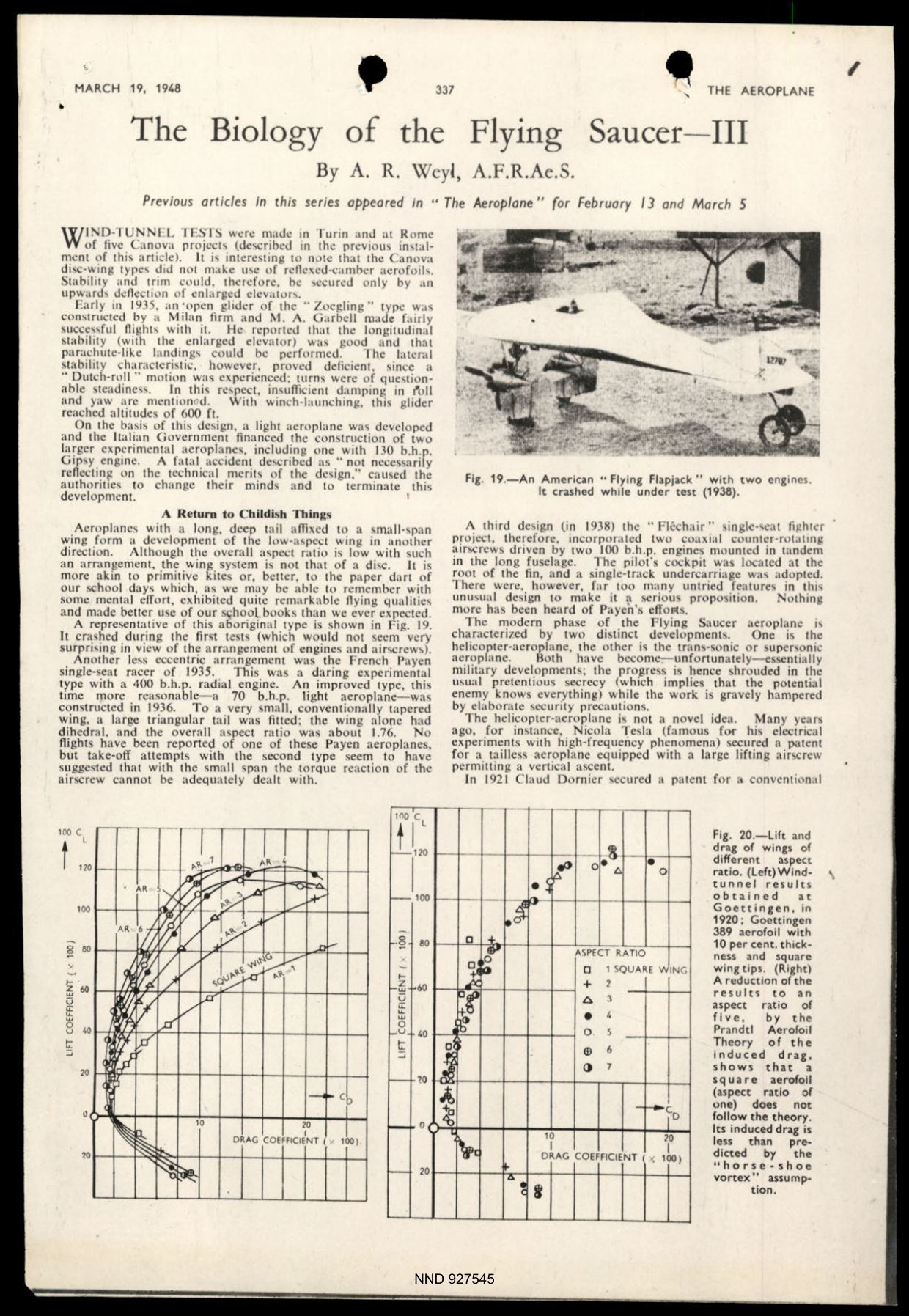
,
MARCH 19, 1948
337
THE AEROPLANE
The Biology of the Flying Saucer- III
By A. R. Wcyl, A.F.R.Ac.S.
Previous articles In this series appeared In " The Aeroplane" for February 13 and Morch 5
W
I 0 -·1UN l· L I F-••n S w.:rc made in I unn and at Rnme
of five C:anovo1 project\ {de-.cnbcd m the prcvtom tn\1,11
"'!Cnl of 1h1, ar1de). It " in1erc,11ng 10 note that 1he Canov.1
d1-.c-wmg lype, did not mal.e u,e of rellc'<ed~ambcr aerofoil,.
S1abili1y ,ind mm could. 1hercforc. be -..:cured only by an
upward, dcllec1iu11 of enlarged eleva1or,.
F.arly in 1935. :in ·open ghdl!r of 1he " Zoegling" t} pc wo1~
con,1ructed by a ,~ilan firm and M. A. Garbell made fairly
~ucce,,ful l11ghh w11h 11.
He reported that the longitudinal
stability (w11h the enlarged eleva1or) wa~ good and 1hat
par.i.chute-lil.e landing, could be performed.
rhc lateral
stability ch.i.racteri\lic. however, proved deficient. ~ince a
•• Dutch-roll " motion was experienced: turn, were of quc,tion·
able steadine,,.
In this rc,pcct, in~uffidcnt damping 1n foll
and yaw a_re mentionr.d.
Wi1h winch-launching, thi~ glider
reached altitude~ of 600 fl.
On 1he ba"' of thi, dc,ign, a ligh1 aeroplane wa\ developed
and the Italian Government financed the conMruction of two
l~~gcr e,-perimental aeroplane~. includmg one with 130 b.h.p.
Gip,y engine.
A faial accident de~ribcd as "not necessarily
retlccti~f? on 1he 1echnical _merit5 of the design," cau,cd the
Fig. 19.-An American "Flying Flapjack" with two engines.
authorities to change 1hc1r minds and 10 terminate this
It crashed while under test (1938).
development.
1
A Return to Childish Things
Aeroplane, with a long, deep tail affi'<Cd to a smalhpan
A third de,ign tin 1938) 1hc "Flcchair" \tngle-,cat fil!hlcr
wing form a development of lhe low•tl'pect wing in another
rroiect. therefore. incorporalcd two co.1xial coun1cr•rot.11mg
direclion.
Although the overall a~pect ratio is low wi1h such
~tf'>Crcws driven by two 100 b.h.p. engines mounted in 1andem
an arr.rngemcnt. the wing system i, not tha1 of a di-.c.
It is
m the long fuselage.
1 he pilot's cockpit was located at the
more akin to primitive kites or. belier, to the paper dart of
root of lhe fin, and a single·lrack undercarriage w.is adopted.
our school day~ which. a, we may be able to remember wi1h
1 here were. however, far too m.iny untried feature
in th"
some mental effort, exhibited quite remarkable nying quali1ie,
unusual design 10 make ii a ~rious proposi1ion.
Nothing
more has been heard of Payen's cffoA~.
and made better use <>four schoolbooh than we ever expt-ctcd.
A rcpresent:11ive of 1his aboriginal 1ype is shown in Fig. 19.
l he ll)Odern ph:ll!e of . 1he Flying Saucer aeroplane i,
It crashed during the first tests (which would not seem very
charactcn1ed by two d1,ttncl development~.
One is the
surprising in view of the; arrangement of engine, and air;crew,).
hclicop1er-aeroplane, 1he other is the tranb•\onic or buper,on1c
Ano1her Je,s eccentric arrangement was the French Payen
aeroplane.
Hoth have bccome:-unforiunately--cs<;entially
single-seat racer of 1935.
This was a daring experimental
military dcvcl_opment~; the proJ_!re~~ is ~cnce bhroudcd in the
type with a 400 b.h.p. radial engine. An improved type, this
u~ua I pretcnuou~ \ecrccy Iwhich implies that the potential
time more
reasonable--a 70 b.h.p. light aeroplane- was
enemy knows everything) v. hile the work is gravely hampered
constructed in 1936.
To a very small. conventionally tapered
by elabora1c securi1y precautions.
wing, a large triangular tail was fitted: the wing alone had
The helicopter-aeroplane is not a novel idea.
Many }Cars
dihedral. and the overall aspect ra1io was about 1.76.
No
ago, for in,iance, Nicola Te~la (famous for his elccirical
flights have bc.:n reported of one of these Payen aeroplanes.
experiment~ wi1h high-frequency phenomena) bccured a pa1en1
but take-off attempts with the ~econd type seem to have
for a taille,~ aeroplane equipped with a large lifting air~rcw
sugges1cd that with 1he small span the 1orque reaction of the
pcrmi11ing a vertical ascent.
air,;crcw cannot be adequa1ely dealt with.
In 1921 Claud Dornier ~ecured a pa1ent for a eonvcnlmnal
-
- ·-~
1/lO C
1110 C
L
Fig. 20.-Llft and
.__._
GI
drag of wings of
lL:
different
aspect
f 120
c• t
• 0
ratio. (Left) Wind-
\
~
. :
tunnel results
I
'--- 100
,_
obtained
at
Goettingen , in
~j
1920; Goettingen
-
389 aerofoil with
n
...
~~ 80
10 per cent. thick
~ eo t--t--;illt":!'-~ -+7"lr--+--+..-t---c¥~--+~
19"
ASPECT RATIO
ness and square
~
.»
0
1 SQUARE v, ING
wing tips. (Right)
"
...
2
A reduction of the
1
0
...a:; ~60
+
r esults to an
A
3
~
~(
aspect
ratio of
...
h
'
w 0
(t
fi ve.
by t he
•
1·
._u ,o
0
5
Prandtl
Aerofoil
Theory
of t he
6
:::; t
4l
Induced d rag ,
()
7
s ho ws t hat a
~ w
squar e
aerofoil
(aspect ratio of
.t
one)
does
not
oQ-"11~t---t--t--:,~o- r-+ ---l- +-~ 20-+--+--I
I D
follow the theory.
- i--c
I
-
I- 0 i€
I
Its induced drag is
ORAG C0EfFICIENT
100)
10
20
less
than
pre
I
~
I
I
dicted
by
the
DRAG COEFFICIENT < 100)
"h orse-s h o e
'--
20
vortex " assump
0. : I
tion.
NND 927545PAGE 44 / 45
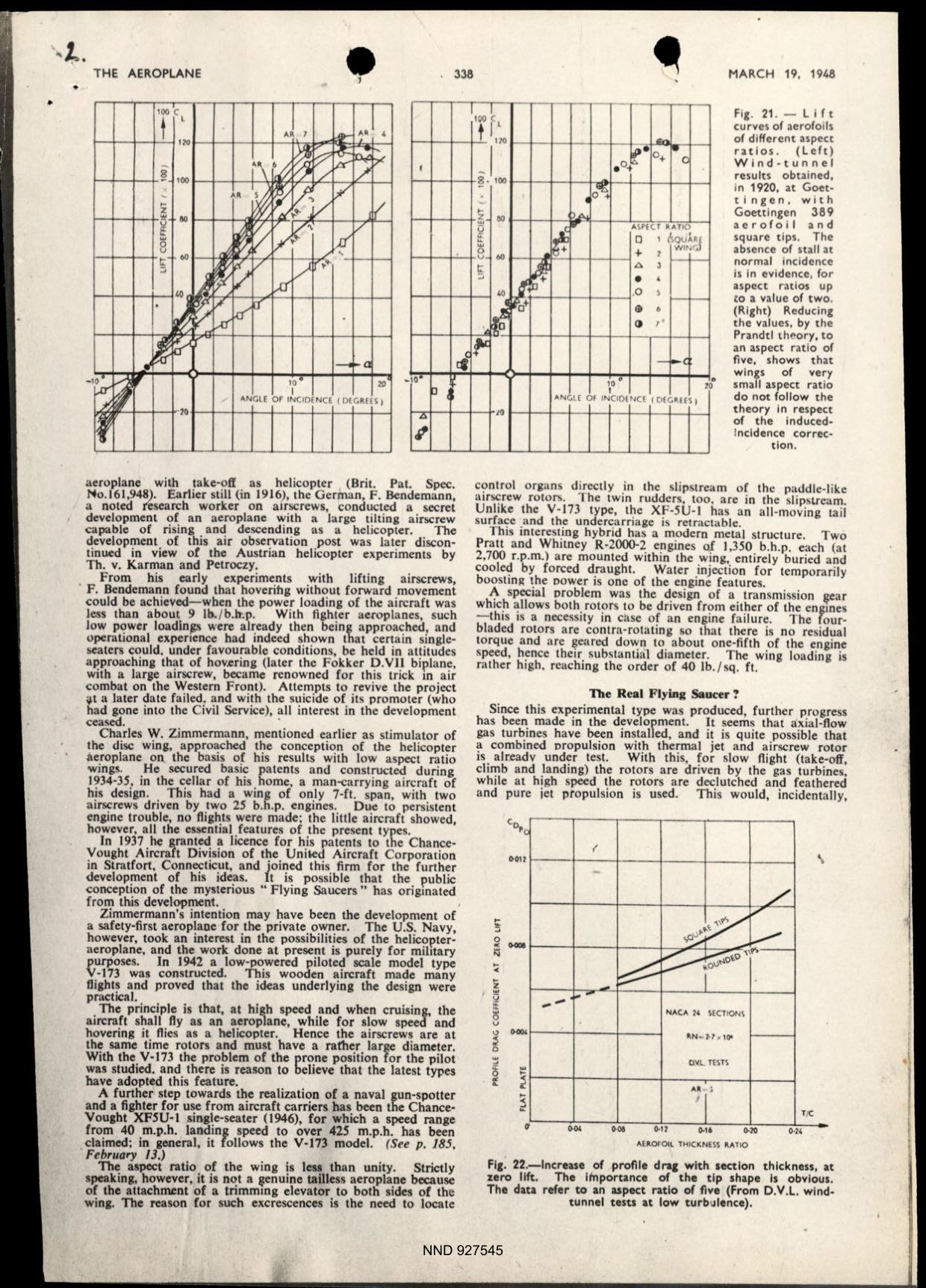
THE AEROPLANE
. 338
MARCH 19, 1948
•
t
L
l
100 C
AR 1
LA> ...l'
1IO
~
--;? ~:a-: L-/
L,CI" ,_,...
f
i\ ~ ~ /
~ 100
I
- ,
AR~
...:z
~Vv
V
~
~
80
~ ~ ~" Lu
V
V
,.I.
00
,, '
t:
't..
::;
/
J v v l,o'
'°
1,,1" fif (r
l.,o'
~ v
.#J~
cf
1-► (l
10 °
10
o·
I
.,.
0 '
•NGt[ or INCll)[NC( ( O!GRCES i
10
...
~
aeroplane with take·off as helicopter {Brit.
Pat. Spec.
No.161,948). Earlier still (in 1916), the German, F. Bendemann,
a noted fesearcb worker on a1rscrews, conducted a secret
development of an aeroplane with a large tilting airscrew
capable of rising and descending as a helicopter.
The
development of this air observation post was later discon•
tinued in view ot the Austrian helicopter experiments by
Th. v. Karman and Petroczy.
From
his
early
experiments
with
lifting
airscrews,
F. Bendemann found that hoverihg without forward movement
could be achieved- when the power loading of the aircraft was
less than about 9 11,../ b.b-.p.
With fighter aeroplanes, such
low power loadings were already then being approached and
1
operational experience bad indeed shown that certain single·
sealers could. under favourable conditions, be held in attitudes
approaching that of hov.ering (later the Fokker D.Vll biplane,
with a large airscrew, became renowned for this trick 10 air
combat on the Western Front). Attempts to revive the project
~ta later date failed. and with the suicide of its promoter (who
had gone into the Civil Service), all interest lo the development
ceased.
•
Charles W. Zimmermann, mentioned earlier as stimulator of
the disc wing, approached the conception of the helicopter
Aeroplane on the basis of his results with low aspect ratio
wings.
He secured basic patents and constructed during
1934·35, in the cellar of his home, a man-carrying aircraft of
bis design.
This had a wing of only 7-ft. span, with two
airscrews driven by two 25 b.h.p. engines.
Due to persistent
engine trouble, no flights were made; the Little aircraft showed,
however. all the C$SCOtial features of the present types.
In 1937 he granted a licence for his patents to the Chance•
Vought Aircraft Division of the Unik:d Aircraft Corporation
in Strntfort, Connecticut, and /'oined this firm for the further
development of his ideas.
t is possible that the public
conception of the mysterious "Flying Saucers" has origmated
from this develo,,ment.
Zimmermann's intention may have been the development of
a safety-first aeroplaoe for the private owner.
The U.S. Navy,
however, took an interest in the possibilities of the helicopter•
aeroplane, and the work done at present is purely for military
purposes.
In 1942 a low-powered piloted scale model type
V-173 was constructed.
This wooden aircraft made many
flights and proved that the ideas underlying the design were
practical.
The principle is that, at high speed and when cruising, the
aircraft shall fty as an aeroplane, while for slow speed and
hovering it flies as a helicopter.
Hence the airscrews are at
the same time rotors and must have a rarher large diameter.
With the V-173 the problem of the prone position for the pilot
was studied. and there is reason to believe that the latest types
have adopted this feature.
A further step towards the realization of a naval gun-spotter
and a fia),ter for use from aircraft carriers bas been the Chance·
Vouaht XF5U·l single-seater (1946), for which a speed range
from 40 m.p.h. landing speed to over 425 m.p.h. has been
claimed; in general, it follows the V-173 model. (See p. 185,
February 13.)
The aspect ratio of the wing is lesa than unity.
Strictly
speaking, however, it is not a genuine tailless aeroplane because
of the attachment of a trimmmg elevator to both sides ot the
wina. The reason for such excrescences is the need to locate
I
I
Fig. 21. -
LI ft
100 Cl
curves of aerofoils
t 1,10
--
of different aspect
ratios.
(Left)
~· O+
Wind -tunnel
-l
. o,."'
..
C
results obtained,
~- 100
in 1920, at Goet•
o"'f3.
I
tlngcn, w ith
I A .
Goettlngen
389
eo
~
ASPIC.T RATIO
aero fo i l and
~
a
1 Aou,hf
square t ips. The
0
?
WING
absence of stall at
t
V
00
+
,__ ,__
.0.
J
normal Incidence
::;
Is In evidence, for
b
• •
aspect ratios up
.o
I
,__
to a value of two.
I
t:
'° t
I+
..
ro
~
(Right) Reducing
() ,·
the values. by the
Prandtl theory.to
,,.
an aspect ratio of
five, shows t hat
wings
of
very
10 •
10
small aspect ratio
- - <
I
AN(;l[ Of tNCIO(N(( t OIGRH\ I
do not follow the
IO
theory in respect
of the induced
Incidence correc•
tlon.
control organs directly in the slipstream of tht: paddle-like
airscrew rotor... The twin rudders, too. are in the slipslfeam.
Unlike the V-173 type, the XF-SU· l has an all-moving tail
surface and the undercarriage is retractable.
This interesting hybrid has a modern metal structure.
Two
Pratt and Whilney R-2000-2 engines Qf 1,350 b.h.p. each (at
2,700 r.p.m.) are mounted within the wing, entirely buried and
cooled by forced draught.
Water injection for temporarily
boosting the oower is one of the engine features.
A special oroblem was the design of a transmission ~ear
which allows both rotors to be driven from either of the eogmes
- this is a necessity in case of an engine failure.
The four·
bladed rotors are contra-rotating so that there is no residual
torque and are ,eared down to about one-fifth of the engine
speed, hence their substanlial diameter.
The wing loading is
rather high. reaching the order of 40 lb./sq. ft.
The Real Flying Saucer ?
Since this experimental type was produced, further progress
has been made in the development.
IL seems that axial-flow
gas turbines have been installed, and it is quite possible that
a combined oropulsion with thermal jet and airscrew rotor
is alt:eadv under test.
Wilh this, for slow flight (take-off,
climb and landing) the rotors are driven by the gas turbines,
while at high speed the rotors are declutched and feathered
and pure jet propulsion is used.
This would, incidentally,
(
~01! 1---1---1------.1---1----1----1
;
0
~ -
,.
<
i
Q
:::
...
NACA 14 SEC11C)N:~
iS
V
..,
0-00,
._N•'1·1 , 10'
~
0
0.~L T!HI
i ,. ~
...
I
~
T{C
~ -
~01
0-ll
0-16
~IO
0 •1'
AU,0r0tL TMICKNESS A.ATIO
Fie. 22.-lncrease of profile drq with section thickness, at
:zero 11ft.
The lfnporunce of the tip shape Is obvious.
The data refer to an aspect ratio of flve (From D.V.L. wind-
tunnel tesu at low turbulence).
NND 927545PAGE 45 / 45
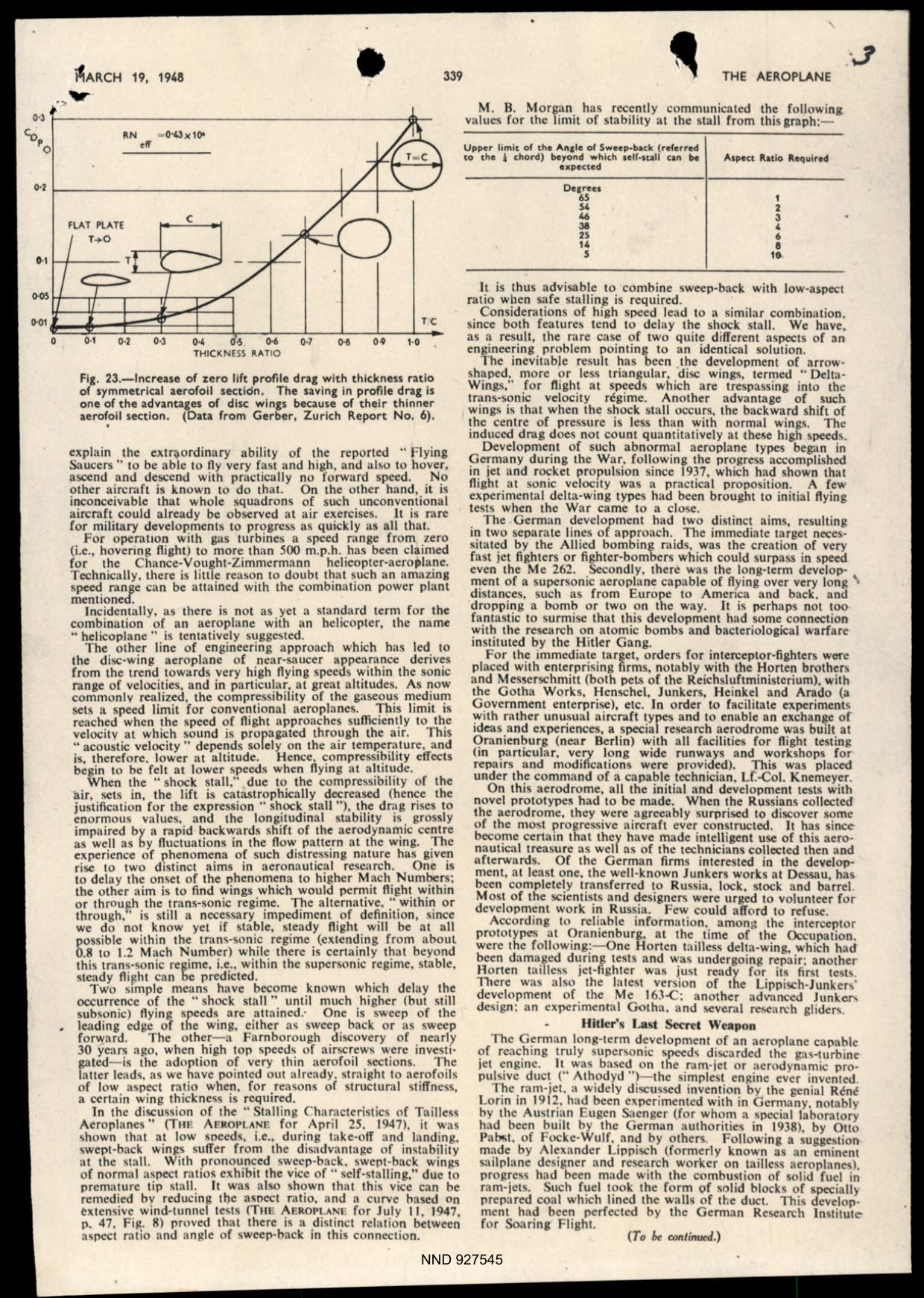
~ ARCH 19, 1948
339
THE AEROPLANE
.,...
M. B. Morgan has recently communicated the following
0·3 r----------------------i~
values for the limit of stability at the stall from this araph:
<=o,
0
Upper llmic of th• Ansl• of Swetp,back (r•lerred
to th• l chord) beyond which Hll••tall can be
A,poc, Ratio 11.•qulr•d
expected
Ocareu
6S
1
S4
2
46
3
38
'
2S
6
14
••
8
s
It is thus advisable to combine sweep-back with low-aspect
ratio w!1en s~fc stallin_g is required.
. Consaderataon, of high speed lead to a ,imilar combination.
since both feature~ tend to delay the shock stall.
We have.
04
as ~ res!lll, the rare ca~ i;,f two quite different aspects of an
o-a
1·0
enginee~ing_ problem pointing to an identical solution.
1 he incv11able result has been the development of arrow
sh<;1ped:. more ?r less triangular, . disc wings, termed " Oelta
Fig. 23.-lncrease of xero lift profile drag with thickness ratio
Wangs, _for lhgh~ at sp~eds which are trespassing into the
of symmetrical aerofoil sectldn. The saving In profile drag Is
tr~ns•s?nlC
velocity rtg1me. Another advantage of such
one of the advantages of disc wings because of their thinner
wings as that when the shock stall occurs. the backward shift of
aero~oll section. (Data from Gerber, Zurich Report No. 6).
!he centre of pressure is less than with normal wings. The
induced drag doe, not count quantitatively at tbeg high speeds
explain the extr~ordinary ability of the reported •• Flying
Development of such abnormal aeroplane types began i~
9e:many during the War_. following the progress accomplished
Saucers·• to be able to fly very fast and high, and also to hover,
•~ 1et and r~ket propulsion since 1937, which had shown that
ascend _and de_sceod with practically no forward speed.
No
flight . at sonic vcla<:IIY wa, a r,ractical proposition.
A few
~ther a!rcraft 1s known to do that.
On the other hand, it is
ll!(ODCeavable that whole squadrons of such unconventional
experimental delta-wing types had been brought to initial flying
te~t, when the War came to a close.
atreraft could already be observed at air exercises.
It is rare
. The German ~evclopmcnt had two distinct aims, resulting
for military developments to progress as quickly as all that.
11_1 two separate hn_es of approach. The immediate target neces
. For operatao~ with gas turbines a speed range from zero
satat~d by the Allied bombing raids. was the creation of very
(1.c., hovcrin~ flight) to more than .500 m.p.h. has been claimed
fast Jct fighters or fighter-bombers which could surpass in speed
for
t~e Chance:V~ught-Zimmcrmann
helicopter-aeroplane.
even the Mc 262. _Secondly, there was the long-term develop
Technically. there 1s httlc reason to doubt that such an amazing
spec<! range can be attained with the combination power plant
~ent of a supersonic aeroplane capable of flying over very lon11 \
d1sta~es. such n, from Europe 10 America and back. and
menuoned.
Jncidcntally, as there is not as yet a standard term for the
dropp11_1g a born~ or two ~n the way. Jt i, perhaps not too
fa_ntastac to surm1,e that t~•s development had some connection
combination of an aeroplane with an helicopter, the name
with the research on atomic bombs and bacteriological warfare
•• helicoplane •• is tentatively suggested.
The. oth~r line of engineering approach which has led to
instituted by the Hitler Gang.
For th~ immcdia!e. target, orders for interceptor-fiahters were
the da..c-winl! aeroplane of near-saucer appearance derives
from the trend towards very high flying speeds within the sonic
placed wath cnterpming firms, notably with the Honen brothers
and Messerschm111 (both pets of the Rcichsluftministerium) with
range of velocities. and in panicular1
at great altitudes. As now
the Gotha Works, ttenschcl, Junkers, Heinke! and Arado (a
commonly realized, the compres,ibi ity of the gaseous medium
sets a speed limit for conventional aeroplanes.
This limit is
G?vernment cntcrpra~). etc. In order to facilitate experiment~
reached when the speed of flight approaches sufficiently to the
~•th rather unu~ual aarcraJt ~ypcs and to enable an exchange of
veloc11v at which sound is propa&3ted through the air.
This
ideas.and expenences, a special research aerodrome was built at
"acoustic velocity" depends solely on the air temperature. and
(?ranien~urg (near Berlin) with all facilities for flight testing
is, therefore. lower at altitude.
Hence. compressibility effects
(in ~anacular, ve_ry l~ng wide runway, and workshop, for
begin to be felt at lower speeds when flying at altitude.
repairs and mod1fica11on, were provided).
This was placed
When the "shock stall," due to the compre~sibility of the
under th~ command of a capa~I~ _technician, Lf.-Col. Kncmeyer.
On this aerodrome, all the in111al and development tests with
air, ,;cts in, the lift is catastrophically decreased (hence the
novel prototypes had to be made. When the Russians collected
justification for the expression "shock stall "), the dmg ri,cs to
enormous values, and the longitudinal ~tability i, grossly
the aerodrome, they were agreeably surpri,;ed to discover some
impaired by a rapid backwards shift of the aerodynamic centre
of the most progressive aircraft ever constructed. It has since
beco!11e cenain that thcr have made intelligent use of this aero
a~ well as by fluctuations in the flow pattern at the wing. The
nau11cal treasure as wcl a, of the technicians collected then and
experience of phenomena of such distressing nature has given
rise to two distinct aims in aeronautical rc,carch.
One is
afterwards.
Of the German firms interested in the develop·
ment, at least one. the well-known Junkers works at Ocssau has
to delay the ono;et of the phenomena to higher Mach Numbers;
the other aim i, to find wings which would permit flight within
been complete!y t!"llnsferred ~o Russia, lock, stock and barrel.
Most of the sc1cnt"_ts and ~e 1snen were urged to volunteer for
or throuF,h the tran,-sonic regime. The alternative. " within or
through,' is still a necessary impediment of definition, since
developm~nt work 11_1 Rus~m. Fe~ could afford to refuse.
we do not know yet if Mable, steady flight will be at all
According to reh_able mrorma11on, amont: the interceptor
prototypes at 9ran1cnburg, at the time of the Occupation.
possible within the tran,-sonic regime (extending from about
0.8 to 1.2 Mach Number) while there is certainly that beyond
were the following:-One Honen taille,, delta-wing, which had
been dama_ged d(!rmg tests and ~as undergoing repair: another
this tran~-sonic regime. i.1:., within the supersonic regime, ~table.
steady flifht can be predicted.
Honen ta1lle,, Jct-fighter was J.ust ready for it~ first test,.
There was also the latest version of the lippi-;ch-Junker,,·
Two \ample mean, have become known which delay the
dev~lopmem of. the Mc 16.\-C: another advanced Junker,
occurrence of lhe "shock stall" until much higher (but still
sub,onic) flying speed, are attained.·
One is sweep of the
design: an experimental Gotha. and several re;,earch gliders.
,
leading edge of the wing, either a, sweep hack or a, ,weep
Hitler's Last Secret Weapon
forward.
The othe~-a Farnborough _discovery of nearly
The G~rman long-term development of an aeroplane capable
30 years ago, when high top ,peed, of a1r<.erew, were investi
~f reac_hing truly supersonic ,peed, discarded the gaHurbine
gated-i, the adoption of very thin aerofoil sections.
The
1et engine.
It wa, based on the ram-jct or aerodynamic pro
latter lend,. as we ~ave pointed out already. straight to aerofoils
puhivc due~ (" Ath_odyd ")-the simplc~t en11ine ever' invented
of low a,pect ratio when, for rea,on, of structural ,tiffness
1 ~e. ram-Jet, a widely d1,cu,,ed invention by the genial Rtnci
a certain wing thickne,, is required.
'
Lorin in 1~1~. had been c~pcrimented with in Germany, notably
ln the discu,sion of the "Stalling Characteristics of Toille,s
hy the Austrian Cugcn Saenger (for whom a special laboratory
Aeroplanes'' (THP AER0PLANr for April 2.5. 1947). it was
had been built hy the German authornie~ in 1938), by Otto
,hown that a_t low soecd,. i.e., duri_ng take-off and landing,
Pabo\t, of Focke-Wulf, _an~ by others.
Following a suuestion
swept-back win1t,s ,uffer from the d1s.1dvanta11e of in,tability
m~de by Al~xander L1pp1sch (formerly known as an eminent
at the ,tall.
W11h pronou_n~ed sw«:ep-back, &wept-back wing,
sa1lplnne des1(tner and resc~rch worker on _tnillcs, aeroplanes).
of normal a~pcct rataos exh1b11 the vice of" ,clf-,talling," due to
prog~e~, had been made wath the combustion of solid fuel in
premature tap stall. It was al'° shown that this vice can be
ram-1ets. Such fuel took the form of ~olid blocks of ~pccinlly
remedied bv reducing the a,r>ect ratio. and a curve based on
r,rcpared coal which lined the walls of the doct. This develop
exten,av~ wind-tunnel te,ts CT11c ~ER0P~~c for July t I. 1947,
ment ha~ bee~ perfected by the German Research In1titutc
p. 47, F111_. 8) proved that there 1, a dastmct relation between
for Soarmg Fhaht.
a,r,ect ratio and an11le of sweep-back in this connection.
(To ~ continued.)
NND 927545Original document
Record Data
Agency
DoW
Type
Document (pdf)
Year
1948
File size
9.8 MB
Release
Season 04
Hosting
Hosted on this site
U.S. Government work · Public domain · Part of the AARO / PURSUE releases.