pdfNASAWar.gov ↗⌕ Searchable transcript
NASA-UAP-D018 Gemini-4 Experiment-Debriefing 1967
NASA-UAP-D018 Gemini-4 Experiment-Debriefing 1967 — a NASA document (1967) from the U.S. Government's AARO / PURSUE UAP disclosure releases. Available from the official War.gov source.
Page-by-page transcription
Searchable text extracted from the original 224-page scan. The page images are the authoritative source; the text is machine OCR and may contain artifacts. Also available as downloadable JSON.
224 pages · machine OCR from the original scan
PAGE 1 / 224
Action
MAIL CODE
NAME
Approval
Call Me
Concurrence
file
Information
Investigate and Advise
NASA FORM 26
I
•
AND SPACE
ROUTING SLIP
ADMINISTRATlo-1
NATIONAL AERONAUTICS
____ .l ,Nmote and Forward
Note and R_e_hl_rn___
_
_
__jL,P;;, -;R;:e::q::-u•=s¦I::::.::_____
Per Teleph one Conversation
_ _ _ _J__:R..e,.c,ommendation
See·Me
Signature
Circulate and De I
s roy
(fL
1
J
'I,
h'.C.9--
§
TEL. NO (
·
or ,ode) & EXT.
APR 69 PREVIOUS EDITIONS MAY BE USED
PAGE 2 / 224
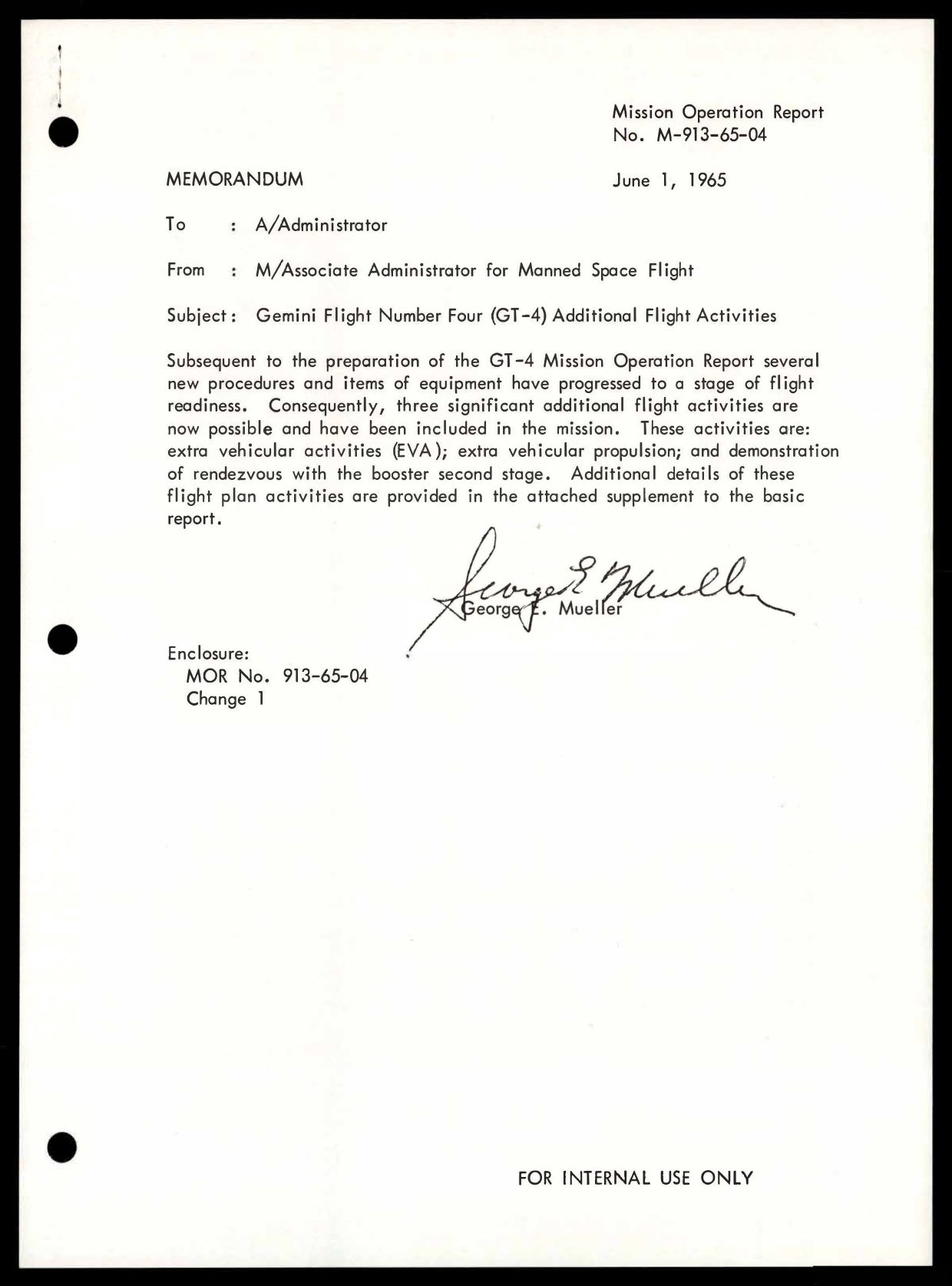
Mission Operation Report
No. M-913-65-04
MEMORANDUM
June 1, 1965
To
A/Administrator
From
M/Associate Administrator for Manned Space Flight
Subject:
Gemini Flight Number Four (GT-4) Additional Flight Activities
Subsequent to the preparation of the GT-4 Mission Operation Report several
new procedures and items of equipment have progressed to a stage of flight
readiness.
Consequently, three significant additional flight activities are
now possible and have been included in the mission.
These activities are:
extra vehicular activities (EVA); extra vehicular propulsion; and demonstration
of rendezvous with the booster second stage.
Additional details of these
flight plan activities are provided in the attached supplement to the basic
report.
Enclosure:
MOR No. 913-65-04
Change 1
FOR INTERNAL USE ONLY
PAGE 3 / 224
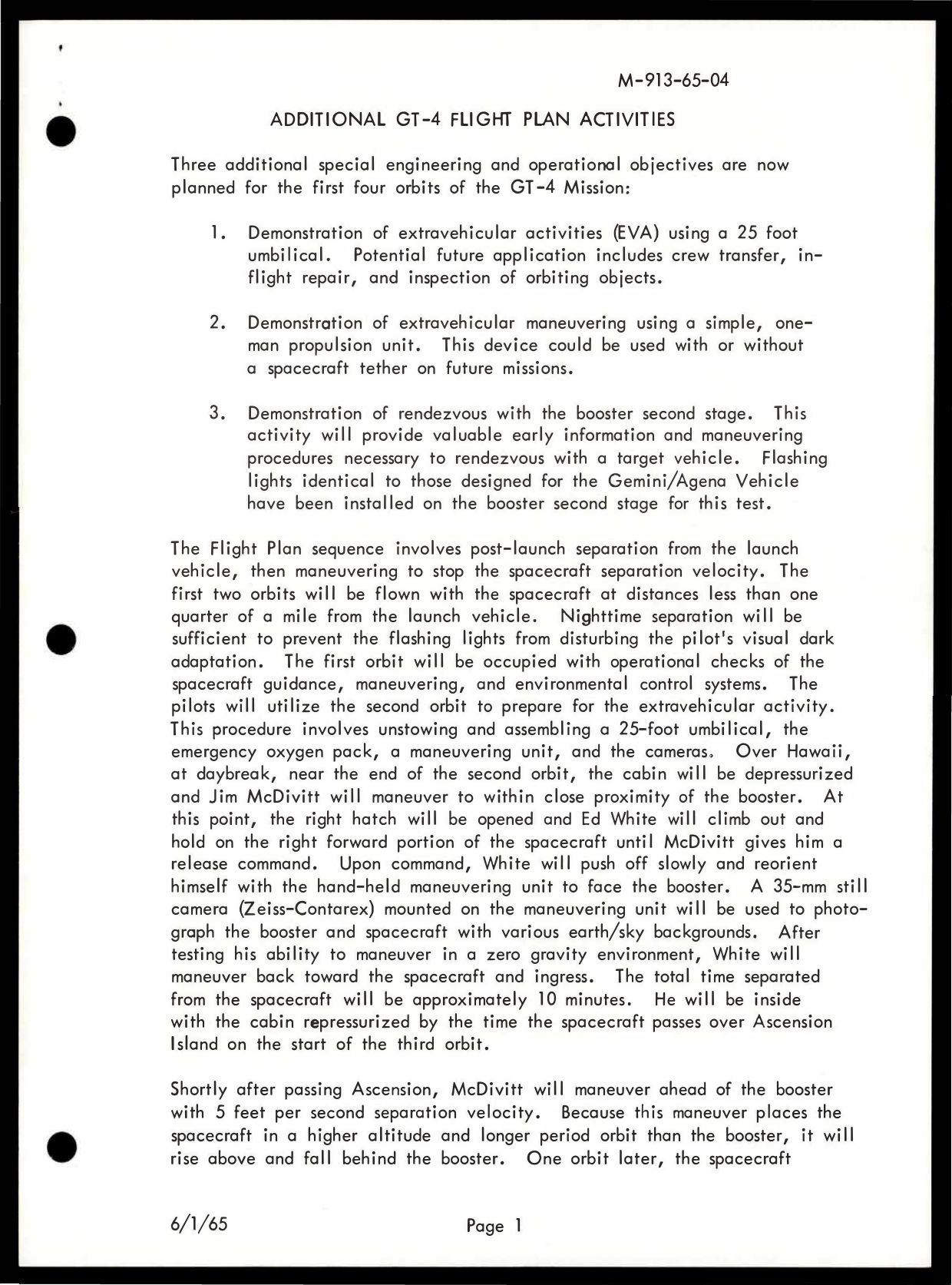
M-913-65-04 ADDITIONAL GT-4 FLIGHT PLAN ACTIVITIES Three additional special engineering and operational objectives are now planned for the first four orbits of the GT-4 Mission: 1. Demonstration of extravehicular activities (EVA) using a 25 foot umbilical. Potential future application includes crew transfer, in flight repair, and inspection of orbiting objects. 2. Demonstration of extravehicular maneuvering using a simple, one man propulsion unit. This device could be used with or without a spacecraft tether on future missions. 3. Demonstration of rendezvous with the booster second stage. This activity wil I provide valuable early information and maneuvering procedures necessary to rendezvous with a target vehicle. Flashing lights identical to those designed for the Gemini/Agena Vehicle have been insta I led on the booster second stage for th is test. The Flight Plan sequence involves post-launch separation from the launch vehicle, then maneuvering to stop the spacecraft separation velocity. The first two orbits wil I be flown with the spacecraft at distances less than one quarter of a mile from the launch vehicle. Nighttime separation will be sufficient to prevent the flashing lights from disturbing the pilot's visual dark adaptation. The first orbit will be occupied with operational checks of the spacecraft guidance, maneuvering, and environmental control systems. The pilots will utilize the second orbit to prepare for the extravehicular activity. This procedure involves unstowing and assembling a 25-foot umbilical, the emergency oxygen pack, a maneuvering unit, and the cameras. Over Hawaii, at daybreak, near the end of the second orbit, the cabin will be depressurized and Jim McDivitt will maneuver to within close proximity of the booster. At this point, the right hatch will be opened and Ed White will climb out and hold on the right forward portion of the spacecraft unti I McDivitt gives him a release command. Upon command, White wi II push off slowly and reorient himself with the hand-held maneuvering unit to face the booster. A 35-mm still camera (Zeiss-Contarex) mounted on the maneuvering unit will be used to photo graph the booster and spacecraft with various earth/sky backgrounds. After testing his ability to maneuver in a zero gravity environment, White will maneuver back toward the spacecraft and ingress. The total time separated from the spacecraft will be approximately 10 minutes. He will be inside with the cabin repressurized by the time the spacecraft posses over Ascension Island on the start of the third orbit. Shortly ofter passing Ascension, McDivitt wil I maneuver ahead of the booster with 5 feet per second separation velocity. Because this maneuver places the spacecraft in a higher altitude and longer period orbit than the booster, it will rise above and fall behind the booster. One orbit later, the spacecraft 6/1/65 Page 1
PAGE 4 / 224
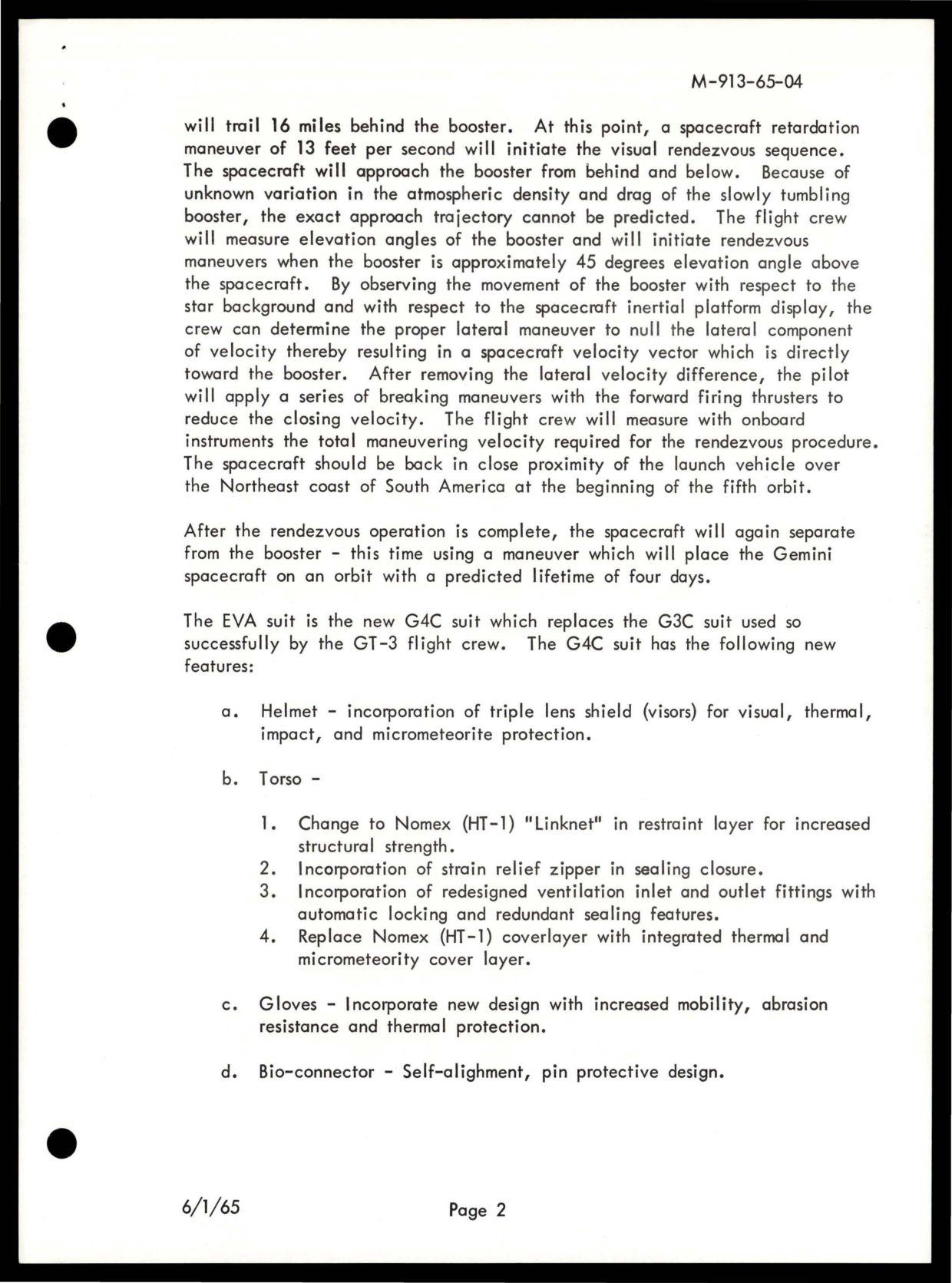
M-913-65-04 will trail 16 miles behind the booster. At this point, a spacecraft retardation maneuver of 13 feet per second will initiate the visual rendezvous sequence. The spacecraft will approach the booster from behind and below. Because of unknown variation in the atmospheric density and drag of the slowly tumbling booster, the exact approach trajectory cannot be predicted. The flight crew will measure elevation angles of the booster and wil I initiate rendezvous maneuvers when the booster is approximately 45 degrees elevation angle above the spacecraft. By observing the movement of the booster with respect to the star background and with respect to the spacecraft inertia l platform display, the crew can determine the proper lateral maneuver to null the lateral component of velocity thereby resulting in a spacecraft velocity vector which is directly toward the booster. After removing the lateral velocity difference, the pilot will apply a series of breaking maneuvers with the forward firing thrusters to reduce the closing velocity. The flight crew will measure with onboard instruments the total maneuvering velocity required for the rendezvous procedure. The spacecraft should be back in close proximity of the launch vehicle over the Northeast coast of South America at the beginning of the fifth orbit. After the rendezvous operation is complete, the spacecraft will again separate from the booster - this time using a maneuver which will place the Gemini spacecraft on an orbit with a predicted lifetime of four days. The EVA suit is the new G4C suit which replaces the G3C suit used so successfully by the GT-3 flight crew. The G4C suit has the following new features: a. Helmet - incorporation of triple lens shield (visors) for visual, thermal, impact, and micrometeorite protection. b. Torso 1. Change to Nomex (HT-1) 11 Linknet11 in restraint layer for increased structure I strength. 2. Incorporation of strain relief zipper in sealing closure. 3. Incorporation of redesigned ventilation inlet and outlet fittings with automatic locking and redundant sealing features. 4. Replace Nomex (HT-1) coverlayer with integrated thermal and mi crometeori ty cover layer. c. Gloves - Incorporate new design with increased mobility, abrasion resistance and thermal protection. d. Bio-connector - Self-alighment, pin protective design. 6/1/65 Page 2
PAGE 5 / 224
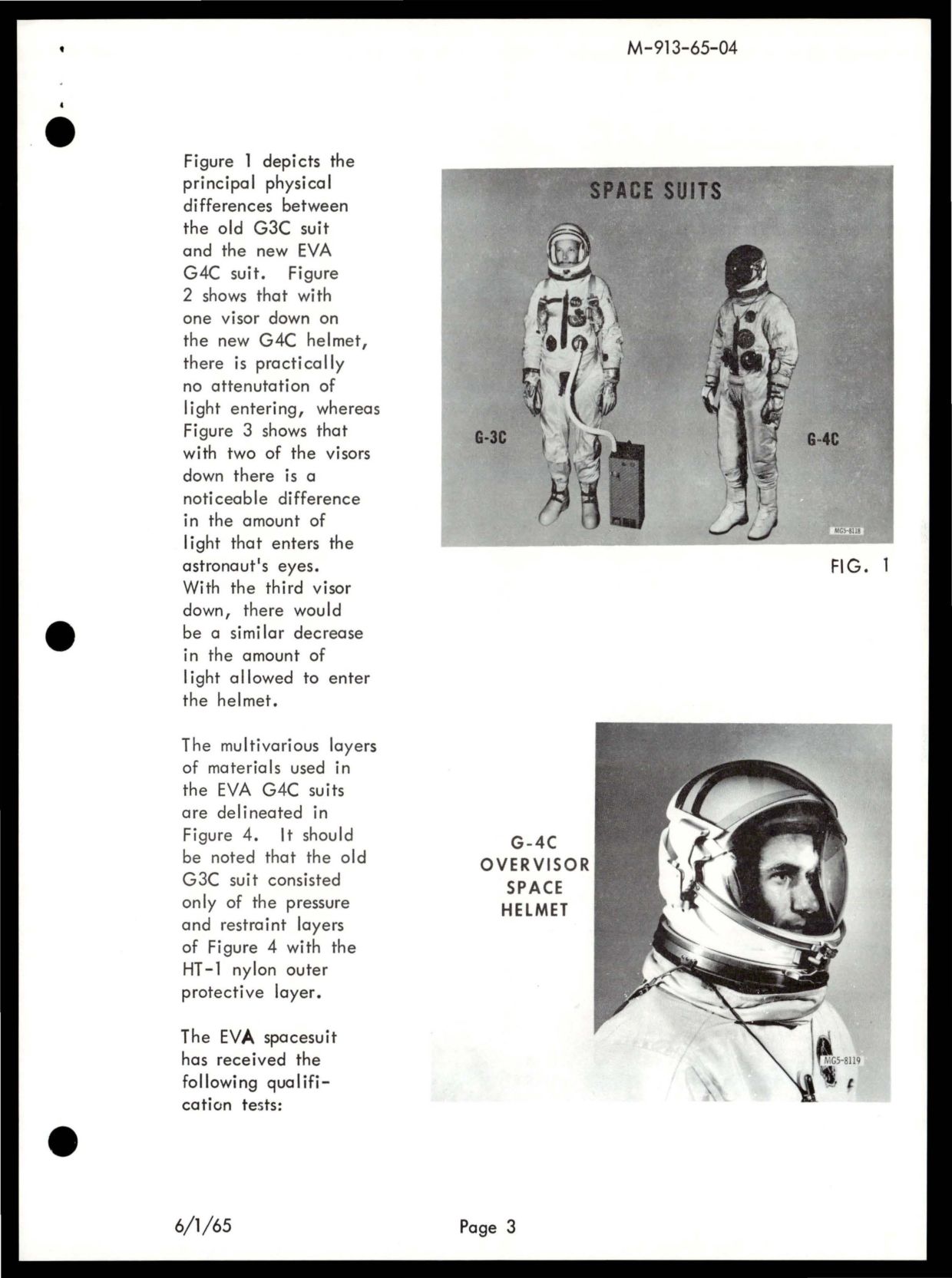
M-913-65-04 Figure 1 depicts the principal physical differences between the old G3C suit and the new EVA G4C suit. Figure 2 shows that with one visor down on the new G4C helmet, there is practi ca I ly no attenutation of Ii ght entering, whereas Figure 3 shows that with two of the visors down there is a noticeable difference in the amount of light that enters the astronaut's eyes. With the third visor down, there would be a similar decrease in the amount of I ight al lowed to enter the helmet. The multivarious layers of materials used in the EVA G4C suits are delineated in Figure 4. It should be noted that the old G3C suit consisted only of the pressure and restraint layers of Figure 4 with the HT -1 nylon outer protective layer. The EVA spacesuit has received the following qualifi cation tests: FIG. G-4C OVER VISOR SPACE HELMET 6/1/65 Page 3
PAGE 6 / 224
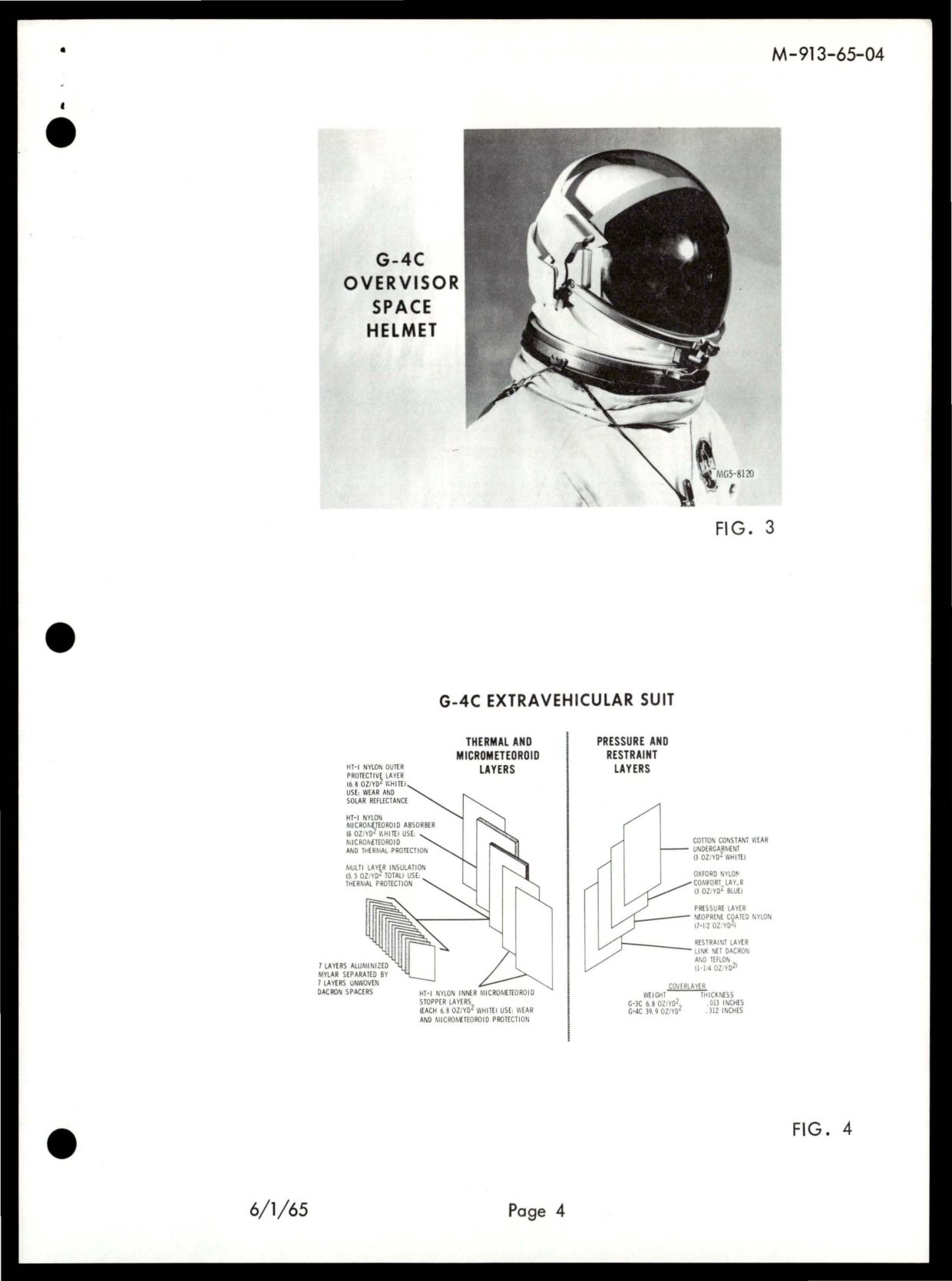
____ • M-913-65-04 G-4C OVERVISOR SPACE HELMET FIG. 3 G-4C EXTRAVEHICULAR SUIT HH NYLON OUITR ~6~~ T~~~~~} ~~~;:) USE: WEAR AND SOLAR REFLECTANCE 7 LAYERS ALUMINIZEO MYLAR SEPARATED BY 7 LAYCAS UNWOVEN DACRON SPACERS THERMAL AND MICROMETEOROID LAYERS HH NYLON INNER MICROr,,'tn OROID STOPPER LAYERS !EACH 6. 8 OZ/YD2 WH IT[ I USE: WEAR ANO MICR0~,1£TEO ROI D PRO TE CT ION PRESSURE AND RESTRAINT LAYERS r---- COTTON CONSTANT "[AR ~Ng~~;:r~~m OXFORD NYLOt-i COf.JORT LAY.R 11 oz,vo 2 swu PRCSSURE LAYER NEOPRE~E COATEO NYLON 11-1·2ozvo21 RESTRAINT lAVlR UM( NH DACRON Al.;Q HflO~ u-J 4 oz vo 21 FIG. 4 6/1/65 Page 4
PAGE 7 / 224
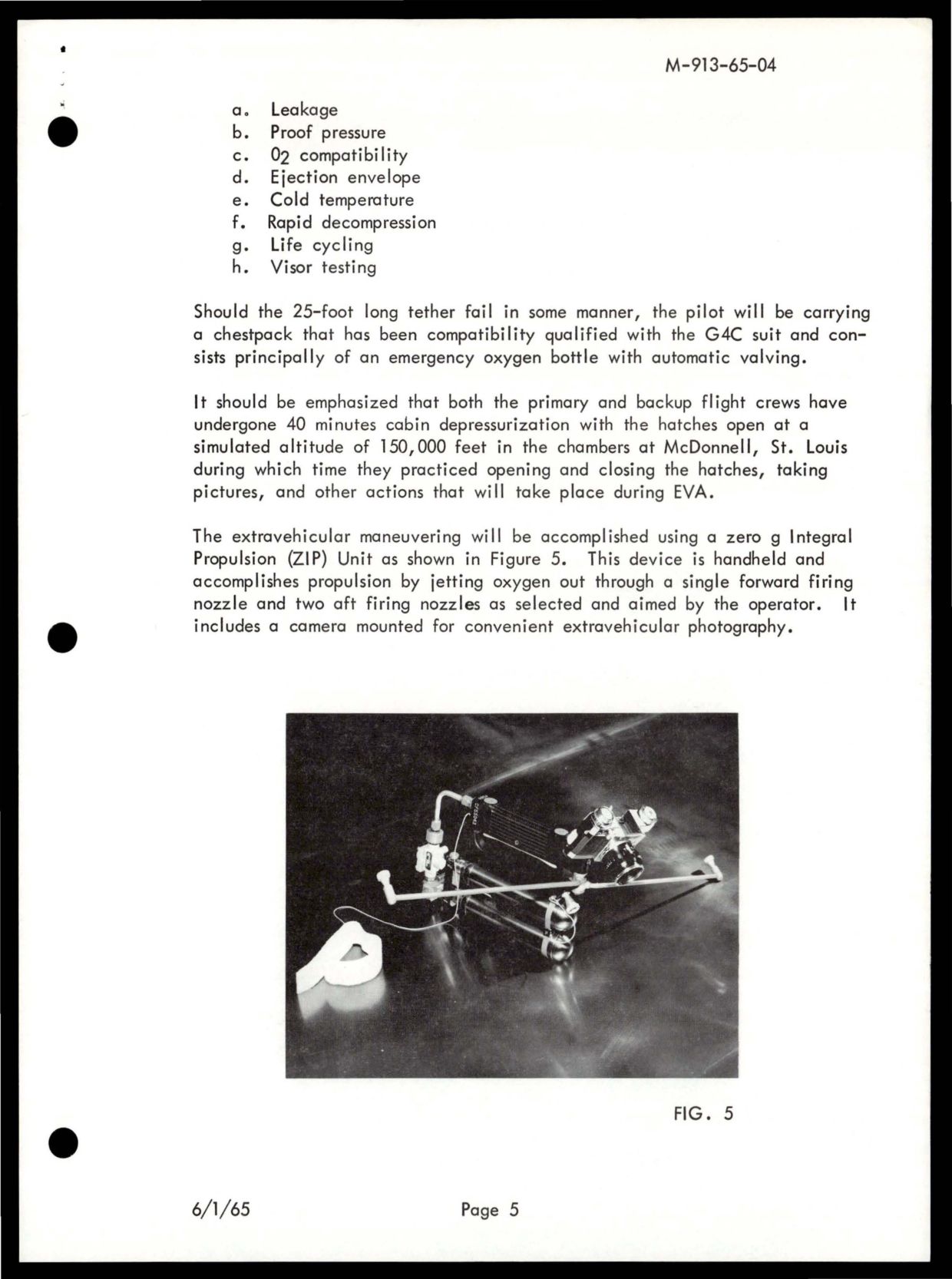
M-913-65-04 a. Leakage b. Proof pressure c. 02 compatibility d. Ejection envelope e. Cold temperature f. Rapid decompression g. Life cycling h. Visor testing Should the 25-foot long tether fail in some manner, the pilot will be carrying a chestpack that has been compatibility qualified with the G4C suit and con sists principally of an emergency oxygen bottle with automatic valving. It should be emphasized that both the primary and backup flight crews have undergone 40 minutes cabin depressurization with the hatches open at a simulated altitude of 150,000 feet in the chambers at McDonnell, St. Louis during which time they practiced opening and closing the hatches, taking pictures, and other actions that will take place during EVA. The extravehicular maneuvering will be accomplished using a zero g Integral Propulsion (ZIP) Unit as shown in Figure 5. This device is handheld and accomplishes propulsion by jetting oxygen out through a single forward firing nozzle and two aft firing nozzles as selected and aimed by the operator. It includes a camera mounted for convenient extravehicular photography. FIG. 5 6/1/65 Page 5
PAGE 8 / 224
Mission Operation Report
No. M-913-65-04
MEMORANDUM
May 24, 1965
To
A/Administrator
From
M/Associate Administrator for Manned Space Flight
Subject:
Gemini Flight Number Four (GT-4)
GT-4, the fourth in a series of twelve planned Gemini flights is scheduled to
be launched from Complex 19 at the John F. Kennedy Space Center on or after
3 June 1965.
This wi 11 be the second manned Gemini mission and the longest
ever attempted by a two-man crew.
The purpose of the mission is to further
demonstrate manned space flight for a period of four days.
The nominal launch time is 10 a.m. EDT (1400 GMT).
The space vehicle is
to be launched on an azimuth of 72 degrees and the spacecraft wi 11 be inserted
into an initial orbit of 87-161 N.M. at an orbital inclination of 32.5 degrees.
The 62 revolution mission will have a duration of approximately 97 hours and 50
minutes.
The primary and backup flight crews are of the "new generation, 11 being
members of the second group of astronauts.
James A. McDivitt will be the
command pilot and Edward H. White, II will be the pilot.
Because the duration
of the flight is one of the most significant aspects of their mission, the post-
flight activities will involve expanded medical evaluation as compared with
previous missions, including at least 24 hours aboard the recovery aircraft carrier,
the USS WASP.
After conducting various orbital maneuvers and the thirteen experiments during the
four-day mission, the spacecraft wi 11 reenter and touchdown approximately 400
miles southwest of Bermuda for a water landing and carrier retrieval.
Enclosure
MOR Noo M-913-65-04
FOR INTERNAL USE ONLY
PAGE 9 / 224
Report No. M-913-65-04
MISSION OPERATION REPORT
GEMINI FLIGHT NUMBER FOUR
(GT-4)
OFFICE
OF MANNED
SPACE FLIGHT
FOR INTERNAL USE ONLY
PAGE 10 / 224
FOREWORD MISSION OPERATION REPORTS are published expressly for the use of NASA General Management as required by the Administra tor in NASA Instruction 6-2-10 dated August 15, 1963 . The pur pose of these reports is to provide NASA General Management with timely, complete and definitive information on flight mission plans and results from launchings with Scout class or larger vehicles. Initial reports are to be prepared and issued for each flight project just prior to launch. Following launch, updating reports for each mission will be issued to keep General Management currently in formed as provided in NASA Instruction 6-2-10. Distribution of these reports has been specifically directed by Gen eral Management and they are not available for additional or general distribution . The Office of Pub I ic Affairs pub I ishes a comprehensive series of pre-launch and post-launch reports on NASA flight missions which are available for general distribution. Pub I ishec and Distributed by OFFICE OF PROGRAM REPORTS OFFICE OF PROGRAMMING NATIONAL AERONAUTICS AND SPACE ADMINISTRATION Washington, D. C. 20546
PAGE 11 / 224
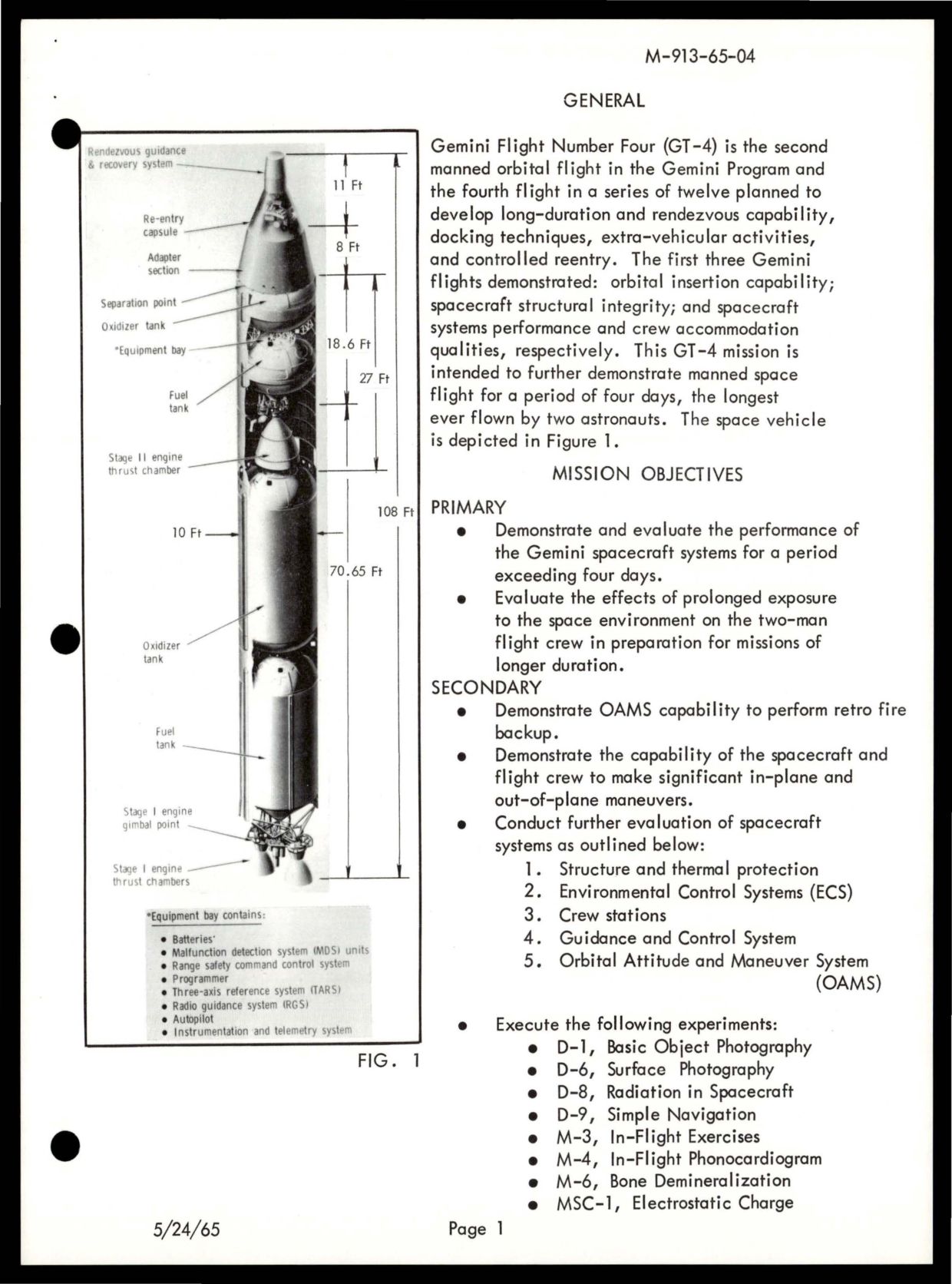
Rtndczvous guidance
& recovery system ____
_,
11 Ft
8 Ft
Separation point
Oxidizer tank
•Equipment bay
27 Ft
Stage 11 engine
thrust chamber
108 Ft
10 Ft
Oxidizer
tank
Stage I engine
g1mbal point
•Equipment bay contains:
• Batteries·
• Malfunction detection system IMOSI units
• Range safety command control system
• Programmer
• Three-axis reference system !TARSI
• Radio guidance system IRGSI
• Autopilot
• Instrumentation and telemetry system
FIG.
5/24/65
M-913-65-04
GENERAL
Gemini Flight Number Four (GT-4) is the second
manned orbital flight in the Gemini Program and
the fourth flight in a series of twelve planned to
develop long-duration and rendezvous capability,
docking techniques, extra-vehicular activities,
and controlled reentry. The first three Gemini
flights demonstrated: orbital insertion capability;
spacecraft structural integrity; and spacecraft
systems performance and crew accommodation
qualities, respectively. This GT-4 mission is
intended to further demonstrate manned space
flight for a period of four days, the longest
ever flown by two astronauts. The space vehicle
is depicted in Figure 1.
MISSION OBJECTIVES
PRIMARY
•
Demonstrate and evaluate the performance of
the Gemini spacecraft systems for a period
exceeding four days.
•
Evaluate the effects of prolonged exposure
to the space environment on the two-man
flight crew in preparation for missions of
longer duration.
SECONDARY
•
Demonstrate OAMS capability to perform retro fire
backup.
•
Demonstrate the capability of the spacecraft and
flight crew to make significant in-plane and
out-of-plane maneuvers.
•
Conduct further evaluation of spacecraft
systems as outlined below:
1.
Structure and thermo I protection
2. Environmental Control Systems (ECS)
3. Crew stations
4. Guidance and Control System
5. Orbital Attitude and Maneuver System
(OAMS)
•
Execute the fol I owing experiments:
•
D-1, Basic Object Photography
•
D-6, Surface Photography
•
D-8, Radiation in Spacecraft
•
D-9, Simple Navigation
•
M-3, In-Flight Exercises
•
M-4, In-Flight Phonocardiogram
•
M-6, Bone Demineralization
•
MSC-1, Electrostatic Charge
Page 1
PAGE 12 / 224
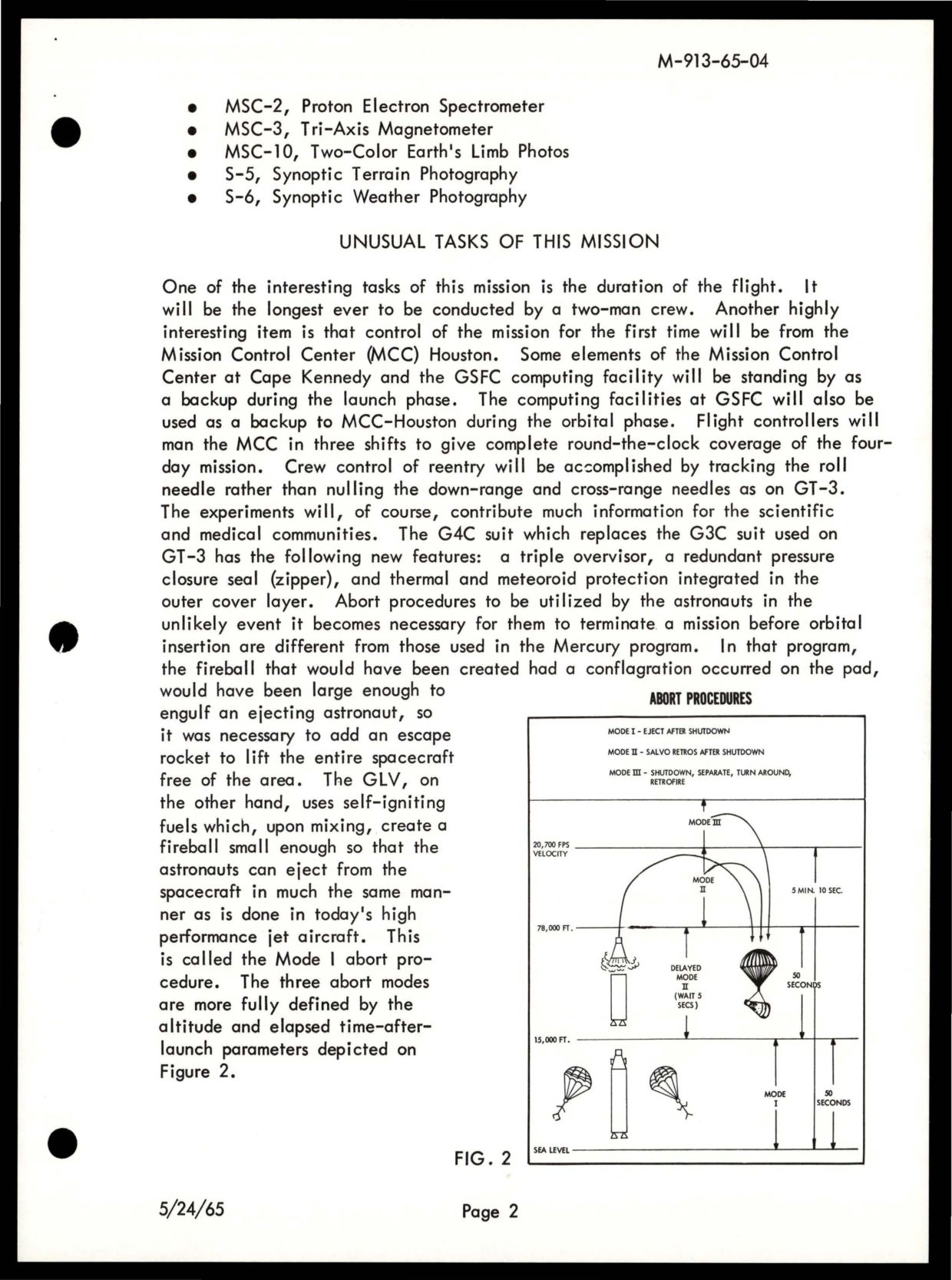
M-913-65-04 • MSC-2, Proton Electron Spectrometer • MSC-3, Tri-Axis Magnetometer • MSC-10, Two-Color Earth's Limb Photos • S-5, Synoptic Terrain Photography • S-6, Synoptic Weather Photography UNUSUAL TASKS OF THIS MISSION One of the interesting tasks of this mission is the duration of the flight. It will be the longest ever to be conducted by a two-man crew. Another highly interesting item is that control of the mission for the first time wil I be from the Mission Control Center (MCC) Houston. Some elements of the Mission Control Center at Cape Kennedy and the GSFC computing facility will be standing by as a backup during the launch phase. The computing facilities at GSFC will also be used as a backup to MCC-Houston during the orbital phase. Flight controllers will man the MCC in three shifts to give complete round-the-clock coverage of the four day mission. Crew control of reentry will be ac~omplished by tracking the roll needle rather than nulling the down-range and cross-range needles as on GT-3. The experiments will, of course, contribute much information for the scientific and medical communities. The G4C suit which replaces the G3C suit used on GT-3 has the fol lowing new features: a triple overvisor, a redundant pressure closure seal (zipper), and thermal and meteoroid protection integrated in the outer cover layer. Abort procedures to be utilized by the astronauts in the unlikely event it becomes necessary for them to terminate. a mission before orbital insertion are different from those used in the Mercury program. In that program, the fireball that would have been created had a conflagration occurred on the pad, would have been large enough to ABORT PROCEDURES engulf an ejecting astronaut, so it was necessary to add an escape rocket to I ift the entire spacecraft free of the area. The GLV, on the other hand, uses self-igniting fuels which, upon mixing, create a fi reba II sma II enough so that the astronauts can eject from the spacecraft in much the same man ner as is done in today's high performance jet aircraft. This is called the Mode I abort pro cedure. The three abort modes are more fully defined by the altitude and elapsed time-after launch parameters depicted on Figure 2. FIG . 2 MOOE I - EJECT AfTEll SHUTDOWN MOOE ll - SALVO RETROS AFTER SHUTDOWN MODE ID - SHUTDOWN, SE PARATE, TURN AROUND, RETROFIRE -□~ OEIAYEO MOOE n (WA IT 5 SECS ) 15,000FT. _ _ ____.____~--'<-+--~- ' ~' MOOE I 50 SECONDS SEA LEVEL-----------''----L--'-- 5/24/65 Page 2
PAGE 13 / 224
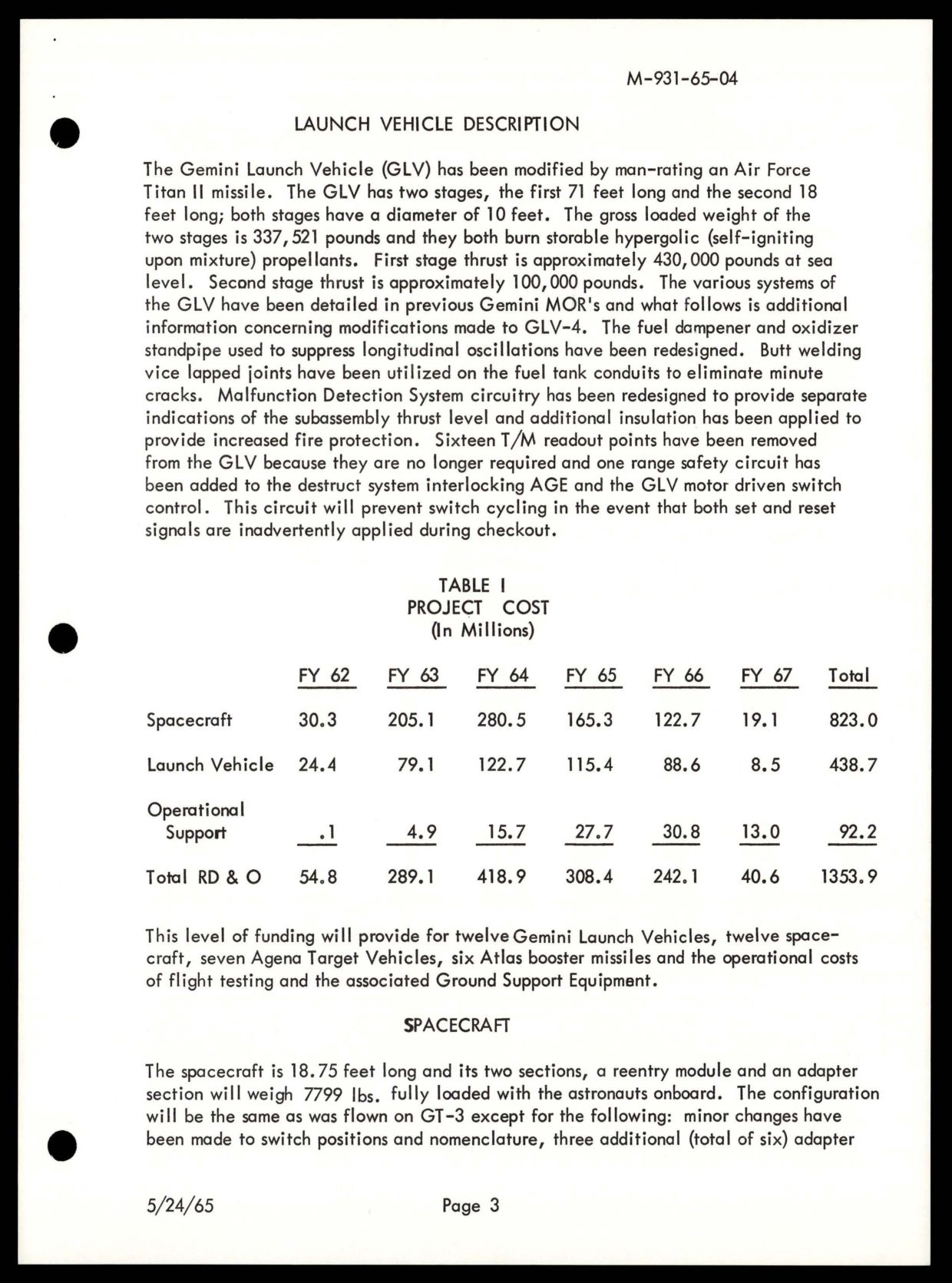
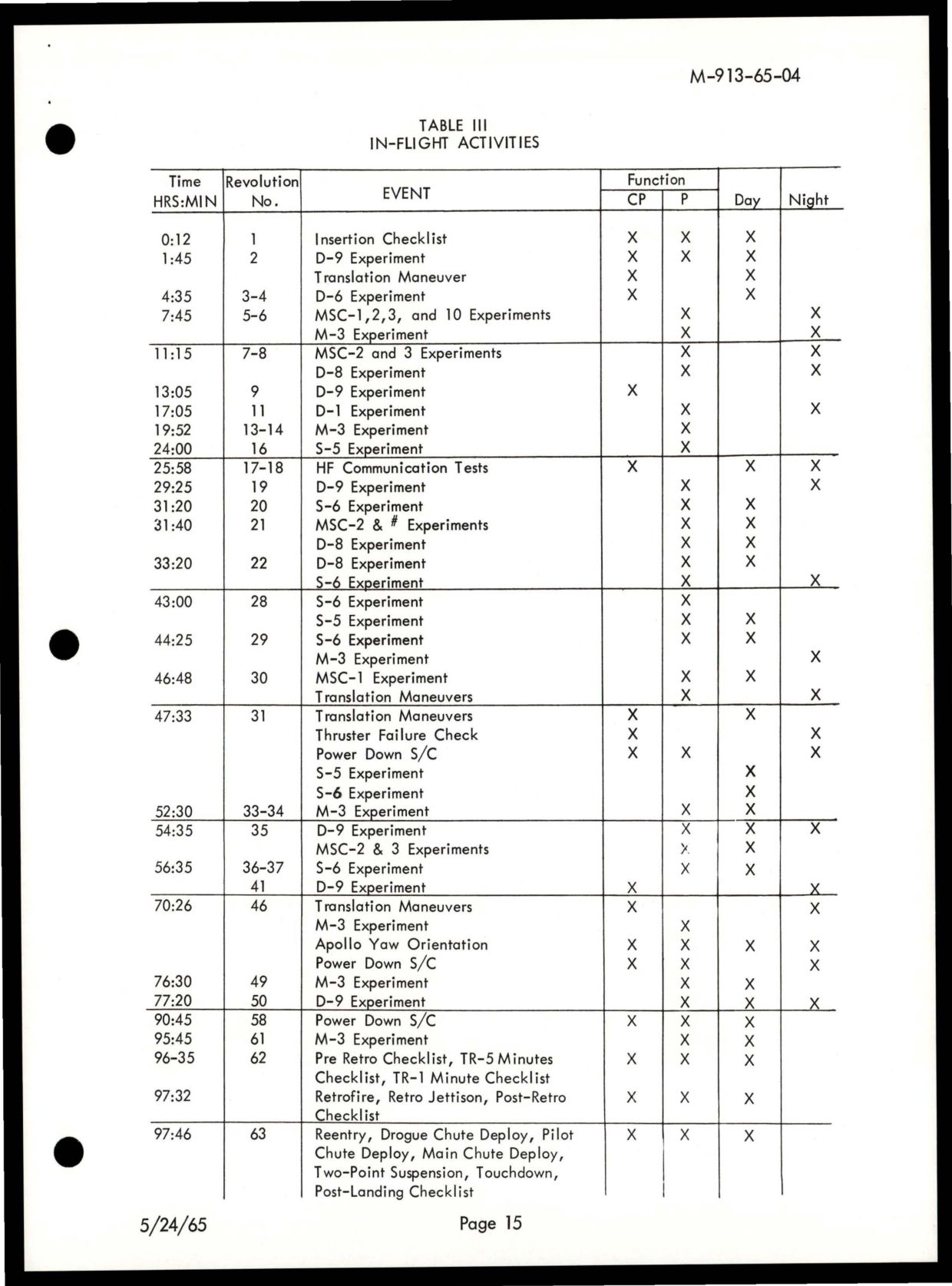
M-931-65-04 LAUNCH VEHICLE DESCRIPTION The Gemini Launch Vehicle (GLV) has been modified by man-roting an Air Force Titan II missile. The GLV has two stages, the first 71 feet long and the second 18 feet long; both stages have a diameter of 10 feet. The gross loaded weight of the two stages is 337,521 pounds and they both burn storable hypergolic (self-igniting upon mixture) propellants. First stage thrust is approximately 430,000 pounds at sea level. Second stage thrust is approximately 100,000 pounds. The various systems of the GLV have been detailed in previous Gemini MOR 1s and what follows is additional information concerning modifications made to GLV-4. The fuel dampener and oxidizer standpipe used to suppress longitudinal oscillations have been redesigned. Butt welding vice lapped joints have been utilized on the fuel tank conduits to eliminate minute cracks. Malfunction Detection System circuitry has been redesigned to provide separate indications of the subassembly thrust level and additional insulation has been applied to provide increased fire protection. Sixteen T/M readout points have been removed from the GLV because they are no longer required and one range safety circuit has been added to the destruct system interlocking AGE and the GLV motor driven switch control. This circuit will prevent switch cycling in the event that both set and reset signals are inadvertently applied during checkout. TABLE I PROJECT COST (In Millions) FY 62 FY 63 FY 64 FY 65 FY 66 FY 67 Total Spacecraft 30.3 205. 1 280.5 165.3 122.7 19. 1 823.0 Launch Vehicle 24.4 79. 1 122.7 115.4 88.6 8.5 438.7 Operational Support 0 1 4.9 15. 7 27.7 30.8 13.0 92.2 Total RD & 0 54.8 289. 1 418.9 308.4 242. 1 40.6 1353.9 This level of funding will provide for twelve Gemini Launch Vehicles, twelve space craft, seven Agena Target Vehicles, six Atlas booster missiles and the operational costs of flight testing and the associated Ground Support Equipment. SPACECRAFT The spacecraft is 18. 75 feet long and its two sections, a reentry module and an adapter section will weigh 7799 lbs. fully loaded with the astronauts onboard. The configuration will be the same as was flown on GT-3 except for the following: minor changes have been made to switch positions and nomenclature, three additional (total of six) adapter 5/24/65 Page 3
PAGE 14 / 224
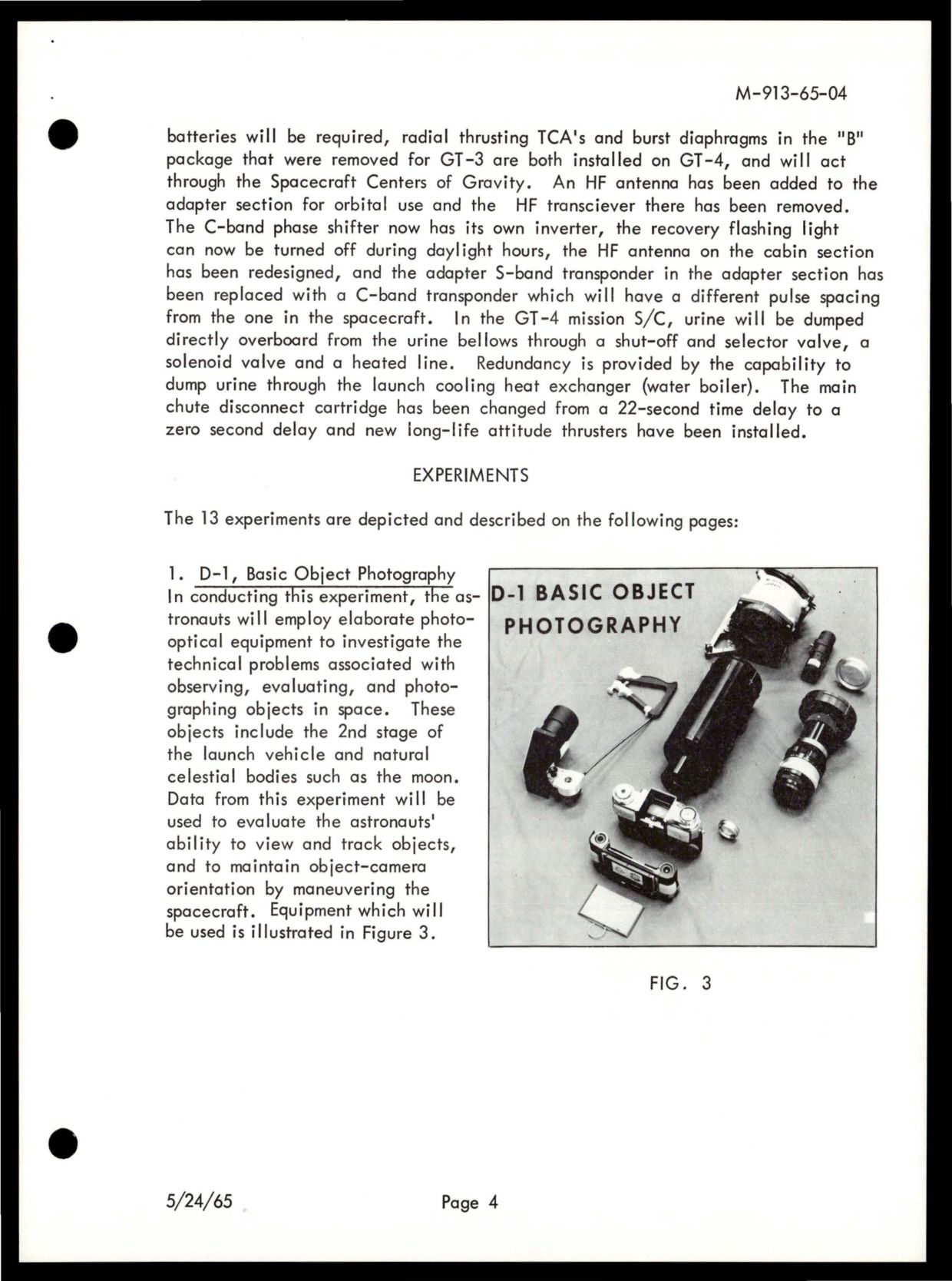
M-913-65-04 batteries will be required, radial thrusting TCA's and burst diaphragms in the 11 811 package that were removed for GT-3 are both installed on GT-4, and will act through the Spacecraft Centers of Gravity. An HF antenna has been added to the adapter section for orbital use and the HF transciever there has been removed. The C-band phase shifter now has its own inverter, the recovery flashing light can now be turned off during dayIight hours, the HF antenna on the cabin section has been redesigned, and the adapter $-band transponder in the adapter section has been replaced with a C-band transponder which will have a different pulse spacing from the one in the spacecraft. In the GT-4 mission S/C, urine wi 11 be dumped directly overboard from the urine bellows through a shut-off and selector valve, a solenoid valve and a heated line. Redundancy is provided by the capability to dump urine through the launch cooling heat exchanger (water boiler}. The main chute disconnect cartridge has been changed from a 22-second time delay to a zero second delay and new long-life attitude thrusters have been installed. EXPERIMENTS The 13 experiments are depicted and described on the following pages: 1. D-1, Basic Object Photography In conducting this experiment, the as tronauts will employ elaborate photo optical equipment to investigate the technical problems associated with observing, evaluating, and photo graphing objects in space. These objects include the 2nd stage of the launch vehicle and natural celestial bodies such as the moon. Data from this experiment will be used to evaluate the astronauts' ability to view and track objects, and to maintain object-camera orientation by maneuvering the spacecraft. Equipment which wi 11 be used is illustrated in Figure 3. D-1 BASIC OBJECT PHOTOGRAPHY FIG. 3 5/24/65 Page 4
PAGE 15 / 224
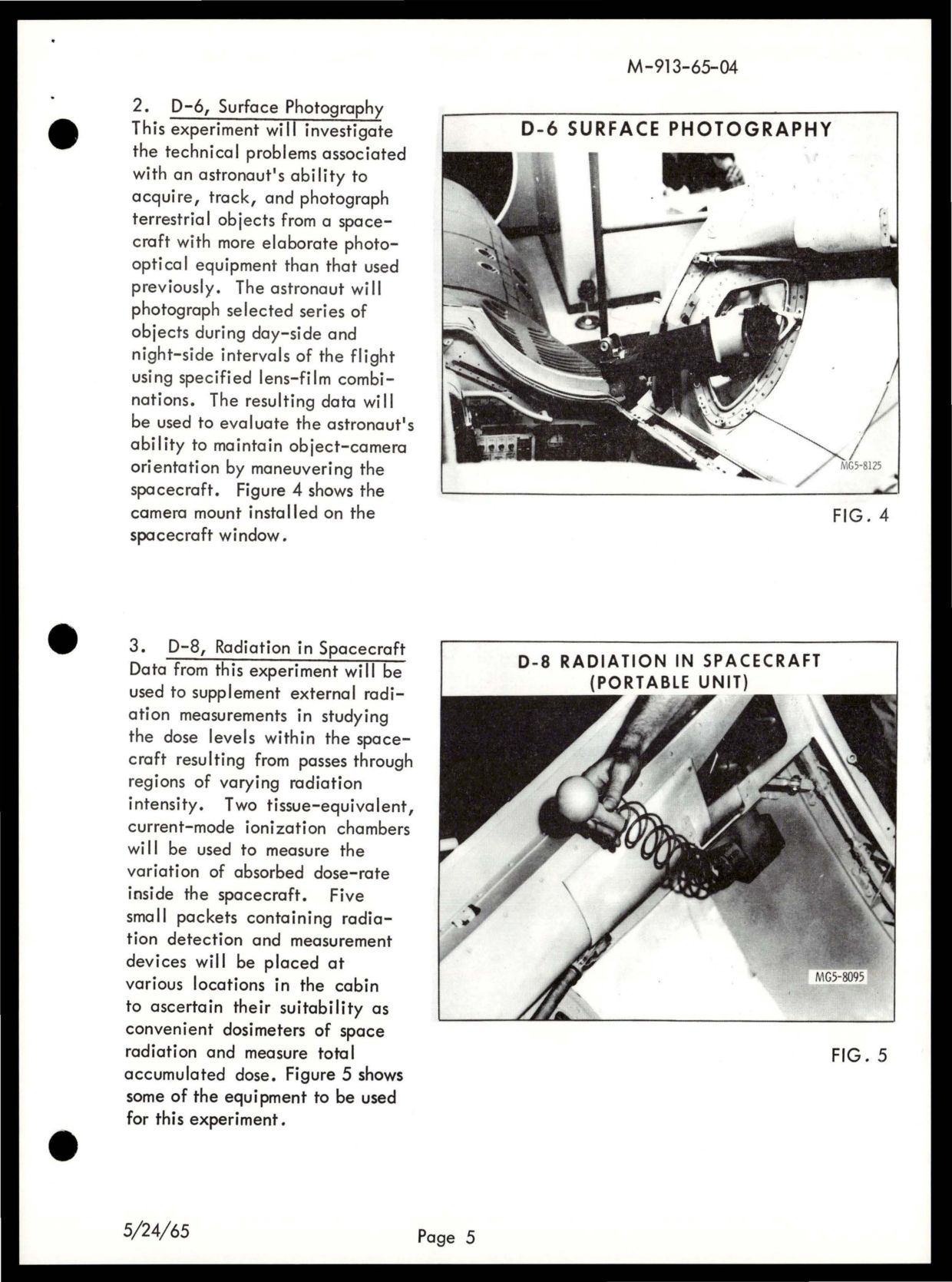
2. D-6, Surface Photography This experiment wi 11 investigate the technical problems associated with an astronaut's ability to acquire, track, and photograph terrestrial objects from a space craft with more elaborate photo opti ca I equipment than that used previously. The astronaut will photograph selected series of objects during day-side and night-side intervals of the flight using specified Iens-fi Im combi nations. The resulting data wi 11 be used to eva Iuate the astronaut's ability to maintain object-camera orientation by maneuvering the spacecraft. Figure 4 shows the camera mount installed on the spacecraft window. 3. D-8, Radiation in Spacecraft Data from this experiment will be used to supplement external radi ation measurements in studying the dose levels within the space craft resulting from passes through regions of varying radiation intensity. Two tissue-equivalent, current-mode ionization chambers wi 11 be used to measure the variation of absorbed dose-rate inside the spacecraft. Five small packets containing radia tion detection and measurement devices will be placed at various locations in the cabin to ascertain their suitability as convenient dosimeters of space radiation and measure total accumulated dose. Figure 5 shows some of the equipment to be used for this experiment. M-913-65-04 0-6 SURFACE PHOTOGRAPHY FIG. 4 D-8 RADIATION IN SPACECRAFT (PORTABLE UNIT) FIG. 5 5/24/65 Page 5
PAGE 16 / 224
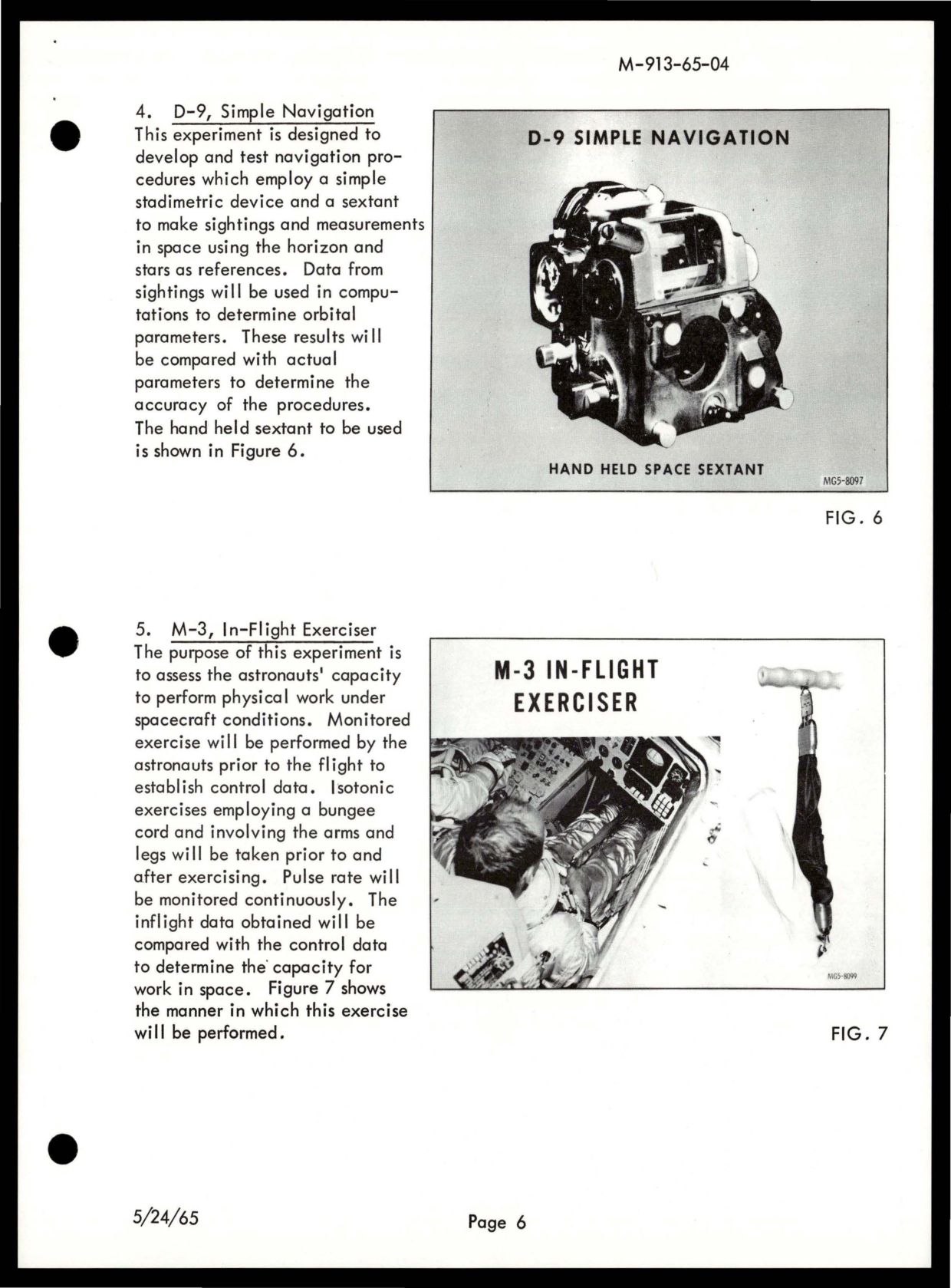
the manner in which this exercise wi 11 be performed. 5/24/65 Page 6 FIG. 7 4. D-9, Simple Navigation This experiment is designed to develop and test navigation pro cedures which employ a simple stadimetric device and a sextant to make sightings and measurements in space using the horizon and stars as references. Data from sightings wi 11 be used in compu tations to determine orbital parameters. These results wi 11 be compared with actual parameters to determine the accuracy of the procedures. The hand held sextant to be used is shown in Figure 6. 5. M-3, In-Flight Exerciser The purpose of this experiment is to assess the astronauts' capacity to perform physi ca I work under spacecraft conditions. Monitored exercise wil I be performed by the astronauts prior to the flight to establish control data. l·sotonic exercises employing a bungee cord and involving the arms and legs wi 11 be taken prior to and a.fter exercising. Pulse rate wil I be monitored continuously. The inflight data obtained wil I be compared with the control data to determine the· capacity for work in space. Figure 7 shows M-913-65-04 0-9 SIMPLE NAVIGATION HAND HELD SPACE SEXTANT MG5-8097 FIG. 6 M-3 IN-FLIGHT EXERCISER
PAGE 17 / 224
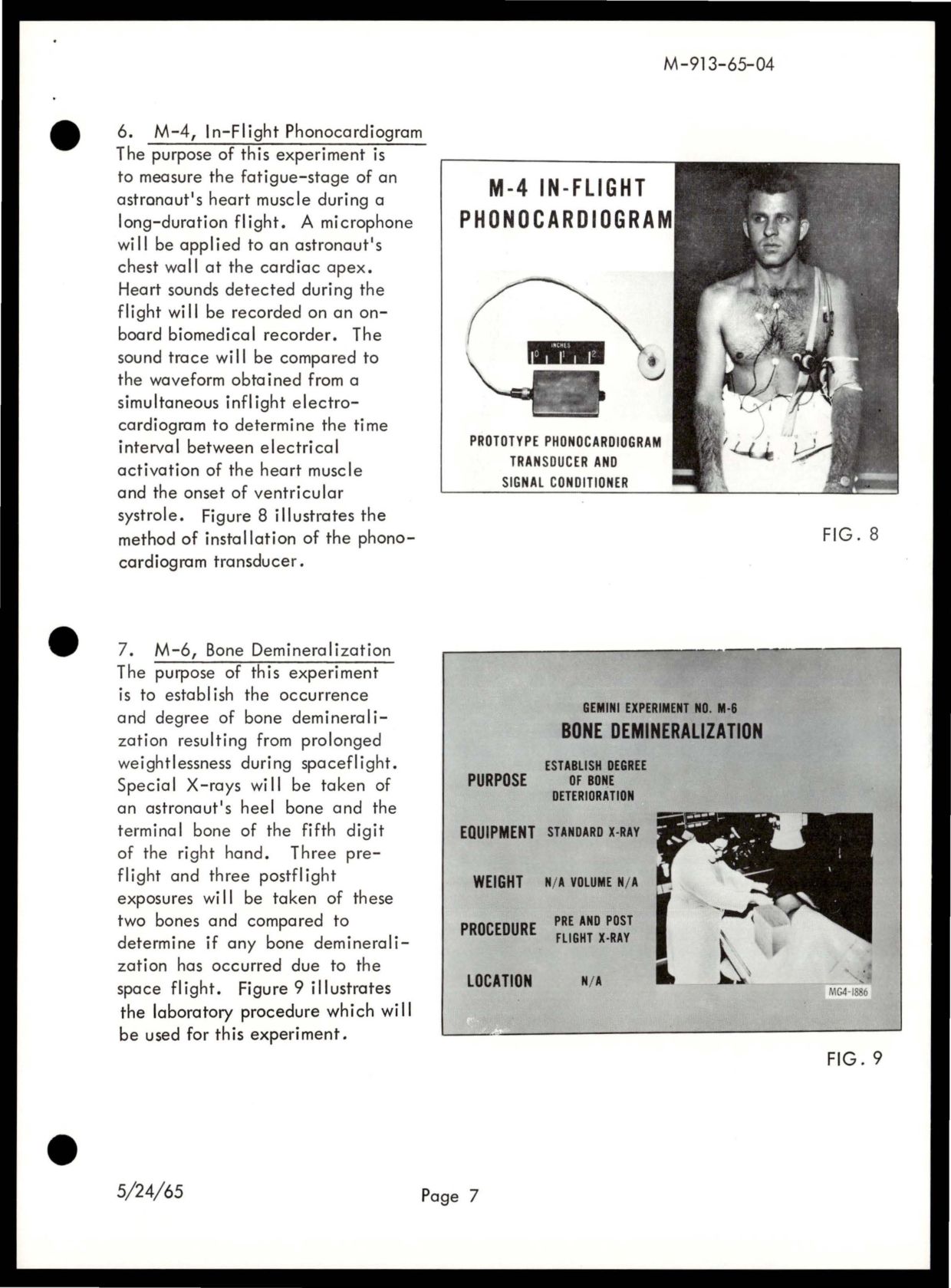
6. M-4, In-Flight Phonocardiogram The purpose of this experiment is to measure the fatigue-stage of an astronaut's heart muscle during a long-duration flight. A microphone wi ll be applied to an astronaut's chest wal I at the cardiac apex. Heart sounds detected during the flight will be recorded on an on board biomedical recorder. The sound trace wi 11 be compared to the waveform obtained from a simultaneous infl ight electro cardiogram to determine the time interval between electrical activation of the heart muscle and the onset of ventricular systrole. Figure 8 illustrates the method of installation of the phono cardiogram transducer. 7. M-6, Bone Demineralization The purpose of this experiment is to establish the occurrence and degree of bone demi nera Ii zati on resulting from prolonged weightlessness during spaceflight. Spec ia I X-rays wi 11 be ta ken of an astronaut's heel bone and the terminal bone of the fifth digit of the right hand. Three pre flight and three postflight exposures wi 11 be taken of these two bones and compared to determine if any bone deminerali zation has occurred due to the space flight. Figure 9 i 11 ustrates the laboratory procedure which will be used for this experiment. M-913-65-04 M-4 IN-FLIGHT PHONOCARDIOGRAM PROTOTYPE PHONOCARDIOGRAM TRANSDUCER AND SIGNAL CONDITIONER FIG . 8 GEMINI EXPERIMENT NO. M·& BONE DEMINERALIZATION ESTABLISH DEGREE PURPOSE OF BONE DETERIORATION EQUIPMENT STANDARD X-RAY WEIGHT N/ A VOLUME N/ A PRE AND POST PROCEDURE FLIGHT x-RAY LOCATION N/ A i " ' MG4-1886 FIG. 9 5/24/65 Page 7
PAGE 18 / 224
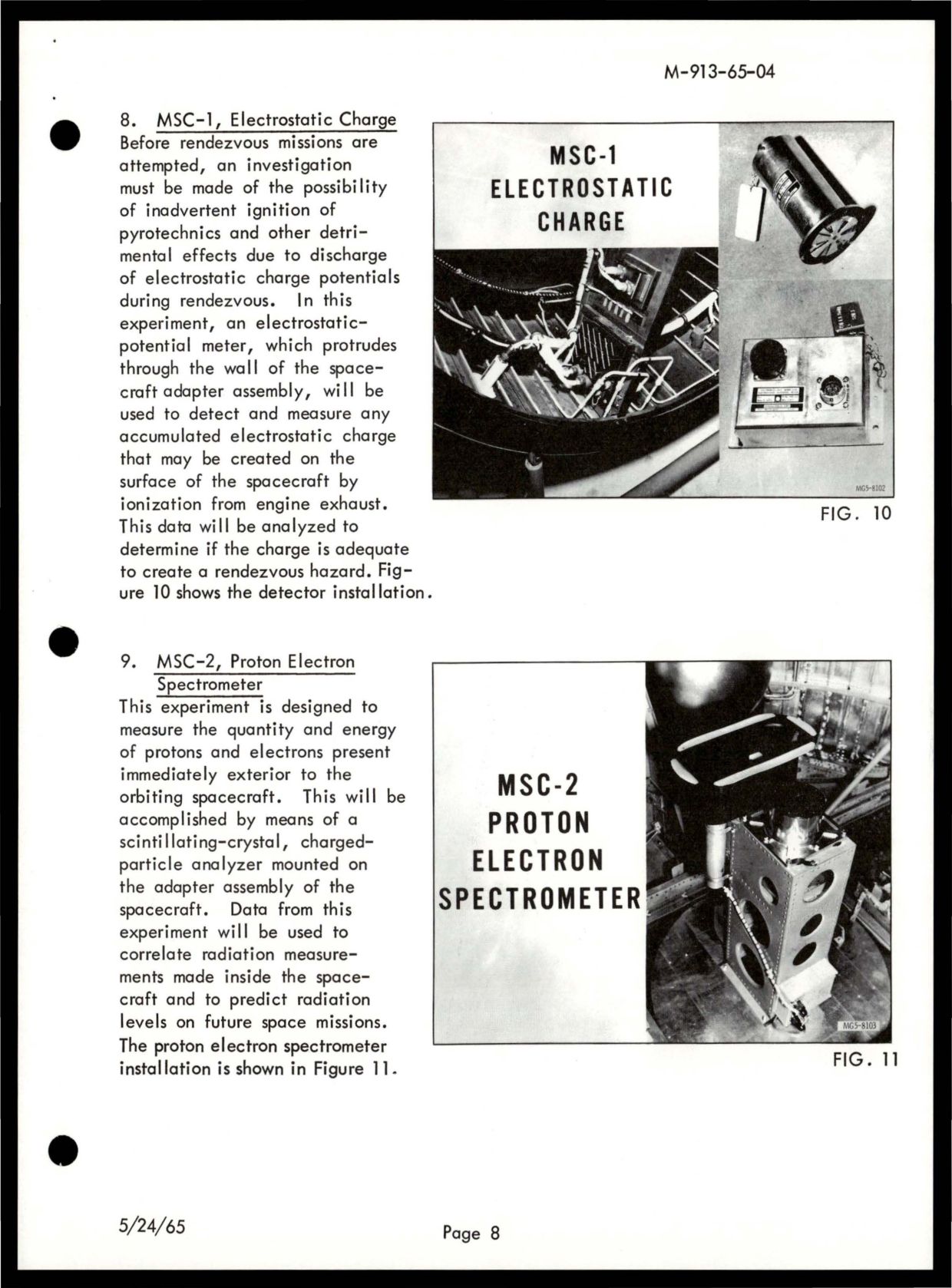
8. MSC-1, Electrostatic Charge Before rendezvous missions are attempted, an investigation must be made of the possibility of inadvertent ignition of pyrotechnics and other detri menta I effects due to discharge of electrostatic charge potentials during rendezvous. In this experiment, an electrostatic potential meter, which protrudes through the wa 11 of the space craft adapter assembly, wi 11 be used to detect and measure any accumulated electrostatic charge that may be created on the surface of the spacecraft by ionization from engine exhaust. This dota wi 11 be a no Iyzed to determine if the charge is adequate to create a rendezvous hazard. Fig ure 10 shows the detector instal lotion. 9. MSC-2, Proton Electron Spectrometer This experiment is designed to measure the quantity and energy of protons and electrons present immediately exterior to the orbiting spacecraft. This wil I be accomplished by means of a scintillating-crystal, charged particle analyzer mounted on the adapter assembly of the spacecraft. Data from this experiment wil I be used to correlate radiation measure ments made inside the space craft and to predict radiation levels on future space missions. The proton electron spectrometer instal lotion is shown in Figure 11 . MSC-1 ELECTROSTATIC CHARGE FIG. 10 M-913-65-04 MSC-2 PROTON ELECTRON SPECTROMETER FIG. 11 5/24/65 Page 8
PAGE 19 / 224
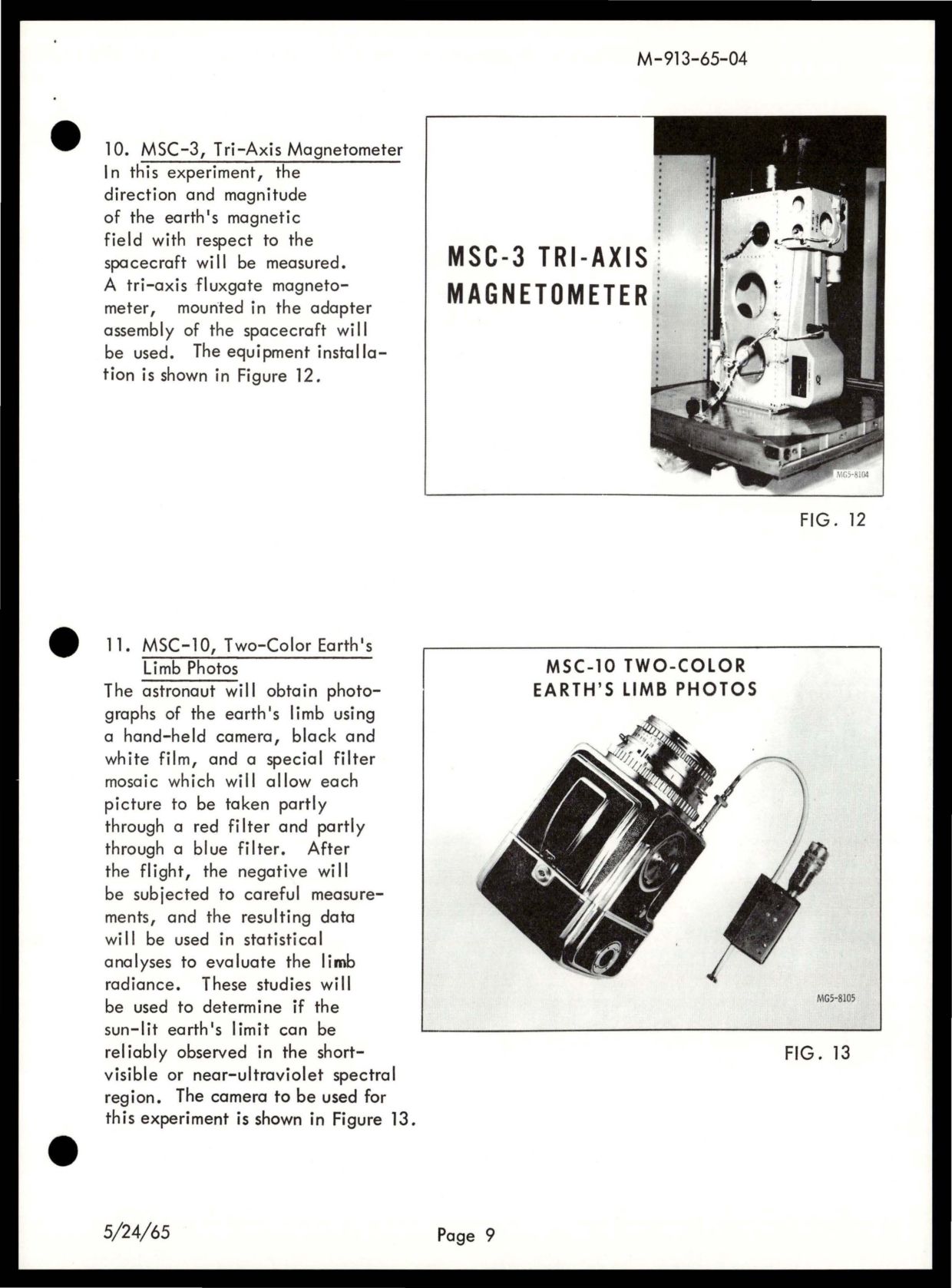
M-913-65-04 10. MSC-3, Tri-Axis Magnetometer In this experiment, the direction and magnitude of the earth's magnetic field with respect to the spacecraft will be measured. A tri-axis fluxgate magneto meter, mounted in the adapter assembly of the spacecraft wi 11 be used. The equipment instal lo tion is shown in Figure 12. - 11. MSC-10, Two-Color Earth's Limb Photos The astronaut wil I obtain photo graphs of the earth's limb using a hand-held camera, black and white film, and a special filter mosaic which will allow each picture to be taken partly through a red filter and partly through a blue filter. After the flight, the negative will be subjected to careful measure ments, and the resulting data will be used in statistical analyses to evaluate the limb radiance. These studies will be used to determine if the sun-lit earth's limit can be reliably observed in the short visible or near-ultraviolet spectral region. The camera to be used for this experiment is shown in Figure 13. MSC-3 TRI-AXIS MAGNETOMETER MSC-10 TWO-COLOR EARTH'S LIMB PHOTOS MG5·8105 FIG. 13 FIG. 12 5/24/65 Page 9
PAGE 20 / 224
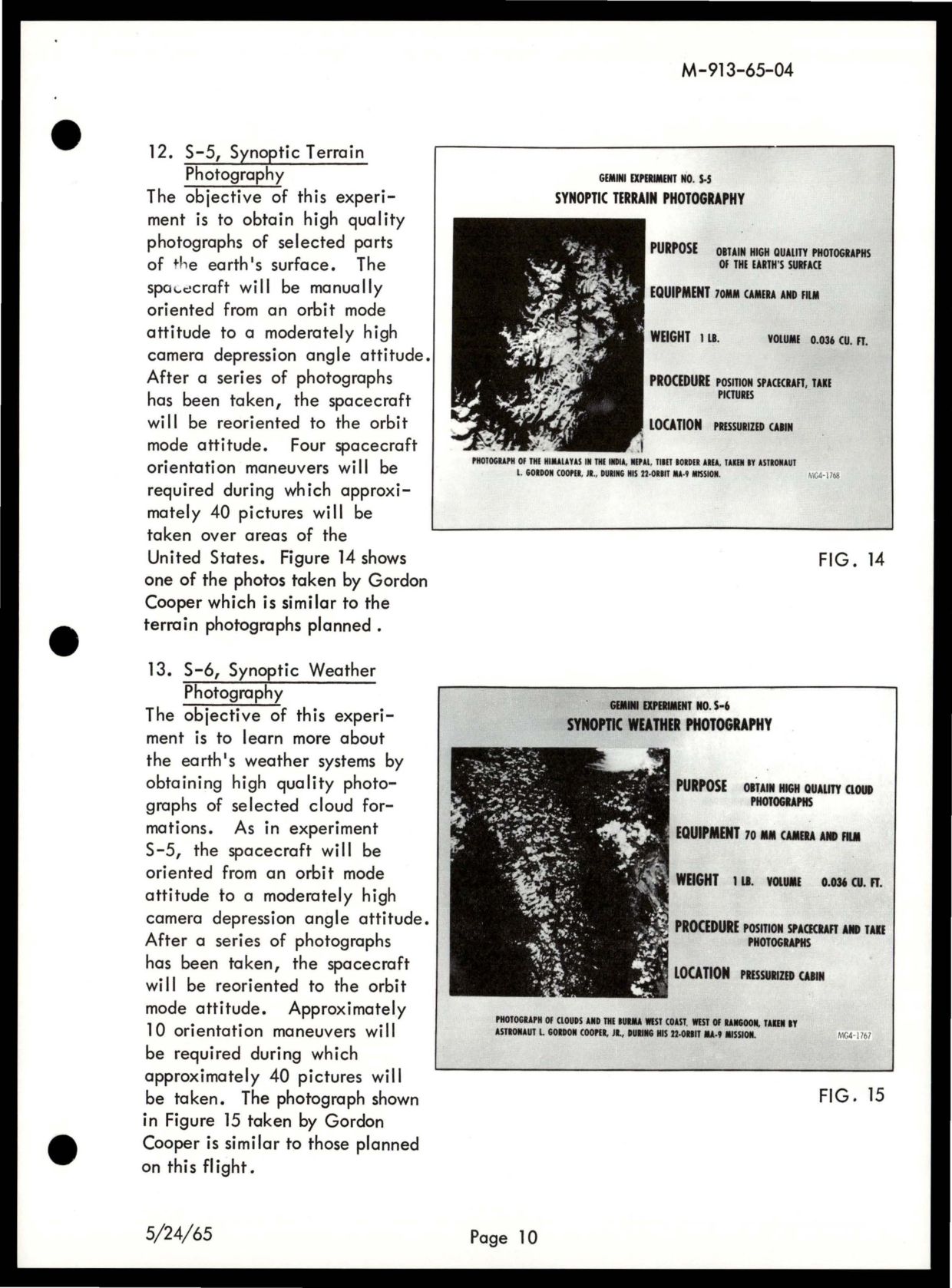
12. S-5, Synoptic Terrain Photography The objective of this experi ment is to obtain high quality photographs of selected parts of the earth's surface. The spa1.,c:craft will be manually oriented from an orbit mode attitude to a moderately high camera depression angle attitude. After a series of photographs has been taken, the spacecraft will be reoriented to the orbit mode attitude. Four spacecraft orientation maneuvers will be required during which approxi mately 40 pictures will be taken over areas of the United States. Figure 14 shows one of the photos taken by Gordon Cooper which is similar to the terrain photographs planned . 13. S-6, Synoptic Weather Photography The objective of this experi ment is to learn more about the earth's weather systems by obtaining high quality photo graphs of selected cloud for mations. As in experiment S-5, the spacecraft will be oriented from an orbit mode attitude to a moderately high camera depression angle attitude. After a series of photographs has been taken, the spacecraft wi 11 be reoriented to the orbit mode attitude. Approximately 10 orientation maneuvers will be required during which approximately 40 pictures will be taken. The photograph shown in Figure 15 taken by Gordon Cooper is similar to those planned on this flight. 5/24/65 M-913-65-04 GEMINI DPEltllfNT NO. S.5 SYNOPTIC TERRAIN PHOTOGRAPHY ,.,. .:t PURPOSE OITAIN HIGH QUALITY PHOTOGIAPHS Of THI EARTH'SSUlfACf EQUIPMENT 70MM CAMERA AND fllM WEIGHT I LI. VOlUMI 0.036 CU. n. PROCEDURE POSITION sm1mn, TAIi PICTURES LOCATION PRISSURIZID CAIIN PMOTOGUIH Of THI HIIAlAUS IN THI NIDIA, IIIPAl, 11111 IOROII AHA, THIN IT ASTRONAUT l. GOIDON C00,11, JI., DUIING HIS 22-01111 IA-f IIISSION. MC4· 1768 FIG. 14 GOIN OPIIIIINT NO. S-6 SYNOPTIC WEATHER PHOTOGRAPHY PURPOSE OITAIN HIGH QUALITY aoue PHOTOGIAPHS EQUIPMENT 10 11 CAMDA Me ,u WEIGHT I LI. YOlUMl 0.036 cu. n. PROCEDURE POSITION SPACKWT Me TAIi PNOTOGIAPIIS lOCATION PIISSUIIZED WIN PIIOIOGUPH Of ClOUDS AND lffl IUIIIA 11S1 COAi!. WIST Of UNOOII. TWI 1Y ASIIOIIAUI l. IOIDOII COOPII, ll, DU- HIS 22-11 IA•t IIISSIOII. MC4· I767 FIG. 15 Page 10
PAGE 21 / 224
M-913-65-04
ASTRONAUTS
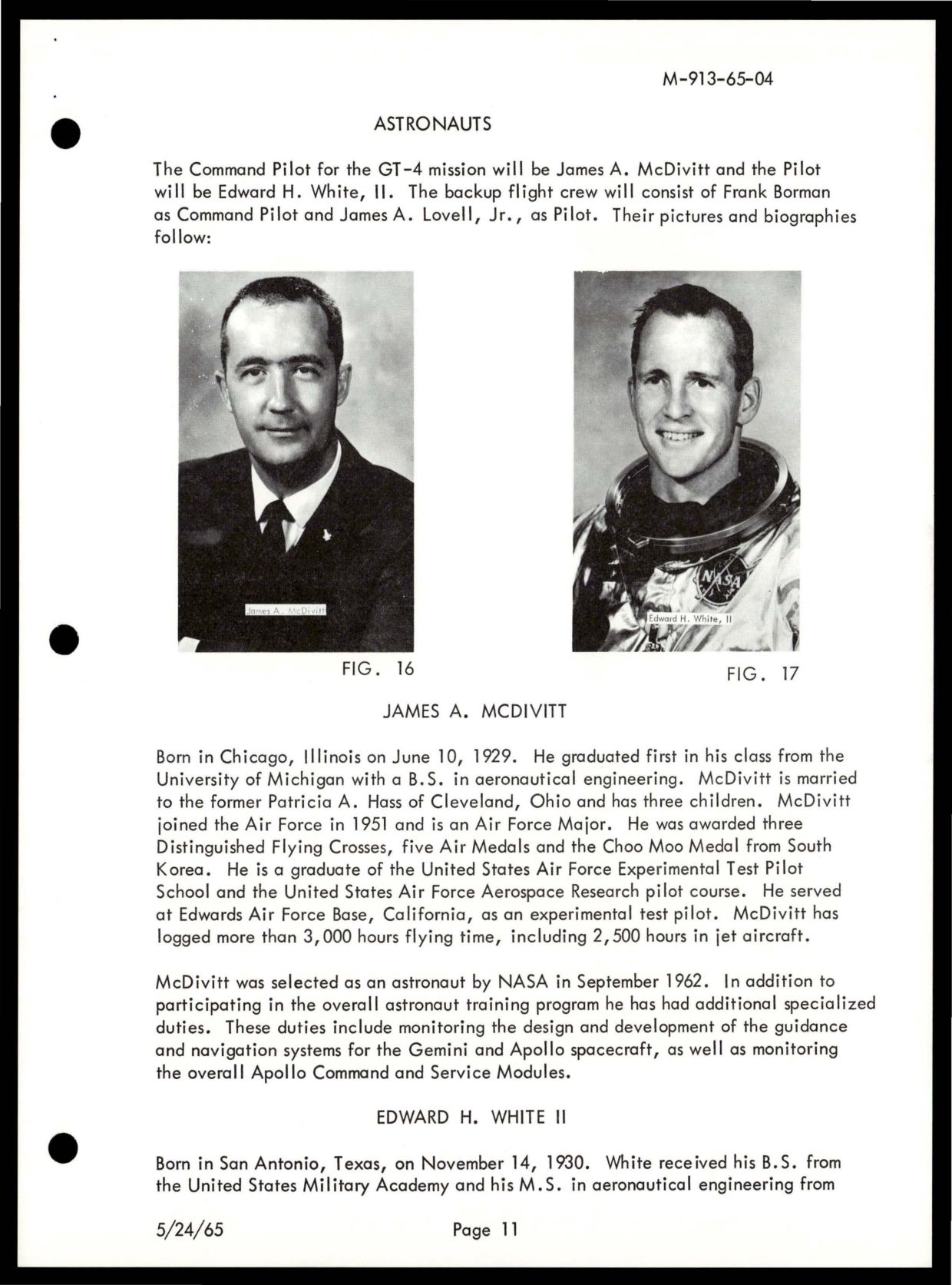
The Command Pilot for the GT-4 mission will be James A. McDivitt and the Pilot
will be Edward H. White, II. The backup flight crew will consist of Frank Borman
as Command Pilot and James A. Lovell, Jr., as Pilot. Their pictures and biographies
follow:
FIG. 16
FIG. 17
JAMES A. MCDIVITT
Born in Chicago, Illinois on June 10, 1929. He graduated first in his class from the
University of Michigan with a B. S. in aeronautical engineering. McDivitt is ma rried
to the former Patricia A. Hass of Cleveland, Ohio and has three children. McDivitt
joined the Air Force in 1951 and is an Air Force Major. He was awarded three
Distinguished Flying Crosses, five Air Medals and the Choo Moo Medal from South
Korea. He is a graduate of the United States Air Force Experimental Test Pilot
School and the United States Air Force Aerospace Research pilot course. He served
at Edwards Air Force Base, California, as an experimental test pilot. McDivitt has
logged more than 3,000 hours flying time, including 2,500 hours in jet aircraft.
McDivitt was selected as an astronaut by NASA in September 1962. In addition to
participating in the overal I astronaut training program he has had additional specialized
duties. These duties include monitoring the design and development of the guidance
and navigation systems for the Gemini and Apollo spacecraft, as wel I as monitoring
the overall Apollo Command and Service Modules.
EDWARD H. WHITE II
Born in San Antonio, Texas, on November 14, 1930. White received his B.S. from
the United States Military Academy and his M.S. in aeronautical engineering from
5/24/65
Page 11
PAGE 22 / 224
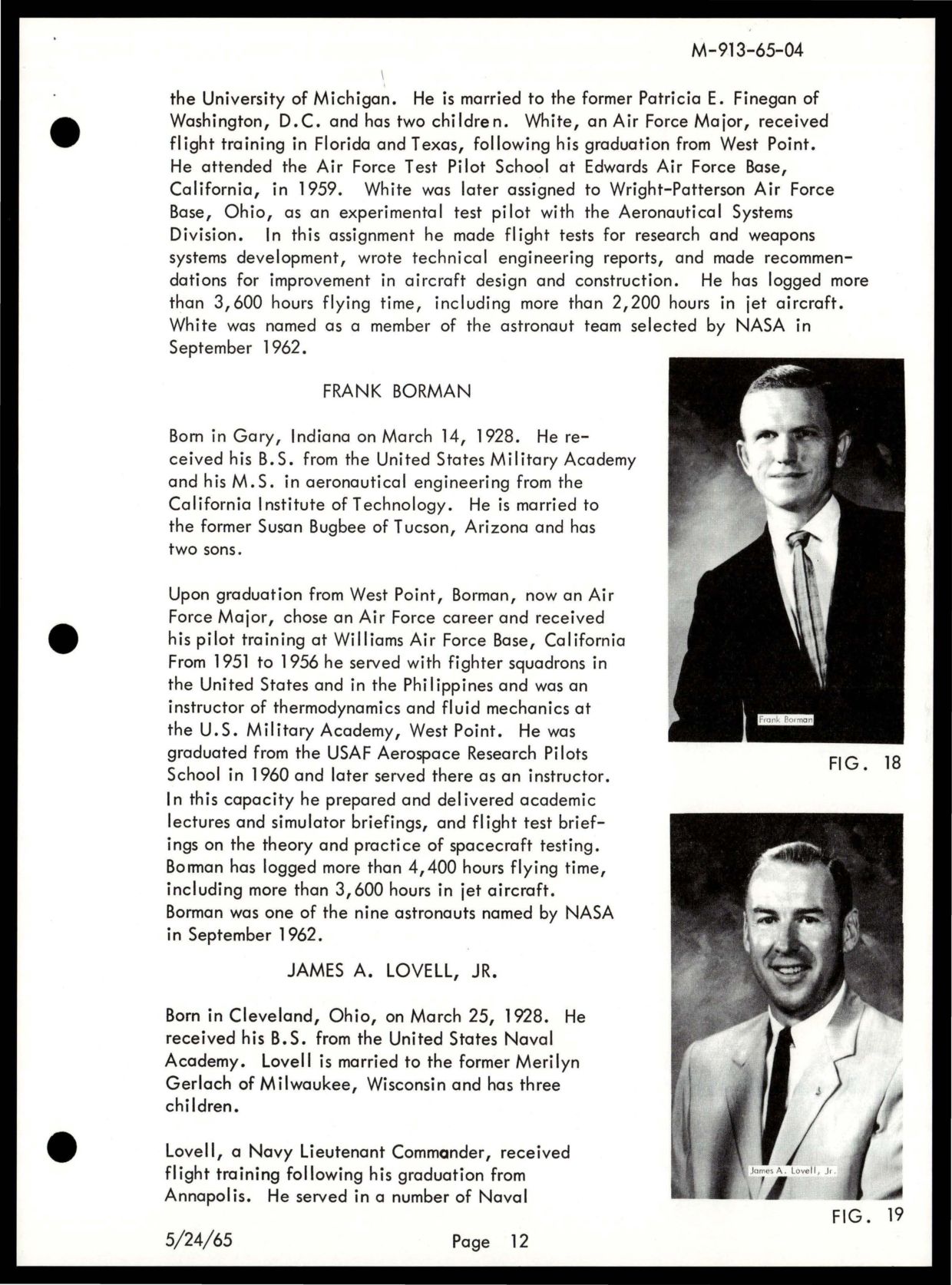
M-913-65-04 I ' the University of Michigan. He is married to the former Patricia E. Finegan of Washington, D.C. and has two children. White, an Air Force Major, received flight training in Florida and Texas, following his graduation from West Point. He attended the Air Force Test Pilot School at Edwards Air Force Base, California, in 1959. White was later assigned to Wright-Patterson Air Force Base, Ohio, as an experimental test pilot with the Aeronautical Systems Division. In this assignment he made flight tests for research and weapons systems development, wrote technical engineering reports, and made recommen dations for improvement in aircraft design and construction. He has logged more than 3,600 hours flying time, including more than 2,200 hours in jet aircraft. White was named as a member of the astronaut team selected by NASA in September 1962. FRANK BORMAN Born in Gary, Indiana on March 14, 1928. He re ceived his B.S. from the United States Military Academy and his M.S. in aeronautical engineering from the California Institute of Technology. He is married to the former Susan Bugbee of Tucson, Arizona and has two sons. Upon graduation from West Point, Borman, now an Air Force Major, chose an Air Force career and received his pilot training at Williams Air Force Base, California From 1951 to 1956 he served with fighter squadrons in the United States and in the Philippines and was an instructor of thermodynamics and fluid mechanics at the U.S. Military Academy, West Point. He was graduated from the USAF Aerospace Research Pilots School in 1960 and later served there as an instructor. In this capacity he prepared and delivered academic lectures and simulator briefings, and flight test brief ings on the theory and practice of spacecraft testing. Borman has logged more than 4,400 hours flying time, including more than 3,600 hours in jet aircraft. Borman was one of the nine astronauts named by NASA in September l 962. JAMES A. LOVELL, JR. Born in Cleveland, Ohio, on March 25, 1928. He received his B. S. from the United States Naval Academy. Lovell is married to the former Merilyn Gerlach of Milwaukee, Wisconsin and has three children. Love I I, a Navy Lieutenant Commander, received flight training following his graduation from Annapolis. He served in a number of Naval 5/24/65 Page 12 FIG. 18 FIG. 19
PAGE 23 / 224
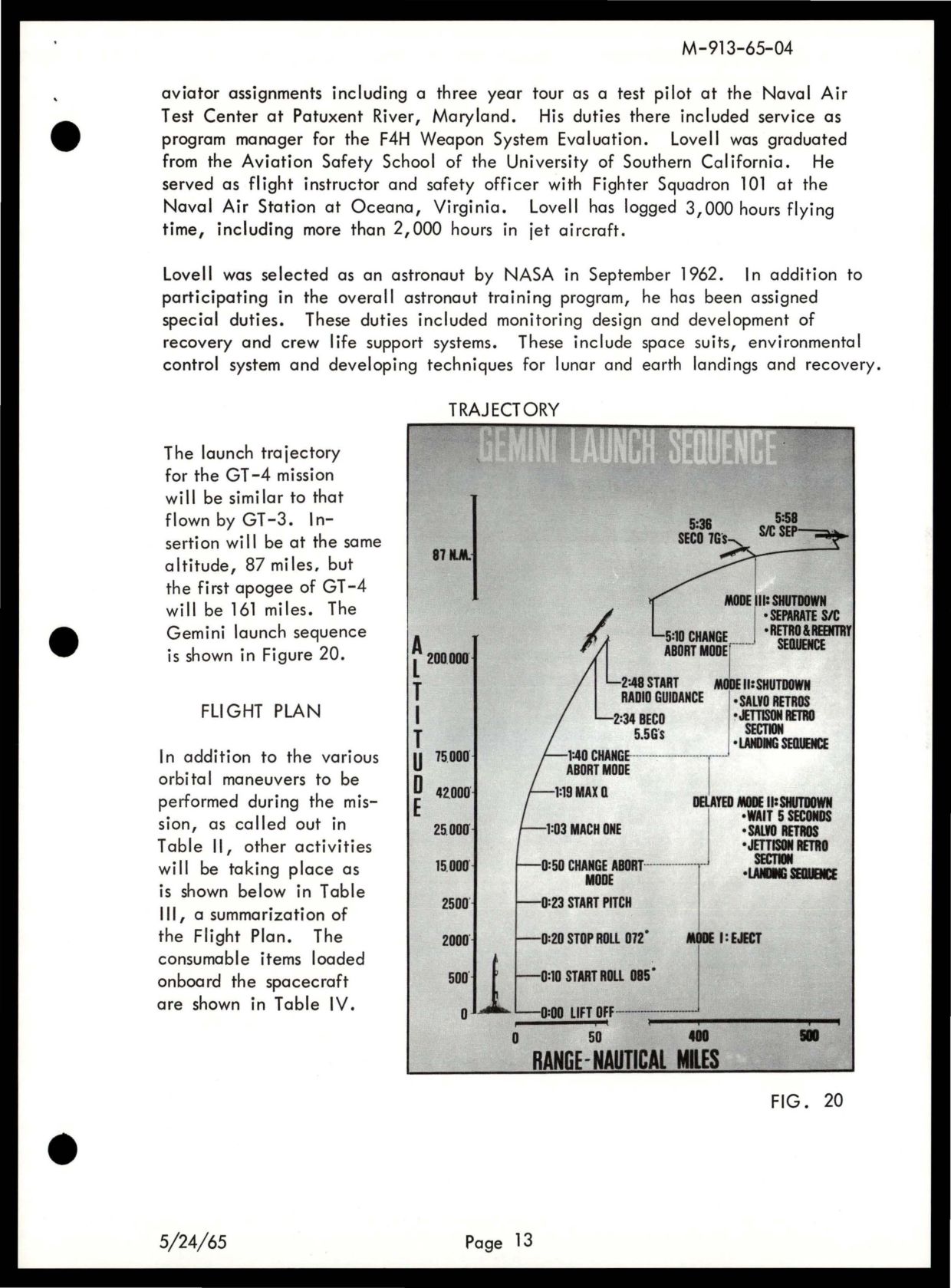
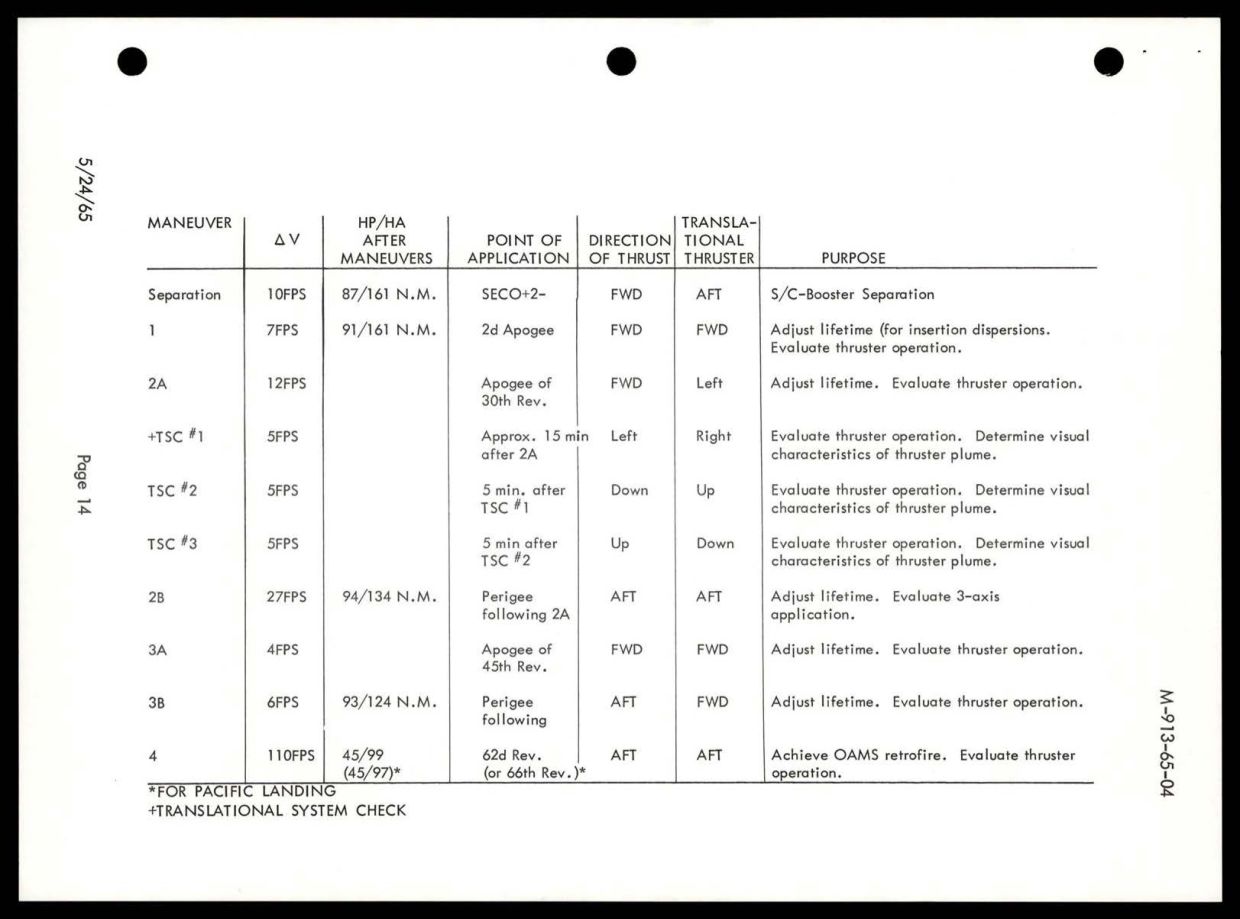
•• - M-913-65-04 aviator assignments including a three year tour as a test pilot at the Naval Air Test Center at Patuxent River, Maryland. His duties there included service as program manager for the F4H Weapon System Evaluation. Lovell was graduated from the Aviation Safety School of the University of Southern California. He served as flight instructor and safety officer with Fighter Squadron 101 at the Naval Air Station at Oceana, Virginia. Lovell has logged 3,000 hours flying time, including more than 2,000 hours in jet aircraft. Love II was selected as an astronaut by NASA in September 1962. In addition to participating in the overal I astronaut training program, he has been assigned special duties. These duties included monitoring design and development of recovery and crew life support systems. These include space suits, environmental control system and developing techniques for lunar and earth landings and recovery. The launch trajectory for the GT-4 mission wi 11 be similar to that flown by GT-3. ln sertion wi 11 be at the same altitude, 87 miles, but the first apogee of GT-4 will be 161 miles. The Gemini launch sequence is shown in Figure 20. FLIGHT PLAN In addition to the various orbi ta I maneuvers to be performed during the mis sion, as ca Iled out in Table II, other activities will be taking place as is shown below in Table 111, a summarization of the Flight Plan. The consumable items loaded onboard the spacecraft are shown in Table IV. TRAJECTORY 811Ul MODE 111: SHUTDOWN j •SEPARATE SIC 5:10 CHANGE -·-·- •RETRO &REBffllY A200.m ABORT MOOl SEflllNCE L 2:48 START 11:SHUTDOWN T RADIO GUIDANCE j.SALVO RETROS . 1:40 CHANG ABORT MOOE 1:19 MAX Q 2:34 BECO ~.ET11SON RETRO I 5.5G·s •=SEOllll:E TU 75,000' 1· ~ 42.000' IIElAYEO AQIE U:SfUTOOWN •WAIT 5SECONDS 25.000' •SALVO RETim •JETTISON RmO SECTIII 0:50 CHANGE ABORT····-···-· 15.000' •I.AIIN SBIIIIG MODE Q:23 START PITCH 2500' Q:20 STOP ROLL 012• l:EJECT 2000· ~l Q:10 START ROLL oas· :OO LIFT OFF-- ... - _______... 0 50 • RANG -NAUTICAL MIES FIG. 20 • 5/24/65 Page 13
PAGE 24 / 224
MANEUVER
HP/HA
TRANSLA
~v
AFTER
POINT OF
DIRECTION TIONAL
MANEUVERS
APPLICATION
OF THRUST THRUSTER
PURPOSE
Separation
l0FPS
87/161 N.M.
SECO+2
FWD
AFT
S/ C-Booster Separation
1
?FPS
91/161 N.M.
2d Apogee
FWD
FWD
Adjust lifetime {for insertion dispersions.
Evaluate thruster operation.
2A
12FPS
Apogee of
FWD
Left
Ad just Iifetime. Evaluate thruster operation .
30th Rev.
+TSC #1
Approx. 15 min
Left
Right
5FPS
Evaluate thruster operation. Determine visual
after 2A
characteristics of thruster plume .
TSC #2
5FPS
5 min. after
Down
Evaluate thruster operation. Determine visual
Up
TSC #1
characteristics of thruster plume.
TSC #3
5 min after
5FPS
Down
Evaluate thruster operation. Determine visual
Up
TSC #2
characteristics of thruster plume.
27FPS
94/ 134 N.M.
Perigee
AFT
Adjust lifetime. Evaluate 3-axis
fol lowing 2A
28
AFT
application.
4FPS
3A
Apogee of
FWD
FWD
Adjust Iifetime. Evaluate thruster operation.
45th Rev .
6FPS
93/ 124 N.M.
Perigee
AFT
FWD
Adjust lifetime. Evaluate thruster operation.
following
3B
1 l0FPS
62d Rev.
4
45/99
AFT
AFT
Achieve OAMS retrofire. Evaluate thruster
(45/97)*
{or 66th Rev. )*
operation.
s::
-b
(,J
I
0,
I °'
*FOR PACIFIC LANDING
~
+TRANSLATIONAL SYSTEM CHECKPAGE 25 / 224
M-913-65-04
TABLE Ill
IN-FLIGHT ACTIVITIES
Time
Revolution
HRS:MIN
No.
0:12
1
1:45
2
4:35
3-4
7:45
5-6
11:15
7-8
13:05
9
17:05
11
19:52
13-14
24:00
16
25:58
17-18
29:25
19
31 :20
20
31 :40
21
33:20
22
43:00
28
44:25
29
46:48
30
47:33
31
52:30
33-34
54:35
35
56:35
36-37
41
70:26
46
76:30
49
77:20
50
90:45
58
95:45
61
96-35
62
97:32
97:46
63
5/24/65
EVENT
Insertion Check I ist
D-9 Experiment
Translation Maneuver
D-6 Experiment
MSC-1,2,3, and 10 Experiments
M-3 Experiment
MSC-2 and 3 Experiments
D-8 Experiment
D-9 Experiment
D-1 Experiment
M-3 Experiment
S-5 Experiment
HF Communication Tests
D-9 Experiment
S-6 Experiment
MSC-2 & # Experiments
D-8 Experiment
D-8 Experiment
S-6 Exoeriment
S-6 Experiment
S-5 Experiment
S-6 Experiment
M-3 Experiment
MSC-1 Experiment
Translation Maneuvers
Translation Maneuvers
Thruster Failure Check
Power Down S/C
S-5 Experiment
S-6 Experiment
M-3 Experiment
D-9 Experiment
MSC-2 & 3 Experiments
S-6 Experiment
D-9 Exoeriment
Translation Maneuvers
M-3 Experiment
Apollo Yaw Orientation
Power Down S/ C
M-3 Experiment
D-9 Exoeriment
Power Down S/ C
M-3 Experiment
Pre Retro Checklist, TR-5 Minutes
Checklist, TR-1 Minute Checklist
Retrofire, Retro Jettison, Post-Retro
Checklist
Reentry, Drogue Chute Deploy, Pilot
Chute Deploy, Main Chute Deploy,
Two-Point Suspension, Touchdown,
Post-Landing Checklist
Page 15
Function
CP
p
Dav
Niaht
X
X
X
X
X
X
X
X
X
X
X
X
X
X
X
X
X
X
X
X
X
X
X
X
X
X
X
X
X
X
X
X
X
X
X
X
X
X
X
X
X
X
X
X
X
X
X
X
X
X
X
X
X
X
X
X
X
X
X
X
X
X
:.<.
X
X
X
X
)(
X
X
X
X
X
X
X
X
X
X
X
X
X
X
)(
X
X
X
X
X
X
X
X
X
X
X
X
X
X
PAGE 26 / 224
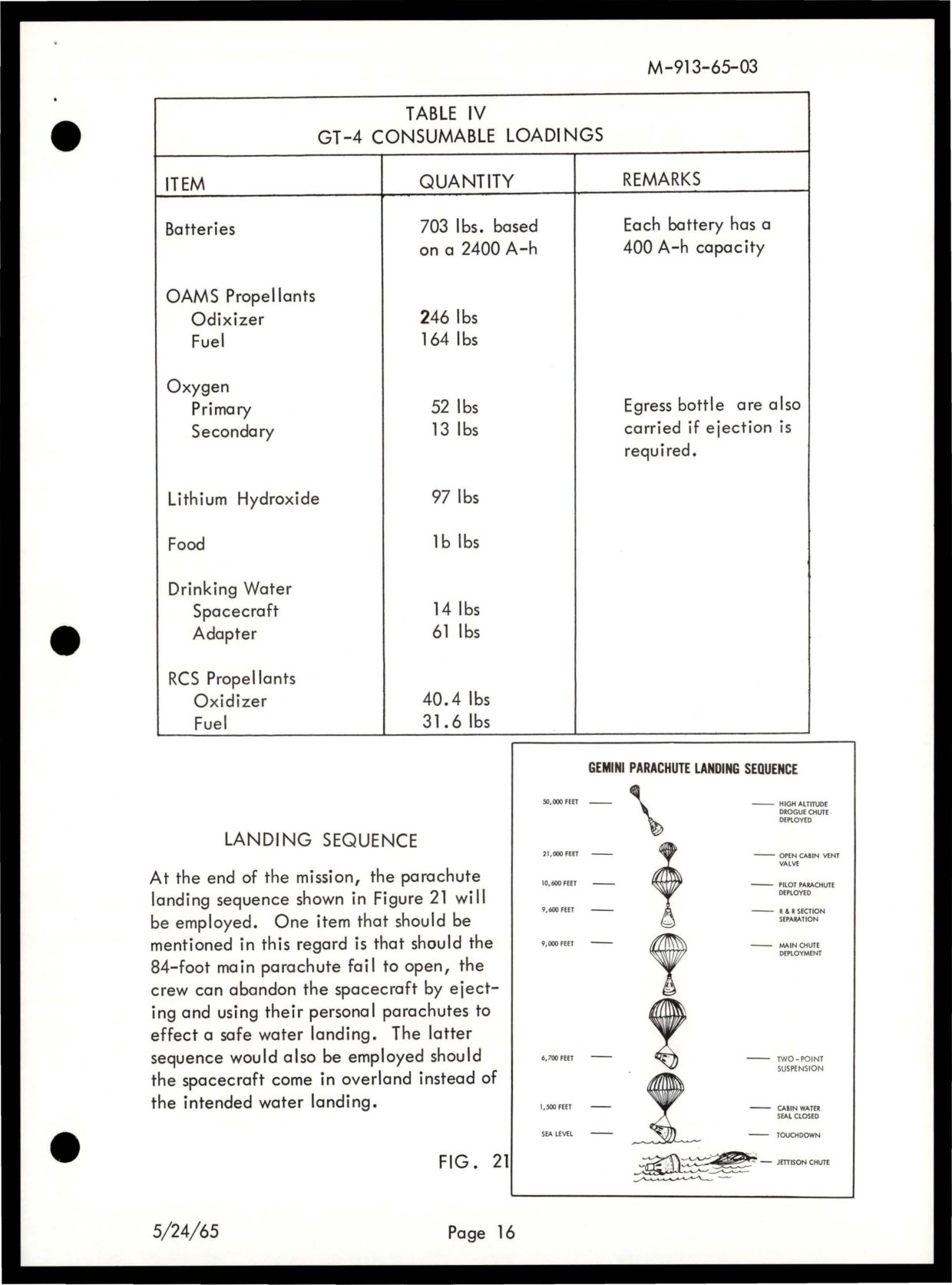
M-913-65-03 TABLE IV GT-4 CONSUMABLE LOADINGS ITEM QUANTITY REMARKS Batteries OAMS Propel I ants Odixizer Fuel Oxygen Primary Secondary Lithium Hydroxide Food Drinking Water Spacecraft Adapter RCS Propellants O xidizer Fuel 703 I bs. based on a 2400 A-h 246 lbs 164 lbs 52 lbs 13 lbs 97 lbs lb lbs 14 lbs 61 lbs 40. 4 lbs 3l.61bs Each battery has a 400 A-h capacity Egress bottle are also carried if ejection is required. LANDING SEQUENCE At the end of the mission, the parachute landing sequence shown in Figure 21 will be employed. One item that should be mentioned in this regard is that should the 84-foot main parachute fail to open, the crew can abandon the spacecraft by eject ing and using their personal parachutes to effect a safe water landing. The latter sequence would also be employed should the spacecraft come in overland instead of the intended water landing. FIG. 21 GEMINI PARACHUTE LANDING SEQUENCE 50,000 FEET - HIGH ALTITUDE DROGUE CHUTE DEPLOYED \ 21 , 000 FEET - Oft:N CABIN VfNT t VALVE 10, 600 FEET - PILOT PARA.CHUTE DEPLOYED 9,600 FEET - It A It SECTION SEPARAT ION 9,000 FEET - MAINCHUTE DEPLOYMENT !' 6,700 FEET - TWO-POINT SUSPENSION 1,500 FEET - CABIN WA.Tflt SEAL CLOSED 1_ SEA LEVEL - TOUCHDOWN ~~- JffilSONCHUTf ~ 5/ 24/65 Page 16
PAGE 27 / 224
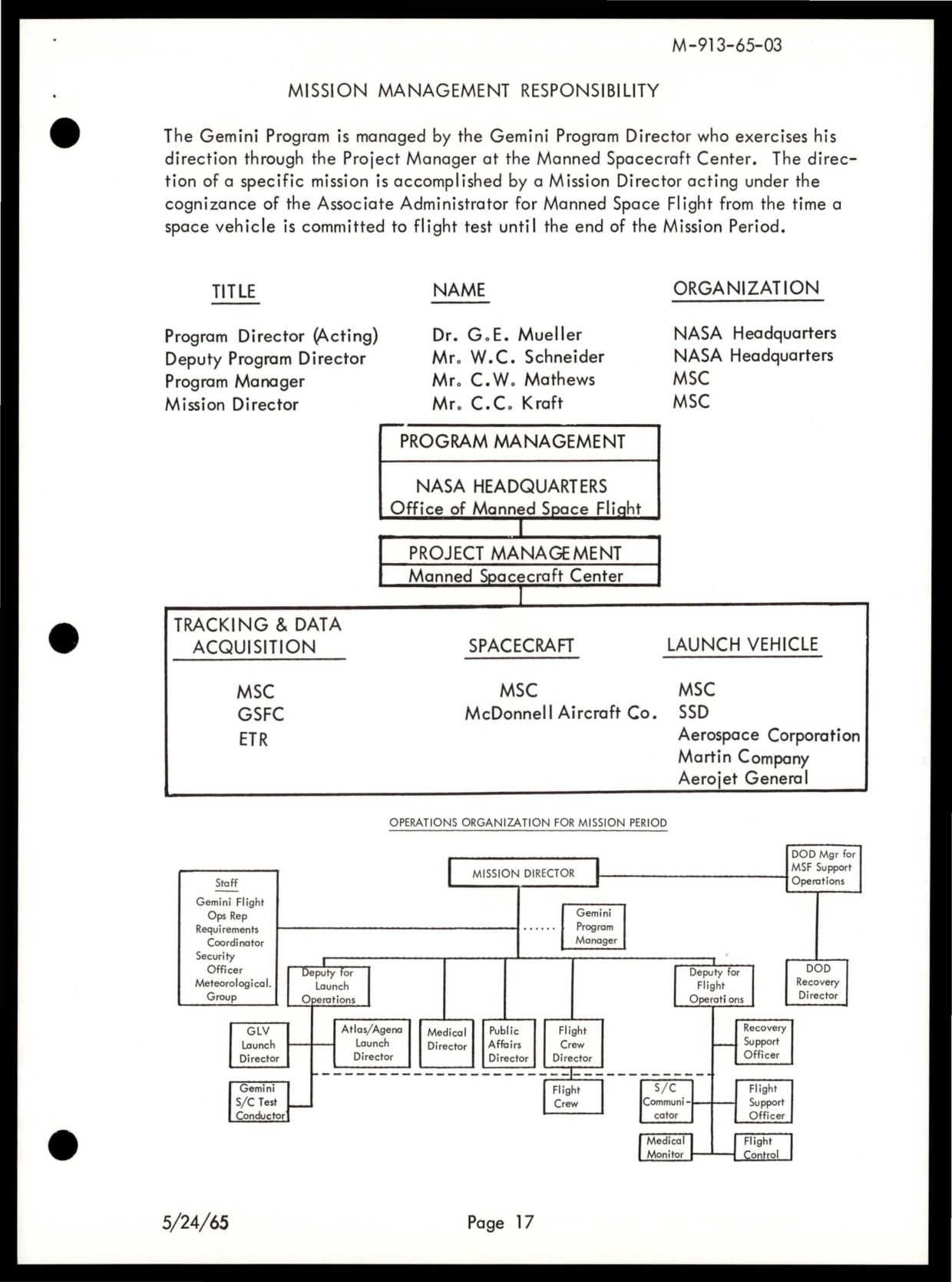
M-913-65-03 MISSION MANAGEMENT RESPONSIBILITY The Gemini Program is managed by the Gemini Program Director who exercises his direction through the Project Manager at the Manned Spacecraft Center. The direc tion of a specific mission is accomplished by a Mission Director acting under the cognizance of the Associate Administrator for Manned Space Flight from the time a space vehicle is committed to flight test until the end of the Mission Period. TITLE Program Director (Acting) Deputy Program Director Program Manager Mission Director TRACKING & DATA ACQUISITION MSC GSFC ETR Staff Gemini Flight Ops Rep Requirements Coordinator Security Officer Meteorologica l. Group NAME Dr. G . E. Mueller Mr. W.C. Schneider Mr. C. W. Mathews Mr. C.C. Kraft PROGRAM MANAGEMENT NASA HEADQUARTERS Office of Manned Space Fliqht I PROJECT MANAGEMENT Manned Soacecraft Center I SPACECRAFT MSC McDonnell Aircraft Co. OPERATIONS ORGAN IZATION FOR MISS ION PERIOD ORGANIZATION NASA Headquarters NASA Headquarters MSC MSC LAUNCH VEHICLE MSC SSD Aerospace Corporation Martin Company Aerojet General DOD Mgr for MISSION DIRECTOR MS F Support ...___--.-_____,----- ----~ Operations Gemini Program Manager Deputy for Flight Operati ons DO D Recovery Director Atlas/ Agena Medical Publ ic Fl ight Crew 5/24/65 Launch Director Affa irs Director Director Director ---------------------------------- Page 17 Flight Crew Medical Monitor
PAGE 28 / 224
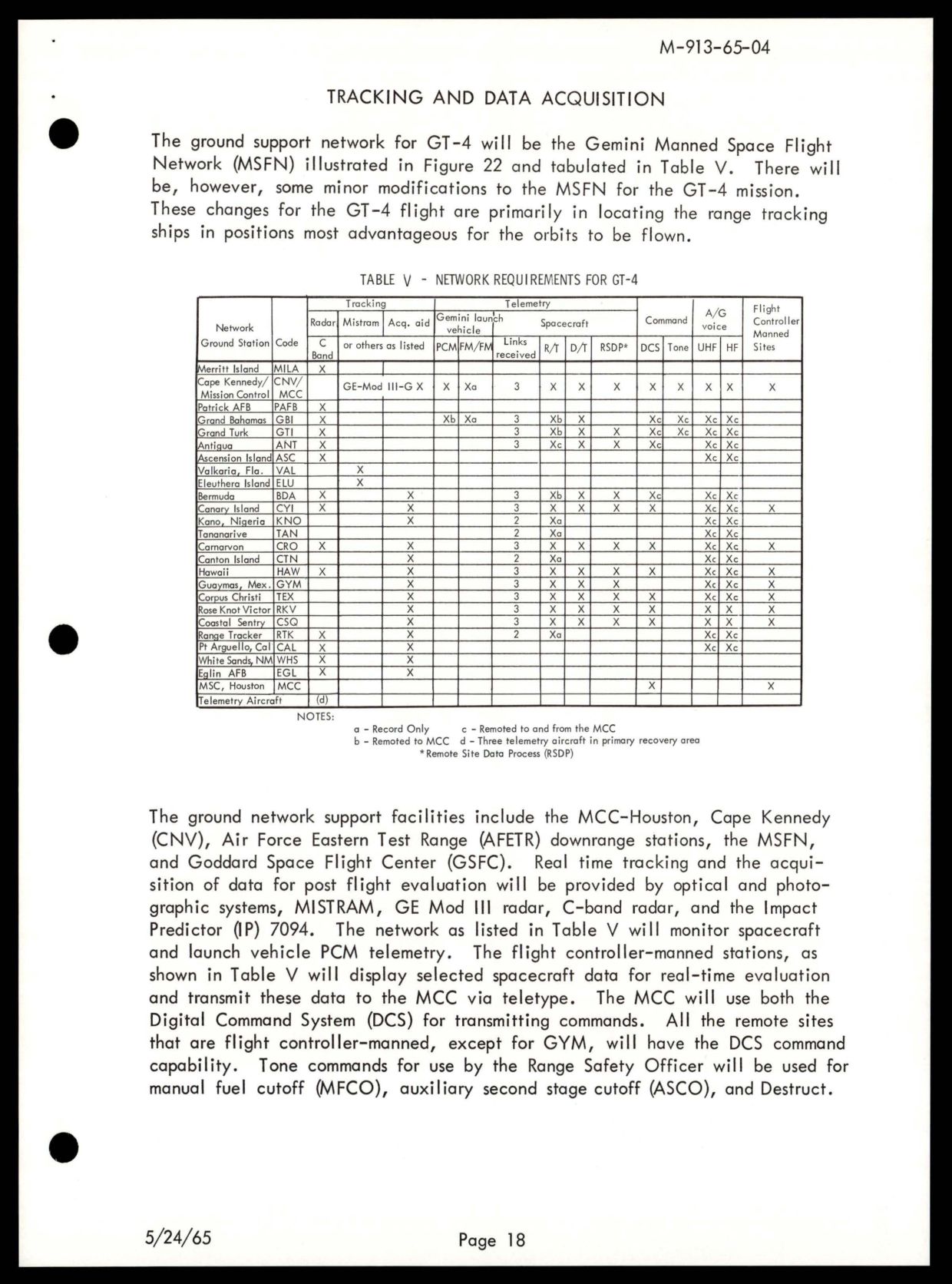
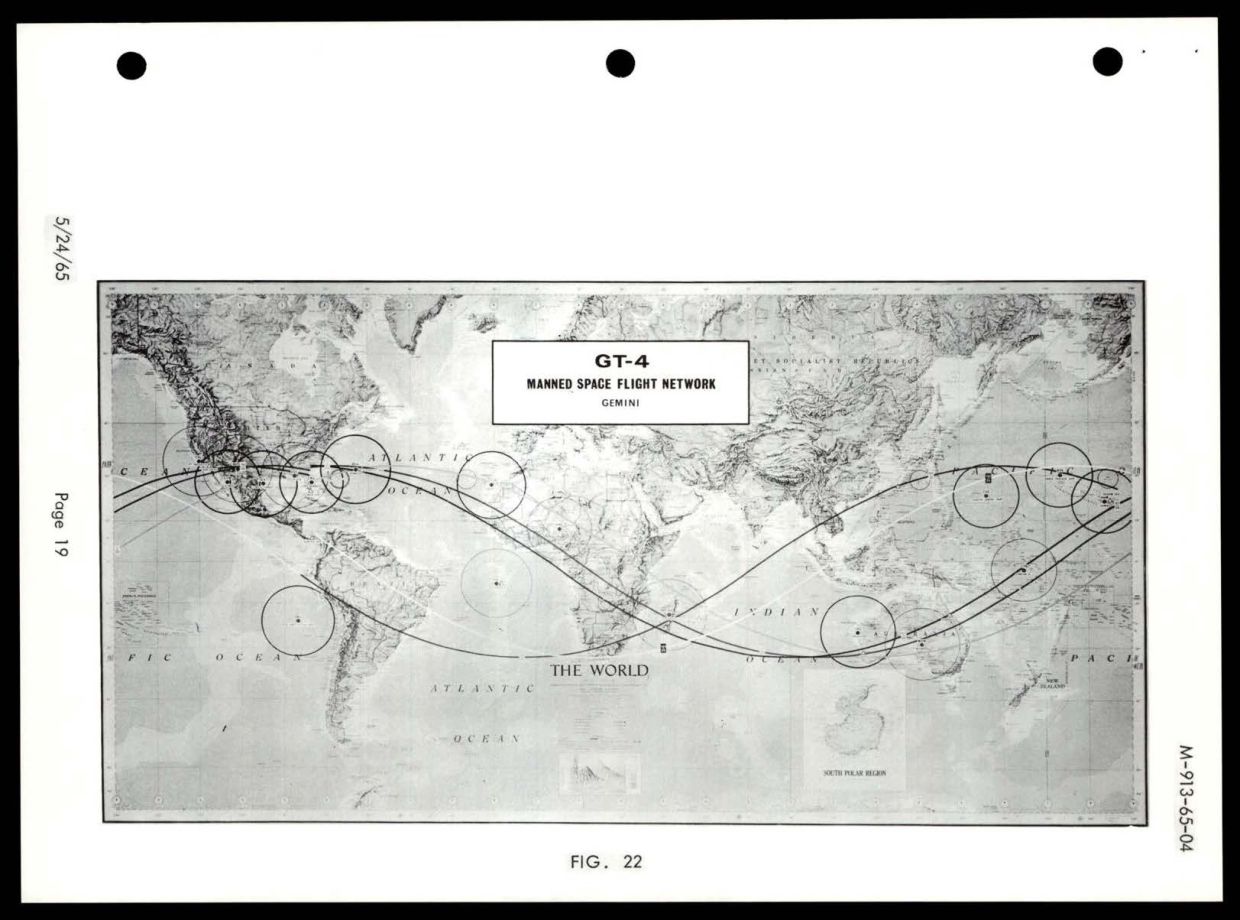
M-913-65-04 TRACKING AND DATA ACQUISITION The ground support network for GT-4 wi 11 be the Gemini Manned Space Flight Network (MSFN) illustrated in Figure 22 and tabulated in Table V. There will be, however, some mi nor modifications to the MSFN for the GT-4 mission. These changes for the GT-4 fl ight are prima rily in locating the range tracking ships in positions most advantageous fo r the orbits to be flown . TABLE V - NETWORK REQ UIREMENTS FOR GT-4 Network Ra dar G round Station Code C Band Merritt Island MILA X Cope Ken nedy/ CNV/ M iss ion Contro l MCC Patrick AFB PAFB X lr.:.""d Bahamas G BI X Grand Turk GTI X IAntiouo ANT X Ascension Island ASC X Valkario Fla. VA L Eleuthera Island ELU Bermuda BDA X Conarv Is land CYI X Kono N iae rio KNO Tananarive TAN Cornarvon CRO X Canton Is land CTN Hawaii HAW X Guovmos Mex. GYM Corous Christi TEX Rose Knot Victor RKV Coasta l Se ntrv CSQ Ranae Tracker RTK X Pt ArQuello, Cal CAL X White Sa nd~ NM WHS X Ea lin AFB EG L X M SC, Houston MCC ITe lemetry Airc raft (d) NOTES: Tracki ng Telemetry A/ G Mistrom Acq. aid G emini launch Spacec ra ft Commend vehi cl e voi ce or oth ers as I isted PCM FM/ FN Li nks R/T D/T RSDP * DCS Tone UHF HF received GE-Mod 111 - G X X Xa 3 X X X X X Xb Xo 3 Xb X Xe Xe 3 Xb X X Xe Xe 3 Xe X X Xe X X X 3 Xb X X Xe X 3 X X X X X 2 Xo 2 Xo X 3 X X X X X 2 Xa X 3 X X X X X 3 X X X X 3 X X X X X 3 X X X X X 3 X X X X X 2 Xo X X X X X X Xe Xe Xe Xe Xe Xe Xe Xe Xe Xe Xe Xe Xe Xe Xe Xe Xe Xe . Xe Xe Xe Xe Xe Xe Xe Xe X X X X Xe Xe Xe Xe Fli ght Controller Manned Sites X X X X X X X X X a - Record Only c - Remoted to ond from the MCC b - Remoted to MCC d - Three telemetry aircraft in pri mary recovery area * Remote Site Data Process (RSDP) The ground network support facilities include the MCC-Houston, Cape Kennedy (CNV), Air Force Eastern Test Range (AFETR) downrange stations, the MSFN, and Goddard Space Flight Center (GSFC). Real time tracking and the acqui sition of data for post flight evaluation will be provided by optical and photo graphic systems, MISTRAM, GE Mod Ill radar, C-band radar, and the Impact Predictor OP) 7094. The network as listed in Table V will monitor spacecraft and launch vehicle PCM telemetry. The flight controller-manned stations, as shown in Table V will display selected spacecraft data for real-time evaluation and transmit these data to the MCC via teletype. The MCC will use both the Digital Command System (DCS) for transmitting commands. All the remote sites that are flight controller-manned, except for GYM, will have the DCS command capability. Tone commands for use by the Range Safety Officer will be used for manual fuel cutoff (MFCO), auxiliary second stage cutoff (ASCO), and Destruct. 5/24/65 Page 18
PAGE 29 / 224
-0 0 (0 (1) I / /_ I \ / / l TH I \ /J I \ P ,I C / I w I 0 <.n I 0 .i,.. FIG. 22
PAGE 30 / 224
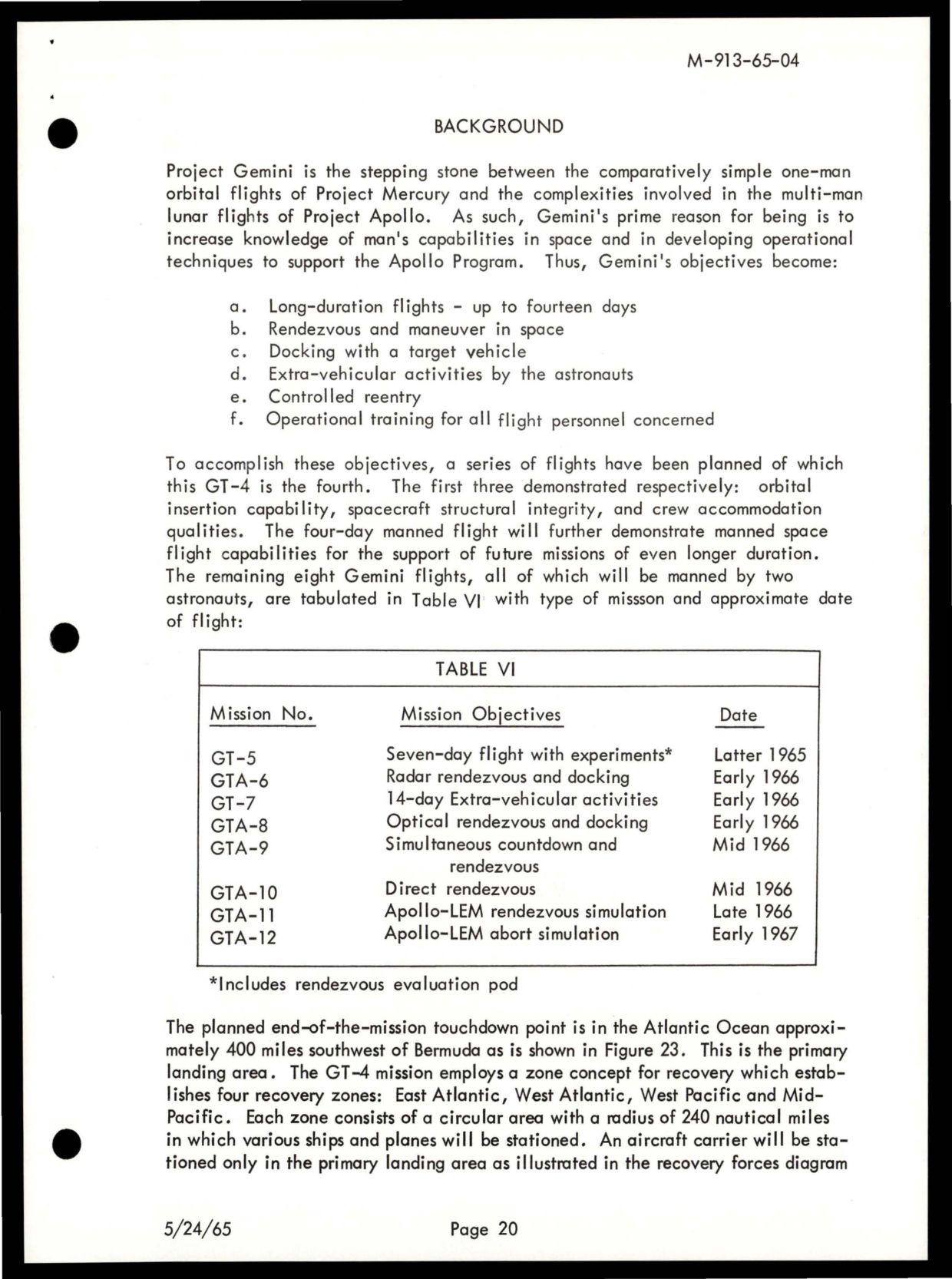
M-913-65-04 BACKGROUND Project Gemini is the stepping stone between the comparatively simple one-man orbital flights of Project Mercury and the complexities involved in the multi-man lunar flights of Project Apollo. As such, Gemini's prime reason for being is to increase knowledge of man's capabilities in space and in developing operational techniques to support the Apollo Program. Thus, Gemini's objectives become: a. b. c. Long-duration flights - up to fourteen Rendezvous and maneuver in space Docking with a target vehicle days d. Extra-vehicular activities by the astronauts e. Control led reentry f. Operational training for al I flight personnel concerned To accomplish these objectives, a series of flights have been planned of which this GT-4 is the fourth. The first three demonstrated respectively: orbital insertion capability, spacecraft structural integrity, and crew accommodation qualities. The four-day manned flight will further demonstrate manned space flight capabilities for the support of future missions of even longer duration. The remaining eight Gemini flights, all of which will be manned by two astronauts, are tabulated in Table VI ' with type of missson and approximate date of flight: Mission No. GT-5 GTA-6 GT-7 GTA-8 GTA-9 GTA-10 GTA-11 GTA-12 TABLE VI Mission Objectives Seven-day flight with experiments* Radar rendezvous and docking 14-day Extra-vehicular activities Optical rendezvous and docking Simultaneous countdown and rendezvous Direct rendezvous Apollo-LEM rendezvous simulation Apollo-LEM abort simulation Date Latter 1965 Early 1966 Early 1966 Early 1966 Mid 1966 Mid 1966 Late 1966 Early 1967 *Includes rendezvous evaluation pod The planned end-of-the-mission touchdown point is in the Atlantic Ocean approxi mately 400 miles southwest of Bermuda as is shown in Figure 23. This is the primary landing area. The GT-4 mission employs a zone concept for recovery which estab lishes four recovery zones: East Atlantic, West Atlantic, West Pacific and Mid Pacific. Each zone consists of a circular area with a radius of 240 nautical miles in which various ships and planes will be stationed. An aircraft carrier will be sta tioned only in the primary landing area as ii lustrated in the recovery forces diagram 5/24/65 Page 20
PAGE 31 / 224
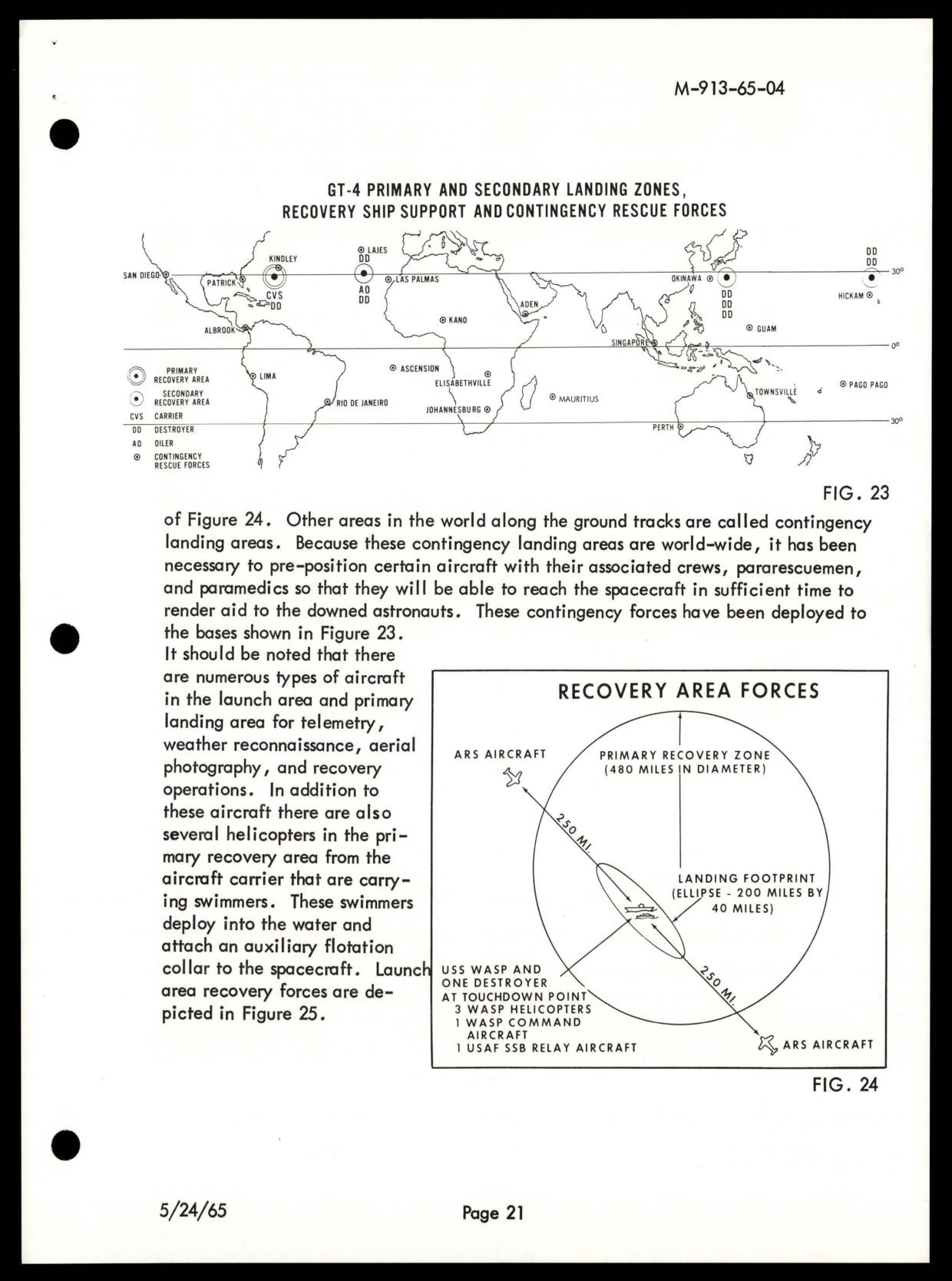
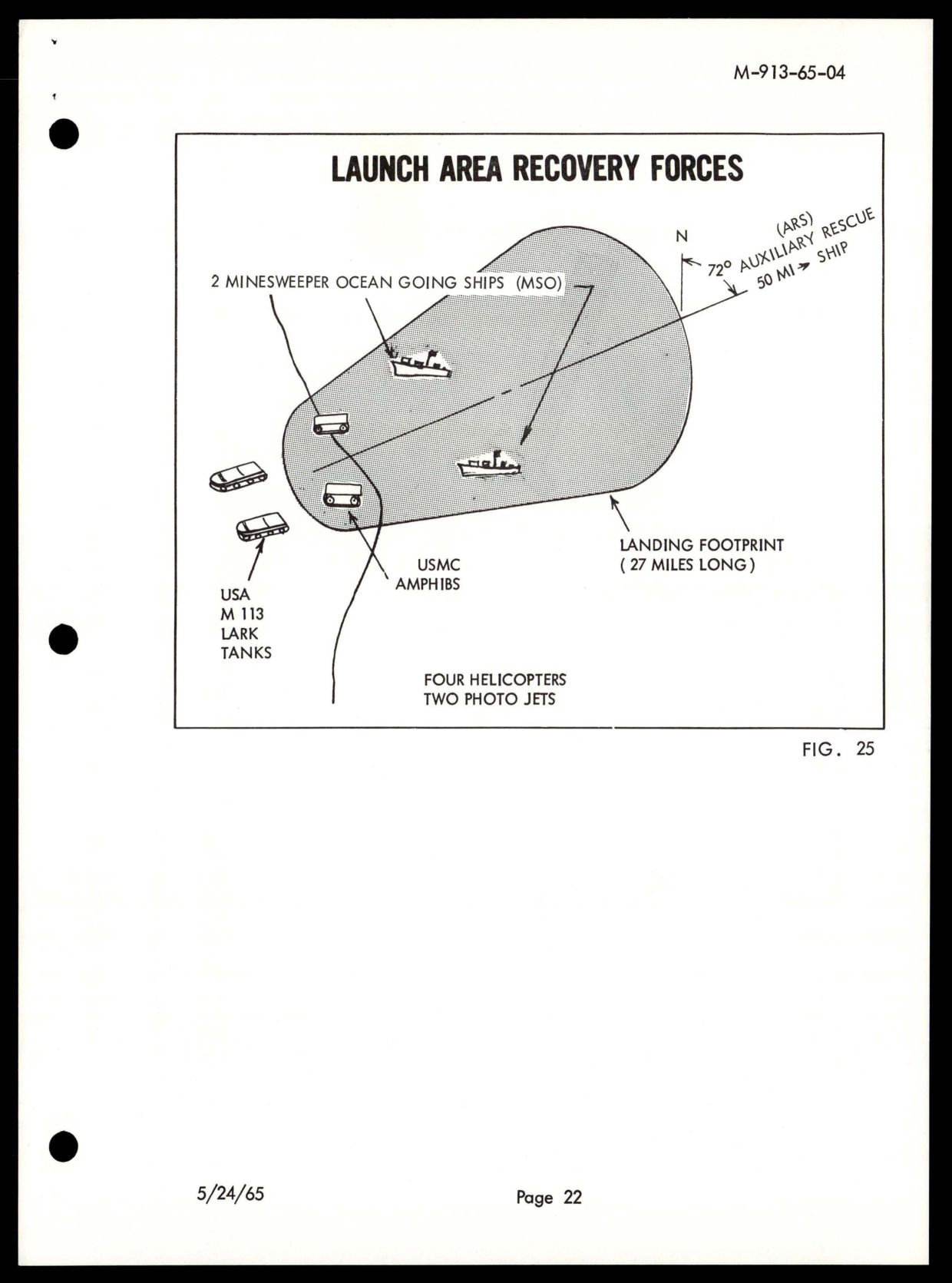
00 M-913-65-04 GT-4 PRIMARY AND SECONDARY LANDING ZONES, RECOVERY SHIP SUPPORT AND CONTINGENCY RESCUE FORCES \);J DO 30" ~ 00 HICKAM 0 00 00 0 GUAM O" ~ PRIMARY l~ RECOVERYAREA 0 PAGO PAGO 8 " REEm;~ANEA CVS CARRI ER 30" 00 OESTROYER AO OILER 0 CO NTINGE NCY RESCUE FORC ES /)};; FIG. 23 of Figure 24. Other areas in the world along the ground tracks are called contingency landing areas. Because these contingency landing areas are world-wide, it has been necessary to pre-position certain aircraft with their associated crews, pararescuemen, and paramedics so that they will be able to reach the spacecraft in sufficient time to render aid to the downed astronauts. These contingency forces have been deployed to the bases shown in Figure 23 . It should be noted that there are numerous types of aircraft in the launch area and primary landing area for telemetry, weather reconnaissance, aerial photography, and recovery operations. In addition to these aircraft there are also several helicopters in the pri mary recovery area from the aircraft carrier that are carry ing swimmers. These swimmers deploy into the water and attach an auxiliary flotation collar to the spacecraft. Launc area recovery forces are de picted in Figure 25. RECOVERY AREA FORCES ARS AIRCRAF T PRIMARY RECOV ERY ZONE 200 MILES BY USS WASP AND ONE DESTROYE R AIRCRAFT 1 USAF SSB RELAY AIRCRAFT AT TOUCHDOWN POINT 3 WASP HELICOPTERS 1 WASP COMMAND (480 MILES N DIAM ETER ) LANDING FOOTPRINT (ELLIPSE - 40 MILES) ~ ARS AIRCRAFT FIG. 24 5/24/65 Page 21
PAGE 32 / 224
M-913-65-04
LAUNCH AREA RECOVERY FORCES
2 MINE
USA
M 113
LARK
USMC
\ AMPHIBS
LANDING FOOTPRINT
( 27 MILES LONG)
TANKS
FOUR HELICOPTERS
TWO PHOTO JETS
FIG. 25
5/24/65
Page 22
PAGE 33 / 224
NASA ROUTING SLIP ,. 2. CODE NAME (if ,,,msary) ACTION APPROVAi. CONCURRENCE FILE INFORMATION INVESTIGATE ANO ADVISE 3. NOTE ANO FOIIWAR0 NOTE ANO RETURN l'ER REQUEST RECOMMENDATION 5. SEE ME SIGNATURE 6. REPlY fOR SIGNATURE OF, 7. REMARKS: ~ - Of4-· ~ ~ ~~~- &._. Q ~u' HL ~ J)k ~ - ~ ~ 1-~t I l · J>~~P1~,~s ~A-- 'J- ~ ~<L -~ f-i ~ o'\rv--J ~ J - ;-T;/::i, er_ lJ. 1/~ I 0ATE , u.s. GOY[RMN[NT PRINTING o,,ict ~ 196-& 0,-1571845 NASA 'Form 26 (Rev. Jan. 1963)
PAGE 34 / 224
NASA ROUTING SLIP
CODE
NAME (if 11«mary)
~ ACTION
APPROVAi.
1.
-
\6 ,-,----£
CONCURRENCE
FILE
2.
J
•
(- i/--e_
INFORMATION
INVESTIGATE AND ADVISE
3.
..
NOTE AND FORWARD
NOTE AND RETURN
"·
PU REQUEST
IIECOMMENDATION
5.
SEE ME
SIGNATURE
6.
REPLY FOR SIGNATURE OF:
7.
REMARKS ,
~~1" CT'µ:;:
I
r#- ft{ J' c_
©4;~"'1
frGJ'
~
z.s-
4. l
I
.
FROM: I CODE :
I NAME:
IDATE :
~0_
C
U.S. GOVI RNM ! NT PRINTI NG Off' IC[ : 19H o,-67'84 5
NASA f orm 26 ( Rev. Jan. 1963) (/PAGE 35 / 224
EX l 3
ROUTING S L IP
,
-
N A
E
INIT I AL
N. G. FOSTER
R. L. cox
w . A . EATON
G. C . HR A B AL
R . A. MOK E
F. B. NEWMAN
'
0. SM IS TAD
B . BROCKER
~
M. M~
~
FILE -=>
E I A RKS
~ C,,vL() z;
\..__ ---- fLc..
-
PAGE 36 / 224
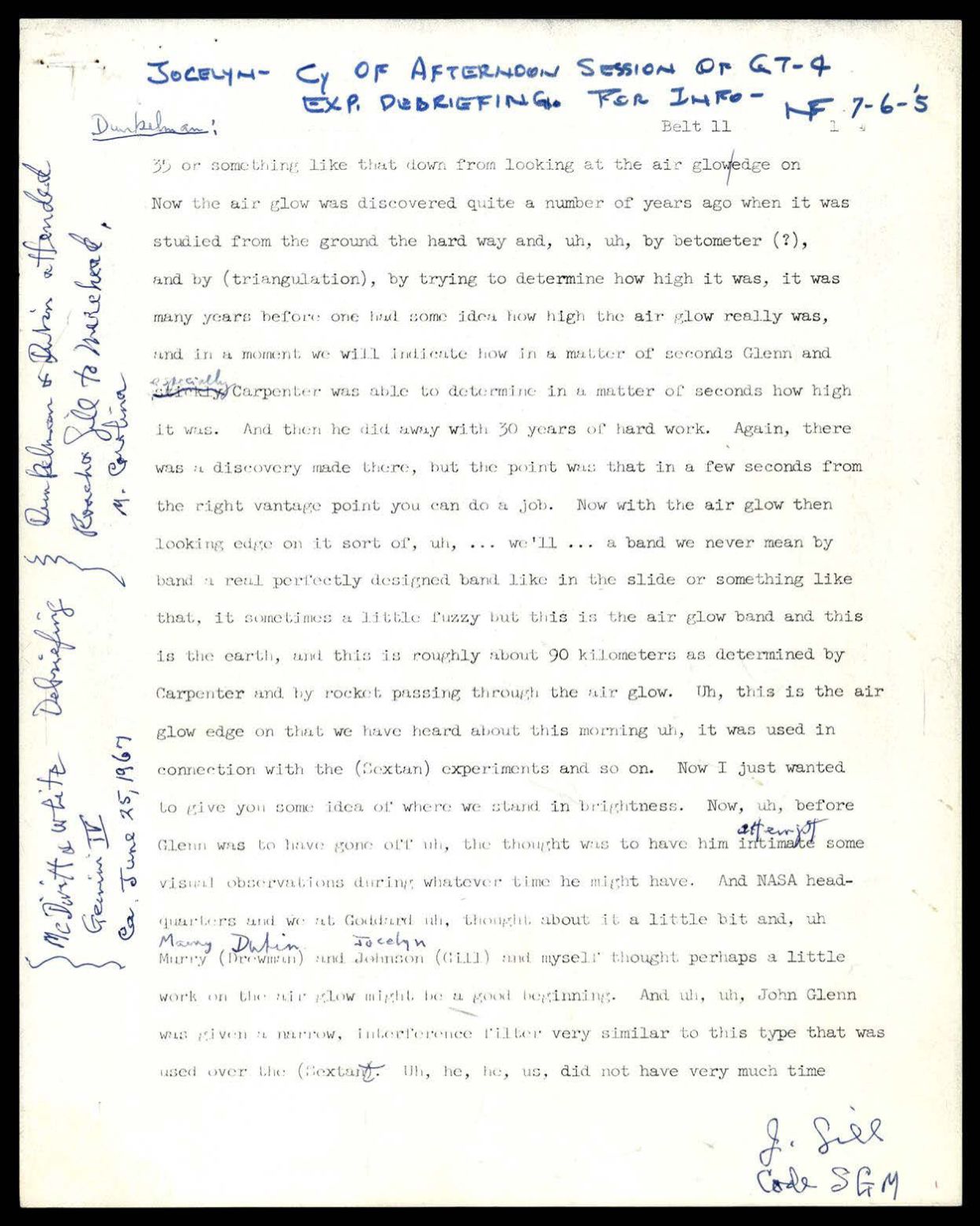
C..y
0~ AFT~NO<#,J Se-w,o~ <Dr
~
f.
9\& b c.,cn: I N-"• ~fl
l,'-\Jrc,
Belt 11
)'.,; or· ~;omc.;U1j r.r~ .Ulce t! ,r,.t ,Lovt', from looking at t e ai!'.' 0 10vfedge on
Now t he air ~l ow was discovered q1lit
a number o· y ea s ago when it wa s
stud ·cd
.om t e ground the hard way and,
uh
uh, by etometer (?)'
,1.nd l,y ( tri11.nguJ.;.i. t • on) , by tryi ng to determine h ow high i t wa s it was
many yea r n h r oJ"<• on· 1,a<l ::om,1 j< <'>L how ll lg}1 tr,c air 1.i:low really was,
ancl .ir1 a rnorm:11. wv "Wj.ll .lrnl.i1:1d,· l1t)W in u. rrv-.1.l,L<·r-
f
ccr·ond.o Glenn and
-<!
, ,. c..-....it..
~Cu.rp ·nL(·r- wac ·· lil • Lo
<:Lr:r-m i 11C: in u mutter
[" seconds how
jgh
it w:.J,,s .
/\ncl tl1<: r1 lie: d:i.<t v.wu.y w:i.tl, :,0 y :r.1.rs of' hard wor·k.
Aga.in
the e
W"l.ls :L dis,·ov _ry 111a<'l.c
Lh<..:.rc:
hut LJ1c pc,in t WIL~: t;hat in a few ~ - conds from
th .
:L ht vant 11~
poj_ri L ynu cnn d > tl jolJ.
Nuw with tl'ic air glow t hen
.Looki ng 'U/~(' 011
LL so L of
ul1 ,
wt· 'll . . . a band we never mean by
LK't.nd ·t red. l' 1.•f't't:tly tlc~ :i. 1'.ncrl
arnl J.jkc.: i n th· slide or som thing like
tlio.L. . it :;urn l,j IIK::; a Ji t;t;l • J'11z:1.y l,ut t:.l1i s
j s U1c air glow band and this
C rp ·11t r nnd. li_y r·ock. ·t pn.::;~i11r.; L11r-()t.1/'.h the 'L.i.r elow.
TJb
th·I s is t he air
glow
dg
on tl11tL we 1t1~v, _h .ard ttl,rn1t Ut:Ls mot'ni.ng uli it was used i n
er-
com1 rtion vlit}, l:h _ u:,,xtu.n)
X'P'l"imc.mL.; ancl ' O on.
Now 1 just wanted
to 1: i vc y 0 11 ::om(: idcu. ol.' wl 1c-rc; we-
:;l.1t11d. in 'lid/~l1tnes s .
N w
ub, before
~tr.Jwv--~
C.-lc1 111 w-:tn l.n l1;rvc· ,'.onr· ,i!'I' 1rl , 1
tl1v thD1l1'.ht
W' L(.; Lo have him irlt imaJtl some
And NASA head-
And. nil , ull , ,John Glenn
w,1 :~ ; '. i v,·11
1i:; <I ,,v,'r
.-L
111 1.1.,-1,w ,
i 11l.('r· l', ·1 ·,·11cc l'i .1 l.1·1 · ve1·y slrnilar to thls t ype that was
L1 1t· (;;,,xt,u;r.
IJl 1
he ,
I re: ,
11!.; , did not have ve y
much timePAGE 37 / 224
Belt l l
2
l,o use it, but l,c
did
uh
have a cha nc
to obs e .,_ve the air glow
-rith the naked eye and he ·aw it edge on and he
alle
it, uh .
name for it a t the mome t and
. a nd really t he first time you se e
a thing l ike that you don ' t know whether it haze or l uminou s sort ; i t
d.oes look hazy .
Uni'or·l.;unal~ ly
t 11 . pr·er;s and other people kept tha t t e rm
•·l si:;t, ,•,)11:,;i••L.in1-~ 01 · dus t. p11:r:-tlc•J(\~_; :i 1ci s o <,n .
ReH-l ly, wbat Glenn saw
wn.
air· p;l w-
tlt:'.t' on :t Jumillou$ l 1t_y·,.,·.
Thex·,· may be :i littl -· d st thee,
l..,.~
may tinv
" omctl 1i Tl/'. to -::.u.y ul>oul: l.t1a t , l,ut, the pr.cdominate feature
is j t ·i.s a ~elf J wninout: 11-y r .
Now, C:.1.r:-:per,Lcr has mar.
time to observe
i.t .
lle took t h
int rfC'r:- nee filt •re• hack up with h j m
and uh , he was
1:,.bl
to tim
a ::; La
pas'"'inf( t h row~li U1c air f~low a s the star was setting
1..1.nd lie n ote
i I_; n.rni t u Tl ·cl :Lt V
y c-nre rull y .
throur;h the air
/'.low the u1)pt:r LI ; low r· and when :it cl .i :;appe1u· :c .
From that careful
LimJ 11e; inJ'ut·ma.Li un ore wt1:~ utile to µ.i n ,town Uie exact time of' the air
1-'.low.
Ro1w:li.ly •)() ldJ.u111eL(•1·.
/\nd Lili s -i.o wl 1:iL took mnn,y many years to
do 1·1 ·,,m Ll 1(' p:ni111 1d l,_y l.1 ·.ir1.rw.1 i.Ju.'\.:I,)11 ( ·:·) w-J1 i <" I, i :~ ver ·y v ' r.y d.iffic:u.lt cau se
you 1t<·vc1 · l<.11ow l11 n, l,u Lnk(· ,·,tr ·
u1 · 1.11111.
Ln1nsml s s.i on W<i.S
o ic;c1·vation.
Uh, we had h ped
J. iglrt 1vl1:i<- il is very diffi ult to see
IH'1J.r-
I.I1c
:;1111 ,
c111 c trtl, yrn1 ,·itn ~;(' (' i t, c,1uy
1.ri 1('TI the s un :is , oh, some
PAGE 38 / 224
-- C l:r:lt ll v/1 • some: L:i.rnr: sec :.;.3tronauts might l.1c aolc t o sec t hti.t . UJ i, Coope was able to see the . light , and uh , White and McDivitt s aw the .. . light, ve ry wel l. Uh, the let 's see there ' s another point here ; well, w '11 go ba k t o t hat in a moment. The cason I 1,htnk have tt otl1e.r dcsji.'.ns I~ show what r:Fm be done . If we lw.vr: Urne Lu ehow whuL 1·1n1 be don<· lly r~xLem.l.int'. vi s 1..ia1 obscr vt"i.tions we ,,.,:111 do so. UJ1 , :,om 01 · Ll1 ·s • n. w r :_:u]ts , 11t1 that McDivitt and White we re able tu r or ar v ry . nLc r 'S Ung. Ul1 f irst of all, t hey saw a structure in the air gl ow a nd this is the fi rst time this i s eport ed. In one inst ance a uh, . i s seen some structure i n the ~i r elow that they 're looking edge on turns (whlte) .... This has never been obscrv d b fore . It is ver y hurd to observe t his with a rocket; you clan 't know when to fire the rocket to do t hat . They, they observed that. They obcer-vcd. unothcr intc.;rcct:Lnp, tli·ine; . They observed mcteo oi ng into Lh • 1:,.1r.th ' :: -'Li..mu:..;phcrr: dnwn ·1ic1ow Lb . 111 . I t .i :; the .first time a mcteo 1::: rcJ,ortccl f"r.um uh , uJ1 , npac l1y l.l!l ,rnL onui1L. And it. wa a very pecu 1.iar .xperjcnc:c l"or· i..11 rn I itru sure: b r·.-1use they saw the things below them go ng own .I.nto t.hc ca1 ·t;h ' n utmo::;pltcr(: . Th_y saw when they were over /\u t alia) they cuw u.J1 ave /1.ustru.lin they sn.w (southern) lights uh, Lli·i.,.. 1tg :I. n ir.; L11e l'it·:::I; time J tli inl< Ll1·i s i s reported by astronauts . . u lo L Ile l. l:c r Lllan I c 1L1ld. m1 uh . and l.l11..':;,• :i 1· , : : wl, l,1 · r1i1-'.l 1L l.i1n,· pl1L't1,,1m·1111. 'rh 1·c ut·c some inte e ting twilight pl 1c11<>n11'11u. I.I rd, i :~ d •i IT.i 1·1l.l L P ll i.H•rv,' 1· 1·um oc·kc t s or satel ites and they (Jh tllcy fow1d sunrises more
PAGE 39 / 224
Belt ll l;. spectacular than sunsets. I will try to explain that in a moment if I can. Uh, going to go back a moment t o what Cooper J uh, what Schirra uh, saw during a twilight right after sunset. He observed) uh, the planet Mars and he observed at twilight, the sun had just set, a very specta. cular array of colas, he describes them very carefully in the report, in the blue.: book, his 1iJ.ue book, and sumrna.rys blue book too. Uh, he d.escr-ibcd a ro.th r :Lnt est:lng blue hand that ' "' three blue bands; you r-an o.11 0chi c a. ' s hlues. Uh, . . . and he's able is true to d.o qu • t w 11, \./ ith bl1t ~s . He observe a da k blue, light blue, and a dark blu /\nd t le worc.l "light" i1-i 1:1. d ··_ fi ult word. When one says lj gh L on d.o sn ' l: know whether on m nns the lue was a lighter hue or 'j_t W:l:; brig! It J: • nut1 j t J it 1:ipp '1:1. ~ to be 1:1. iigr1t blue J and. one has to use these wo tls or what t hey stand. Anyway, we uh, from what these obse vations v re is (reportedly) on to a tape and is . (debriefing) and afterwards we are all very consistent. We had an order to try to construct this thing. The first time a ound it needed a little correction wr1en lkhirra saw 1.t; th s cond t me around he was somewhat, he was quit plca"ell w:i. Llt H . We di<ln ' t quit - know wl at this thing (band) was u. t; f irst· ,.,, 'r s Lill not too sure . Uh, we think it might be I ook:i 111-~ . [; j rn le.::;:.; tube 1>c'c:tuse th . tomorrow is 11:;c· Ll1<: :;11.111c l, ·r:!111.Lquv J\ r· t.:Lmi.ll1-; :Ls Carpenter Jiad stn.rted. Uh . we l,h lrik 11(1:;ci 1,.1.Y- ,m • :I.~-; l111,·c·rvj nt,~ Lil • O:lonisphcrc edge on. The ozonisphere , ,. appr·ox·im11.L ·ly ul1 , 011 , L'r •om 10 t l'.> kilometers hitsh up to rO, some- t.!1inr, .L:ik that . It (H.·ems to huv u 11lll.Ximum around 2:> or 20 kil omete s . 1rh, l1J1 ozone 1i8 you know, is very ve y absorbing in the ultraviolet,
PAGE 40 / 224
BE.:lt 11
r::
_.I
in ·:wL c·tir11plcLc, ,dJsorl 1;.1.nl; lw·J.ow 3000 !"or s ol;ir radiation c.:oming
'.rlu:, t'C :i.s anoL! 1e r· weak band o
ozone i n the
ed,
y ll(Jw, t:tnd 1~, .c; 1
jn tbc
• l,,,rnd uh, at, uh, dista nce 5000 .
6000
7000 and
i J • ·1iy cl ock I ill
absortion this way
Ur
r1
rt w- D.I< 1r1.om· l,11.nd p1 · ::orr, _(;h :ir1r'. .l .i kc· l;hn./., .
And ·i (; clo :J s 11 tract , tt
\./c · I.J,
1111 ,
L11,:n· i:: PrLly an 1·q, 1i vnlc·1d; oJ' ;2 rnjJirnc-tc1 ·s
tir · )
n1il:iinc ·l,c-r:;
:t l·,mcl~JJl 1er, , !.11:1.I; i:; 01 · 1·(1111 ·~:" ,
l,e:1 ·1.1.11: :c ' ,·,miplc l.1 , (r:orrt,j , 1111.1.t:i on ) o.L' th
sw1
J :i,g}1 l: .
llow,,vc1 ·, wl 1e:n ,yu1r lo k at l.lrJs c:u.ge c,11 you ' re look:ing throueh
:,o i I. <Loe,:: :11./.,tl-j,c:t out 11 lot uf' red
1
'L
1li('t '1'
:: c; 1•r·l.:r.i11.J_y
,1, ]nl. ()I'
l '(•d,
yr • IJ.c, 1✓, 11nd 1•1 ·<·<:11 :in 1,/ 1C' lilu · sky any-
iv: '.Y .
/\11<1
1,_y
·1 l.l.1·:1.1 • 1, i 11,•~ i.11a1. ,111l. _y1•11 ,·11d_ up wi 1.11 nnnLl,l·t · kJ 11'1 of' blue .
I 11
i'·w l. ,
1.11 i ::
i :: 1•111:i.l. i I,
1-1.·1:: .
I~, . we 1·1·11 ' I, :-JLll'<'
a rr l l.h('ll ycst.e:r'l.iay ,
\,/t • 1•,. l.:tkh11 •: ,
1.J,,,y l 1wl l11·c•1r
l,:tkin1,'. w-il. 11 Ll,cjr· 1'.11 1 ,:amc- ·a tllll
u.li ,
~n the
, ·,l./l'1'i111'.
ir, l,fi<-
Lop 111"
Ll r<' ~(• .PAGE 41 / 224
Br:lt 11
,·,mr i r·rncu. l,y p! ,oi;ol,';rapliy, motion p ie t trre photocraphy.
The explanation
I haven 't had a cha nce to
I givr may or may not
)C:
i['.'.;l t , I don ' t know.
'l'l1 .r, ' n a l so 8. dust layer in here within
J.nok u. t all the 1,ther p r·ohlcm •.
l.l 1r· :.;j tuut.i.on d()wn by U11: wh :Ltc l i clit too well I
,lon ' L know, :it rtuty be v ·ry c·ompli -1-it d .
''o 11crc 's another situation where
un oh.; r v1::1.Lion
lnLer <·(in1':i rmed
.Y• uJ-1,
1.1.notl,cr Get oi' ast1·onauts doing
l fh , <:nupcr· mack •0,ume v r:y intcrcstinB ob-
clown un t }1c <:l oud:.: und >-1.:i 1· p;low j::.; vr-r,y trarn;p,~r-cnt j n s olur !"adiation and
Ll1at.. sort u !' t hin/~
so wh
11 you l o k ti.mm y ou ' r·e e;ettinc u.h, sort of
r·je;rrt 11 hjrnl j(·, , you ' r··· /'. t t:in1~ an ·i nte ri sem·rrt of, of ligh t here and y ou
:.;c
,·J011ds a rid 01 · ,·our~;c· Ll1 ' rcsL i s
:J. l.'ucto1· <>L' t wo d :i ff
ent .
'l'l 1i s i:.; i1,Le C" Lin1: 1eca1tsc the
p1·1fpl,· rll)W I Li'('
1-1111 ·l,:i 111'. ,,11
1.11, · po <·-v a1r.l I. :J.i. 1· 1~Juw expvt·.Lm-nt whi h wi l l be
1111 . 1,wl L.
w1 • •
,. l<lild:: .
'I'1r ( · r ·, • ' : ; •L11• , I.I 1( • r • i 1 1 L< •1·1 · : ; I. i 111 '.
I. i l, LI ( • l,.Y- 1~ I·~x l 1 II" l, .
ln 1, w•i L:1 l trt mnon. ·r is i
rJ
PAGE 42 / 224
I JJ 1, McDj v.il.t ,tnd \.fliitc·
\./, :11
l':ine,
i.l ' the @)on is out :Lt is
jll w 11i 11n ti 111 '. Ll1c ca r t J1 ' :.,; Jen, :1.ntl p· r l ,u _p:__; the' il. w-as
1 J.ittle bri r✓,htc r
l,J11 u 1 !.11 '
/J. ,i , . / '..11 ,w Wi l('J I
l,l tl'/ '( '
j r•
n11
rrl( )() fj t he ol·./1cr. wny ;.;,,rotmd.
But
1,;h •
l n Pact
Lhc•y pref er
Lhe Lit i n,1~
1.1 1
J i)I(: o.r tl.c.:m11rk 11 t;:i.on :i s mud , mon: 1·1 rw 1:1.t night t han i n
t I1c
<I a _yt :lmc:.
T'hc c!.lty-L:i1r1c
1ll.t.Y tl rc
<" J owl si l,1J:·t1.:ion i ::: tih
v er y dif· i cult
11. :;ccms U11J.t
effec:t 01.
they, they
ct.lWttys
l,!1 •
c;low,
I.i s
i l,
thr our:h t he·
:;omc .I i,'-~hi.. ;
('dgc o n u.lr ~low.
But you also a:ce looki~
through the a i r
i s r;omine;
oun ; you' r e l ooking so t of taking t wo pa sses
rd r
1~- uw jn::;tc 1;t.d of one , l onp: b i g pa t h and y ou a r e getting
and _y1, u. 1H ·<~ 11ul. /'. -·l;t I ll'. vc r _y mur·l1 l :i ht :f om t he s urf ace of
1lJ i
i n /,c • r·c .
ituation
tytime .
N, ,I
1.i 1c
1d . .
l tll ,
t he v l s:tblc
I ) / I '
.Y' • ; : '
i I. rl 0)( ...
lilt .
l, 11I. "" I. v,·r ·,v
1t1,, , · lt .
111:t ln· , •111•
: ; l..•t l.< ·1•1, •1 tl • .
PAGE 43 / 224

C
3elt ll
.
~
Lil
:d
r.;low from the 1·onL :i nui;J...Y',1c may have c:u1..,.se
people t o think that
there ' s ::; om •Ll L.i n11: very n1c1.[~j c; a out Lhc.: 1~reen (line) .
PAGE 44 / 224
, l Belt 12 1 5~7'1' 4-477 atomic oxygen green l i ne of the air gl ow rom t he continual we may have caused people to think that t here ' s someth ing very magic about t he green (line) . I f you are starting t he green line certainly you want to observe the green line are built very carefully to obs rve (holding ) the green l ine j_n a nd uh, would continue (near) . But for o.pplications it may not be alwuy" wise to subtract the (<.:ontinuim) . In other words , while' you ' ce d nling with a nd this is a gain Lhosc 1,000, 7000 . 23 mentioned .h ' 77 j s the green line right here but tl 1ere ' s a str ng con tinuim rig/it nlong he.re. A lot of 1 ight here; this :i.s th light we ' v been talkjng n.bout . 'I'his visual night (glow) visnl>) c nip;ltt elow cdr.;c on :Ls is t he total. ,.,o there's a lot of light thcr and just . . :· n tl c :Jexto.nt experiment . . . . constructively critical pcx·riaps th r ,ason why th . didn 't wo· k too well i s af ter one is throwing awa y a lot of l i ght . Uh, t his is not a s bad as the case of foe J.ights you. know. Remember years ago the og lights were yellow. 'rhey were li~ht wasters . There i s no r1.:ason, the only reason why they wo. kcd. well is th .Y w 1·L· low down :;o cv ·ntuall,Y the yc~llow . . . . disappear. Hut .YtYll don 't; want t.o w;u:.:tc /J.liY Li1'.l1t.. However White will point out to ynu t 1 1· • • • • be <lid J>r.·c ·r us:i.np: l;l1c 1~reen l'jlter and McDivitt preferred I':i 1.·::; t t o , 1.cpcnds a lot your own method ,,r· ul11~r:rva.t.J1,n. J do w:Lr,t to po.i.1,L L,uL that on' has Lob very ca eful I1ow on • rnak1.::i . upplicu.t:i or1:-.; n1 · 1d e glow. Uh, ecall any other u.h , l-.t1irlf.'.f; , tlie_y you. wcrcn ' t l1ct·c yest.e day ; . know a J i.ttlc bit 1;tbout H .. lfli, I think I shoulcl . . . . . senr·it i veity H ' each of the astronauts
PAGE 45 / 224
I start:i.ng with Glenn who l ad trouble getting . . . . Well, I r eally don ' t want to get into that t oo much for this reason. Finall~, there will be a very ine experiment carefully planned through the . mean sensitivity uh, Oh, uh, uh O. K. Well Glenn didn 't u <:hang t o get . . . . and therefore he wa n ' t able to n!B.kc the E:amc a<.: ut observations for example, a s Cooper was a le to make bcca1.we for example , I don ' t think Glenn had an oppor tunity to really eet .. and see very muc;l1 on the daytime skies but you mean maybe, uh, tha t t ype of ult, W 11 uy, Y'S , uh, o vcn star light. Oh, alright ine, alright, I see what you mean. What was the (landing) o bit magnitude? Yes . 0 . K. llh, going back to .... let rn continue with tha t Uh, in one ·a sc Coop -r \-,as taking o. small, woke up and opened his blind and looked out and he was on t he dcr.y side . The earth was direct l y below him, the s u11 was d:Li:-cctly behind M m. Do the a.rth was not illuminating any portion oJ' th window nor- wus :i.t; :I.l.lumina ting anything that the window :;aw. 'l'hcrc :i.::; not prj ma. y , :Jee mlary . . . . a ca Jjk• Liiat . II<: hu.d. IL :p1·c•t,Ly 1~oorl s :itual,ion and 1~ d i d ::,ee stars in the d:i.y l,:int<: ln.rl, lie cJjd h1d:i.,·11.tc Ll1at ltl' wns ,1ot ul>l to S<' •' a s well in the w, • l<.now th ', ·e: ' s :t tJ.ny a i 1 • ~low l>uL i ts vc r-y di LTicul:t to mea sure and he e J'.; ab r,:Lnni :ng f usu ,jcct:i.v ob"c1·vntion of , of its (men ) at the
PAGE 46 / 224
<>n uorir-d S<J tt1i1.t d urlnp; the; clny sid.<.: one can :took and observe p hysically what the day air glow is. Now t his is very important b ecau se here we have the orbiting . . next year and very i mportant background prob lem. Two of t he orbiting . observatories . . . . . are above the 1:dr glow, t hjs air glow. nut the day air- gl ow is much higher and uh, at l ea.st , there ' s p;ood evidence in the rocket measurements that it ' s higher and it ' s sort of u.ssoc:iatecl witli a red air glow. And, so here 's our situat ion where an o.etronaut was a1Jle to : mbjectively note the d i fference between day and nip:ht in the (sky) Uh, McDi v·i tt and White were able to sec d1.')\v.J'l to 7tl1 antl 8t!1 lf'll:ll '.Tliturc r.; tar::; where as the other astronauts were not al>lc to sec so well. AgEr i .n i. t may be: 1:t question of time (darkmcntation) perhaps not that much more t ime but uh, . . . t hey were ge tting down to uh, the kinda of sensitivity . .. that uh, should be possible under , under good conditions of dull a tmosphere. Uh, should we mention anything (about) the window (pane ) and uh, . . to hear more about it, the question on did uy, White smear someth i ng on Lhe window or tak e something o:ff w:i L:h ld s elbow or somethi ng. It appeared, rcom what w(~ heard, thn.t he tood sometl1:i ng oJ'.L' there h~s been some nr:cumu.11;1 t i on ( 't) them ::.w:lt Lering tile mc<li um on Lhe wi ntlow and we took :~omc (;!' :I t oJT m1<i ,rltcn it look at whnl. lie dici. they have to l ook inJ in Lhr-0111•11 t.1 1<' w-i11dow , i L lnok.ed blac-k wlH-rc he ltnd. rubbed something off, :;caU.vrinp: u !T W-:iJ1d.ow w·J1l<:l1 !ind. a1T11m1Llal:ion (>1' little particles which 1u·c; brou~hL or- ::a)lll\:tltJ np: wl1i<:li wo11lcl get in tlic light t he place where he moved it :md. again j t lol)ked. I\u t 1cl'ter nll the cockpit inside is
PAGE 47 / 224
:Belt 12 relatively b.l.ack cornpa. ed to the 01 tsidc . And thi s is true and they J ooked out thro1--<13.h the 'Window 1.1h, there seem d t o be a change . In fact, they have a pl'1otograph of t his ( spot ) . . . . talk about that. Uh, they are very uh, they say the astronauts have t aken advantages of every possible opportunity t o note something unusual. And he keeps all the (;opies . . Uh, .. I think we can look a little bit to the :futu.rc. I think we uJ.l woul.d like t o extend the . r a nge of vi s i011 o.nd the way to do tJ-mt i s w•i t l1 inn ge converters . Thia may be vc y ])rnc tic.:tl.l. Uh, i on · j s des.line: with uh, the iclea of perhaps using 'L viol t lens t·at11er tl11m 11 ulue to r...-;ct down to a reg:Lon that is . many ruo e c·ommunt::: on. You mn.y ue /7, t t.! ng into cl. reg:i on wbere the eye snot ver y sensit i.vc or nots nsitiv • at all, yet i t is a very inter esting region to do practical navigation well , there one can use the image c;onverter and hav the eye become s ensitive through a n image converter to uh, (the near v:i.olet) . There are many ob servations tha t have made I' om rock -ts that are 1a d to repeat. Uh, for example , ultraviole t aurora . We ' re not sm·e thi~ happened b ut uJ1, two of th ,se .. in a rocket nntl L11rou~~l1 ,y_j r· ai1d. -Lt r:ot satura t d Ftnd it tm·ns out t hat it probably WHS a vc y st-.rong ll·:trnv:i o:JcL u 01 ·1-1 over Wa]ll)ps Island. And f'or t unately t.w-o ol' tile ( 1;1:l<· t..,lmc Lm··n ) worked uml l>ec:iuse ti icy were .. to such J,i1...-;!1 ::i;rw,iLivlty l111L tl1c otl1t:l' t wo W-<: r·<· .. .. Wel J_ , Lili, there .as 11u vj ::;1Lh.l • <:()tmt.cr·J)u.r.L 01 · thJ s aJ."c:t; tile e Wl:l.s 110 w y of knowing it · ::;11 t .LJ J Les I1avc • • • • • . 11<; tromJ.uLs might ' c able to l ook a round and . LLltravio l c;t 1.:1.urora. •r1,cy saw l".hi" aura a j_n south /\us tralia visually. Wi ~J 1 LI 1ft t 's l;I 1e bcginni.nt;. Perhaps With image c:onw-rt rs Ll1cy rr\j t,'.llt p•ic ·k 11p som • 0Ll1cr· aurora. 11 I L. n,vi oJ ct. C/'. 'i on; we don ' t know whether I I , . ,.• I I i r ~ I • l.1 :I
PAGE 48 / 224
12
5
o w he: r<· af,:ai :, "'"n j magc, converter
,1jll <'nnvr•r- . . .. . l i1~hL Lo v•i.:-.;alJ c
I i1~ti1. .
Uli, l,;1eir 0 1,servu.tions
l.haL have 1Jri n mucic o f U1esc neb locil.ies (? ) which may or may not
,,e so , th s • are ulLraviolet nebulociti .s (?) in the 1200- 1 300
r g ·on .
Aw in on
migli L ha v
un j rnal~l' conver L r or c eate an i maee
in a rnutt,,r· o(' u mnm nl.
luok o.t u linL!(? ) untl :;ee if one
an see this
tlC'buloc i Vi~,; (?) .
M1 y1n· on ... j n:; Ln.w1cn .al Jir·oblem(? ) -.,,e don ' t
know .
In I.Iii :; L.Yfl<' or <'X[K' r· i.mcnL v<• r·,y diffic 11. t o uchie:v .
Uh ,
',l('J]
I think (,l111.l. ' :; a.1,oid.
Jl I witril,<·d Lo ca.v 1.th , I tun ::;u1·e you ' ll
l.hc,y :lf)l,) un-d ; Lhv
t::iL ,·01,u11I.; ; when 1.11!'.Y t;cl] .voI1 ahou ', th , when ... .
'l'h
J i:; t
1.I1i1w. on our r,ror:r·arn
i::; I.I,<: 1t:~l. rona11L" , anu I. ey ' ve
ohviou'.;ly 1,<:en d0l1.l.,yed :;o I ::;uvgcsl. w<' l.ake u. <·orfee 1;r co.k whjle
w
wail. for f.hcm ..... Wc ' l
cul. our· c:ol'f'ee bn,1:1k shor L.
Colone
McDj vi LL ar,d Colon 1 WI, i L
hfav
silown u J her(' .
Uh , maybe we
an
r co11 11t. (?) , I. k • a min11l.c uncl .cecouriL 1·0 -c th~m what w~ • ve cone .
Uh ,
our 1nLen1. l1L'r
was Lo 1,av<-' each or 011r· exp rimcntors p,o tlirougr1
111
i>:L< · k1-'. r·<ll111d or I.lie 1'Xl'c' 1·i 111<'11L ,
/'.l) I l1 r-ougl1 1./w
•xp rim nl, , and
: ,.1 :;u 1.ivv :;,1111,
lll' .VPlll' ( ' ( HnllH'til .:;
,V(l ll
/'.i •VI·
t'.o
1 111'111 .v ~I.L'f' a,Y ,
0
I 1.11 i .1k l.ll• t t.h
::p<·ul~<· r·( ·t ) w•J1Jlli :q11,n·,· i:1I.,· ,
i 1· .vo11
W(11il, i ,
u l1 , ,:ave s,.'ll\e 01' .,·otr own
c·omrn, )11I. ;-; w,d < l,:;1:r·v d,i,,11:: 011 "•t<'h ,i1· Ll1L'..,e
•.· p • ci.mc1 l...; , wh re ,vou
ar-
I icip;il,c•il rllf>r'l'
l/11111
1. 111 · (~:wil.< ·lt w:,::
i11 opcrat.ion ·!) , a11tl , uh
';ive
l. /1('0I
f.I1(· O(lf!Or·l.1rnit..v I<, IJ.:-;I<.
l
l'<.' W qtt(• .:i.ionu
1>;1~,1 ·
on :..lie o\.h('Y
l.l1i111'.: : 1.IH'.Y lall<.< •d :Jl1011/
I.Iii:; morJ1i11 1' ... Anc
.L ,rtw ss Lhis morn · ng
w< · ,,,, ·11!. I. 1r·<111 f'. l1 Li,,, m<'di1 ·:d
,·xp .riu1< •11I: : I·Lrsl . . . Lhc me .ic· l e:icper iments
<[j)
PAGE 49 / 224
.. ' .
BeH 12
6
and ,
L, cholce oJ.S Lo how you .....•....
(l\.ctually ) Lwo r ours in space .
I don ' t think there are any questions on tha t .
Ha, Ha .
The X- rays ( '?) dlcln ' t c.:r.a.1 se any signif · c1::1.nt ha dships as far as the ..... .
Lo fl lgh L.
'l'hey mtvl-
u::: get up wh1-d. , 10 minuL •[:
ar li ·r .
Yr·1;.h .
W<: J
you cw huck ( 't ) L ,uL.
~;lncc Lhcrc was ,mly 4. 3. (?)
I guess
'l'l1ut ' s most ::;erlous p roh em<• a.nd I wan Led a milkshake or something
as soon a s I landed and I c uldn ' t have it .
aid I couldn ' t have any
calcium until what , (20 hours afterwards? )
/\s far as the flight probl ms
'l'hat' s a pretty safe f oar (?) my hce
rlid.n ' t hurt at all.
M"ne ' s all hale
up .
Tin. , Ha .
1 did.n ' t trd.nk you had enough hield c1.L Lhe rnom -•nt
(?)
Ila, Ha .
1'he uli , phon cardiogram (?) like s ome of the other senses (?) ....
eouplc day~ (?) Noi. so LhaL we coult.lr1 ' L
arry on the mission .
JL w.t··n ' t any more t;oL11 ·rsome than u1.v (lf the o Lher ones .
l. ' db'enh1 L •r•st.cd in , LnLcrestc\1 ink.110wing , uh
the ..... .
rcsu It.:~ of Lhein .
It, h:;.~;ri ' l.
l" ( Jlll<) lJp . .. .. .
v,• .•i.1 1.
Wl1LL I ' rn
·(• 1.dly int.el'l'::1.vd i11 is wl1 L'Ll1\· r· or 1tul. our m
ion dist rbed
l.l 1c mi<·rupl1,>11 • enough 8(> Liu.LL you 11,• LnJ n lot. \)i' other· things ..... an
1101, ncc!cssar·il.v
1u· l1cur·L .
I~
L.
Wi '
i.
uh , a.lw· ys have the band on the ..... .
PAGE 50 / 224
·
,_ .
• I
.,,
Belt 13
ua
h- ... . .man on the t ape .
1'he EKG?
On t he biometry tape r ecorde r .
'l'ney we r e arr anged in s uch a manner that the - the phonocardio
1~rwn by itself was not r cor clerl on both t ape recorders .
It was
only r-ccor dc <.1 on one tupc r •cor der.
/\.nd s in,~c_: we were not neces::;ar ily
inL ·r estcd in thl: mun wl1u wu~ u.wa k<! , l,ecause l,J was mov i ng ar ound
: r.ii.1 y oL1 we ·• ·n ' t. 1-~n ing Lo L .v
.o gc L uround t q t.t :J.L anyw:1y .
Whe:n(:VE::r
1.>ll<: w ·nL to :;J.ec1, , lJ • !J I, i omud LF.l.J)
r 1 c:0r<l r
w:i.:; un .
Most oC- the
I' L.ight pr oflle 0 11 t.hc
j om d .....
Do either oi· you talk in your sleep?
~o , I don ' t
elieve so .
Jim doe s n ' t, do it?
Ther e were
ome - thr oughout the sl ·ep I f elt
ine .
I know I moved
around move d my ar ms an tri d to get. mor e
omf rtable .
J only u e 1 bout hu.l
of my "i r st Lhrcc sleep per i ods , whi h .....
l,1t:: IJ1·:<: n
r ·<k po::i 1.,,
b.v Lite l.lm
Lite l.ld. rd X- 1·ay was being ...
JJ, ,, i.L l::; ul I he:a.l(:ci u_r, rlghL now.
'l'l1crc is nv hing \ffong with it .
Wu don ' L r ·,dly l1nvc tl1c tl.uLu yeL ,
l ,ju;;t talked to Dl' .. ... .
e hcu rd
h i. i~ rnurnirw I.I 1at 13 Lo 10 p<: t'L'. nt , H to 10 per cent calcium
dc l' i.c icnt .
We 11 , we mud • u . .. ... uwJ L ,tm a.f r a i1l .;..~ l os s -
nut quit e ba k
N"I. •p1i l.1· al I 11,1,('k a11 cl
w, · w,:r1· :1. Ii 1.1.11 • 1·ur j_n11:,; .
We wondered iI~ maybePAGE 51 / 224
2 we o 1ffovi e ex Lra shiel •ng on tr,e right s id; of the pilot ' s heel until a couple of weeks from now we w·11 chec it again out of curiosity. It is not part of the protocol or anything else . 1~at ' s all righ . )\11t , W(~ 1:1.re _just c;11 r'io u::.: Lo n na 0111, . Now WC reali ze Lhat you have ,j,1:.;L l,c; en pu.rudi111~ -- ••... Lhe mure you jomp a r ound on it i.!1 more .i L <.:ome s back . .L ou ' t know .i.f' you think you have lie •n jompj 111~ more or ..... [ wilJ. L1::ll you unE: thJ ng - I n&.ven ' L hud. my f':..i.lr share of ice ·re n ttnd mi k . 1 1 llad yo 11 taken your last X-ray:;? Postfli.ght u 011L , .i.L ' s u llttle over 10 days it was supposed to I,c 10 < ays itl!<l i L Litrn ouL Lo he l? , I beli vc . W1~ ju:.; L l1ad Ll1 m. Cl.lJne tile '/Ll 1 r ichL , und -re di it yesterday morning , o o w n J u · ·C Lher e it is Lh 23rd, al.Jout the 25nl day . I thj nk if i L . s a (\me j on of exerci,3c, and.... IL is not u d irr~ct, f1tncL ion I mean Lll:~L :i.s 011' variable , but it is ,j1 ,:.;t u cllr i 011:; L_y t.11111.. wi.; 11:Ld cx:pec·i, . ti l.11at : t. WUlLld b<2 back up by i n,iw and it i:.; ri,il. <Jl.l i t,r, l,,t · I< n 'nr j ir-(.: . w, , wl111.L i mun_y )•<.:1·1 ·<; 111. C:in yot t:ell? I I , i , . I . n<.i w': ' ! l o w d o wn l : ; i L : W<, j j , j I, V'Uf' i r::..; I 11 ,w I,c.: l. w, ·en l,i IC l. w 11 l\ j" .Y Il l , /\ i!d Lile r•c 1:l.l'C S t..ill WI" l , u u l , v,·,·.v p r ,~li111i 11:tr-.v 1Hiw . i.11,)::, · .v,·:;l.crdu,v , ; nd we - Lhcy wer e .:l.i 11 p r·11,t"l.i,·:,. l l_y w,·I. w11,·11 w1· w1.r c ,hii,11~ i. t , i ,u t. we n.r e :., ill
PAGE 52 / 224
.
Belt 13
3
JH'O\.Jahly 4 l.i r
'.:,, p - rc.:ent. b ]ow wha t
_y, u wt::r e whr::n we took our pre
f _Ligh L:; , ar1
tho:;~ wer
very cons tunt
e::;pec _· c.1.J l y the fir::;t t wo .
Well , if we are st.:·11 4 or 5 per cen
down , t hen we onl y wen
down
about E3 per ent .
Hight .
What is the ~enslLivlty ··n your meU1od 't
Well, :1s I
poinLeoJ out L11i.s mornine , if. , erieml:::: on t he situation , but
1~,i tlii11k w
are de1'inlt.cl.v within
~ prirccnt .
lt. -
we produced it
,111 s ·v,:ra.l mnchi_n:; -
m .11.Y Li.rne:.:; we, /J;<.;L much r· lu::;er th :-J,n that , but
w1: u.r e not. -
we d1)11 ' I. wa11 I. Lo ,-~O 011 I.
<111cJ ::.ny U ,al, we :1.re -
Lt varie s .
Wl1u.L w:1:; yu,, r- ex.per i_cn<.:,: wlU1 I.ht;
·M:cc i :;e?
Yes , well JeL m· <.:oounen t.. on Lh i.s fjr-::;I.
liecau:;•.:: C think I deviated
l'u.rt her t e exp riment .
But after
u.bou
2 days I felt that I wasn ' t
getting any exercise at all , and there Li; a J tmit t o how mucb push
ing on t he
·1oor Lhat y o1t can do , ~;o 1 , ot cl ,i.cance f'r om Dr . Grady ,
1...o go ahead and u.,e the
xerciser t,hr ou1~hout Lh • r emainde r of the
1' I igl1L .
oL 011.ly a ,; a mcLl1n
of e:,rnrcj 1;e a s pn;s cr ir)ed
n our medi cal
t,vp1~ I
pa::i::c•:,; , liul. al,w a " a J'or m ,,!' r•x ·t·cis i.11:\ my ar ms and legs ,
11nwr'v,•,·
_[
:;11.w l' il. .
/\nd. [ did do L.l1i :: t. llrou,~!1
1.1 1e r emuin
r of the
l.ll.p; •Ll ll ::
I.() 1•:o
l1
dlt,Y ;c;
1J.11rl l,c ('llpli.lJJ•· I.,, /,;c: L Oll l,;; ide tl10 spacecraft
Ly rn,y ::, · l r l.l1 n11 l.u :;o r- L 01· s l.n.v in LI,<· .;I.a e u1 · l1ibernnl ion .
I
1<. i 11d u 1· lik<'<l _y,>11r ,·onm1•11 l. yc s t.eni:1.v , :;omethi11,~ :i ouL rather
1a.n
l.1 , n Ii 1111 i_n Lo a p11 mpk in .
:,uu1l: LI I Ln(!
I. i k<: Lt at ,
[ Lhou ht it was f u nny .
Ii ·aJly . we w ' t·<· -
J wa: ; 1•:(~l. l. .i11r1, muc:1 , l,:s :; exe r cise t han
I h ad an i
1· i pul. 11d .
'l'l,<: r
w:_,1,:-:; a ::p1 1rL (i:.u·J.'f i11
1.11,; r1 · 1~l1t. when I was ge t"ng
,. v,: r-,yl.l1ir 11~ ""l. , ,'.1;l.L i111~ ,·vc r ,y Ll1i1 11:; :;L,>n·il 1.Je1',11·c Lh
~VI\ n...'1d wePAGE 53 / 224
Belt 13
4
ad a
ot o • a fair arnou.nt of exerc •se there .
Then I found I could
r each ever yth · ng that... I needed t o reach without real ly....myself all
over the inside of the spacecraft .
I managed to get all the food
out wh ·ch is a - in a lg is a fairly d "fficult
a sk, I managed to
f-'.cL
j t
tho
e fforL
•ver, once
got the first one
o u t
w
i
L
a n
y
w
hat... 1;0
I
olT .
'l'riey we r·• 1:.1. ll .... 1,.n<l 1.h·y Wf: r·•; in 1.1. box ri -~ht ur::hind me and
l
, j u : ; t .
-
I
It...
n o u g h
::;o
J
t.
alwa_y:; lef't 1)11
l1 u.n(!. LJ1f-': <\111. .
w,L ~; big
wu 1.lclJ1 ' L go lme;k i 11 l,u I.I 1c I101 • anti i I. wu:.; taped u . .Ll ..... und I d.i<.ln ' t
l1uve Lo worry abuu.l. .Lo.'.lin1,1, i.L
so J ,j1i:;L rea ·l 1~d back und f "nd it, ,
und I
j 11st jerke
i_l, ani.i pre t., Ly :Jeon Lit -. next m•~ul would flop o L
t.11en I would Lak
t.he rH.:issorr; an
c11L that one off, wi. h no
l'for t whatsoever
• d I antic.:.ipatecl Lhut I mi.gilt have to Lur n
around and read1 back in t,herc an
)UJ.
lot of exerc •se s
d o
a
t hut .....
/\notliu· thing Lhat we thought mig11 t,
rov .i.de exercise just d • dn ' t so
_you !1ucl t..o mak
i , .
And I W<.1.:m ' t
l,IJ11L -
I d .i dn ' t fee} l ike d uring
a I < I. t> f ex •r ·.i :;(::; !'or c:;crr i :.;c :.;nhe !>••cu.use wu weren ' L getting all
1.11,) ;:lr·e11 l.i1al. wit:;
t.11<)11 1-'.llf. w<· :;J1,>11lcl l1·Lv u and
L ,justll,sl. the
esjre
I.,> Ii · du.i.n1-'. p1i::l11,p:: o r 1~11_yLlli111: I ih\: 1.1,aL,
} 11 . I did feel tlla
I
I t.hi1d~ LtJ1.1.f. ::om•·Ll 1i ng uq.~i1l.
.u \;-• c111ul·
l ear l.11 0ugh ~- re , I t1i n k
v<..:
1:.1.n.:
1t:.; • 11,'-'. I.he wo r d c;n: r c.: i.:; • r;J.l.l 1c r· l" t·c ly he n~
in n
lay
onunon
:~en:;<.: , und :11,i;o..i11 1.l1e
r. pcri.m•n1. he r· (•
:L: ; i.L wa~: dcsi gnc
w-a,; no t
11<..:c .:::Jar L .V -
u wo.rk (;LJ.Jl~tc i Ly or u wnrh hear t cupacl1..y te s
I
s
110L
1.1. thin1'. dc:1i 1'.n'd Lu pr vide Lb· crew witli an extensive amoun
o
PAGE 54 / 224
Relt 13
5
c1xC;lrc i :;e , a11d I U, ink -
I r;uei;:: bC('.:.1.u:;r, - you probably -~ might have
1-~1tc:;:;(•1 l be l1n<i 1:2.1,01iL 60 pt~!L:; l,haL yr, u were rc:flly heaU.ng yourself
11p a llLtl c t,it, wider Uios<:: condit ion s .
Well, I made the corn.men-L that 50 was kind of Lr-Lvi al.
Hight.
'then I said Go warmed me up in the :;uiL more than I would have liked
t.o Jta.ve !Jeen, I was kind 01' wHrm mos L of the Llmc anyhow, and it just
mt1.de me a 1 i Ulc WFlrmer .
So j L wa:;n ' I. a r eal big exercise workload ,
l.!1c k i nd ol' cxercl:,c that. you would uo over ir1 Lhe gym.
HLe;hl,.
I L!1lr1k Lho.t, s<.>m<: pcoJoJe j11sl, :~<)!, a misconception of this
Lld.ng -
thi:; exer cl:;cr -
Lti<:: J'act tl11..1.t. we call .i.t, that that we use
l.l1e word exer cise , Uw.L we should u~<:: Ltie proper pros:pective
here, what ac Luti.11.Y was Laking plu<:c, wr,ich j s u very short spurts
ol' energy expenditur es; yes, l:Jut not, exercise like in a gym or
a real good workout, oi' ti.ny Lype .
Do you feel
Llw.L the ventilation in the suit was ade quate?
I did, but Lhere again, i t was adequate; but marginal.
You couldn' t
do u. lot, or cx:c r ci:;e, .vo11 w0t1ld r~el, a tie:.1.t l oad .
As n. matter of f act,
wl1cn 1•:<1 wn:; cxcr-c·i:.: lng i t lo!.. f co11ld :LcLually reel tl1c heat going
1q, !11Ln m,y ::idc ,,t· L1 1e :;11i.l. u..l:;o .
/\rnl
1,:,t hall,, -
Ed i'clL w:ir mer
l.111rn I di,d ul I during tl1e f'J i1.':f1L.
I think you itrc u w1J.r e
L11nL .vo11 l!ad Lljl'fci-ent Lt'mperat11res on our suits ..
Wlii.c 11 wi lJ lic.l.J> ,:x:plu.:i.n I.he di l'f'erent-v Ln th() rcelings as far as the
<·11vi.ru11.men\,.
IJow co1!1u. .Y<ll1 J'el.!.l. Ll1e l10u.L whc.m he cx:eccisecl'!
Well, i L i:; it clos, •d loop.
'!'here are Lwo brancl1es to the loop.
PAGE 55 / 224
...
Belt 13
6
l3u.L
L:1e hot, air went o t , went. through a bunc. of contraptions
un
eventua.l ly <~a.me
ack into both of our suits again , same way that
mine d.id .
H didn ' t have a close
loop for himself only, and I had
t.i.nothe r clo ced loori .
We had u clo.s d loop t h.1t was closed -
but we
wr;re f,f~r.1, u I" t,ht; 31'1-me mi ,diu.n :i ·u.l \.lfl j , , so thuL 1mytim
t l e air temp
1 • 1· 1J. L,ir·c: wenL up 1.11
L11
hr.;i,1, L 1.0 • t or 'Wli<:: Lite r .[ w .ld ,<J the 11,:u l, tu • t
i. t. wcni. ncros s ·he
lieut C::xc anger u d it was onl.v takjng out so m1
h of the heat , so
.it essentially it came .in a liLtle h.i.r.rher temper atur e than it would
have if he wasn ' t exerc ising .
So , you can notic these small temp
~r ature change s .
Wtts Lh ' noj t : - level assoclut d wi tt, the cold u. i.r through the ....
I Lllink SO , yes ,
l'r·ob11hl,v no , IJuL [ Lhink .oroJal,ly .v011r 110ise .in .vour
· nte r com was
·r -
wns so mucl1 rn0.r
Limn L111J..L
y(/ 11 pr· liabJy didn ' t even not · ce it
IJ..!:i mu.It llS y,)H had .
You e;cL u se
Lo .i.L .
J'u t. llke flying Lh · p3__:;
you ge l somebody i n
ie re Lhat is noL used Lo Lhe hot m11.k
si.Ltine; in then. it probably
e;ct s rir etty
h,j cLiona,~Lc i.ri 1.l. shor L pe r i od 01' Li.me , but when you
:.1. r e usc1
Lo Lilul. ,
1_,1,l' Le r a Jicr· i.od or· L im , yo11
.u1 w there is a noise,
l l11f, yt.ti know wh:LI.
i.l. j,s and y u1 J e:11i1 p11l. i.t away .
I t.1i · nk another
1•1-1•n · i :;c r·, l11r!. I.Ill' dt,;J i r•,. I.,, <I, ,
1. l.l1t1111-'.ilL t!H·L·c was a Jccr 1;asing
I di cl wlta.L I
I did ,,If ) I,,irn11t ' r ing tL L'c>i ind tl1e ins i e of
l.!11; :: 11:u.:0<· t·1,.J'I . 11rn11,t:<i:.;::ar· i t.v .
/\s 1·:u· il:..; the w,1rkloa
i s concerned .
J
,Ju11 1 I,
IU l( l\-1 wlH•l .!1 f;(' Ll1i:J i:; ."L e;etl i11;'. I. ired [ll'\,) CSS ,
c)r' 1,o the l ackPAGE 56 / 224
::11.rne r, -,: I i 111•. . Lli <l _y,>1 1r fr :1.i.k 1:ll:c-Lri c :;Lul,lc; <:hur,~<: wurked un electron and magno meter we d'dn ' t get any performance at all on those three . First f r om an instrumentation standpoint , we had - the switches were accept ·l'>le even o me, I thought E was asleep when we had Lo ttu:·n Lho:;l: 1.ltin/-'.S on , I hucl Lo r 0.ar.: r1 acr oss 1.,ri.th this thing we <·u.11 Ile swiv l sl,ick wl1 i d1 · o abo1 tl, Lhis lone:; 1;,,nd has an un sually ::.l1aped end on iL Lhut we OLtld r at: 11 1rntler t he switches and flick Lhem 11 and off wi.Lh iL . di cl ym1 ::; e Lhe ... ... . exl,enrl'( No . LL wa :;1 1' L ex.I. nded? No , • t, ,msn ' t. ex Lende IJ i.d yo1, ever ~ e tllc Lh lJO.t:k encl, i y ou ge t far enough back Lo get Lo look in deep enough Lo s~c it? No . Di you hear it extend'? J\lo . I ex tended lt I.he l'i r s L Lime l n,t I really- clld.n ' t see it . 'I'! 1rot e;I Hrnt I.I 1 , r Li.1:'.I 1L wl ,a L - w(-.. pru mlJJ y - wl 1aL did i L ycle ther e , :d,1Ju I. 'J Linu;:.; . ,/11:;I. i 1, c:u '..:<: l.hu.l. IJ,I1.,.yorn) !,jm • t. h r<· 1,: ~:.; ~ome\.11 in y wr n s 1.,ri th • . w•>1J ld 11' t, exl.«:11<.l , wu 1il d _yu11 :~ 1. 1.,•rnpL l.u ,·xi.end ii Going .l rough the 1·;,t., ;11<1 r;_yr.;I,· ali<>11I. 11 or· ', Lime:· <1 11r·i111'. I.lie f li;·:111. , .1 11: : L i11 c·1J.::,· ::,>1m·l. l 1i1 1~'. w:L:.; w ,· 111111'. w ii.11 it. at n.11.v l)B Lim th:.1.t lt 111ii-'.l1L 1-'.':I. <nil. I.> i I. . w, - r v vc· t· r ·Lra · l.(:tl it , ::;u , i if wor s , hen rttil.11 i 11;-'. ·01 1I <I l,1,v,: Ji;tpJ >( •11e <I . v.Jl1 •11 did _yu Ir l.11 n I Ll1c t;w i 1.ci1 11 1· I'? 'l'l ll' .... . .... ··w i.tcli .
PAGE 57 / 224
8
/\s soo .-1 as j L w:.: exter ded
after ul1ouL jO secor s or so .
What ever
i L sa i.t in Lhe
·1 • ght .
jO se conds .
Have you got uny data buck on it yet ?
;;e;v n <>n
hr.: c:ornpu L r .
/\ny ul.l1er q,H:~t. i 1m:; on l.110:::
U1r e ··r
Wl iat wus U 1' c:o:.: 1. oi" Uie pho ogruJ1liy ·r
'J'Jie Wt;:.i.Lher
and mar· ne
pl1oto1-~raphy .
o·. you skip M C-10?
Okay 10 .
I wou d like to say we got some good picLure s und I appreciate it .
'!'here again , ll. w-u
a pretty
traiglil. forward experiment .
We didn ' t
lmve any
i L"i"i.culty ~rith iL .
T ' ve P,OL a cou-p.l
of q11e:.; L.i nc abo11L Lile FJS5 .
I\ couple of things
thaL
u.me up llli.; L night.. .
You sa..i.d -
.vnu know Llie syst ma tic photo
graphy aero::.: :; Ll1" lfnltc<l ~LateG , cvcr.v
'..> secon s , how cli
you t ime
that?
Count , or c:lock or how .
J. s a r t.e
i.t1' t'V nt. Um r wi L!i Lhe ili1~i Lal
Jock tha
we got in
mL u t:·· uwl :.:e ·u11 ::; , fi.nd L 1e11 J cor1Lr,,1..Lcd s pu. c raft
o.n · then I
I :;<•t• ,
1J.11
J•:d ,·riink •d LIii · cnJr1 ·r u.
111 at)( l took I It -' pic tt r
llid 1.11<~ :;wn,· :rn l,.i•t;L , du _y t'lll l.l 1ink
1.l1u.l, one man could
o thi s by
lii rm;(; I 1·.
'l'l,is 1.: iinpu t·l.nnl. l.,l
.!\(' t'I i:~l1L plar1 , li O y ou think it
l,1ik ·:: ll<il,h frl/!rt
l..i du i I. ·t
L Lhir1k so ; i L wou l cl lJ • v c; ry t1 · (•fjc-1tLL
o time -jt, and '"'ontrol
t he
:;p: 1.('(•c · n _1,f"1.
:1.:: yu, 1 Luke I.lit- pi.<· l.11r • :; .PAGE 58 / 224
,.. ,.,
Belt 13
9
I think you could get some degree of pictures, but I don't think
.hat you could get the same set that you got .
The set we lostin
lhe souther n [JarL o • Mexico , :): beb.eve I did one time when Jim was
b.S.leep , but it was not near l y as long a period and I think it
was onJy 1>roliabl,f about 12 p.icLures .
'l'hl s i s shorter :piece, but
tt,e c1.1untry i.sn ' t v ry Jung .
Yes .
W •11, w-ere focusing it u,en Ed .
Yeah, ( j us l, wanled t o get l L till :.;et up aheo.d of time, and by the
t.i.me we pas:c:ed t here we <lid.n ' t chang
l t, a grcaL deal.
But on the
pass that we made across Lh
United ~Lates, iL wo.s , I think, most
precisely held. straight
own
and w-r::. went much longer period of
time and there were contr ols that were made, and to sit t here and
1' .. ddle v1' th the controller and time yourself and turn the camera
and take the pi lure , you can ' t., do it, as exac.: L 1::1.s you can . •
Okay
1 w· 1 L -µu L Lh1 LL in as a l':Lrrnat tve reque .~t f'or my experiment
if at all pv:,sj l>J c , ltave boLlJ pi lot.:; on the joli .
l•'(ir
niw of .v011r :ieq1, nee ricl.ures .
Y1:ul1 .
'l'h c;>S<; 0Ll1;e vrie.s,
L/1e ta.r g !. ..... .. .
l•:nrl 01' !Jc] I. .
PAGE 59 / 224
- ..
Belt 14
o . K., I ' m ,~c,ing
o pu
Lhat . . .. udrlrer;c prefer request for my experi
rmmt if Lht1.L i:,; f..t.L :.:1ll po:i'' i.ble to hl:I.V(; uoth pilots on
he job for
any of your ~eq ence pictures .
Another one' s Target of Oppor unities if you
on ' t nee
the cont rols ••• • •
....... . . . . t.be one::: I.ha
we ' ve got you w ren' L alls ro.igh ened o t ••••••••••
. . . . . you
on ' L nee: ':;r:ar i I .Y f>u:;:: CN<: t
I.It m
y uu know .
'l'l 1
1.t1ing l.!le,y w nt. Lo Luk.~ fL T>i.t; II r
o[' iz ov'r her· iL ' s best Lo
Lake a picl.ur, .
You guys cerLa.inly hu.v• your eyec upen
buy s11me of those things-
l.hut volca11
shot
\..hat re:;hoL sl..r11r.: u re espc<· i.u. ly, \..ha ' s r eally
going Lo give u:; L 1e miJ •age .
Could you make a comment, ,just. on the general :; .u.billty of the
:;p cecraf't
.. .. ... . .. pulsing und you ::toppe<l once , and you were wait
jng ; how l ong djd 11. take for r ter: l,o build 11p , for instance , how
I on.g co ld 1:.1.
(' Llow co n t. on 101:1ybe p,1 l l j ng p o:;ition
n gen ral?
Whoev r go .
h
r t.c:; :;Lopp d l '
~uy i I, ta _:.; him a 1;ouple of
ays
ror him toge
::1.ar-L·d .
There ' s n(JLhi11{~ to make them i,?;O except that
r u l.al.ine; rn:u·liinc•1·y wl1\t;l1
i:: p 1·neUr·1Ll l,y nil • •• • •
l\t 1 l. yn11
11, v1• l.o n'1111·tnlh· 1·, I.Ii, >111-~I• ,
:t: : _y,>11 get• .v, 11r rat. •• :1.11 stopped
,vo1i ' r · in(;r-t. i1Llly l'ix.'cl u1<l
l11<: Ll1i11(' ' :... rota .i n~"; 1m erne .h yo
so
.vuu. ' r
r L ::t<.rpp<·d wiUi Lh • r e:: pr.::c I. l.lt:-1.L wha • y~,u wan • •••
l•'ort..v llcgrc..::; Jl r rni nu!. . ... Jtt:1 ·
:.; ·<•1)11d .
in l.l 1: ~:atn· v•in , r!o you noLic<' 1rn.v rc:Lc:l.ive m,,l,ion i .
he space
1· r
'L wh rn y u ' r
:i it:·· de , wl\ 'll you <l i..; Lur
i L , when y ou move aro nd
1d, n. l l'
I ,·,Hild t'<'•·I
1,:c1
111,,virl{J, a1 ·nu11il , l 11il
1-1l1<'l.i1c1· L r,~l
it. 1 ving aro nPAGE 60 / 224
I l5elt 14 2 was acLually oving Lhe spau: raft or whether I a:; .... \i cau::e 1'elI, L '-' moving aroun cc:t.use he Wu'.; ti umping it , either tha , now I .idn ' move you r eally, Jut I ' m s,lrC! that you quite felt some ( stabl e?) , ., I don ' t lm ow whether it was tha t kind of a ,hing I was feel ing <> r wh t.t1e .r· l t, wan the :q11i.·ee r1J.l'I, e l'l'c! c·ts . I don ' t ••••••• Y, >11 cJ u 11' l, l,1: nd Lo ...... _y n1 1 don 't, l. 1 ·11d I.,; 1.i <;l~ 11p Lhe:.;1' motion~ l'l'Um 1.11\~ ::Jl l( ' (.;CJ'llf ' \. • • ••• rcrnc111b •r :;eve r ,'il Lim<•:; wh •fl I kicked into tl111 !'ootw IL thu.t you 111intioned ; you co, .LrJ heu.l' that , buL J ' w ~ur e 1.tnJ.t wa~ ,just :.;orne i.,h ' ng ,ha t he heard , and tbat I d i dn ' I, r ,.ally < i.stur Lhe motion of ,he s a cecr aft . Wl1F.1.t u.!Joll Lh • ext rnal ly ..... I mea11 coul d y ou cli stur b ••••• :;u r·c wu,r. . I. kn •w l,h • t,j in :: whcri , 1vhen J k.i.ck ed off l\u L I u.l:rn lo w w i \, l,oo . l111 r-d 011 I.he :;pac: c·1•1:J.i't , :·o I ... and U1i:; was t1 1,~ t.imes l,hat I wanted utLc r , and U1at wus th · 11d o f' Lh L<l i.i; L all I.lie \o/H.Y \lit, l.o 1.11 Lirnc 1.LaL ,Jim r em:trk(: ., one Lime w !1t! 11 J. r ealJ.v 1,1md1e off it har , :,.nd wlw rt 1; ::u.i d , " 11,-y , _yDu '1·t : p11t.l.i11/': cu. e ,q· .wo d ~,:r ~e er ::,:c ·ond <) rt U 11' ·:p!'.LC<•erl:l. 1'1, . " 'l'I 1<·n I ,:ull I,\ r' 'IJ(I I, tC ••••••• w1L:: , wl1L:t 1, .vrn 1 1"1uw , 1vlt1'J1 .vo1 1' r'C' ::;i l.l i 111~ ut.. ,)n the en 01 l,lw 11"::c , 1u1cl .v n1 1 l\i<'k ,t,,wn <111 il,
PAGE 61 / 224
!'.e Li.. 14 ::1,u.c •r:ral'L ......... . l ucer , uh , t.ran::; ation of bigger p':.rcentage t.ha.n mine wa s ..... . . . ' Caus y ou ' r only t ransJatine; y our .. . ....... . . . . . . . need :;ome pictur es , sir . llc , wh 1L ? . . ... Di you ju · t. fix yu11r::;,JJ' in one po::jtinr1 ... .. ? I 1~::c:<1 p r o-pu r Liona.lly 01 · Lhc..: l'1Jel l.!1ul, J use ,1 , Jlr'Obabl.v , three quar L<;r ~_; or i.L Lra.n:d.1.Li.ne in 1LLJOut a L'or!.h or ii, just in the pitch and yu.w maneuver:; t.lia L wer e mu.de 1:tnd l d i_1in ' t try Lo tak e out r oll..... un I cli.d.n ' t really (put in ) very mt1c:l1 roll ; one time I c alle d-- I c· lle out roll on my tape a cou.pl<.: ol' Li.me s but pitc 1•.••• Cu ld you .... <lid yo11 lm e s t,a.nt. i..ho11gh L11at wh an he di these pitch and yaw mane v r:; h warai ' i., t r ying f,o Lransl ate , he wa:3 actually monr_;Lrfl.Ling Ltiat Lh.i:: r;ould be done? Y<.::ut1 , al) 1 did wu: piL<;l1 c1 l i!.t.:l e Iii.I. r) c yaw :1 1. ·ttle hit , y aw, d1i n JiLI.JP 01 · Lh i :: Ly-p<.: of m:rnc1ivc r·:: wil.h i t. , :ind to see il I could ::1.01) iL and p1J1. i11 jn :;...i .!1al. -1 did11 1 I. p11L a.JI I.he mo ions i.n too . :;., iL w1J.::;n ' 1. l.r·1it.v , -1 :;<...::' wl11.1.I. Sim ' :; dr:-iving a1. . .. tha you don't 1-1:1.nl, 1.0 :;n,v Lla.1.I. Lu Lr un:.: Lu. .c f' roni po i.111. A tti ll i s hrce qus.r ers i11 Lr 1,.n:;Je1.1.iun :Lnd ;.1, quarl.cr in al.l.i[.11rl: . 'L'l\aL ' s whu . ym were Yc :al1 . ll l' m,y 1'11c ( i.11:d. c·,J.r-r.Y i 11 I.lie 1,;1nI I pn1bably u ·c thre quar ters in I. 1·:u1:: I:ti, i_u1 1 ,,111 I a q1mr I.< ' r· in :-1.l. Li l.1J1 le , lli1 L yP t t Jon ' t. need ver y mu h
PAGE 62 / 224
· 4 111 at. I. ·. ,udt: . Ont: 1, • me I 1J,uL pl ~<.:bt;•J c,v(;r bacv.wards and I did use 1.,ne g n Lo La. e r,riat out , beca se I j st didn' t want to use the oxy gen . . .... some of the ( numbers ? members ?) say One more qu ·ck ques ion : t..lJaL you were movin , the :;tr u Lure about in a one - side configuration •••••• LL ' ::; _pretty big , but it. ve .Y well ht.1.~, Lo be wlthin y our work area- .:rou know, • r1 your :,;ui t, you ' r e ra ther restrict,ed on wher e y ou reach you don ' t r ,,ci.Cb IJIH.lcrnet:t.Lh and behind _you especially, but out n rronL- ·r e. guy would ' v~ iluudt:n me ~~om -thing hat ' s i g , I coul ' ve llt.ld ii., . '1'<..m Lwenty ft:: et, ..... '!'en , right , Len .. . ..................... 'l'en by Len sec j ons •• ••• •• Wait, now wait a minute, we ' r e talking about Gma.ller tings right now- . •r n y ten what? ........Mov·ng where ? lJo whuL with iL ? 1 cuu l cln ' L inove i 1., 1.n -j nch , l,e aus ! l won dn ' L have anything to ••• how w,>uld J move i.1.'? J ' de Lhe 01.l1cr way ii' 1 mov ed · t t Ls way • . . . . . . . . . . . . . . . . . . . I'ropu I :; .Lon .. .•• (:q,ia.J '? ,~•> , I dor ' t. 1,tiinl, .!1i:; i:, 11:; , ii,'::; 1i1ll. wl\aL w,· w re ien.-ns ra 'ng wi Ll1 i I,.... v,:u.!1 . 1 8C•~ ,,,11:1.I. ,Y<lll 1 r·c i11L,·n!::.;Le.t ill . <111• t.hing ,Y lH J 1~ot.\.1), l,c ,·1H ·,•1'1tl o r. • • Y<->U 1~uL a · 'nLer ul' gruvit.V L11:.1.t its hing y ou 'r talking about ,
PAGE 63 / 224
j•,,: 11, 14 .r<:;a ly v ry ,1<"· I. I gr~ L pr 'I, Ly cl.ose . 1 knew wher mine was . These t hing~ , these things ar e weightless up there but they're not ha:;kets thaL fly away , one y ou get tlle ·e things goin , y ou gott a :; .op Lhem 1.wain i. l' you :; L:irLed pu:;r i.11~ , if you had a • •• some me· ns ,1t' pr OJJOI'Ul>n , you ' ve f~oL :;omcLhirw I ilH: the :;i.des of Lhis able KO ·ne,, 1.1.n il' ' L l, i L Lhn.t. wall OWll Lh1! r <; , i L ' c..l. go r ight through i L . 'l'h.i s i~ tl'lc gen ra I flU ::; I.ion .I ' m 1(;1J.n i ng t : 1~ it , wel , I ' m try ing to get i L . .. wiLh the i~tjncLion -t,110.t you can u se it ••••• auto matic tape cl.a.bi.liz.ation..••.•• You ' d have t.hc :.;rune pro l m wi h automatic stabilization t hat y ou would . . . . . "ure . But wi.Ll:1 aut.owaU c stauilization you mlght , it would set down in I' i.ne ( re i; • s Lune: ' Lo ) t he mo Lion wher wj th tlYi :: thing you would.n' t ••• wiLh n g1U1 _yo11, prolHl.bJy , wo11Lll yo11 kn<M, how Lo find , you ' ve gotta [' i llli ..... . . , . Y1>11 111(•11.11 , .Y"" !1av,: l.q l'i 111L y,HH" 11.ut.0mal. i e stalii lization s soon as y()u ' v,· held un Lt a I, n hy Len box , i L wo 1 s L· bilize you and it t.00 ·1 ~n _, for Li1 , i.t wOL ld star f' ring W•lJ , i 1' y,111 <:ou.l cl :.; t • .I I hol cJ on Lh t:l.:.1.Ji.]i'I. r·. Ul1 a1J wil.ltin limil.:; ul' Li:; conLroJ • • • • •• Y,:tt.ll , [ Ll1i111<. ,VOii would !'i nd , )11l. Ll1;d. iL wasn ' L esig.ed to do that . ::,•(.; , j I' ,Y )II l11.1.d It ::_y:.:;L<'lll l,11:1.L W u]d :;l. t·av ,o y,) L •••
PAGE 64 / 224
1
I
Y(Ht hwl
1..1. ::ys1,1~u,
1.111,.t
Wu.:; :;Lrappc~
Lo you ttai..
11:.1.d automatic ··i.,.abil.izat •on and t r anslation of a per son , well ,
than you ' ve got the whole of a box or something that you were hold
ing when you we r e down in one corner of it .
I 'm sur e that you woul d ' nt
buve engouth stabili:L.atlon con\..rol author i ty
o handle the t r anslation
,1(' ·oml:thin~~ like that , be<:au1c;e yo u ' re putting your engine ...
Well it depends on his mu:; s .
AgaLn you said it ' s mas .
If it
were magnes.i.um bonds or ~ometbing , then.............. .
think we ' re asking ..... .
Y(::ah , well .r know what we ' re tu k.ing il;out--we ' re talking about
l,uild Lng a i;pa e s \..a.t on .
I ' m as rinx.Lous to do that us Lhe next guy ,
h
\..
\..h i<.: isn ' t qui Le wha\.. we looked into .
I H.p-pr e ciaLc you r quest i on ;
we cer t ainly have Lo fact up to lL. ...... .
On- sta.bilizat ·on , uh , su pose you were t rying to take of
(both pic
\..ur es ) on Gemini , compared to Me r cury ....•
Wou1 · it take you what?
"uppo c,e you Lry to Lake one photo -pic\..ure of t he star , say thr ee stars ,
uh , w at do you th i.nk your s nsi.t i vity i n terms of an,,;ular accur acy
wou d be for ··a.v, L n s •c0nds or I.hr ~e secondr; focus,
ngular- wise
l,uL (who ) Luo k pic;l,tir - :~ n 1.' t.h _ ho j:;,on n.nd... . .. change s ··our degrees
1,t: r :;(acond .
Ol1 , c ,1er. 1.l1n.L ...... l.u UH~ d ,Y•~ll 1,a I Ilh)n'?
W, ·11 , iL ' :: 1i vr; r-y ::pc(: i:d qu c:::t. i u 1 vn p:c nerul i:c.ntion , you know,
_you ' r· , muv i rt/.~ ar·ound , l1u-w
c·1J.1\ you ,
c:u.i 1 you C-ut!rl\..erac
the motion
un U111 vc l1i<'J · , 1·or 1n::Lanc' , Ll1e Ccrn.i.ni ca11:;ule .... to t ake stabilizer •••
Ycu.h , yo 1' d liu.ve Lo , i 1· y ,H 1 W'ant \..1) t:onrpa1·e i
with Mercuey s 1.bilizer,PAGE 65 / 224
Belt 14 7 you have to Go back and get moment of impulse of the control system, then apply it to the moment of inertia of the spacecraft, and then do the same with the Gemini .... No , in this case he ' d be moving a camer a . Pardon? Move Lhe camera to control the angle . Do you jnst hold it? You hold it, yeah. We could take them as well as you could in Mer cury, 1:i.ccording to how stable Lhey tie it . lt/s quite pos:.;ible that you couJ.d stabilize the spacecraft better than you could stabilize Lhe . . . . . Yeah, can you get that in the spacecraft . . ... . Thank you. Uh-huh. I would (use ) the spacecraft to stabilize it... to hold it out the window, kinda hold i t out the wondow, you have to, you don ' t have lo move the stabilizer. The spacecraft is moving, that means that you 've gotta, you have to move your hand al the , an opposite rate, or the opposite direction, L.lie :rn.me t·at.e thal the ::.;pucecrafl 1::.; moving, I don' t think that you· w.1.nl t.,,i do Lfltd, , l>CCt.t.USC yrnl ' ve 1;;0L U stabi liY.er thing in your 111-.1.nd lioldl n1.( it,, what, you \vould p rubauly do is brace your hand up f.t.ga:i.n:; L U1e s.i.de of the ::.;pE1.c:ecraft lin<i take the pi ctur e , then you' re going to get . . . . . .. . Yeah, you sec we've got a site on the spacecraft (bl astoff ) that has a rud.ical Uw.t you ' :re go.i.nµ; to light i 'or night so with the minimum im._p11J:;e Lim!. we have in Lhe spacec:rart, we could fix it on a star ,
PAGE 66 / 224
Belt 14
8
and g ~L a i' ixcd u.tLHude sLabilizecJ i n Lhis mo.nner .
It would pr o
bably be r ather ... .. (unstable? )
• have the feeling it would be very stable .
ome of our section
:;iting
over there part icularly when we were wor king on the Apoll o
:3 l ting , where I wus keeri • ng u. certain fixed t wo star s on a ertain
l1J(:aLi.o
on m.v w!rulnw
:J.nd .Ji m ;J u0t. clo.i.np; i
"v<·i · t h<'t'
with pul es •••••
111; tHcJ11 ' t, t11.1vc; Lhe
c11<.1i ·:.il orI • •••
Ile hu<l the ra i ca) on .
On
ye ah .
. ..... .. ... . . You were well within :i degree t aking a fe w minutes
of oxygen .
You can hold it wl thln u d -gree or a quarter of a degree .
Yo
can ge t the exact answer to th.i.s if you just analytically••••
Do you have the data?
IL ' s not i n the order of hun
N0 , I can ' t, qt1ot
.i. L to you of'f- han
My 0vc a.Ll j mpr ,s::;iun wn.:; t.ha.L w
W(; l.' <..: mor e
:_; t.,.1.lJle thaL I thought
we wou.J.
b • when we: warJt cd to stab.i I .i. zc .
. _ . . Wt: ' ve luoked flt our agenda here,
u.nd it I s got some general quest ions
i.n the end, ~et, l:l. good si..u.b"ili:.::ation ::;tudy go i.ne; ••••
'l'hu.t ' :; i'ine
1-1ere Lher
,.my more questions on the terrain photography?
I ' ve r~o L a question .
Can u fr.:llow, y u \mow look a:L
he movies an
.:,,c; "if wt ~ ~ot any Lcrr .l.i.ri 0 11 Llt·re '{
rnaLLc·r· 01 · f:.t.l ·L, T c oL tile
i.mpres sioti J'rom w,1::t.· you
howe
a .; y •;; l.<~ r ua.v 1lfl.L• i·rn)un , Llw.l. Ll 1t•re ' ;, qui ·e a hj L of t
r ain .
/\JL<
n.l :.:n snm • u I'
I.lit• )'J - 111 i) J i lllL L<.: I'.'
I' i Im::; .
c.:0m.J..PAGE 67 / 224
J:<: It J.4
9
ol' tlic j'.)- ntiJlimeLc r'?
Uh , yeah ,
ost of them are
I think, blocked , because we have to be over the
water, but, if I 'm not m· staken , on the lit tle bit I just caught a
J ook, i,here migt1 t, be some land bnnd ~.
Oh , ye:; ,
., ,J. muL Le c of tad,
you r; t Lhree or four
uh , t hey ' re
Loward l,he end of that box of 55- mill ·meter s.l i.de s .
Ii, shows spec ular
:; Lr
c1.11r<c:s probu'uly, tt1ey w !:tCn ' t
L:.Lk.1..m outside
they were over
/\i:;iu :.:omewher
buL they were reaJ.ly n.i<.:e .
Those definitely should
l,c blown up
cJ.lso the movle s .
We
id
uk
a lot of movies of the clouds .
~r~ di just, a couple of t imes , just turn the thing on .
We were n ' t
e;o ·ng to tak movies ar o n
us of Lhings that were still , and
1-run ed - to get, a
ig s Lrue; Lure of' L 1e .••••• area
so I took some over
Ll1e }!aclfir. , on i,hc - up over the northern Pacific between Hawaii
m
the UniL d ''L:\.te..: , abou L 5, '4, o
'.> minute8 .
We took a lot of ocelill movie ·.•••
Was there ever any qt.1e ::;Lion in your mind as to whether or not you
wer e looking nt elouds , did you always get •••••
I)ityl:i (J;tl L.
IJn_vl i gtiL o.ntl rdgltLLi..mc .
tl:iy.l i.gl1L , I.here .is 11ev ·r :w,y dotd.> L .
/\L ni1~l1L l,imc; il. i :J .k ' rnl 1,1." l1ani t.,l ~;,:' the t~r,iund .
u 11,
q1w:.;l. i.,,J1 r .r u1,1 t.lw pi <:L1 1n•:;, .i.t. djd noL U.FJlcH •
o be! Loo gr ound
!111L w<· r c _yu11 uik Lo t,e con:.:l· i.ou:: \> I" ti11zc or
u$t l aye
, say over
_you.i:· , e~c r t.:;
or even ovcr pol..l u ,iort arco.s or 1,; j ie s and so f orth .
W< •re you. con:;civus 01 · r: •c inp; Ll1e i1 1du:;tr-i.al pullution or the dust?
PAGE 68 / 224
.. Belt 14 10 Over or t h Arica a couple of times we commented on dust storms, although they weren ' t really dust storms? We weren't s re that was a dust storm, right . Remember I said that is a ........ , and then we said well maybe not . It wasn ' t a <lust storm us you woul<l see it from an air pl ane where you ·cc the wind J.ow· ng on or prior to the <leseri. . I.Je et: i. ed i. t, wasn ' t u. .us t storm, j u:,;i a dusty haze . Ovt.:r N r th /\1'ri a . Ovt;;.t Nnr h Af"ricu . Over no1·th Indi u. Lt1<::re wu::; quite a pronounced lin..:;e r edor ed . l wo ld way you we r e , far les s con:;c j_uu::; of i t.. In fact , a r ather interesting thing , it ' s - on one of our first pusses over the Cape I was looking on talking to the Cape at that time , I told t 1em I could look own and see the Cape, launch pads and everything was quite clear . But in fact the weather own th re was not clear at till. Some of the i'ell ows wer e leav.ing at t hat.. Lime to go back to lk>uston , kml t,he vi.::;lbility was ver,y, very lo1v. You could see a mile p r• s0rn,;Lhin1-: 1t11d j _l. wu.; aLJ qu · t; •••• • W,· c;u11.l< l :;L, ::Lr-ai.gl1L d< wn l1til. we r-,11iJdn ' t see Lhe hangover at all . J\1101.h ·r- qut:::l,iu 1, di.d y 1lu ever - Gor 011 C oper m,te tho: ther e w:t:.; <•La Li ,,n hj:~ :radio l.he s11me Ljrnc when he saw ligh ~ening di~ cliur ge on t11 g r ound . f!.:l.(i you - jll you get any stati~ that you might !,ave correlu.L ,a wiLh b .i ng near di:;Lurbc weather on the gr ound. 'l'fli. s i:..; ort of a chanc: ot.rnerva.tion if you made i t . N , J rlon ' t Lhink I did . N(l 1 d.irl.n ' L u i I.her . We wa .. :1. lot i1 1 i.ghten-· ng . W, • - •tJ • had 11<, •• .
PAGE 69 / 224
,,
l ., .
J!cll. l '
No, I wou.LrJ.ri ' t :.:,1~y th1:;. t I d u
.
.
• I ~ucs s you would call i t but you couldn ' t ... it didn "t
. t a ny r ate .
Did you notice t he
. . with t he flash i f 1 • p_;htning . . . .
'rher
wuc nn awf1Jl lot of light ninc;
f;urc w.1s , .,outh fl!n ri r~ •'l.ncl .
/\.ny more covcrag . on t l 1c wa.t(:
p 1oto1--~r·u.phy 'l
Y<';;
on atmosp}1crlc- ph ,nomenu . . . Did you eel us t hough you would
l,ave Lj me to study t h m i.n" t rwneni..r.1.lly'
I mean f rom the t i me that they come
into vj ew until they pass out of v:i cw·t
Did you go t hrough the exercise
with the i nstrument -
l et ' s say a hand- held spectrometer or ....
Di
I phrase the question'!
I think so .
..... but I ' m not sure of t he
d ration thc:1.t your s tudic" r-equi r e .
Tho.t ' s m._y probl m -
I wu
t r ying to p;ct some re 1 as to the duration
!:bat y ou hncl nome t;l1j ne; ln
'i{-~h t .
. wl1l: n ~ you 'd f ly a l ong in r egard
l.<, wlluL th
w
Ll1t t · wa:-: :tncl you 'd :;1ty 0. K. , :LI.
'..> minutes a ter eleven
I ' 111 F~orna cl, i
11 i.;p ct romc tc.r-
r; tud,y 1Ln<t Lhen you 'd set the thing p and
Ht'..; minut •i; ur1;,r· 11
.vou w uJtl ... l,:1.rt jt or jg i t s omcthi11" where you
W< >u.lcJ
:;:1.y
. that ' s been repo t ed to
·1,,, ;~> rnil., 11or·i..l 1 or· Trj _p:iol i -
I 'm 1~oinr; to st-.tuty .... which of t hese
l./1 in{-'.:: ur· • .
.
.
.
.
PAGE 70 / 224
Be:lt 15
2
I ri lookln(.~ :·(, r ,,1 ,,J(• 1· UJ
(Jrj Lh<; v.r oimrl 1,.nd t hinr.i;,; like 1,h1;1.t you juct don 't
l'jnd Lh ·rn '..,,00 rn.l.lcr: iri fronL o
yo u.
1/ow a out comething in the sense or a target, of opportunity'?
You see i t
without ad v n ea warni ng.
I woul think y Oli 'cl hav • or, Lhc ordc.:r o
a minute or 80 seconds maybe to
,. tudy i t i C you have y ou
( cq11ipmcnt ) al: eady mi eaged. if you want ed to
I ook at it y ou 'v' got to a im the SJ)/l('r:r: r af't as it, say .
A ·min£~ the :;pnc c.r.:Lf't
~!t-. it s not ,lj l'I :icult .
If' you've got a field to do
j
y ou can truck ,·tght on I! point..
II' y ou ~Hy
a t hunclcrstorrn, say, off to
your lef t, you could mn.neuvcr th
cp acecraft u r ound t here and just keep
pointing at it as i t wen t by.
About how many mi.lcs would 60 secons -
80 seconds
We] 1 of cou sc 2~0 down .
• •• II-.J ' o clown
'l'hat ' ... about 80 ::;cc·onds .
'rh:it ' s 80 secont1""
rou• hly .
'J. hfJ. t ' . right .
Fu
the (norm1tl) 11J l;.it1 1t ('
·1' vc
f~oL n w-l1ult· :;c•t ol' claLa ii' _yu 11 w:t1 1l. i t l'or va ious altitudes on just
Yo 1 ' v • r;rovjtJ.cd t·rniugh
/Incl J thin}. ,vo-u t·a11 prol,n.li)_y :· c: , :i t. 1· nm1 the ;;01... down b l ow the horizon
T Lrij nk y o 1, <·an 1'. t a n •;i.J. i'.u~xl I' ·< ·J •i 111'. l'or :i L l
yot I
take a look at
:;1>mc ol' tlc• Lruc·klng
:i.lin on whlch we _ooked l'or an object on the ground,PAGE 71 / 224
Belt 15
3
f'ound the ubj ec·1., 1.1.nd then tr:--i.eked it all the way.
And as soon a s they
g t that film 1'J.ml put the pieces i
to make it - it's a sequence camera
it ' s not a real movie camera - as soon as they put the pieces in and in
sert the extra frames so i t is in :-uh a movie camer a
I think you ca n get
, i real i
•11. of .xu.ctly how lone; yo1;
1·nn see .
So if you know how much re-
q 11 i r um~nt y ou lt:1,vc· 'LS
r-1,.1· n.r:
110:i nr-'. ,1/(lltr inst umc' n ation ts concerned, you
•·•tn L1·]l c·x:11.c·L.I .Y wl 1c trH'r you <'1rn
c11 · wl11J.L kind 0 1· meo.01tr-cm nt:::i you c:nn make .
'l.'l 1r•ri yo1
<·Hr1 1J.]:io l;l1co n •'l;jc·n.ll.. Y l.'i/,;1ir·e lt oui,, Loo.
'l1}1
big problem t::; to id .n·t;if·,y thC' ol>jc r· t
. If you ' t'e looking for a
::;p c: fi object, a. <:erLn.in thund.e r:;torm or the northeast corner of the
Red Sea or something, that means that you don ' t - you're not going to be
able to piek it up ci.nd aim the spc1.c:e<:raft at i t 300 below the horizon.
You.
~ goinc to have to wai t awhile .
You ' r e p obably not going to get it
IJj,ckc
out ' til lat •r
so that your tirn
on tl1e target is s oing to be less .
0
.ourse
you k now th
angc is cltan1~ing very rapidly.
'I'hat thing i
l1clo1,r you -
-::.ay it ' <> rt f-:ht 1 ·low your tra .k .
When yo,, irrt see 0 t of
0
.i I. ,,.
1.11:it J1'.;
1-'.<J i n1'. t;n lir. r J1 11-~f] y ;,oo miles r,.wn ..,y nnd L you paes over
~·
i L 'll h
~'()() ,n:!.I( •: ;
,' l.v/1L,V •
:;o tliul:, LI"' r,uige :i :; <:s sent :i :..lly doubllng.
I f
.v11u 1n· :irit,·n:~;b·d
i 11 ··01m-tll!n1.'. that. n·qLtire::; 1.m_ythinG like a
onstant
r;mgt ·
I don ' t 1rnow exucL_y lt w y o1i 'd d.o that.
T'lis i s a problem that you
J>r .
J,r·t rn • t y to 1·c.•-phras
tl1;,,l; qncst:Lun . .
. . althOU{'.ll I think it wa s
. yo
we c tracking
T LI i11k. my 11.nr;wl ·1 · Lo .iL wu:; ;1 y 's , lluL let me t·ephrase the que stion a outPAGE 72 / 224
!, Llie se tar gc L:; 1)1' opportur1i ty. Let ' ~- take t he airglow for moment here . There ' s the night air glow, t he twilight glow and the day glow. Now ther e a r e no ...... of day glow. That would t ake (perhaps a) second exposure, and you know where to look the next time around, and (you can do Lr,at forever. ) '.!.'Ile Lw-Lligllt td r1-~low m.i.f~I it t n.kc 10 seconds to 1-~ct . . /\n<l Li c rd e:h t, id r·r(Low y ou w-01.LL(l w11,n"L rnaybe l1 minutes . Now ho\./ do you feel :il,out i f tliat w-·r:c prop:r1.!Jl1Jn ·<l in w-i ti, prope :,pc t ographs'? Either hand. Ii •ld. r on tl e capsule . Ilow (io y ou reel about i t ' Taking a one-second c :x.'})O"ttre ~r the 1.lay p;lm-1 , a J 0- second exposur • o the t wil ieht gl ow, and :L 4-m-i.nut exposure o i,h ' n •gl t e;low. You ' r moving a.ll the time , but the p l,- nomena ..u ·c .P ctt.Y mur:h the ~;n.mc duri ng that period. One f,e ond 'r; no problem f o r ut; . l•'ou r· mjnuter;, you m:i.f~ht have to be a littl8 l>lurry. I t hi..nk y ou c:oultl probu.hly , ·i f' you tr·ied enou13l1 you could probably get a 10- s e ,;ond . }'our minul, s- Wcll o[' cou -~;c ttic: r,p r· tnc.rapl 1 1·a11 . . . . . . . . t he t i me to permit a fair amount of 1110l~ion L o . '(uu '(l p; . t ~.umc LI I i n1-: Ofl Ll le 1.111: :: p(.'cl;o1,'.1 ·a l 1 ,·u1Lld :;L•1.y- i. 11 01 ·bi L, Llit) pc1·:;n11 would have t o gu ba k in. ::< , ::l u,r·Ll y 1d' L1·1 · 1.111.ct, l.l 1c <' >CJ)Cr i 1111·11I, \v:is t ,·icll in u ocket and the ro ket :; L: di i I j ·1.1l 1..i rn w-:c:, it prnllJ. · in , too . W" i Ll1 tim i n1~ a ·ter our minutes, the ,,xpo:; H c one tl:i.<l 1-:c t tlie ··:rx:1·Lo,•_: :1.pl1 b co.us the thing was able t o point 1n i,i1.i. s (lj r·c d~iori vcn tr1m11-~.h iL di <l 1-nl)ble u. littl~ bit. I w-u11.l tll1 ' L Lh h1k y oi1 1 <i W":t11L l.() l1anil - ll)J 1l n. '1- 111:i.nute one , I' l l t ell you
PAGE 73 / 224
Belt 15
5
t.J1at
No, no.
You 'd have to be spacecraft-modern.
You could get the rates down low
nd you could
0 . K.
You <·ullld c rta:i nJy holcl it wHhin a lib.lf a tlcgree .
:But now your half-degree-
You ' d h~v · t10.lf- clc1;;rcc: ton~s w'L t.;r1j n L11c spa,·r ,·ro:ft •
( I think that
w)1u<l do J L) .
•ell t ' ~, all r.igl,t .
You can build :i 11
i <:c:r.ta i n a.mount o
smear ( so you can
,~ t. u. very good c'lny) .
Le t. m
ftsk you an Lf1 ·r thin/~ -
What is the air glow that
Wnit :1 secon
you ' r, . lookine; 1::1.t now.
llow 1,dll you l ook o.t tliis't
Whe e !:I.bouts is it
(;\Oine; to be'?
Well, i t will c at the hori:.wn, or u. tlegree or. two above it.
I know, but you sec , you 'r looking
t - the horizon behind you i s gone
rlonw -
by very r,:i.st .
rhc airglow is essentially - if you' re looking at a
0
(l:i ffcr-cnt 1)·
·c of the 1.tire:low -
110 1~
L11
horjzon at a certain spot .
Now
:t 1·c yuu Hi-il'I/-.',;
l:.t J1okl,cltind you :u,<..l Jook a t continually cha nging airglow
(,1 · ]\l<>k i n 1r 01 it·.
1· y(.iu 1Lnrl. •·cc a c·OJ1t:.inualJ.y c·hanginu; airglow or a re you
;~\l l1 11'.
L;o Lr ·y rtn I :Look
01!l: u.i; n •i p;ht :i11 viewpoinL and try to pick up a pie e
r,I ' 1,.-11·1;,;low 1J.nd
l.r-11.,·I•
• •••
'l ' l11 lL ' ::
.'1 V<·r ·y l:-'.ond q1wcU011 .
I W\ltLld :i:1.y one would 1ie v ry a't.isfied to
Ha Ha Ha.
01 10 0llou..l I also t.:ry tl1<~ otl 1cr exp r·imcnt .
I clidn ' t Jt'l('lln t:.l1;tt I <1:i rln ' L tl, ·nk or your expc iment, Dr.
I djdn ' t
tnt : ; 1n
Lo <·omplu :in .
i':1.1 ·L uJ' tl1 (• 1'.11.r11•··
,,
I'' I
I'"PAGE 74 / 224
r, , •:csj_l_y done tha.r trying tu Ln1c:k 1:1. ,; •rtai n spot in the airglow because that mea ns that if your flight pat i s this way, you 've got to aim the spacecraft over here and t hen you 've got to track it along like this . I t would seem to me that it ' a easier to just put i t s ome place and hold it thee . MM-hmm. And cspecin.lly f rom t be :pil ot ' s s tandpoint when you 've got a guns ite or r·omething like it. mn i nto:Ln that apacecraft essentially wings .level with ... and ii' th pitc:b Hti.,itude ' s paper, you don 't have to wnrry u O\Jt the t;rnnslntj_on FLc·rosG the ... 'l'li.i. c j ., a q_u.csl.jon on hoth '.> ,rnrl 6. Tn terms o f" pre- warned subjects , like thiu ~ort of th 'ng. /\ lot of pr·e-wurn cl au.b Jc<:1.,r; . 'l'o your eye liow 1:ar 1,clow the !10 i zon could you .eel you could pic..:k up say 11 wea tli . r phenomenon . Now you ' re not l ooking Lhrough the atmosphere at somcthi gin the tmosphere. Do you feel you 1:ould see c.ay 10 0 bel ow tb horizon'! Can you (:ome up with some e stimate there . I f you ' r e pointed head csscn t ·in.lly try the plane towards it so i t ' s ln y 01Jr winclow. WouJtln ' t ttri:_; dt ·pc r1d. 11pon wl1nt; t <-· J..llic'ril)IDen n wu.s •·uvv r·<·cl 11. ! COO mil :': llfl t;Jw ::i dv lii., •~; make it more ' ,00 111i L r; I>r1 1;1,.. :;i( <' - I ' d ll0 ab!,· I. , ., c tl1:.tL at 10(_ below the horizon. Tl' .it. we're· l l .li11< · or Lll1wd1·r ·:;L 1·in: ; , .I t.lllnk p r· llably 20 or 30°. I f :ro1i ' r ' lolil<.int: 1'01· ~om<· 01 · the trdnr~:; Lh::tt we Wl c looking for at 30°
PAGE 75 / 224
Uclt 15
7
l 1c.low (Jw l1(11·i·:,(Jr1, I
l,f1rn111,ld, 1.h,,.I. 1,,,,_::
'L p;ool p.1:,.r·i: Ln J1;ok f'e>r :an1dl ob
.1<:r·Lr: .
W'J1,, n w, · :llL.'J :'.Hwd.1 CJl,,)cr· Lo>
tt1c:y hav e: Lu ttav
h1.rge identifying fea,...
Lures near them; mayb if we 're going to start l ooking f or something like
the
. . . . . . . . . . . . ( could be a cloud)
-th Hcd fie,
. 30° Jclow the ho izon> I think you could proba.bly
r3Lart; piclclne; jt 1.tp .
'fld.s is below tl1e: apparent hor i zon.
This is below
Lhc lor:al l1orizontul.
H•ig} L.
l\r:, to w-11t .r and land yrni cny ii, mn_y lie ?O t o '50°.
As
or .l ouds , perhap s
abouL the same ,
01· mayl>c furU-, r up·t
A little furth r up.
Furth r up.
To tell the di-rrercnce b.tw
n a "'torm a nd jw:: t a sheaf that ' s so far
ol'r tk1t y u can ' t tel l jf i ' s just, u ::,heaf or c.:louds or is it onestly
a st rm nthcrin ,.
o0
You r·P.c ac you f~ t farth r out th re .
bel w the ho izon
. . when you ' re
l.ooki r11-'. J:i kc• tl1n.l, you ti.on ' L know Ll1c d.i r-rcrc111 ·<' -
One degree cithe
s1de
(•o ver:: 100 ' :: 01 · mjlc" , co if.' you ,-~r·L rl1;ht
wi1 below you one degree either
:::id<' cinJ y (' )VC r:i 1.t c·oupl
rrd .I.es .
: : . •i.f' you r,ct too l'los to t e hori
:1.on
_you'1·(•
•nJJ.y not; c· n tninr~ itny p int o tL t here .
'L'loe puLnt !:; ,
:i r I r;ci.. 11v l'or say 5ct 01: 20
hclow the' horizon, would
I.hat 1x: a /'.OOCl pla<:c: to /.;j V
r.t man 11
v1 lue on to set up·?
J think 20() wo11.Lu lle ( (•;t::;i(.;) ", y s . )
J l;hink ';20() w u.l<l Ii
ea~:ict·.PAGE 76 / 224
'(,11; :pirJL
·1 u1 ' L dilT<:rr:11L.ird, ; iri wh1,.t :1rnt ' re l1)u v.·i.nf.J; aL.
Wcl.l you c., -(; we 'r~ plH.yJ ng 1:1. csamc he re between giving you enough time to
cet on it so you 're on it when you get ther e and at t he same time not
so far t hat it ' s wastine time.
Really to me you 're not wasting t ime at al l when you tell me where to
start even
f you start me way out.
1ro tell you the truth, I want to
start looking as soon as I
O. K.
1 '1
l,ell you 1111 this though , jf you ' r - just eoi ng t o give one time-
No.
'rhat ' r, no good..
\.J11il'l1 time woul, y·ou like , row?
I was talking-
If you. ' rc 1.i;oing to give them multjple tlmes, you know, start early and
just ,:ontinu. out, but if you. ' re cj 1wt ~oing to give one time, then I 'd
.
0
suy 30 .
30°.
Or 20° maybe , but no closer to th horizon.
From the earth ' s horizon.
That ' s about 45 half the horizontal, or some-
It ' ::; ,{bout'.> .... .
.
.
• • • ?O.
No .
..
. ..... - . . ... .. .. .
N<, 1;.i r· iL :..;ur< · i ,;n 't.
M(ln· ,Lboul. a minute and A. half.
Then he goes .
'(uu ' v,· 1-'.0L t;u 1•:1' t it nt: 1.11 on it. .at··1.v ,,11ough L.,, l111ve the same kind not to
throw ul.l
.Y<)lU' w'l:jgl1t, l'j ,J,li~ pi('k·i 11g .-u·ound mKL wait for it
o
a long
t i me .PAGE 77 / 224
... 'J . . . your reul key, t hout~h 1 s t rio ir t titr~ you look a t i t it ' s pretty harr to find i t . As soon as you' ve gone by it once , maybe mi ssed it once, the next time you come through, you can give it up there at 10° if you wa nt . You know exactly what you 're looking f or and you rr-1.i.:J n ancl pcrhr:1.ps l.i ttl J.'u.rU t _ up f or wct1. ther. . . . . 10 further know what ' r: com ·ng before and you v.o right up to it and get a Cn.u.,, you' r-c s Ly1n ~ nbout 30 to do t t1at or lt-'.; down .r om the horizon for 0 t a r up i'or· w - 1.1.Lher on a f:I rsl:;- on u. dw.nc:c basis t uri;;et of oppo tunity . I just wanted Lo 1-1.sk you thut in your - part II of t his - under the great and under the terr:Lal - what is t l1e r;;round altitude that you took 4 shots with the pitch down - I don't know if both of you were up or not . You pitched down and you fired a thruster as a preliminary to t he experi ment on t h · red:incal lir;ht to see how much t he thruster flame would and could int r-fe:rc wi t t he t:Lrget. I was just wondering what you actually obs rved on t he: /\ny brigh t·,n ss of the thruster and. eo -f."orth and if 1t c:ou.ld have any err •r· t on l;h' l.Ul'.'f:'. ·t. I )nvc n I t f rn,u 1d. l'i photogr aph Y.t . W-c.Ll on c Jmc t h:L1 lg 11k · , you 'd b •I, Le l " n~nlly 1-~c l: over there and l ook for t hem be cause th ·y 're ,.~o:iN< to tll.rll 011.t bal ck nd your polaroid probably l sn ' t e:;oinr'. ·to pr-j_nt them. 'l 'lJC ,V ' r-e i n the ;l;-.1ek-1w d-w}r i t . niJ .l , arcn 't LJ1 ·_y? . . . . d.ueumcnL ouL ( ) JI t he tape .
PAGE 78 / 224
.Lldt l'.; lG '!'hr..: <l u curn(:11L 0 1JL ,,n U,c l:;upt: 11. rad ·1 1,1,Jnlr. th1;i.L'r: :pror,: r,Jy the part wher1c: l,rie ti.pc . . I believe lt ' s in the book t ere , 'Eirn. Do you re(;all how they came out? You could see ...... light or . Oh, no. No. It ' s in the Sf.l.lll ball park, but the diagonal light that we snw mn.ybe once or twice . You looked l ike you saw it on e , and You did nee it once . Well , we t~10u.gnt we djd i'rorn what w ' tl been briefed up to .... Did you draw a pic:tur - of i t yest·r.d,iy't Yeah . I could comment . W talke q_uit a h .i t about this afte t he GT- 3 f light and I know Gue arcl John oth hacl q 1 ti t ci a bit t o say about i t if you want lo heck t he not•s on it. You mean on the- On the bright Lh r.u sters, yeah . Wa it a s cond . I t hink tr1ey may l 1a.vc been talking a lot about the re- entry r;ontrol syst m. No. No . No. Do you l<now w:tw.t c·n uscd you to s .e :i L'? Was .it efle ted o f the space ,-raft or wa::; it an uu.ra f f~low s rn whcr around /\ glow rrom bch:lnc.L. You ' re ju:·L ::; . , •jrp; ·that .. ,·Li on o r· tl,c glow tlio.t comes your way. Nuw - I:..; j L pr:Lmary or ::ec rnlu r-y ,'~ll)w. Was jt parti 1 s themselves Lo l.11<: .j 1'.i1L, ni · ym1 t;hink 1·<:1'l(~c l;.i on·· off t he )articles t hat were round? J clon ' t; thi nil.. you <·ou.l.(l tc 1.1. It w-11.~.; ';o dim, you ouldn 't tell.
PAGE 79 / 224
Belt 16 I on ' L trd nk y ou e: 0 1 1 hel p - You d i sc sBe yesterday p articles of space junk? Yes vlff: did do you hav any partic1dar q estion? I w o1il rJ like Lo h11.ve the in r·orm.1V on ·1uter thougr1 . We .. wltat w:i., yo11r- quei_;Lion '? l was ,ittsi.. c11r •i()11s f.tllo11L L11c mn.ounL of' j nk you had al,out he space ,·rai'L . Ji'r-om t.l H:: spucccruf:t? Wcl.J., 1·r om Lhe:: .;pa.cecraJ'L uud also I.he amount :Ln the spacecraft? J•'rom Lhe spac en.a.ft:. . I am rtL)t tal king about any .strange par Licles t hat appeared..... /\nd 11.J :,o , when _you w r • cmtsj clc Lhr~ Sp:J.c:ecrafl., whether you coul J,_,;c:p :.1.ny ec~umc;tr-y ol' F;.11_y ,j unk off l.1 1,~ sp:;1.cecra ·t.? Par ticu)ar the :,;pactTc1:J.ft ,,nc;l c uf vj ·w. I didu ' L .-;1•c any - Y <>1 1 diiln ' L :pc ;.i.11.y pu.1·1.i,·Ic,s - ::,,.l.r· l Ii l.c!,; , >r· p1,r·l.i,:lc•:; l' lullLir11-~ 1u·., 11i1d . I ::,,i,w 1.11 • 11: lnv e 1-'.lo:i L ol'J' . 11. w1~:~ a ,1c f' i rij I.<: . 1111 1. ii. w,•.:~ 110 1. .smitlJ psr- 1. i cl(; :.; t'l o1Li .i1tG off 'l.11c :.,pacec,a t? Tl 1( : n : w,:rC' a I I k i rid:, . J11 il, .Y <> 11 li ~LV<~ 11,) /'.!~O111cLr i ca.l pi. c.: t1u· , ol' LJ1ese w! 1e n yo were outside I.! It.; :.; p: I.C C (; r:.1. 1' 1, . Wl1en _yt,1t d.1trr1p the urine, you I I 1 •• ·, ·: 1 I Iv lic •:1111. i 1·u1 . :,;n0w flakes
PAGE 80 / 224
2
ul 1 ~,vc.:r .
;,i_i 11 i.om: 01' U em .
And Lt, doesn ' t make any difference
whicr. way t.iey are going but
ou can see them come off by the window
and they look like they are going off spherically , from what you can
see .
ow maybe they a e not going out the back, but I doubt that .
n·
you see them al any other t ime?
Glenn mentioned that h e had
:.:een L!tem , ice e:ryst,als
,h .Y wercn ' L associated with such situa
1.·onc r:1.c t1i.3
Y01
see a r·ryst..:d or Lwo go tJy _vcr-.y once in a wh'le .
You k11ow,
Lb i.JJk Lll:..1.L Lhe.se u:r c a:.::.:oe:iated wi t,ti systems in t he
sp1:1.c <·raft .
'l'llc
xltuus
Yes , we ' v
got, ,•~ water <.;ooler 1..1.nd I.lie water
:Jc parator and the suit
loup lllt.mps i.ri 1..ltt. water anu Lh
v1i.poro.tor , and t, er e ar e thi ngs
going over bourd .
.[ think th1:1.L it might
)e pret Ly obvious that L 1ey ' re f rom the space
r;raf1, .
'l'hcy ar e going away genera Lly .
.L th'ir1k a point Lhat JJm made, and [ !,hink I ' v
made it clear , but
nay be not , U1aL Lh 'Y wcr • ac 1,11u. ly goin.g smaJ l end forward , actually,
t lie l'ir · t. l. imc W<' w"rC 1:~)illg f'r-onl, r~nd forwar
quite a
· t , and it
11)0],,•it I ik<: Lil<' :;l,re:trnl illcs wcr' t'.ninis back, arn you
hought
well
l.i1:tl. i :; I.IH· v/lJ,.Y
i I, ~,1t1-'.l1 t.
L<l 1-\u ,
L11,•t'(' is a l i l .I
b '
01' flow .
Rut
::<:v .... 1·11.I
l.irri,·'.:
v-1• · 11:<il. 1tr'<>111HL l.ll t.t1)i111-'. :.:inn!. . end t'orw re
:1.nd the stre am
I i11 • :1.11tl
I.I,•· Li 1,1, 1, , pu.r· l. icl •:: wt: l' !'.l>ing eqtu.dly as W<.:11 ti is way .
::n
I
k.1,,iv-1 1,hu,t, U1is i:, a l,IH.:u r·,y
l,11aL :wnie p1..:up]' had Lhat there is
<'r10111~lt )HJ.rt. i (' l L::; ev 'n in ti. ver·y r •d11ccll !'low area to cause a stream-
I inc: l,ut u.11p:ir,:11Lly not..
r:u r 1lw 1 Cu,1p,· r· ~::ii d lie L11ou1-';lll. Ll1n.t lie could tis
it as a yaw r efer PAGE 81 / 224
Be;lt 16
3
'l'hc: 11,.t.r·Lic: I c•;~ comi.m~ 011 . Lhe back .
i'.1.tL 1.11 ·n we; :;aw U- 1 .L
,~ co1lld ~,,,b soJ utC;ly coul ,.i not use it as a
_y1J.w .re;J'er enc:c: .
'l'h1~y w ·re go ing ::; tra i.gl it, 'o wurd .
/\n,y way .vo 11 W<!n: goi.ng , l.hc:y were :d wny:. flowiue with you , and it
wu · tl 11.·re wu c : l.wo nrinc d 11 mp sy:.; l.c;1r1:; on th · :;v at;ecr a1·t , on
dumped
111il. LIH, r1 1;:l1L t,;i<e and unc.; durnped 11,1L I.lie 1 1·1, si. e .
Tht: one on
l.he r L/-~h l. ::; i.dc _yotJ c:ou I cl s e ouL l.!1c r Lt~l1L w i.n uw and Lhey would
c vcnl.w..1.J J.y come on the lefL :::ide 11m l you cou ·lcl .,ee t hem out both win
_ows .
Predominantly on Lh
right side .
Whe
yo
dump d from the
1 ft s i.de ,
LL wri.., predomh1a c on tile
eft
side .
'l'hey al vtay::; ri.pp -ar cd to l;e
pl'1eri c;.1.l .
·tu1t r; n, .Id Look
0111. and l,licy w r e 1~1, i n1'. s t -rai /:')1 L -
you know you
wuuJ.u I ok u1 1L an<l Lhc_y wer . g0inv. :; t. r-1.1. Lght
11 l' Lhis wuy .
'I'll •y wer
v ~ry l1r i ll:\unL .
/\::. u 1riaLl,e t· of L'ae;L , Lt 1c; pr-Ltjest. :;i1~1it.
f
1.11<· whole flight wo.s
yuu ' d J
l.l,js .r-i gl1L 1;. :;11ns ·I. uml _y 1 >1t vl<.lllld h;,1,vt• a pcr l'cctly black
:;ly 1-1i!.h 1J.II Ll1cr_:u -
wi t.h L111: s1m :;l1 i 11ir t/!: on :LJl the se par t icle s .
I l. .,,,. t:; re:J.J pn:L l.y .
/l1:.1.L w-rc: yoi1r Ll,0111'.h L:.;
l't.-/'.llr Jlll/~ 1,1 tr-l. i 1: ·11aL i 11c: in th'-'
oor ina. ed
1'. row1n - :::pucc:1·.r:tl'L •~>CJ>(;r•i.me:rtl
wl ; r<: :; 1ml .hing
1: 1s to be
one
n
1,11 . 1~r,,und f'nnC" 11 cr<:ril, J,y
w ll.l1 yoltr -
dtJ i nt~ S (l11<.: .hing else
f r om .,he
:; I ,:;.c ·1'€ : r-:.1.l' l. .
I l.l1i11k _y,, 11
w1111i d lie :t!,!c Ln do :; i1111l:ll1 i nc; l il, • Lhat .
'{,>1
1111• J.11
l :t.Yi 1\/'. twl. p:d .l.,· 1· 11 :; ,in l.11<·
1'. r·u11nd r·u r· visual .
t ll1 ,
J, · L ' :.: :::i._y ::,·:t l.i111'." l11 11Ti, ·1i11t ' d r· :.:,)1111.:Lhi11;~ ;.;uch ns that wherePAGE 82 / 224
~E:lt 16
4
_yuu would vi.sually you WOl1ld oLser vc something clown below you .
We we re essentially oing someth i ng like that on our flight - on our
f' ight plan , and we didn ' t follow i t exactly.
We were getti ng
informa,ion f r om the gr ound on when to do cer tain thi ngs .
We wer e
r,::s nt,i:J.ll.Y ,Juir1t_'.; i,hr.i.t.. .
'l'I 1(.;_y Lu I cJ u :; ~,h
11
W(; w • r<; cuin i rig )v, • r· C:nrJa ,
1t h11 r-ri can ' , and the
l111r-rj<.:nnr-; n1.1.m(; , e~i v : a.<.:r; ll1 in l. ::; ul' U1r: ~Ktensiv
L;]oud areas .
.L L wa~
1 nfort..un Le at t..hut. 1.jJnc i.. huu1.~tJ • trie r e w re no c.:haracteri st i c
clouds i..ha L charucter i zed a t r opical s Lorm .
'!'here was just a big
::::truct r e or cl ud mas s
we took some pic t ures of i t .
They don ' t
ci ve you. t..h ' c i r c.:ulati.ori Lhu.t you would like to see , but they
<.:n11 tell yo 11 -
tl1.i s is wtint we did on the gr o und t r acking too, t hey
1,old us wl,c ·c
t..o Jook Lo p.ick itp <·c r-l:1.1..i.n tar gcLs .
We <lid , we pi cked
vi•; d id. 1,/-te :~ IJ.Tne
rJ,(; Lu.al) y .,,i th g . L t, i n1-(.
Ln t.,
t he anomaly .
We had
r-cq1 e~ 1,e<J p >Si tio11 v e.tSL!S aJ.L • tude .
We llad to hange time and run
ours
()WTl u l ittle it .
As a mo.t't..er of f a t
we got orbit tracked up Lli re which we couldn ' t
rctLll.'f do a gr eat d.ea.l with o,tr own selves because the or bit t r a ck
J1 1i1l
Li1'.1e u, ,<;k
r·i gl1L u.J.ong iL and we covld irn.le-µcnden ly know at a
1.irne when W(; were; r..:oinil w o v r ;in 0 11,jcct of in t.cre s t
n th~ gr ound.
1,:r1 , di_d ,y ou ex:r>• ri.cncc any
.iJT · cull..'f in operaUon o
t he .. .... . ..
.' Lili n<-lL :;11n, wl1eLl1t• 1· we bud 01ie
r two
rlil'fi c·11II.I•·:; wi l.11 jt,_
vJl1t~I! WV -
I lir,111gl1L Lile' ,:rnner 1:1. IJll kin and
1~:wc.; i I.
l.0 ,J i rn, lie s ui<I
i I, .,n w .;c.;t, ,ir1 u l>o 11t. .. .. .
I ,1. wl11: n y ()11
l11 t r1 cl c.!d ii. I.,, Ill ' :;um• l.i 111<. ln.Le1·.
PAGE 83 / 224
, :Belt 16 5 :,ome t i me later , but we don ' t know whether we got gimrr.i ed around i n ,he s a cecraft or whether it wa s my big fat handed ·glove I tur ned Lhe wheel and actually tur ned it about - you have t o turn it thi s way to find out what y ou turned it _to and I aJn afraid - of course J: he] d j t Ui •3 ~,u.y and I could huve ci rnc that w· t h the hand on the v I t)t.:J< . '.:lo , Lit i.::: mi 1-~hL l,c urn.: :::ou.:r·,·< · u I· <.:rror- wh i.ch wo ul hav e been , Iii..: l.1.1 Ll,e 1.>1H..:rul. i.un 01· .i. L. i\no Lh,; r- "nc tho ueh , t hat we had prior t.o tl1c Lim(.: t haL c >ntirn1<)llS tuk.lng plcLures, the inside .shutter (loesn L ba<.:1< - oc::m ' t op .n - :.;o y oI1 drop the J'ront shutte r all _yo11 ,m.nt and you get a black J'rmn' :,.nd we go t, quite a weries of black f'.rames on L11e 1':i.Jm . But thi~ may lie u. mechanlcr.i.l problem t hat we had, as fa-r as oper ating Lhe c1.JJT1e r a , t.11e moun t ing of the camera on the gun l tself, made it difficult Lo operate . '1.'he s ame th · ng, if you had a crun.erc,. tl1a.L was j foot w.Ldc and one and one-half foot .Long it WO il l.<.J l;C! hu.rde r Lo OJ) :r-a.te . I reuJ.i.zc Ll111t . I ri i,j_cctl thut in oft(; of y our' shots from the space <· nd'L .YOH l1 u.<l 1.1 wh i Le ~we .u · i n LlJ pr i r1L . Now , is thr.,,i., one y ou · 1· x. pc.: ri1 :nc ·d ul.s,1 d11r · n,v; .vu11r l.r-ai.nin1-~ period ':' '1'1 1<; wl,il.c :~111c1n·, I lle li :v~! i:: I.IH; 1' i cl.1ir·c Ji111 t.ookof Llie window, ·,.rnl i i. l11.1.<l LJ1.1 lL ::,m1 :n r· ,,11 L11c wi ndu~, . i!u , 1. 1, i .<.; w ,i.:; i n Lh <.: p:tiJ1L l.1..s•lf.' . Yu 11 loow Llic 01e I 1uureferring Lu . Yu.:, 1,1 10 0 11.; yo11 t ook .rLe;hL r 'iE hl. l'r nt. nos e straigh t int o Jim ' s window . Is Ll1js the un ·' wi LI, Lhe whil.t: syme t..clcal st r eak all the 'l 'iii.1.L ' s rt g l, L. 'l'lH: r t · ;1.rc; : , 1·r: rn11 : :; .
PAGE 84 / 224
1:,-'.Lt 16 le i..LJ' not. '.~IH't; wh :,,t, Ll,c,_y 1.t.rE: i.tL ,;.I f . 6 'i'l1ere is a ::iymmei.r i.c:al one on each one of them . ~/ell , i. t goes back acr oss the fi lm~ about 90 degr ees. I s it stra ·ghi ? :~tra.l!:!:ht , i.L ' s a ]')retty , ·he same w-i tlL!1 all the way across . ·1 L m Lr.~l1L b<; ln.Y !it1.IJ11cl. L L<; - down GLrnp . I\Ju , l.11is W'IJ.,~ a <l il'I' rc: nL •r.po!.:11 c!; 011 1,utr , sicJes . 'J'l1 is i.s par I. ic:u.lar too, l1eca1 se tht: exposure goes all the way 1:.1.<...:ross the fllm . You .......... . It is noL with ·n the r rune itself. So there ls a p eculiar ity there . Wjth respect. to the bl ac.;k f r ame , the people have looked at it and tliey don ' t Lllink t.hi.s j s a mechan •c:.1.l pro le . It is <1.n exposure problem mo ·l, likely . We ar c .i.nves1, igating i t further . 1 also , was ulk ing Lo some people on I.he cam n.ts on i i.. and they l'1!lL I.J1nL il. wus an imag of some L_y pc wi t.h U,, br ightness out there , I.L wouldn ' t b e black . 'l'l1cn~ wou.L· I, an im11g L11 .r e yo1i c:u11.J.d bring i L out . Ar·i] L/1c:;e Lhings reull,y bl.a.ck. , or j :; LJ1e r e anything on it? Wt-, 1.1 , 1 dor1 ' I. lmuw . Wr~ .ittt;I, helrl i L trp J ike t.!ti.~; and looked down , a11d that is a 0u all we• 111;1.vr~ done., Loo , ,Jim . T d.un ' I. u1.· 11k 'I '! 1:1.!, i ,; LJ 1e: , ,n J y w. y l I u.1 ve nn i C:ll11 J d11 ' L see ·Lll., thi ng . •L li:wc,11 ' I. r- 11n 1.1. 1'.uud. <10Lai Led :JL1HJy .vet . l',1 11. u,. :; l ,r· i 1-'.lrl. a1J i I. ic ,i1il. l.111'1·,~ , .i 11::I, ,·emcm L'1 · t.ue ii wa s my l.lwn· . I iJp11 ' I. :;,•c! l1ow , (•vc,r, 1,t. 11. ll >OO ; t,,ca11S1J wi h the recommended
PAGE 85 / 224
7
:~c, LL i n1~ I
Li't." n.k .is abou L '.:>UO that you would have some type of an
underexposed someth ing yo
can see ....... .
I think so .
Our measured success of that camera hasn ' t been high.
I 'm al'raid every time we med it ,
j t failed .
()f cour·!;e
we are getting fl
of the se thin{"s , but when we go t o
l) ,
Lr<1.ce Lhern
own, we can ' t rr::nlly Li_e them down .
We Ll, I can tie do'Wrt al;out ;; Limes for you .
When the film in the
td .ti Lwle chamber in exa<: Lly Lbut moue , the shut Ler doesn't fall,
Ll 1c mir.i:or in L11e l;ack doc,::;n ' t fall.
I L' s
~ ~ )t a lmnd.le <.>n tlluL one and he discover d the r E:ason for i t .
'l'l1cy l1ud i,I1 Ls c1uncra bcl. 1, u.L McDormcJ.l r igh t no-w .
'J'r c twc we had o u L 1e .f'.L.i ght .
'l'tie onE: we ha.d on Lhe flight and they ar e l ooking at H to see if
ther e we r e any of those kind of' event f'r ames, that t hey found .
I s t hat the one -
No , the problem that they found in the altitlJde chamber was a b ent
part, .
But they don ' i.. know how it J';Ot bent , they don ' t, know what
mude j L bc11 , buL t.11cy· 1..1:r:e going Lo look at Lb.i.s camera to to see
i 1' l,li r:c wr'rc n.lly of' tl1ose kin s o l" frames n.p11arent .
I l.hi1 1k
w-hul. i. " ul::;o
1-nl.e rcs Ll11g
i ,l , me .
I r emember l oking in the
J. co1 J I c1 Looi\ at, t.tie ro I J o I" U1c or i c; "Lnn.l se ()lte n(.;e and I think we
r:uuJ Li ulmo;~ L Le I I Li' we lln.d u co.mer.a fn.i.lLtre ur we hucl an e xposure
I·a u .1a-C; .
I11- r:a.11:.;1..! L.l1" 'x-posu ce fall11:r , you l1ad lt , :t'rom then onPAGE 86 / 224
8 .Y<)1t1· J i c:Lucc: .~ 1-1<,ulrJ b<.: I; I,J.<;k uri<l m,lyl,1; .i.f you riu.<1 a r c,.ndom failure o l' U-1<.:: mirror l,:.J.c:k ther e .iL might Lake a pieL1u-e somet ime , sometime not . The oack plate - there were exposures on almost every frame. There weren ' t these , I g1less a fairly lar ge number of f rame s that w-ere 1>lack . vlr.: r r.: 1,1,<; l'r-:lJne:; ir1l.c rm i1, 1.t:n1.l_y thnl. ,tc r e blac:k on these ? ,l<J , 11< 1 , l.b1,.t, l c1,c:1ilJ . .1 l~,oked - l d Ldn ' t luoh at all of them i,uL l.ookvcl 1.1.L 1)., J'uLrl.Y 1~oorl :Jtri11/~ u1' Lhem antl thero were a cou-p tc ol' t.he:m, one: or 1.w-o p oi.nt::: , one point wher~ ther e is a small over.lap in Lhe frame, buL that i s uoout the only problem that we rou.ncl on the black and wl'iite . \✓ell, are ther e except.ions in the color that. a r e black? In the color, yes . There are . I tMnk this is - l don ' t, know - 'l'hcre Ls no i.rnJ i en.Lion Lha.L you goL a random l'uilur e in the mirror I.hen'! 1, i.eht. , you :;cc we nr e upplyj r1g U1j_:; un GT- 5 . 'j'trr ee experiments 1w<l we 1.t.re kind ol' c.;onc:crned aliou.t I.hat . I Lr, i fl~, yo11 [;hou I d be r-u,•.1..ll,y . IJ i <l .'J'rn :;c<· <Jitsl, JHLrt.i,· I<::-; r·.1outin1'. u 11t; the ca.l.) Ln when you had the I 1: d,r;li open . l.t' .vou did , wl1al. J'lon.L,: u ,)uL'? Ye·:.; , we <li<l ~;cc tlt1::L JF•.r-Lt<:1<! 0 , Ll1<:rP was dusL. 1·ioatinc; f r om the inside l.11 I.I,,. 1111l.:;idu, J: l.l1i.r11< l.l1c\.V Ut' <.:! ,j1 r:;l, g,l"Lng J'r-um o. high p ressure area 1.,, n. low -pr-(.::; s11r 1· a r011. .
PAGE 87 / 224
9 .. B-=lt 16 /\nyw,,;,y my suit J.eu.ked th y all do you know s o that 1.here is cetting something on the inside , also, we had a lot of things i n there that were probably outcast . /\lso , Lhe insides were dirty. I on ' t agre e wl th that. There was a efinite t'low of par ticles :·ru 1 1.n irir;ide ,o the outside . liow j d you ge , rlE: glc.rve outside . l t..111 nk Llmt may have - o , Lh glove wasn ' , put out , it went out by LLself . J cun ' L say L'ur <•ure U1uL anyone hi L i L, but Lh re i somethi ng ver.v inL r c::;I..Ln1~ LliuL 1mJess you sc:e iL , it n _ver davmed on me t,~ .rorci . l>uL we J1nd .s me JierLutl::; uf l. imr.:: where 1.,;c1 was asleep and I di ' L huv' m1tcl1 Lu do, t:o I fool ed 1J,round with what things do i n :t.<.:ro g and 1 ulm sL had a pcrC'eci, conservation of energy until you relea·e an ubjecL and push it o:ff .in a certain i rection, i t continued Lo r icoche, aroun the spacecraft until i.., catche s onto a lever or .i.t gets we ged in somelhi.ng, but iL doe sn ' t seem like when you drop u. ball on Lh e;round • L goes haem, IJoom boom, lioom, and finally c.: I.op" , t L is k.Lr d of l i.k, Lliat, . JI. keeps going - - - If you take ::,1meU1in~'. :iw l ::;pin iL , it. wi.n Ju"L "n.y th :r~ and sp· n . I took •>t1r; of" L11r; l'i,rid L>1Lf<C w<· 11:u l wl1it: l1 W<'n· ul>t1ut L.lii ::; long tnd a 0tt tha wid<: a11<J v 1 ·1 ·_y l.l1i11 1i11d I wu11 l <J ,j11.sl. :,p i u i.L J ikl! Urn. 11ud i wo ld .i 11:;I, ::t,n_y 11,<; r, - a11<1 :JJ>i11 . Wit.I , m> ,lu·rense j n - es senl.iall,v no /\not.11,•1· i11 i.c:J.ticlll I observed, I had ,,. pi,·•~, or mcl.E.1.I Ll,nL w:l ' :-.:cr·e wecJ .>J1l,c i,l!c · n··Lru.mentlition panel Uu.1.L lu.1.d it r·u1111<I d.isc: wi Ll1 a J.oop i 11 i L un Lhen it a a chain I i rJ.k d,~ wi Ll :ind t.lt n I.I 1< : r t: wus :,mot I ,er 'hain l i.nh ewitt, and that
PAGE 88 / 224
Belt 16 10 c11air1J ink as s cr e we o:ito t e ins r ument panel , so tr.at ther e r-e u Jy w&s - Uw me ta. ,J. link, then 11nother fixed link, and ther e were we h • u a ['&n in 011r suit loop , und you could fee l t hat inlet va ve un er·neath the insLrument panel, a nd I r e a ly shouldn ' t be ·,c ry much uir going throu.g}i ther because you only blowing just :_,_ smc.1.JJ por l. Lon of he uir fr·om the c ;J.IJin nd mixing i with all Lhe :;mall u.lr or oxygen in I.he su • L i Ls(.;lf , '' O y·ou ju"t sort recir c·ulaLc a. J j Ltle b • t of air from Lb • ,J.bln and mj xing it wit h mostly ·ti r C.t· 1m t he suit ,"ln it ,just so happeued t hat I noticed the parti c 1.e s with:in l..he ..,1mcecraft 1, ndecl tu flow down .md you could get 11 r-cuc.- L'in i. Lr! s t..rcu:rn.1 in , f"c Ll Lh.rou1.i:JI m,y leg a.nd. this ctal was motrnl.cd .j1 1::I. 1:1,l1ovc Lhu.L , lrnL up ug11i.n:.;l, the l" l al, pane] so that the ..... . l•:nd of tape .
PAGE 89 / 224
1
Belt 17
and the Spacecraft tended to pull down to here the redefinite streamline
down through my legs and this met al was mounted just above that, but up
against a flat panel so that t he ball ad of the panel i s here and t he metal
is mounted pin here.
And I watched that thing start into motion.
Really, I'd just touch it and it would st art loffing.
It would loff over
like this and boun e up like this.
And it went on for - one time I timed
i t for ovc
20 minutes and other times for as long as 30 minutes - and
the only thing that ever stopped it from t his continuous motion - this loffing
back and forth - was a piece of gawkroll t hat we had gl ued on underneat h
i t and every once in a while it harl an edge on it like a nickel or a dime
where it essentially came off like this and every once in a while I 'm
sure that that edge got stuck in the gawkr ol l , but it never, ever stopped
unless it got stuck in the gawkroll.
And t he same kind of thing could
have happened to the glove.
It might have been put i n motion in the
spacecraft and then just I wasn 't looking 'at it AND it could have been
rico heting around inside the spacecraft for a long time and it finally
went off.
The same th ng applies to your strap.. ...
I think wll t you ught as far as u Clowout of spacechart is concerned,
th r 's a tr m ndous ex mpl of iL in the first part of the film.
on. my h lmet tied-on ...,trap.
It ' s <le i nitely taking exactly the path of
the
low -
omcs up, goes out, und aches ov r, and i
you rec 11, the
£.~love
am out and followed exactly that path.
It arne up and out,
arched over, and went ight out the right side of the spacecraft over the
top 01' the .
PAGE 90 / 224
Belt 17 2 It conti nued right on out. You can see there was a fai r amount of sun i n and out of the cockpit. Quite a bit. You could see all the dust particles. You can count the streamline on the way out. .Maybe we 'll have a tou h on these last t wo experiments and then ome back if there - just to make we touch on all the ...... the radiation exp riment insicle the cabin. Is there any comment or question that . . ... that this was the little ball. Right. Ed White, why don't you ·omment on that? Yeah1 t his is a fairly straightforward experiment in which I 'm sure the people responsible that are f amiliar with it. It was a measuring device in which we measured the spacecraf t radiations f or 1- minute periods of time at 6 different spots of t he spacecraft and this we did at prescribed times during the flight. A very straightforward experiment. That 's all the background (up to) t his morning. Are t here any questions bout it The last one was the Hangd.ella Sexon experiment We covered t his in great, great detail yesterday and I don 't . Did anybody br:l ' on tho. t cxpcrim •rrt;? I t hink it would be bett r if y 'all ask ct. qu tJ ons on t because if we w nt through i t , it would take about thr c hours. Do., anybody have any questions about it? No, I think we got a very good thorough field for i t yesterday when we went t hrough it in detail. That leav s t he vi sual observations . Yes . /\nd I know you went t h .ough tl1at y sterday and I listened carfully. 'I'hat ' ::i rieflt . W won ' t, have. to
PAGE 91 / 224
3 Belt 17 And I personally asked Glen, Cochran, Schirra , and Cooper if they say a meteor and they all said negative. And t hen you both said you saw a meteor. No, a falling star. Ha Ha. I think thcre ' e a diff rence betw en what w say and what ,;.re were expected to se as f a ns meteors are cone rned. Are you t a king about micro-,eteor.i tes striki ng the No, I 'm t alking about meteors in the atmosphere. O. K. Below. O. K. Below we saw them. Little ones. Ah, little ones. Yes . Now, one of the obvious situations is t hat you said you said a 7th magnjtud otar. co probably your visual sensitivit y was better than another ob er vation. The window was better or something. Is that it? Di d you make a count of the num.be of t he- Wait a minute . What are files you use success? Well, if you have poor visual sensi tivity, then the number of meteors observabl drops of f very qui ckly with the sensitivity of the eyes. You sc, 10th magni tude, you could see a lot more meteors in the atmosphere than you ·an if you .. . . . . 2nd magnitude. And the question arises How many do I exc .cd .. . . . 2nc o rel r of meteo1:s . Yca.11 . They were ~nd or er. met eor s and
PAGE 92 / 224
4
Belt 17
They were quite bright.
O. K.
You saw only bright ones.
About how many did you see?
About how often did you see any?
Could you have made a count of them and
said,
11Let's l.ook at met eors f'or awhil.e" ?
Yes, we could have.
Could you have sat down there and counted t hem all off as you say them and
give them relative attention?
You see, I hesitate to give you a number because I think that if we did,
you'd tend to come t o the wrong conclusion because we weren't looking out
of the windows at night all the time.
No.
Quite often we had things to do i nside and: we turned the lights up and
never even looked out . .
Oh, you weren 1t dark enough, is that it?
No, we already were looking out.
We were attempting to look out and we
couldn 1t see out because we had t he lights way up and, first, we were
working at the window, and secondly, if we wer e we couldn 't have seen.
So
if we give yo\l a number, make sure that you don 't say that, O. K. , we say
15 m tears in :four days and therefore they're going t o see ..
. and
that.' s not right.
No. o. K.
n1rt ber•auec .
If y·o1, want H. number, I saw probal>.Ly between 10 and 20, but again I
wasn 't looking out; all the time.
No, so you really weren't looking f or a meteor, right?
No, we sure weren 't .
And you have tor member, also they occur in a rather uninteresting place.
PAGE 93 / 224
the dimmer the meteor, the shorter the trail. r .u.aonti.blc . 1-,t • 'l : ,., ' I \ ,11 Belt 17 5 They don 't occur up in th heavens, they occur down below you. This i s the area that you spend a great deal of time looking at i n t he night. You're looking up at the stars. We came to the conclusion that you looked at the ground in the daytime,' you looked at the horizon starting at night, and if you were looking some where else, you really didn 't see much. You find out that sky, in the daytime you a.on 't see anything- I was just curious whether it would be worthwhile to spend a little bit of time looking sort of at the ground close to the hor izon and trying to count meteors in terms of finding out what I 'm sure we could. Getting a count on. It occurred quite low do,m . . . . ... . . You looked down at 30 0 and there'd be meteors; at 45° there'd be meteors. Obviously well below you. Did they l ook any different from shooting star s from a baJ.loon? The t hing that I noticed about them is that they were short and I think this is probably because you're l ooking at them from above and the angle - the lengt h of them - of short, and. you 're seeing them as they come down through the atmosphere from above and so you see a line that's lonly that long from above . Up there it ' s only that long, and then when you look at them f'rom down below you see them .ome all the way down and they appear to me 'l'hey 'rc probably microscopic . The random slope direction. ~.iometime s they 're real 11ttlc tiny short ones and- 1\.nd I think the short on 'fl would. more be an indication that they were very d.im ones, b <;ausc Well that :..:c'rns I' I , i'
PAGE 94 / 224
6 Belt l7 But what you 're looking at right here then i f it was dark. To tell you the truth, I think what 's more· important is the angle that you 're looking at them at. Well anyway, we did see a lot of them. And they 're not difficult to see. And I don't think we were looking at anything that approaches a 7th magni tude meteor. You see we could see- Well, I was just curious whether this was the reason why the , Much brighter than that. I didn't see any real dim ones. As a matter of fact, since we weren't looking for them, you know, we wouldn't have seen them. You look up there and you say "I wonder what magnitude star I can see" and you look around and you say "O. K., I know that's a 3rd magnitude and that's a fifth and then I see that one over there is dimmer than the fifth and that one's evan dimmer so t hat eventually you come to the conclusion that maybe you can see 7th magnitude ... I saw those because I was looking for them and I could come to t hat conclusion, but I never looked out at them to see how dim a meteorite I was only seeing the ones that I was attracted to while I was l ooking f or something else. ~,o that might be 1:1. nice thing to ( ask) . . . . . . . . . . . on the next (flight) . W11, if you looked out for th m, you probably could see a lot dimmer ones. Dr. - .. . ...... general ~uestion or something?
PAGE 95 / 224
Eelt 17 7 Do you remember on your consumption of oxygen . You shouldn't ask. That ' s a hard one for me to answer. I know what the flow into the suit was and. Look, somebody might have given you the I don't believe that you could get that figure because you see it was an open roof system and. What ' s not used goes right on. In fact, not only that, it comes in at a f i xed rate and it goes right over the sides. You can ' t get that when you ' re fueli ng. Did you come across any unusual problem outside the vehicle that you didn't . expect? No. Here ' s one you may not want to comment on. Do you have any comments to make in r egard to the capability of putting man aboard and hide inside the vehicle, the satellite Without act uall y .. . ? Doing what? Putting a man aboard You mean go over and take a look ..... . . Sure. That's one of t he reasons we ' re doing this. You think lt 's perfect. Pull 11:p along s1dc of it and go ever and take a look at it. (You don 't 1'oresc, e.ny u.nus®l probl ems, do you?) No. . . . the tumbling (mold) "l Excuse me? Even jf it ' s in the tumbling mold? You 're goinp; to use some good judgment about what you do as f ar as going
PAGE 96 / 224
up to the 1>ilot 1 s There Belt 17 8 . It 1s the same kind of problem we have associated with the booster. We spend quite a bit of time ahead of time trying to determine exactly how much of t he tumbling booster we could plan to go up and take a look at and we finally came to the conclusion that it was good judgment to approach the booster using his O'W?l j udgment on it. just wasn 1t a way to put a hand.J.e on it - well it's tumbling so many de grees and out of plane and you can go or you can 1t go. I think if you see it, you'll know whether you can or you cant. Is the problems connected with the difficulties in closing the hatch unidentified? They ' re working on those, I t hink. I'm not sure that they completely ompleted the case . I was asked to find out whether we have some lubricants in the very close cauldrons was contributed I think that kind of inf'orma.tion should come from t he systems people who have done a lot of work on it. Yes, t t ' i t1k ..... •.••• . •..•...•••••••.••.• Are there any other general questions? Yes, I have one. In your effort to photograph specif i c objects on the groun, wh~t kind of siting devices - .did you use optical siting? Did you try at any time to use the reflex viewing arrangement of the 35 mm? uh siting deviL:e For siting'/ yes. We looked out through it but it was mounted in such a manner that you
PAGE 97 / 224
Belt l7 couldn 't do any more than look out. You couldn't aim at a particular point and correct for- No, because it amounted to looking over this way and then controlling the spacecraft back that way. In addition to that, you had up and down, which is worse. A redu ed . That' s the reason I asked the question. I wondered i f you had used that paJ:rti cular thing and whether it was useful. You could see what you were looking at, yes, but, controlling a space craft, no. I think you could have ma.de a little near - actually got around to t hat part of it . .... you did the first time. But if you wanted to t ake a picture of s specific object, and one person was controlling t he spacecraft and the other person was going to take the picture, he could take the pictures when he saw them in the viewer . control the spacecraft too it would be a One other point i s how accurately do you think you can point a photo-system with the optical site' Cert ainly with .:ta half a degree. Plus o minns half ad gree . robably l os than that. Maybe on the order of a quarter. Do you have a picture of the site again? No, we don't. There ' s a dt fercnce between the open bars on the site . Do you hav~ to go, Bill? No, I don 't . can give you n b tter answer if you come and ask me in a day or t wo I
PAGE 98 / 224
Iielt 17
10
when I get i t little
l~t me: look clt the site ~gain.
'fhe e ' s ..
visual obse.cvations.
Excuse me.
Let m answer one mor e .
Have you seen the tracking .film?
No.
Look 1t t at -
you
ould probably . .... putting a grid on a screen.
I coul<l show you what I was using a ::; the targe .
You could
••••• feel the view that you got - that you ' e looking at.
Knowing the f'i ld you know, I'm sure you could calculate exactly what you
an do.
• • l:l. tl,y whu L you .nn do.
'.['hat ' :; the :; ' ·onll Lhj ne ] want to 1:1r.;k Dr. White
bout -
r:ornments of fields
of view.
Yo u w nt outsj_<lc tJ1
spar: •<;ra t and then you ·had a Wider field
of View.
Yeah.
How would you describe th difference in field of view in terms of your
visual sensibility in looking at the lemo.
Any problems about t hat?
Oh, golly.
It's like l ook•i.nc; ouL t .h
ha tl1r-oom w i.ndow vers s l ookinB out the f ront
wj.ncto, out t pi · tut·c· ~-rind >w, whi<·h :is like goine to a movie th atre where
yo1, ha.vc, it lJ LL.le r :um t l,c>r ·e rtn(l t h 11 going to (m . of tl1es
wide- s reen
one:~; .
You l 11,vc• Lo L1a·n yo 11c lll:ad Ln :;cc it all .
Did you 1·-·n<l l.11c: :JI)l.l.('C' pJ.:d,,• <J11jl~c . .d1•q1iatc?
Wc •J J., I
:.;1;J, l.d. _yn1, l1tJ. vc to L10:n y ur. IJ( '1Hl t o see it.
C uJ cl like y 0 11 G
then lJ 1c whole }iorj.zon'!
Did you f ind any differences
PAGE 99 / 224
I
Belt 17
11
,L.LOfli--'. the 1,url:r.on'!
You ,::an sec, the curvatu('(; :ln the horizon whe:n you 're just l ooking out the
window of the spacecraft.
And then when you're looking out there you see
0. K. then, yo~ could ~ompare one part of the horizon to another to look
for variations.
Yes.
In dnyligb t .
Yes.
You <:ould sec a great deal o.r t he horizon out the window
Did it look all t he sf.i.me - uniform - or did you find a ny variations?
No, I didn 't.
It looked just the r;l).me - like three more pieces of dough
What about stars i n t he daytime'!
didn 't see any outside .
/\nu I d.jdn 't specifically try to chaff myself
to do t hat.
. . . . . . scattered light
It was ver y bright out there and I even looked in the shaded areas which
we ren 't shaded deed shnde but behind t he door , places like that.
Were
Cooper and :·ic.:hir.ra i n the d.::tyti!ne'!
Go.w a dayel ow.PAGE 100 / 224
Iklt 18
1 ,a
.. , • .. ,.,, . <lce-p Sl11i<1a , t, ·•hlnd Lhe du()t·, J)laC!,';$ like that .
Were Coop ~r rind. :·;ch.lrru ln the rlayt 1me?
Sor t of date- low.
Could you see t hat also?
What di d t hey describe as the basis?
They...... the sky had u brightness t o it ..... above t hem.
And when Cooper woke up , he was mostly in the daytime.
He (not iced)
out on t he wi ndow he knew i t was dayt ime right away .
. . . . . . . . . . . . . . . . . . . . . . . . . . . Ha Ha Hu .
I could t ell by up and down .......... .
I tell ya , I woudn ' t be uh I would hesit ate that there was actually
phenomena like duy glow because it might be uh .... You could liik out
the window and whether you 're at night or in the dayti me .
But it
may (not ) have anything Lo do with what 's out there .
It might not
have anything to do with t he spacecraft.
You 1ve got t wo windows, anyhow.
You can tell whether you 're....... .
There 1 s more to it than t hat.
You know you' ve got a big long nose
PAGE 101 / 224
Belt 18
1
sticking ouL on th t spacecraft ; and if t h e sun is shining on
that nose , ,you know darn well it ' s based on it .
Al so t he light on
t he nose •• 3 refl ected back int o the windows gives you a light .
And
t here ' s a. 1ot of things 0 1 tside that window that give light to your
eyes .
We roun
that th · r e W/lS a f'l i m on (trie cone?) t hat gave
1ight to .vo1,r (; y r:! :, .
The r e arc so rnany th ln1.'.,e; n:round ther e that would
give you n. clu
You could indeed be plo.(: ·•rt
oi1 t into a ..... if you
tllk that same spacecraft and I knew there wasn ' t anything outside,
no dayglow, just nothing but an absolutely black sky up there, shining
l i ght on the spacecraft,
I woul d get the impres sion that I was i n
the daytime .
I hesitate t o lead you down the wrong path.....
Did you see stars in the daytime f'rom insi de the spacecraft ?
At sunset and .;unrise that you c011ldn' t when you shaded both one• s
s ' des .
Herc n.p;ain it ' s the same kind of problem.
We had something
or Llt
winetows; w
had th _ rJl'.'ight nose of the spacecraft, the sun
was shining ori the spacecraft any1, Lu.ce 1 t event1 ally came into the
winclows ...... in the form of money .
And I , once or twice when we
were in free drifl.
I could sees rneLhing bright up in the sky .
I
coul n ' t Le t.1 you wheth r it was r1 _planet or whether it was a star
or an.vt.hine: .
Rut ,you • ve got a loL of light coming into the space
craf'L on the drw :s ·cte f'rom th
sun .... doe sn ' t have anything to do
w.. h who.t ' s out there .
It ha~ t o do with the fact that you ' ve got
11 lot o
nooe <; L.Lck·inv. out , ,you ' V(' got a l ot of window there was
som('Lh11 t1.1. on -t,h • w·indov, , n.nd even u· there "Wll.Sn ' t anything on the
w nd ,iw , tl1c l i 1.r11 I. com0.s 111 l.h
wi 11dow f rom the sun and is reflected
n ro1ir1d i.11 :;iJ, l.11-
~pa
era l. .
Yo11 ' v
got sources of light just allPAGE 102 / 224
Belt l8 .2 over the place . It follows, then, if you switch that , I mean the next time is ter ical and the next time was great .......... . that if you could get out in the spacecraft at night, ...... . You ' d sec a l ot more . You say it ' s "great " because you saw 7th ma.gn • tude :-itars, l'.,1i t Ed and I oth proved th t w_ could see more stars .Lyt11p; in an airplane at 40,000 feet here on earth than we could up there . But Lhen if you want t o l ook at the diagolect ric exampl e, which is p:eomeLrical y ext nded ob ec L--you ' re l ooking through this little narrow an,lc r estriction wher .as if you ' d ·gone outside you could see this clong~Led phenomenon with ease--the same with l ooking at meteors .... You ' r e making some conclusions right now that we 're not--haven'.t made- nor making . Well I 'm t r ying t o get your impressi on as to whether- And I ' m not sur e before when you were t al king about the dayglow of what conclusion you drew from what I said . Are you t rying t o imply Lhat ther e ' s a differenc be lMeen a night sky and a day sky which 11.r 01>vio1Jsl.y ..•..... or b tween the slcy and the ground in the <layt: i rr11' ? I ' m Lr y i ng 1. > J'lnd irt l1ow w 11 yo,ir seeing conditions w .re compared l.o 1.lif, M rc 1u·y c t·ew ' s . llh -h1 lt. J\nd tl e i mplication that I get i thaL the i mplication is the same condiLion in the daytime with i errical probably because of the way th spaccc r-aCt ·s shnped an multiple scattered l ight .
PAGE 103 / 224
3 Belt 18 I think you ' r drawing improper conclusions . o. K. I don ' t see why you say that the seeing conditions i n the daytime were extr emely poor . In t erms of visual accuity, for looking, for example at stars, - Well , how about for tur ning down &nd looking at objects on the gronn .. Now that ' s visual acc11 ' Ly , also . Yes . And ·1 thoup;ht it was oulstanding . Looking a L br ight objects , you ::,ee . Where you don ' t have a high contrast required. You mean on the ground they ' r e br ight , yes . Then ther e is a high contrast required on the ground . If you ' re l ooking out at a star, you know, you 've got a bright star against a black sky . That ' s pr etty high contrast . The same thing l ooking down at the ground . You ' re . ooking at a white road going across a u:rk. fi0 Id . Yo1 can e those 1.hi.ne;s . Y s , lrnt. t,IH' only :prohlem h re •i Lhat you 're l ooking thro gh a ha:G • or n ·cattered lay r of ljght. ...... scattering illto the space crafi. or on Lhe window . For instance, the case if there's no scat.t. red (frost) on th spacec r a When tha disappears at nighL you can •·ec directly througl1 the window and yot r visual sensitivity goes up Lo a maxim m o:f (photogr aphication ) . Whict1 obvious y must have happened because o the way things were . Lei.. me t. 11 yoll what I think . I .link there are so many things .he layer on the
PAGE 104 / 224
4 Belt l8 windows , the light corning through, that I couldn':t tell you whether there' s anything that if I looked up above I could see an image, or not. But I t hink that possibly , if we could find a long black tube and a window with no film on it and some way of closing off all t..he liv,ht inside the spacecraft , I feel that maybe I could look t1p a.ncl T could have seen t he ulack sky (and the stars ) . Yeah , we didn ' t have t.,hat , so I wouldn ' t draw that conclusion from what. I saw up t..here , All I can say is that you couldn ' t see up and see t he stars in the daylight because of' all these other reasons . Now if you eliminate other reasons, I think probably you could. I wouldn' t say f or sur e that that ' s r i ght . The point that interests you when you ' re talking about accui t y, is t o look down on the ground and you can see very small objects in the daylight . So t hat with one is (resolution) and the other one i~ sensitivity t o different l i ght levels . And I ' m talking about light levels from Gemini , i n terms of having a niosy background . I want.. you to be careful of the conclusion that you made. You've p;ot three 1.hinr~:.: !.hat you ' re obviously tryinp; to make conclusions out of', and 1 wunl. t,o be sure -t,ha1. you didn ' t make some of your own conc:l 11slon:; out ol' t..hc:m. Out of !.h.is Mercury, they have Mercury, and you ' :re p;oing t.o compa:rc Mcrcm·.v and Gemini observations and you Look Lhe insiu.e- tlie- spncecraft observat ions and said at night it was t-'.reat and. in the day time it was lousy. Well , in the daytime I didn ' t, reel it, was l ousy . I dori ' i, know what standard you ' re com parj ,,g it against. YoL1 ' re comparj ng it against Mercury . I think ,YO\J ' d be very car eful in d rawing that conclusion. Ancl 1.i1c11 L!H·r·e ' ~ rwotl1e r ll.rca that. you want Lo make conclusions on
PAGE 105 / 224
Belt 18 5 and Lhat ' "" vision o tside the spacecraft , and I (can make a comparison betw en those t wo and I have alr eady ; but you can see clearer f rom outside the spacecraft . And I was quite surprised at this because I had thr ee visors on : one of them was a left-hand visor which isn ' I, h p: 11 on OJr\,ica.J pror>e rt~ies f'..tnd one o • them which is a sun vl.:<Jr' whir:11 l!; 1,robo.lJI.Y pr tl.y r.1, d o,rti ally wj_ ha gold coo.ting on • t. and Lhen a 1' ex1g ass which is very· l. igh in optical qualities . And I felt as far as vision was concerned , I could sec better out side the spacecraft and I ' d love t o be able to make <•ome fur ther visua testing out and I think we probably we 1 do this--t ake the visors p, this type of work, later on . So you 're comparing three ifferent things and I think we can definitely tell you some con- cl sions between inside and outside as far as Gemini is concerned , I ' d L>e very caref\ 1 ap;a.inst sayintJ, that t he vision out of Mercury was worse or e1.t r w· th respect. Lo what we could sec out of Gemini in th day . At ni~ht we were ab1c to see and compar e hi gh magni tudes down to what we felt was 7th order magnitude stare . (The only thing that )bothers me just a little bit i s you saying because Gordo said he could - he woke up in the daylight - pointed at the sky, he could tell whether it was day or night , and t herefore it was an airglow. Now I could wake up and tell whether it was ay or ni ght, too, but it wasn 't b •<;au ae t here was any airglow. It was because I had sun in the spa<:c;cr ft . And I think...... . Gord lol.l • n.w . . . . .. . . ........... .......... in the daylight. So that's the s ond inuic tion .
PAGE 106 / 224
Eelt 18 6 Yeah} this is a unique situation. He happened to be in a situation where the earth was beneath and the sun was behind him and there was no light ning scattered into his window or anything or at least apparently ther e wasn't anything. He didn 't feel there was any and that he bad a good opportunity. There ' s only one datum ..... ( ·?) Two were there when they havc poor days. Shade on the windows. You know the stars are there; there ' s no question that they 're up there and if we make th conditions right we can see them. Couple times I did see stars or planets or something in the daylight. I co~ldn 't tcJl you what they were, what magnitude they were at all. All I could t ell you is that as we drifted around some random positions I could see some sorts of light oming through the window. I t hink the point that we tried to make also is we have been working on Apollo and we know that stars and measurement of stars in the daytime and the lighting conditions are very important. And on a routine operation in this matter, the stars weren't there. This is the observation that I felt I made and I think we've both been working in (guidance) . I think this is whut Jim was driving at also. I was looking for them in the day time becau::; I wanted to sc th m out there in the daytime; I didn't want l,O sec th m 'ln a cloud (Apollo' ). But they weren't there to the extent that J wm.uu 11 ke t,o bt.1.vc seen. As n. mnttr-r o.l' fttct thnt was one or the reA.l surprise s we bad. They just uren ' t out th<:r.. At lea.st they wer n 't out there in the configuration WC • • .•. You t .ca pnnsing star of a 1st or 2nd magnitude out there, that's not 1~o·Lng to <Jn you u bit of good as rnr as anything but saying "O, look, I (ii)
PAGE 107 / 224
Belt 18 7 see one" because you don 't have any idea what it is certainly can 't get into measurement. Results of this............. Maybe we can give Dr. (Ritch) a chance. Did he hav any questions? I was curious as to wh t th difference is between sunset and sunrise. Well, particularly with respect to the shape of the sun and how much does it spread out in lattit ude. Is it different for night and day? We sort of concluded that the sunrise was prettier than the- no the sunset was prettier than the sunrise. The sunrise seems to be to my way of think ing was more white and blue. But the sunset was many colors. A l ot of ed. It i s red and blue. They were much prettier. I don 't know why because we 've got some movies with us . Actually we do have some movies that we tried to vary on some of them the perture and I think we 've got, at least at certain times during the film ing, we 've got a fairly true representation of what's up there.The colors in the pictures really do look right and, in fact, I was pretty happy with them. There are certain parts in there that give you pretty close to the i mpression that w got, and I think these will also show you that the sunset is u. little mar spectacular than the sunrise. Now there is one thing that certainly is different in the sunrise. When the sun comes, it rally com.sup wjth SQch a much higher rate and it just booms right up and bang it ' s light and a big ball of r·re from the sun comes up. Now when it goe <lawn, Lhough, it ' 8 the rev, rs, and it kind of dies out slowly and you ,·o.n mt.1.yb ::ilt Lher and njoy and absorb the colors a little more. Maybe that ' th reason. ... that the sunset is a little pret tier.
PAGE 108 / 224
Belt 18 Is the sunset more billiant than the su..'trise? Yes. Contrast-wise? Right. How about the elongation? Wait a se ond. When you say it's really . . .. . ... . That was brightness . Sunrise 1s more brilliant. Sunr1se is more brilliant. Up it comes. See i t's dtirk and then the next thing it ' s light. It's really light. Sunset seems to t ake longer and the gradation- And more color. More colorful. What about the elongation and latitude? Is there a difference in sunset and Does the sun squash down elliptical? No. It doesn 't move. It goes so . . . You .know .. . It takes about 4 seconds to r everse the whole thing there and it ' s so bright, you don 't notice it squashi ng ..... .. ... . Did you? No, I didn 't . No, I 've seen a lot of peculiar sunsets and moonsets; the s un l'tnd moon have ear s on them and t hings like that It' s a.11 du to t he t hi ·k amount of atmosphere that you're going in. It all go s pretty quickJ.y and I didn 't notice that the sun came up in any different shape was set, but it may have . You know, one t hing on t he f ilms when you see them, the bottom pa.rt looks like the rcfle t i on o something, either in the lens or - I don't think
PAGE 109 / 224
' . .
Belt 18
9
it '
in the proce sing - must be in the lens under the film.
The - down
at the bottom part kind of duplicates and lets magnitude look on top and
that's really not fair.
It doesn't reflect down and what you see is only
on top.
Did you see any difference between moonsets and moonrises?
No, I dido 't .
Did you see any (classing) .......... of t he moon?
The elongation that you see?
No.
I didn't.
I didn 't notice any.
I thought the interesting thing, too, about the moon is that clarity - t hat
I
you see it ' s quite clear whe·n you l ook at it here, but also it just looked
l i ke a little silver globule going down.
It just goes right down.
You
have no scanning or anything associated with it.
And no ....... , either.
That 's right, it goes right down.
And also, your vieWing of the stars
beyond my cpmment on this earlier doing this. It doesn't obscure your
vieWing - the moon being up there doesn 't particularly bother you as far
as the ( stars?) ...... .
Then you could always tell where the horizon was because of the stars
which you know appeared.
And then the airglow.
Could you also tell from the stars? ...... sort of a supplemental picture
of the horizon from the stars?
PAGE 110 / 224
1
Belt 19
... the air e:low.
Can y ' all Lell il' i t ' s dark?
Some little (Supplemental? Sublimal?)
pict11 r c o f f,he hor i.zon 't
Well jf yo,; watched a certain star , you could tell when it went b elow
Lhe horizon .
You J·ust can ' t look out ther e and say, "O. K. , that ' s the
hor izon . " IL depends ·on the stars.
Now, you can look out there and
::,ay, "O. K. , now , that's the horizon ; not because of the stars . "
necausc of the luck of the stars ar,d also the air glow.
And a l so t lnmd(':r·sLorms on the hor izon ..... .. .. (of the Lark? )
proves that you can get. it (pictures?) .
But you never can say that
and I never would evet' say that, I co1,1ld t ake a pencil and draw a very
l'ind I. ine o.nd say U,aL ' s the horizon at night,.
As a matter of fact,
in the clay Lime, c:i t her .
Did you ge L the point. that Edward made about the moon , though , that
when you look at it f rom even far and high, you can see all these stars .
You see t he moon ; but you don ' t see ,just the light of the moon .
You
see a l ot of glow aro1rnd it.
. ..And f rom on earth.
But up in or bit
1 didn ' t sec any glow around i t .
I saw the l i ght--I saw the moon.
Right next t o H was dark.
Ther e ' s not,hin~ armind j1, ,
It ' s ~har p .
l~vco when yo11 :l<-e u aha.r p rjm her e: on ea.rth--Yon see, if the moon were
her e nnd wu:-: L11a L b,iµ; 11.rounct. J ' rt Lend to see glow around her e.
C:ver1 wr1cn Uie moot1 is i-n (venus?)
You do at Limes .
Tha t depeHds on the humidity on a clear ni ght .
Normally when Lhe moon ' s out on a c:lear ni gh L, you have a lot of haze
and stuff around it.
(that ' s noL Lhere? ..air?)
which you ' d expect
when ,vou ' t·e out, of t he atmosphere .
You know, we received a picture
in t.11c ma i I whi(•t1 Lr .von ,'tt1::;L , t1av.Lu1-'. been on a space fli ght , I thinkPAGE 111 / 224
2
Belt 19
it. mc::nns a little more Lorn .... now thai, I th ·nk about it .
Expec •ally n.s yo11 look at i L row and thE: artist has t aken these things
and he ' s p ut them in very clearly on a stark black background--and
you k.now and you say , "Gee ,
sn ' , Lhat artificial looking?"
But that's
not
rLif <..:ial looking .
That ' s the way it
ally doe s look .
The
rnoon ' :~ n
I.her
n a. :1La k hla k. l>··ck.µ;rotmd ( and the other artists
should [pr;1,inL ] J.ik.
U1at . )
I ' cJ like to ask CoJonel White what color
was h.i s (w::1.!,ch) (uL sh )
.T st s ·lvery whiLe ................. I suppose .
. . . . . . . . . . . "Dr . (Acre )"-
I take it yo
would not have any trouble findine the sun if you were
to try orienting at som
angle with r espect to this ..... .
You w uldn ' t hav e t o do too much ,·earching if you wanted t o l ine up
with Lhc sun in order to ....•
No
N >. Yo1i can 1~ ne ally tell wh ·re it is by the brightness.
The
.:;rune holds Lr11e wilh ~ln (open lo.nd.ing).
You c1n find it on tt1
way in .
It's easier ·-r you ' ve got an att i tude
rcfercnc
w· Lb iner1.ia1 rcferen e,3 working and you just go up ther e
und swoop ,•t<.:ross Lhe sky and yon cn.n find it .
nut if you ' ve got to
/1; L l ip .•.
You 've: ,~o t Lo v,o find it w·tho11
nny references (out in the spa.ce
r:raf'L) , I 1;:ucs
j f yo11 g t on the l1orizon an
get all set and then
start. a _pj 1.c11 raL , or somet'n • n{;: _yo11 o..;a,n 00 find it .
ut when you 're
dri f'L i n1 ~ rr·ccly ., u.nd you
on ' L know 11rhich way is down, you simply end
11 p l 001<. i 111-'.
11 p a I. 1.hc :~k.Y and you cl o 1 ' t know how to get
o the local
11 ir.izont..<.1.l--i I. rni (.'.ld. I>(, r · 1-'.llL t.hc r 1• ~n
your _plane here and yo 'rePAGE 112 / 224
Belt 19
3
not s11re 1m Lil _yo11 :-- LarL lookJ nv, for it l i ke this and you can search
around for a long Lime .
You ca
s arch a l ong t ·mc ...
And never get back down to the horizon, but if you est ablish (a
per rate ) well you can get the e .
'rhe b i g thing is how much f uel
you ' v
p;ot. Lo expend .
You
~e
r'i b•:hL on the 'horizon ancl p · ck up...... Mi l ky Way wel l i t can
help you... we 1 you can geL I.here .
The big 'Lh:i.ng is how much fuel
you ' vc got
1.0 cxpr:nd .
You get, righ t.. on t he horizon and pick up....
Milky Way, 1veJ.
i L can help yo11 .
Dr . (Ayer) , 1. think we ' re p; •t1,ing close t o time t o go home here
In r ega r d Lo your (meter ) pror•:ra!l'I (in your notes that you made in
t he auditor ium) could you mo.kc any recommendations a s t o the new
make- up ot· that meter progr am?
I think Ed and I have a cormnon -recorrnnendation that we don ' t f l y many
mor e flights in GMI' and elaps e time at t he s ame t ime .
We ' ve got a
oner al p roblem Lo kinda sort all this stuff out , and I think we
our~ht Lo r J.v Lhc s
Lhings jn allot. -
time s ... I think that ' s the one
r: i.nv.J e r comm II a1.ion we ' cl muk, Llin.t·. s ands head and shoulders above
J
ot.ber <HILS .
'f'r,yint, L
orrel!:d.
t he time is very t ough .
H yond thal,
would you say that you could make recommendation s as
Lo make- up of Lhe ... hooks?
T tho1 ghi. Lhr! 1;ooks -w re 011Lst.andj 1l~~ and I think that make - up modi fie s
t.lli.s sui L Lo c rl.aln wrij te a,, 1.h
way we ought to go at t hem.
I think }wy ' re out tandin~r, , too , an , of course , Ed and I designed
PAGE 113 / 224
4 Belt 19 Lhc.:rn , r.o w<' ' rc p r1:.!11di ~<:d . llu J[u l!1c.1. . No , ,1,; a. matter of f act , w<: huvr• i.1. 1· . i Et,h t, plarlCl<:r ove:r in U1e spacecraft center. You roll Lhr ee limes dur in1~ flight--You roll (when you come down to) l iftup from the luPnch 1iases which you ho.ve never looked at and about 20 hourc Jal.er 'Ne rolled a round fo r 20 hour s --I never even got it Lo 20 (her e ) Just part of re- entry we rolled i t around some more and then gave up 70 hour s . (We milked some stuff on it ) . Storm books are real good. Excu se me , l et me see these hooks . We have a book like thi s . To do any r eal Lime f'light planning, you have t o have access to the--every Lhirw.--all al once , and you don ' t want to have t o get every some Lhinµ; on a r oller when _you ' ve ,<(ot Lo roll t hroup;h i t l ike t his . If you want to know what ' s going to happen in 9J hours, you just open the hook up and turn over t o 9J hours . Then if you want t o compare that with say 40 hour s --you want t o have a comparison t here , you can ' t f o this on a roller f i l m. Unless you ' ve got some quick access, u way of get,tine; that our like y01J had your own sor t of a meteor rrucr ofilm. Uid you take notes on your book, sir? Yes, we dj d . ·1 Lli.i.nk one i,hi.n~~ thut we did decide on is that the l..i.mc-sc:ale:; Lha.t we hu.vc ill our .flight plan here are- - neither one c>l' t,t1cm a:t'c' exactly ri.1<h t. The ear·l y par t o r the mission was highly <'xpu.11dc.•<l ; Llw L~1t.Ler _pn.rt was we.she'd down a. J ittle. I think we have ::l.x '1011 rs p<·r paf'.C in I.he latt,er s U1ge and we ha.ve an hour per page
PAGE 114 / 224
5 Belt 19 in the early s tage . I think probably three nours per page or some thing l ike that would give us more room t o write the notes . !Ias tha t book been reproduced? Yes, it has . Ther e are copies f or everyone . L<--:t me a.al< you one her e . Do you think you c o11l.d hold half a degr ee 1n piLcl't on I.he ni/.~ht hor·i,100 w:l th the radical? !.lur e . ,Jus L do it on the top of the air glow layer and you ' d have no t rouble a.Lall . You wouldn ' t need a filter , or anything . No . You <lon ' t want. to make the air go away or any dimmer . And the sight i s (clifficult) as it is and it ' s adequate to use at ni ght . But t.hen you could Lake pictur es , otherwise . Take picture:; at. p;unslght,. Wha1. ,,ere .vou r-;oine; to do when you held thi s '? 'L'he sharp point,, i~; dovm , antl for tunately , it was a crunera now designed ll.Y Spacecraft . IL ' s a fl11sh- mounted camera for G'r5 and diap;onnally , push down the right window , so the camera is l ooking np Like thi.s . i:o the spacecraft is on over at an angle like this . Jt, ' s not u 4-sa1,elliU· camera is ,1haL I 'm s ayi ng . So while the point js probably 1~oo<i , I ' d ltatc to sec I.he thin!!. get out that 0 . K. we can p11ll 011I, t,tlc ~Like . I Uke Lhi:' way it ' s certainly designed . /\c:t.11;.111 y, 1.11cr1: ' s more· Lo i1, than l.11at . The experimenter will go wi L.11 11 10 (1 , ·11C \.lir·o11j.-'J1 U1c SM.rLi11ct1. L l.ighL , so Lhis has nothing t o do 1,1i I.Ji t.11<' cxp,: ri.rnc111. nnymor c . 01il.Y one time it did. /\nd yui1 al :;o tinvc ot.hcr Lho.n JusL a f ipper on the radical you could
PAGE 115 / 224
· 3elt 19 €, hold . . ....... .. . 'l poinl u , I ' d l ike to et your feeling on calcium balance coming up on the seven . .... what do you think how i t will affect your post- flight . I don ' t know how it 's going t o affect your postflight, but I know i t ' s r~oing to be a real problem. You ' ve just got a lot of things Lo do . Thr!r c a.re a lot of t hinp;s that can ' t be done until two weeks be ·ore the f'.li gh L. I f you r,i;c;t involved in the b it data- p;athct·in ., x rd ses before the ·1 •1-'.ht , I think that it could indeed ,jeo:pm·d h . 1.hc whole l i gh t... This i s my pe r::;ona1 OJ)inion . I sort of Lho p,;ht LhaL ::;om of the medi cu.l c:x:aminat · ans that we had should be inovccl hack ear· Lier . W had n IJif.'. medical examination at FlTA and that ' s one of those few days we go1. a lot of at.her things that should. be Lakin , place and I car ' 1. see tha t my physical condition changed in the l as t week . Except maybe I got s l eepier . But I just feel that when you put all these Lh ings into the last couple weeks , you real l y - - t he guys t.hat are flyin g the flight--have got to get ready and ther e ' s almost an ' nfinjte amo nt of work to do . You just (~an ' 1. do i. I. ul7 , a.nd i L you t ake t. i rne for data- gat hering exerci ses, I sot'\. of f'cc:I U11.1t. it. .ieopnr i 7.e "' t.r1e success of t he whol e flight . YOL1 t.hink .voI I <·u11 l<l -- u110\.IH: r q 1H' S1 , ion--Do yo, think i f you had a cern"n1 i.n I.t i(: ri 1..;l 1L wi11<1 ow w t.h tt ::wizzle st .ick arr angement f or p11.(·!1, do .voII U1 i1 il\ c;ou ld t. · l sc.:op,· :;U,cs co11 ld l ock onto have r·ont r· ii bc:t.Lc• r 11ll.cll t.hnn .Y u eou ld with a. r i,v:i<.l mounted camera You ' n' talkinl,'; ulJ uL n con\. r-ol 01· I.he mounting f or the camera . A con LroJ <>I' t,h • pit, r1 ; u conLro I o r the mm n t, und th pitch .
PAGE 116 / 224
the good
t han
the
to hear
up there and
7
Bel t 19
L, Lr1 i r.
a. lin I 1. - j ckd, - :~ >Ck , f. t.yp0 oJ' .)unkhcwl or som<: ,hlng .
rt. ' :; 110I. 1, 1>1,1.l
11nd c H:kcL , bid.
1;1. p i tch ..... f'o:r ho1ding a pitch atti
t.u
Oh ,
or the ai r ~low.
l•'or the ai:r glow
yes .
'l'his
1✓ onld be for on
minute phot 1~r t'tph i n g .
Wow .
T ' d haLe to be u
You mechan j z' lt wiLh n low- speed
.le troni
dr j v e and a r heostR.t
Lype J r i vc or it .
No . Mani ally .
A manual swi vel ,
Let ' s do sound effect s f or
old
Yeah ...•Elr oy T . V.' s char gi ng , you ' r e not going t o have more
20 minute
exposur e of nie;ht air .
Ha Ha Ha
We ' r e .,afe I.here , ar en ' t
we . Ha Ha Ha
A. swiv I sUck h,re in the right. coming out ; you hav e authority
t.ak ·n on 1, d.lff(•rc•nl, one .
l,urr.v , did .vu 11 L 11 I k t.0 Lh m 11b ut l.tw Northern lights below
I trj c~rl. to .
Oh , exec U.Pn L
. xc I I nt .
I ju:; L cover .d fl
f'ew I it LI(' l.hing :,; and I
surely would 1i ke
.vour <'omm ·n t. s nbo1 1t t. I1e um I would Jo ve to ,
Venus .
Yca.ci 11, "'
w<' .r
rc;tl Iy imprc• sr;e<l 1-.ri Lh the p l anet Venus
W(! l.nol\ '"'On11· p'ir l 11 r
r; of' j L nnd i I. di
come 0 11t with about ½thePAGE 117 / 224
8 Belt 19 magnjL de o.nd rill iance that it r eally appears p ther e . It ' s a beautiful sight . Afte r the dark up t here , it ' s very bril liant and much more large as far a s I was concerned and bright in magni tude than anythjng I ' ve seen looking f rom the ground . (Mer cury) proved very, very -pretty. [ be, _yo u r·nugh a pho .ov,r aph , t oo . Yeah, .i st ........ you know a.nd you 've just - Yeah , Lhe colors on those Lhingc . Th t:, Lar s t.hat w Look. on Lhe r ound wer en ' t ,oo graphic . Di y 11 , 1cv r s ,e- 1\lack . Was t,her e mything else? Black o.cll;a) y looked beautiful and this :i,s the way the sky l ooks ..... 1rhe sky 's black , t iL ' s a b eautil'ul black background . But that doesn ' t come out on the pictur e . Was he r a i cal any good in the da:,y? (Hasistas ) would be br ' ghter t han it is . /\bout. Lwice ns bright . Twicr bri~hL . You ou l J ~:t'<' • t on t.hc-' !:(.rm nd . I f' yo,1 nn ' t. •·c, 11. n 1.h c~nus' I.hat ' s t he big thing her . Yo1 ,·cHiJcl :.i•c : jt <m Lhe lr1nd . You c·rn I t1 :w,· j L HI t.lw I and 1:in!I L11e wat.c:r . It was fj ne . But when .YOl ·r·0ss Ltle cros"c)oud 1 t. hi11k we oue;ht t o have two r ings of r · 1•:hLnc:,s . You know r i ~~ht. now i L' c ver y brigh !. and just t h - next beat tannicals look v<·r,y dirn nnd t.hC'n _you ' v<' 1-~o t t v;rn,dat · on of dims .
PAGE 118 / 224
9 Belt 19 thir1k the dim gr adat •i_on is excellent . th:i nk we nr!ed 11. lj t1. L. variation of brightness . [;id you f .i.r d any difference in the two windows ? Di d you s e e any ventieral differenc~ in those two windows·? We co1lldn ' t, chang places . Ha Ha l[a. ::iec T l ooked in m•i ne , he) looked i n his , and t here wasn ' t any way in tile world that we could- You ou d ' get near enough to start a ration ? 1 o . N . You really can ' I. . fndepen enL of yo11r r at.ion . You ' r pretty safe to check your radi r:t.11 hri.p;ht.ncss a.gulnrt 1,h . bri p:ht <.:lo d right on the earth . You know on 1l. brighL day like Lhi:;; . Shoot , t hey said it was checked against the snowbank . You can ' t bank there . You ' re in trouble . Unless ,here ' s a ............. . A couple of Li.mes I was looki ng f or it . 'T'hose wer dirty St . Louis snowbanks . (snowguns '? ) Ha Ha Ha 0 . K. , 1 ,hink ... . .. the more you want to say . If you ' 11 wrap it uµ . J Lh;i 11k b0Lw 'rt tl1 i G mor n i n1.,~ and ,Jim and Ed ' s comments this urtc::r11 )On w,, cu11 t·xl.r o.(:L v r yl.fl • n1•· we )res nt, ...... . I 'd I i k., t.o ::a.v '.; rneth·· ng . The~ wn.v it l ook s rip:ht nov1 you have 11 1-xperirn •nt :; 1.tn<.J ev ,ryon of' them i,: o. t otal s 1 cces s . Ther e i s no indicn1.jori LhaL 1.h r ' s any hine: , nny anomaly and there ' s no indi cation that. th r e w· L be any anomnly . Just a q1ick l ook . ... . ... . C r ta i 11ly 11OLhi1t oper uLion 111 , I me n it ' s not operational. ...... . 'f'hcrc· ' r: nol.h.i.n~i: uL uU . Now you ' v ' go a cou le of equipment pro !, I m:; , h11L .vn11 r•x1><' . I.C'd Lhnt ·1 ' m !.ol:.; . It was per ec as far as
PAGE 119 / 224
..
Belt 19
10
experiments go.
'l'here was nothing hat could have been done to
improve it .
This is t he way the guider shows i t ; this is the way
the mock-up ...... .
~ven the experiment you didn ' t have a very successful flight . . Ha Ha Ha.
Well , we ' ve got how many more . ... 8 mor e to go, huh . Ha Ha.
What , ........... .
No , flights .
End of tape .
PAGE 120 / 224
"'
Notes from the De-Briefing transcript
eteors:
Both cDivitt and hite
1 tioned seeing a number of rn teors bel w
them:
e sa quite a fe fall end burn up bolo our cltitude.
1hey wore bout
on half to on third as high as re were hen they ere conswn d. . e /n er
aaw one bove us . 11
{ short
d s if.,'()
As the acco p',nyin..~ plots of numb rs of meteor a ainst the onths of thef
r sho s the
oun of meteor activity in e rly June is at a r ther lo
p206
*Fig. l(Ro chta plot of Olivier data from S ithsoni n Contrib. t o Astrophys .N
level, b1,.:gdnn
to rioe very hortly alter that to rds ll peak in u ust .
on th average
from
to
altitude
Re rdless of their bri htness/meteors ap or
40 and 60 miles/in the earth's
sphere. Bri"ht rn toors ares en to reach about 40 miles, rhereas wct8kkx
lar e fireb· lls may still e seen as lo I as 20 miles or so.
Th
ver· , hei'.;ht th ou11.hout the ath is r ter for f aint r eteo
nd
for thos of h h v.locitie .
Actually the hr' ht objects r lar er and hence
tr vol further tofore they re conn
d1 often tr veling fo r sev ral hundr d
iles b for they r consum d.
Planets
The pilot re rked that"the pl ets or
o clear nd br' ht, 11 nd later
th t
11a11 the sun"ets h d the plan t in it •" Th y have in f ct r corded Venus
in the oriion bands on one of their sunset pictures .
t thot date V nus Qllbc
as still clos to the sun being (angul r dist;nce·t)Sup. conj .A r.11) bout 15de •
cast of the sun (eve. star). On the color print S-65-34771 them ge of Venus
can be distictly seen amid the horizon bands .
PAGE 121 / 224
.. Zodiacal Light ~ Jae Divitt and ,hite ,ere taking 16 rnti. movies DK1u:d;i1Q5 be.fore one 11 capsule da m11 when they noic d ttie zodiacal light and described it u thus, "it was a shaft of light and a long tine before the sun came up. 11 On the ,round observ rs can note tho cone tot light in the eastern sky or • western sky after the sun has set and gone down about 18 de~~ ( about and hour after sunset or an hour before sunri e.) Pilots t 40,000 feet o~n follo it for a lon1er span since they are , rray from disturbing city lights • \ Condition of tho ii.do \ \ The G....nrlni optical window is quite superior to tho Jrcury indo,,. None ~ the less the pilots note that11both their windows ere fog YJ" nd at one point durin~ EVA ,hite :rubbed his sleeve accid nt·-lly on JirllSs, ~dow d~~na it - probably parti lly rcmvlinr the silicon ·D.m. smu -~-o
PAGE 122 / 224
-
.
~
PAGE 123 / 224
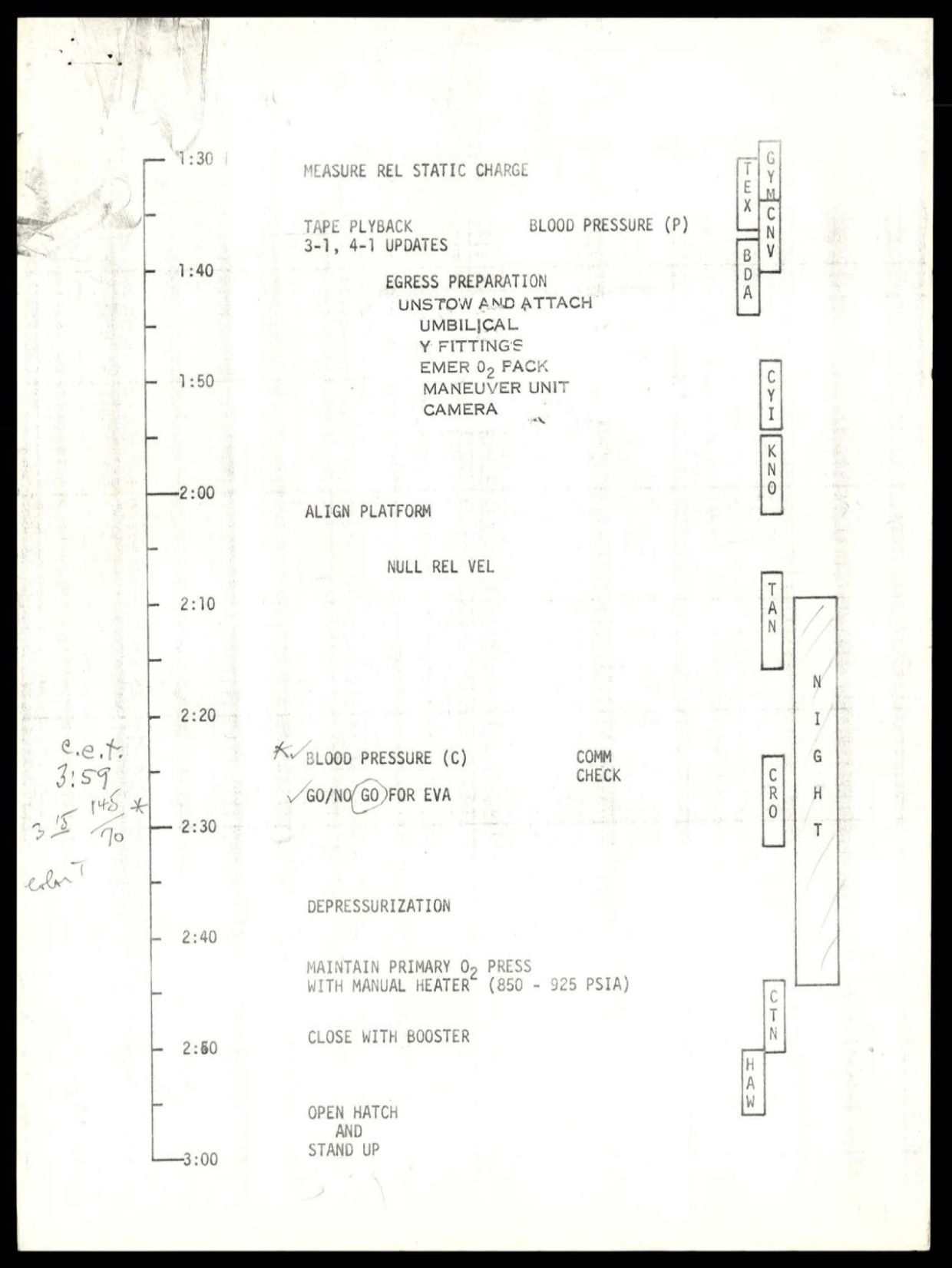
• I
l : 3
G
MEASURE REL STATIC CHARGL
y
TAP · PLYBACK
BLOOD PRESSURE (P)
3-1, 4-1 UPOAT S
1~40
D
EGRESS PREPARAT IO~
A
U NS l"OW A r-..~D I,,\ TTACH
B
UMBJL)CAL
Y FITTING·~
EMER Oz PACK
1 ~ 50
MANEUVER UNl
CAMERA
~,
w
- 2:00
rn
ALIGN PLATFORM
NULL REL VEL
T
2: 10
I
A
N
N
2:20
I
e. .e.
f;.
G
•
BL OOD PRESSURE (C)
COMM
CHECK
3: S-'f
/
H
/ GO/ ~FOR EVA
fl-f-b ~
I11""
_,,
2:30
T
'}). /'/o
~
_c)!.v---(
DEPRESSURI ZATION
2:40
MAINTAIN PRIMARY O PRESS
WITH MANUAL HEATER2 (850 - 925 PSIA)
C
T
CLOSE WITH BOOSTER
N
2:10
H
A
w
OPEN HATCH
AND
STAND UP
3:00
PAGE 124 / 224
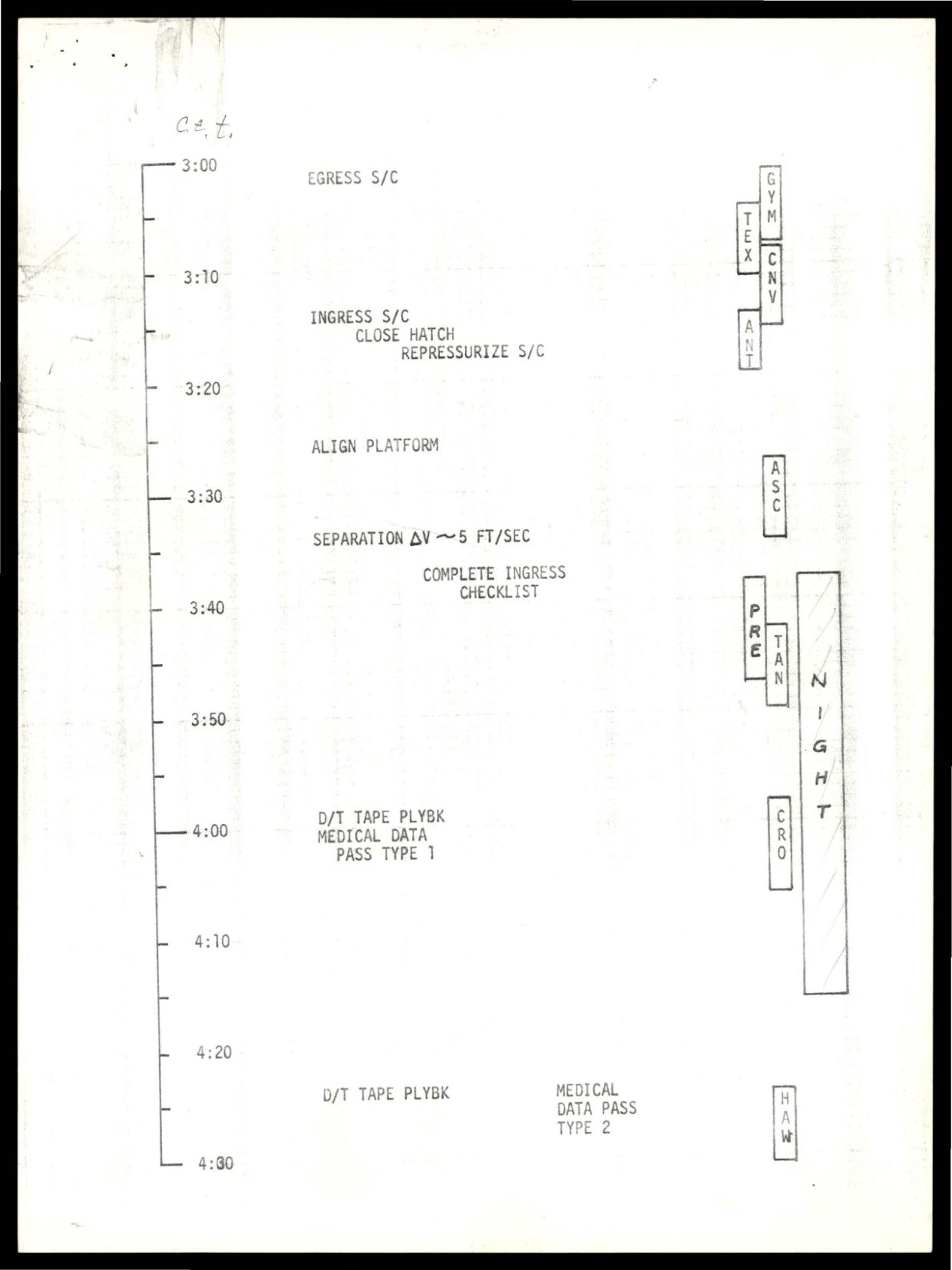
c~. t, 3:00 3:10 3:20 3:30 3:40 3:50 4:00 4: 10 4:20 4:80 EG RESS S/C INGRESS S/C CLOSE HATCH REPRESSURIZE S/C ALIGN PLA FORM SEPARATION AV .-5 FT /SEC COMPLETE INGRESS T E X N T D/T TAPE PLYBK MEDICAL DATA PASS TYPE 1 D/T TAPE PLYBK CHECKLIST MEDICAL DATA PASS TYPE 2 p R f G y M C N V A s C I J T A N N . G H T I ~
PAGE 125 / 224
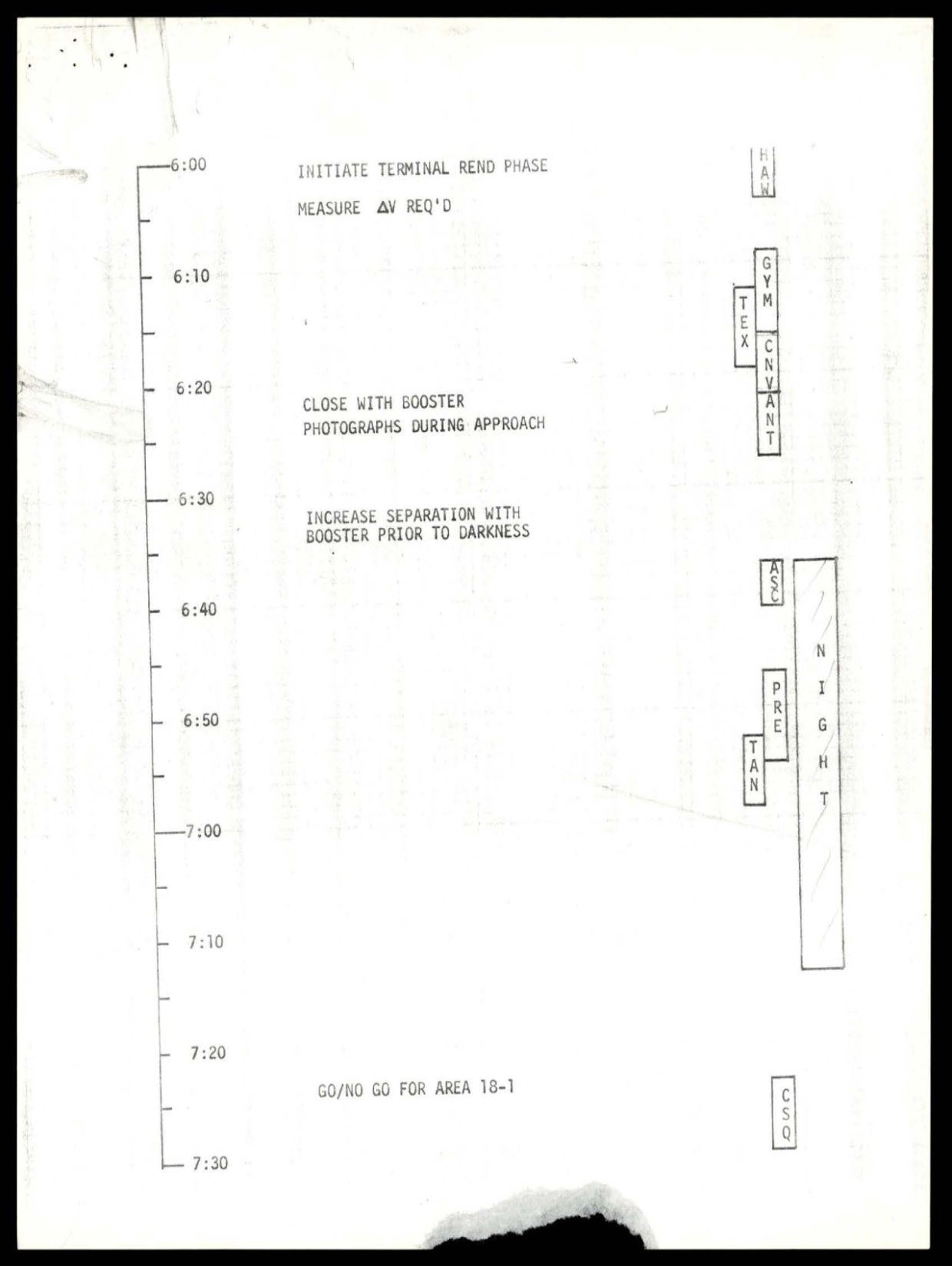
i
6:00
INITIATE TERMINAL REND PHASE
~
A
MEASURE
ll.V REQ ID
G
6:10
y
T M
E
X C
-
N
V
6:20
A
N
CLOSE WITH BOOSTER
PHOTOGRAPHS DURING APPROACH
T
6: 30
INCREASE SEPARAT ON WITH
BOOSTER PRIOR TO DARKNESS
rn
6:40
p
R
6: 50
E
T
A
N
7:00
7; 10
7:20
GO/NO GO FOR AREA 18-1
rn
-
7:30
N
I
G
H
T
PAGE 126 / 224
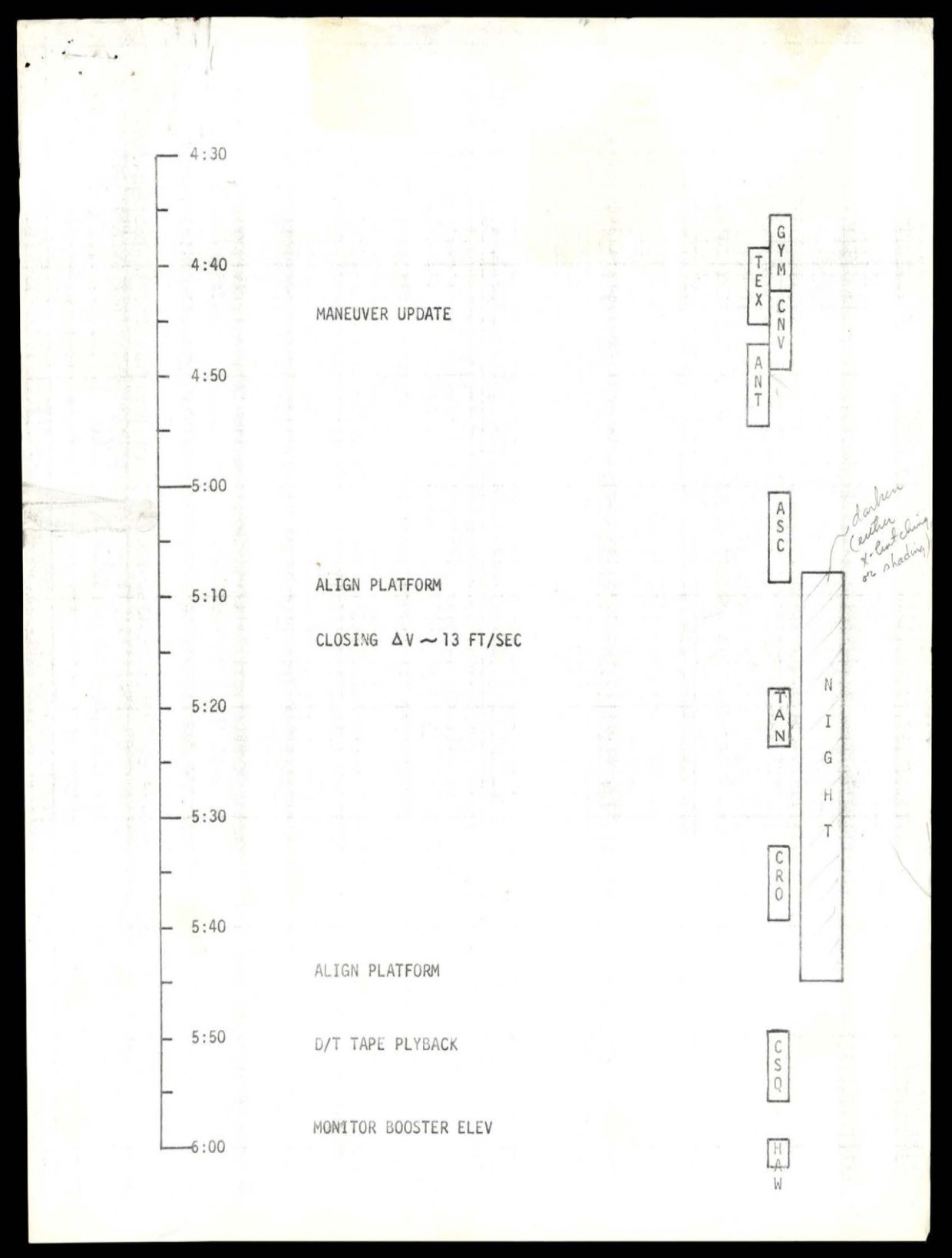
4: 30
4:40
MANEUVER UPDATE
-
T
E
X
4: 50
A
N
T
5:00
G
y
M
C
N
V
~ ,J., \, V
c~vf".
•
r1 e)~'
( ,
~..."J
m
-I
()~~
r/"
ALIGN PLATFORM
5: 10
CLOSING AV ~ 13 FT/ SEC
N
5:20
A
I
N
G
t
5:30
T
C
R
0
5:40
ALIGN PLATFORM
5:50
D/T TAP
PLYBACK
C
s
Q
MON TOR BOO TERELEV
:00
PAGE 127 / 224
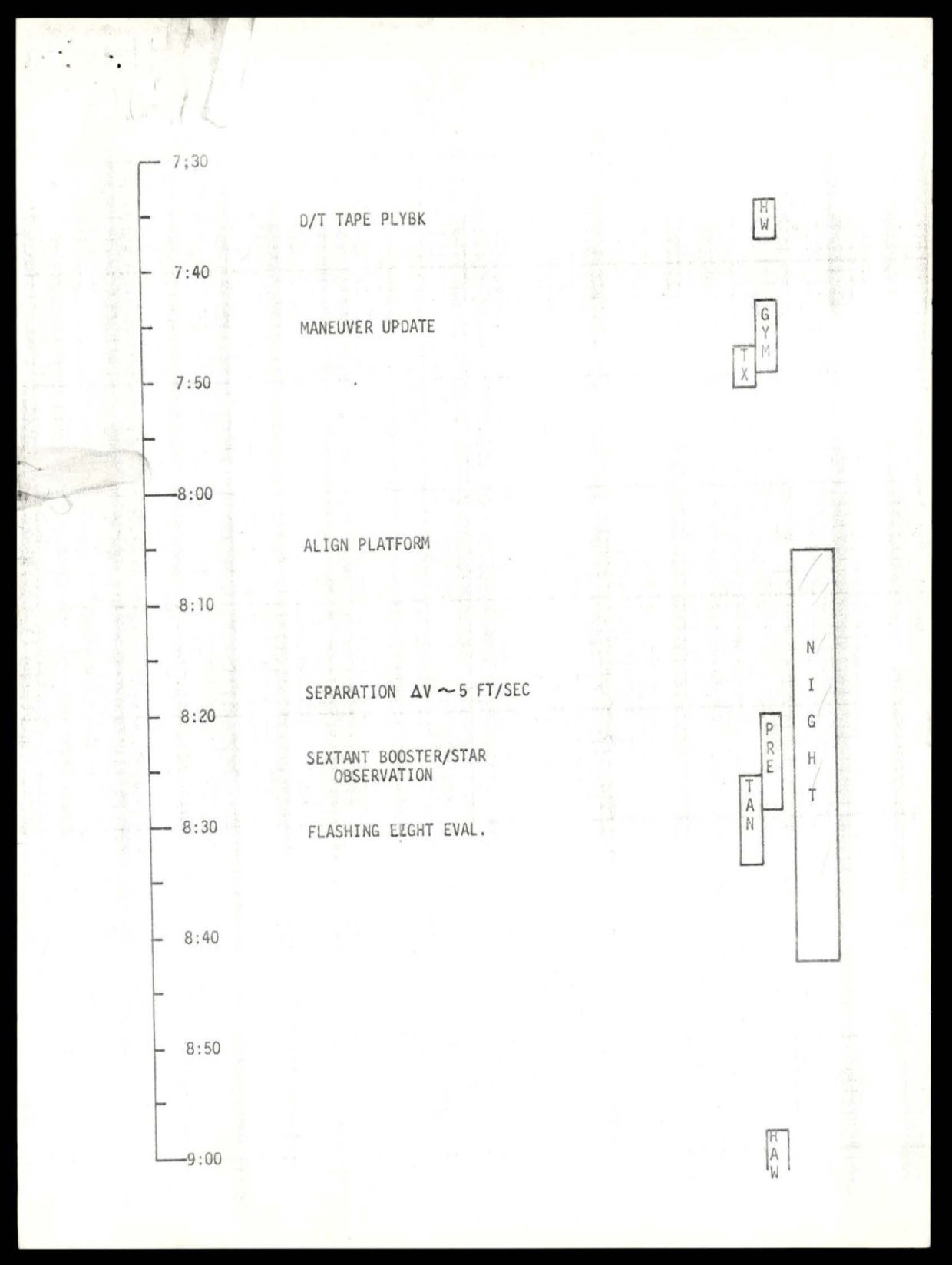
7;3u
0/T TAPE PLYBK
7:40
MANEUVER UPDATE
7:50
8:00
ALIGN PLATFORM
8: 10
8:20
8:30
SEPARATION AV .- 5 FT/ SEC
SEXTANT BOOSTER/STAR
OBSERVATION
FLASHING
,GHT EVAL.
p
R
T
A
N
N
I
G
H
T
8:40
8:50
9:00
PAGE 128 / 224
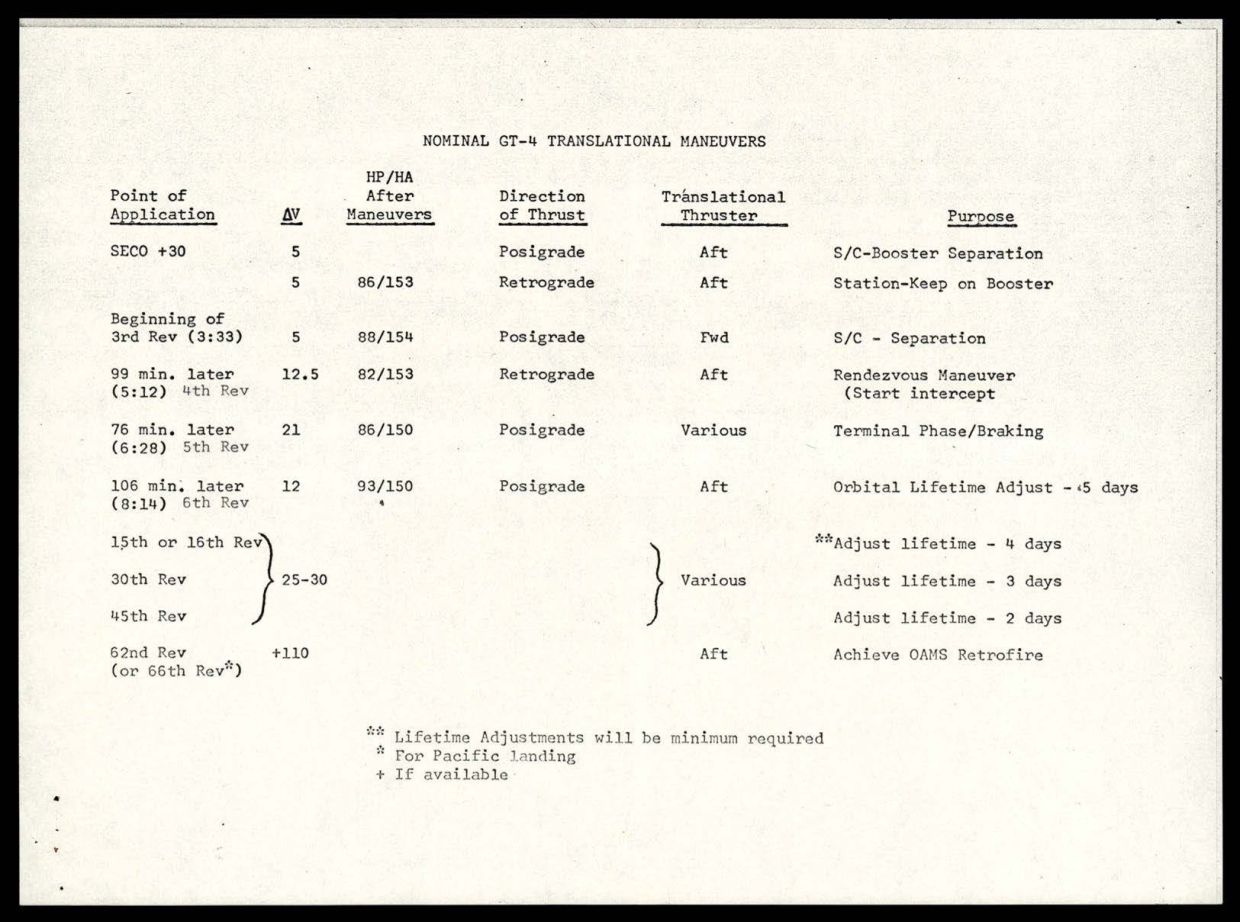
Point of Application AV SECO +30 5 5 Beginning of 3rd Rev (3:33) 5 99 min. later (5:12) 4th Rev 12.5 76 min . later (6:28) 5th Rev 21 106 min: later (8:14) 6th Rev 12 l,5th or 16th Re] 30th Rev 25-30 45th Rev 62nd Rev +llO (or 66th Rev~':) NOMINAL GT-4 TRANSLATIONAL MANEUVERS HP/HA After Maneuvers 86/153 88/154 82/153 86/150 93/150 Direction of Thrust Posigrade Retrograde Posigrade Retrograde Posigrade Posigrade ·1 I ! -1 ,5 days 1"': Lifetime Adjustments ~·: For Pacific landing + If available Translational Thruster Aft Aft Fwd Aft Various Aft } Various Aft will be minimum requiried Purpose SIC-Booster Separation Station-Keep on Booster S/C - Separation Rendezvous Maneuver (Start intercept Terminal Phase/Braking Orbital Lifetime Adjust *~'rAdjust lifetime - 4 days Adjust lifetime - 3 days Adjust lifetime - 2 days Achieve OAMS Retrofire
PAGE 129 / 224
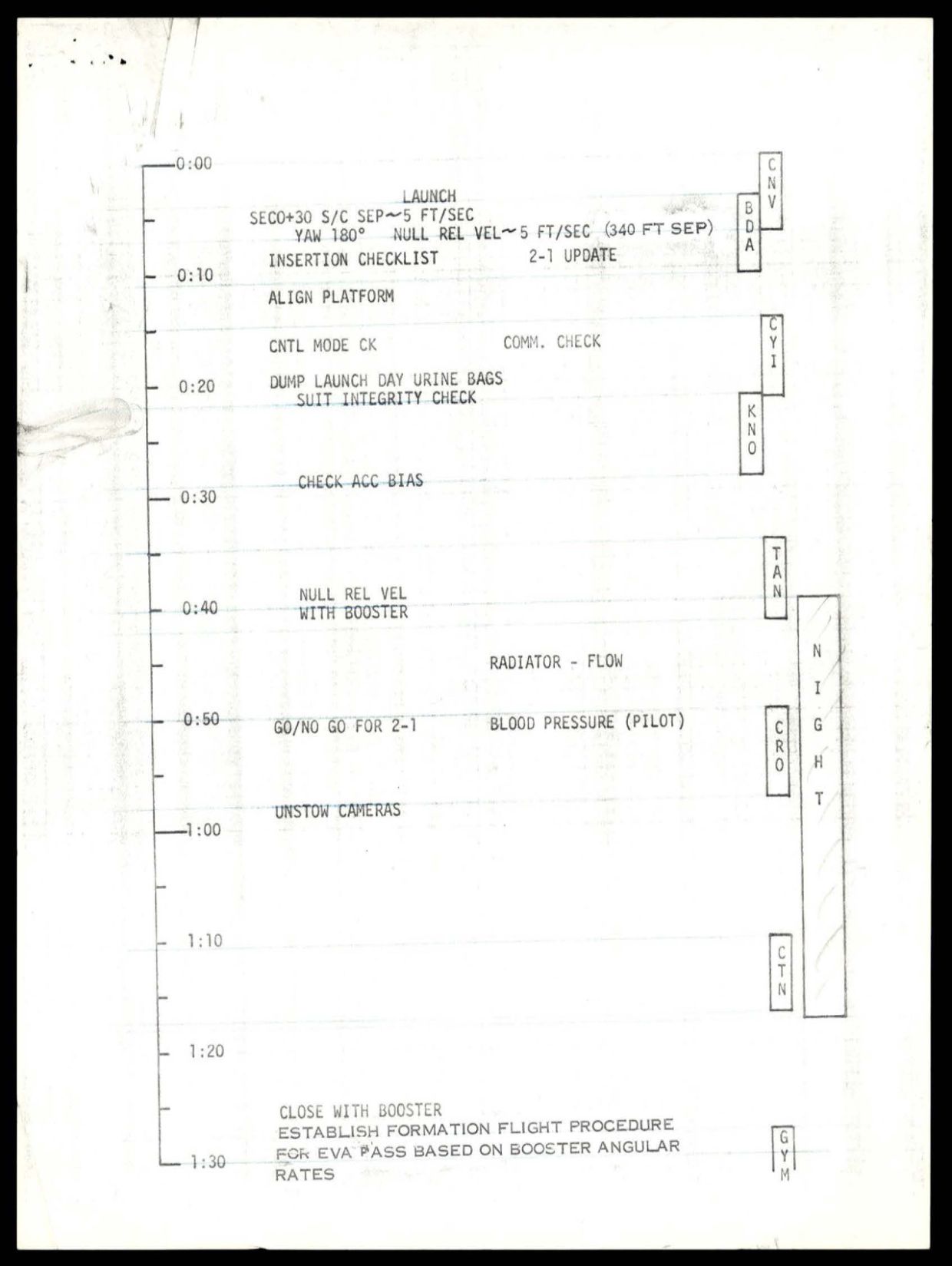
0:00
0: 10
0:20
0:30
0;4-0
0:50
1:00
1; 10
l: 20
l :30
A NCH
SEC0+30 S/C SEP-5 FT/SEC
Y-AW 180°
NULL REL VEL- 5 FT /SEC (340 FT SEP)
INSERTION CHECKLIST
2-1 UPOAT
ALIGN PLATFORM
CNTL MODE CK
COMM. CH CK
DUMP LAUNCH DAY U INE BAGS
.SUlT
Nr£GR-ITY CHECK
CH-E-CI'- A
BIAS
NULL REL VEL
WITFI 13UOSTER
RADIATOR - FLOW
GO/NO GO FOR 2-1
BLOOD PRESSURE (PILOT)
UNSTOW 'CAMERAS
CLOS · WITH BOOSTER
ESTABLISH FORMATION FLIGHT PROCEDURE
FCk EVA 'P'ASS BASED ON BOOSTER ANGULAR
RATES
C
N
V
B
D
A
K
N
0
rn
N
I
G
rn
H
T
rn
m
M
I
PAGE 130 / 224
Dr. J . B. BlijfMf,R • Metallurgy
DE VER R SEARCH INSTITUTE
UNIV RSITY OF DENVER
ox 87. 6, Denver, Colorado 80210
PAGE 131 / 224
\ Cf!- Lf P:1/~ , ~ - kl--,__ -Rik f
PAGE 132 / 224
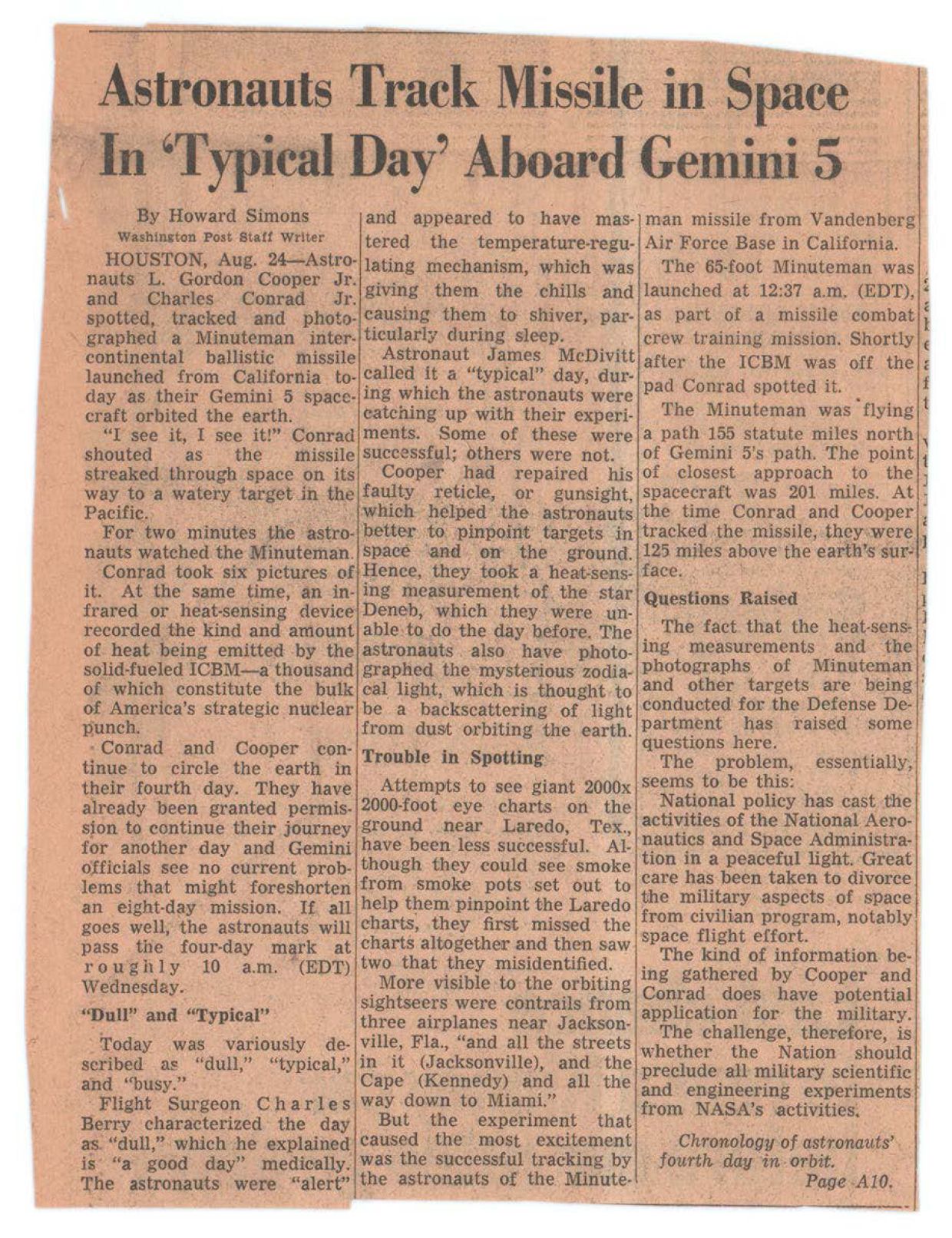
Astronauts Track Missile in Space In 'Typical Day' Aboard Gen1ini 5 By Howard Simons and appeared to have mas- man missile from Vandenberg Washllliton Po•t Slat! Writer tered the temperature-regu- Air Force Base in California. HtOULSTOGN, dAug.C24-ASlJro- lating mechanism, which nau s . or on ooper r. . . th and Charles Conrad Jr. g1vmg them e chills spotted, tracked and photo- c_auslng then:i to shiver, graphed a Minuteman inter- tlcularly durmg sleep. was 'Ihe 65-foot Minuteman was and launched at 12:37 a.m. (EDT), par- as part of a missile combat crew training mission. Shortly continental ballistic missile AStronaut Ja_mes McDivitt after the ICB 1 was off the launched from California to- ~alled ~t a "typical" day, dur- . day as their Gemini 5 space- mg which the astronauts were pad Conrad spotted it. . craft orbited the earth. catching up with their experi- The Minuteman was flying "I see it, I see it!" Conrad ments. Some of these were a path 155 statute miles north shouted as the missile succ"ssful; Others were not. of Gemini 5' path. The point streaked through space on its Cooper had repaired his of closest approach to the way to a watery target in the faulty reticle, or gunsight, spacecraft was 201 miles. At Pacific. which helped the astronauts the time Conrad and Cooper For two minutes the astro- better to pinpoint targets in tracked the missile, they were nauts watched the Minuteman. space .and on the ground. 125 miles above the earth'sc; sur- Conrad took six pictures of Hence, they took a beat-sens- face. it. At the same ti~e, an _in- ing measm:emenJ of the star Questions Rai ed !rared or heat-sensmg device Deneb, which they were un recorded the kind and amount able to do the day before. The The fact that the hcat-sens of heat being emitted by the astronauts also have photo- ing measurements and the solid-fueled ICBM-a thousand graphed the mysterious zodia- photographs of Minuteman of which constitute the bulk cal light, which is thought to and other targets are being • of America's strategic nuclear be a backscattering of light conducted for the J:?efense De• punch. from dust orbiting the earth. part~ent has raised some Conrad and Cooper con- . . questions here. tinue to circle the earth in Trouble m Spotting The problem, essentially, their fourth day. They have Attempts to see giant 2000x seems_ to be th_is: already been granted permis- 2000-foot eye charts on the ~a!,i~nal policy h:is cast the sjon to continue their journey ground near Laredo Tex activities of the National Aero for anoU1er day and Gemini have been less successful. Ai: 11:aut~cs and Space ~dministra ojficials see no current prob- though they could see smoke tio~ m a peaceful light. _Great lems that might foreshorten from smoke pots set out to care h~~ been taken to divorce an eight-day mission. If all help t!lem pinpoint the Laredo the m~li~3!Y aspects of space goes well, the astronauts will charts, they first missed the from ci~illan program, notably , pass the four-day mark at charts altogether and then saw sp;ie f/;t~t e:~orr . r o u g h 1 y 10 a.m. •(EDT) two that they misidentified. . e n ° m ormat10n be- Wednegday. More visible to the orbiting mg ~athered by Cooper a~d " " " . ., sightseers were contrails from Con~ad. does have po~~nbal Dull and Typical three airplanes near Jackson- application for the nuhtarr. Today was variously de- ville, Fla., "and all the streets The challenge, t~erefore, 18 "b d "d ll" ''t · l" ·n ·t (J k -11 ) d th Whether the Nat10n should sen e a~ u , yp1ca, i 1 ac sonv1 e , an e preclude all m"lit • tT and "busy " Cape (Kennedy) and all the - • d t l\". •., Flight Surgeo_n Ch a r le s way own o ~m~u. Berry charactenzed the day But the experiment that as "dull,'' which he explained caused the most excitement is "a good day" medically. was the successful tracking by The astronauts were "alert" the astronauts of the Minute . . i ary sei_en 1 ic and engmeermg expenments from ASA's activities • Chronology of astronauts' fourth, day in orbit. Page AIO. ' i ~ ~ f t 1 1 1 1 1 1 1
PAGE 133 / 224
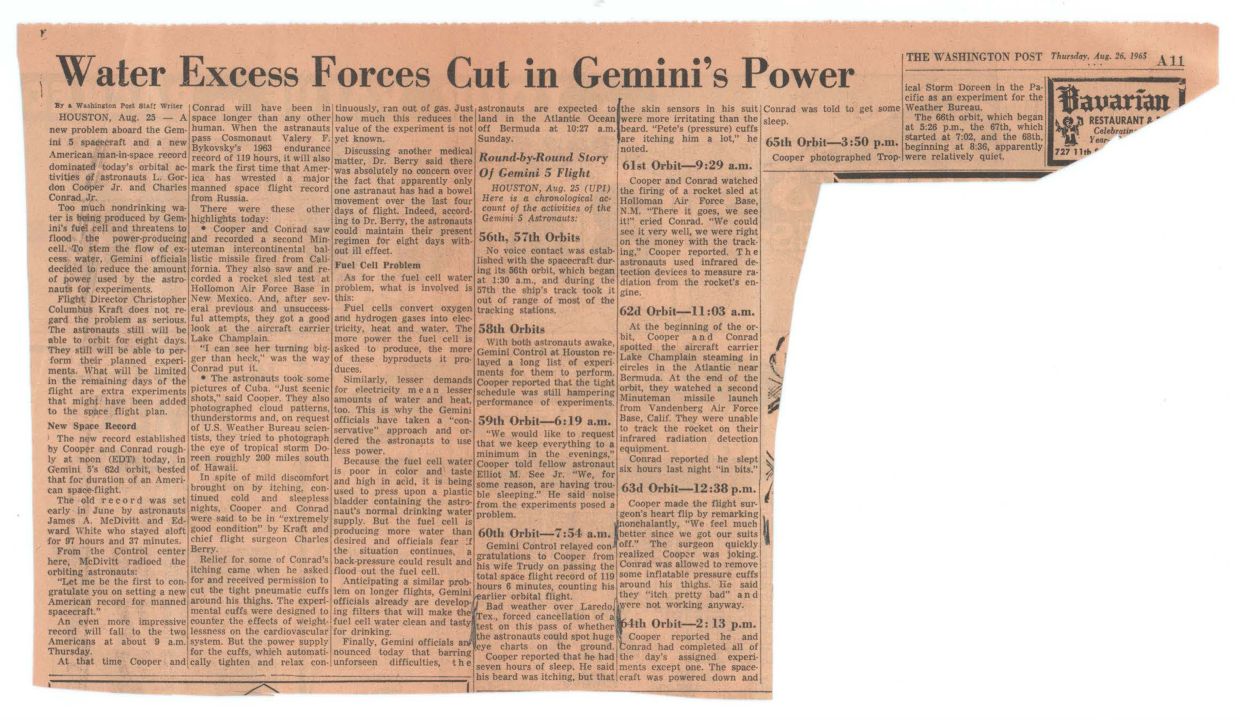
y Water Excess Forces Cut in Gemini's Power 111 a Washlncton Post sta.H Writer Conrad will have been in tinuously, ran out of gas. Just astronauts are expected to the skin sensors in his suit Conrad was told to get some HOUSTON, Aug. 25 - A space longer than any other how much this reduces the land in the Atlantic Ocean were more irritating than the sleep. new problem aboard the Gem• human. When the astranauts value of the experiment is not off Bermuda at 10:27 a.m. bear~. "~ete's ~pressure) ,cuffs ini 5 s~aft and a new pass Cosmonaut Valery F. yet known. Sunday. are 1tchmg him a lot,' he . Bykovsky's 1963 endurance Discussing another medical noted. Amer1can.--t11an-in-space record record of 119 hours, it will also matter Dr. Berry said there Round-by-Round Story . 9 29 ~o~inatef tooay's orbital ac- ~ark the first time that Am_er- was absolutely no concem over Of Gemini. 5 Flight 61st Orbit- : a.m. tivities fl astronauts L. Gor• 1ca has wrested a ma3or the fact that apparently only Cooper and Conrad watched don Cooper Jr. and Charles manned space flight record one astranaut has had a bowel HOrJ_STON, Aug. 25_ (UPI) the firing of a. rocket sled at Conrad JJ'. from Russia. movement over the last four Here is a chronological OC· Holloman Air Force Base, Too much nondrinking wa- There were these other days of flight. Indeed, accord- coun! ?f the activities of the N.M. "There it goes, we see ter is t,dng produced by Gem- highlights today: ing to Dr. Berry, the astronauts Gemini 5 Astronauts: it!" cried Conrad. "We could ini's fut1 cell ,and threatens to • Cooper and Conrad saw could maintain their present . see it very well, we were right flood the power-producing and recorded a second Min- regimen for eight days with- 56th, 57th Orbits on the money with the track• cell. --To stem the flow of ex• uteman intercontinental bal• out ill effect. No voice contact was estab- ing," Cooper reported. Th e cess water, Gemini officials listic missile fired from Cali• Fu 1 C 11 P bl lished with the spacecraft dur· astronauts used infrared de decided to reduce the amount fornia. They also saw and re- e e ro em ing its 16th orbit, which begao tection devices to measure ra• of J:!(>Wet used by the astro· corded a rocket sled test at As for the f~el . cell wat~r at 1:30 a.m., and during the diation from the rocket's en• nauts fot experiments. Hollomon Air Force Base in PI"?blem, what is mvolved is 57th the ship's track took it gine. Flight Director Christopher New Mexico. And, after sev- this: out of range of most of the Columbus Kraft does not re- eral previous and unsuccess• Fuel cells convert oxygen tracking stations. 62d Orbit-II :03 a.m. gal'd the problem as serious. ful attempts, they got a good and hydrogen gases into elec• . The asta-onauts still will be look at the aircraft carrier tricity, heat and water. The 58th Orbits . At the begmnlng of the or• able to orbit for eight days. Lake Champlain. more power the fuel cell is With both astronauts awake, bit, Cooper _and Con~ad They still will be able to per• "I can see her turning big- asked to produce, the more Gemini Control at Houston re• spotted the i::craft ~arri~r form their planned experi- ger than heck,'' was the way of these byproducts it pro- layed a long list ef experi- ~ake C':13mp stellJ!Ung m ments. What will be limited Conrad put it. duces. ments for them to perform. circles in the Atlantic near in the remaining days of the • The astronauts took some Similarly, lesser demands Cooper reported that the tight Ber.muda. At the end of the flight are extra experimen~ pictures of Cuba. "Just scenic for electricity mean lesser schedule was still hampering o~it, they wat~h~d a second that might have been added shots," said Cooper. They also amounts of water and heat, performance of experiments. Minuteman m1ss1le. launch to the space flight plan. photographed cloud patterns, too. This is why the Gemini from Va~denberg Air Force thunderstorms and, on request officials have taken a "con- 59th Orbit--6:19 a.m. Base, Cahf. They were unab~e New Space Record . of tsU.St.hWeat?edrtBurheautoscienh- servative" approach and or- "We would like to request ~f tracdk thed.roctiket dont tht_eir ; The new record established tis • ey tr1e . o P o grap dered the estrona)lts to use that we keep everything to a m r~ ra ia on e ec ion by Cooper and Conrad rough- the eye of tropical ~rm Do- less power. minimum in the evenings," equipment. ly at noon (EDT) today, in reen rou_~hly 200 miles south Because the fuel cell water Cooper told fellow astronaut Conrad repor_ted .~e s!eP,~ G-emini 5's 62d orbit, bested o\Haw~:i- f ·1a a· f rt is poor in color and taste Elliot M. See Jr. "We, for six hours last mght m bits. that for duration of an Ameri• n spi e O nu . !scorn ° and high in acid, it is being some reason, are havin,J trou- 63d Orb" -12 •38 can space-flight brought on by 1tchmg, con- used to press upon a plastic bl 1 · " H id I It • p.m. • tinued cold a d sleepless e s eepmg. e sa no se The old 11" e cord was set . n bladder containing the astro- from the experiments posed a Cooper made the flight sur• early in June by astronauts nights, , Cooper . a~~ Conrad naut's normal drinking water problem. geon's heart flip by remarking James A: McDivitt and Ed· were sind ~ ~. m ex.tremely supply._ But the fuel cell is onchalantly, "We feel much I ward 1,Vh1te who stayed aloft go~d co~dition by K.taft and producmg more water than 60th Orbit-7:54 a.m. better since we got our suits for 97 hours and 37 minutes, chief flight surgeon Charles desire~ an~ official~ fear :.f Gemini Control relayed oon off." The surgeon quickly From the Control center Berry: the situation contmues, a gratulations to Cooper from realized Coo~r was joking. here, McDivitt radioed the Relief for some of Conrad's back-pressure could result and his wife Trudy on passing the Oonrad was a]low~d to remove orbiting astronauts: itching cam~ when h~ ~sked flood ~1;1t ~e fuel. c~ll. total space flight record of 119 some inflatable pressure cuffs "Let me be the first to con- for and r~ce1ved perm1~s1on to Anticipating a suntlar prob- hours 6 minutes, counting his around his thighs. lie said gratulate you on setting a new cut the t!ght pneumatic cuff~ le~ ?n longer flights, Geminl artier orbital flight. they "itch pretty bad" an a American record for manned around his thighs. Tb~ expel'l- ~ffm~ls already ~re develop- Bad weather over Laredo ere not working anyway. spacecraft." mental cuffs were designed to mg filters that will make the ex forced cancellation of a; An even more impressive counter the effects of weight- fuel cell water dean and tast est·, on this pass of whether th Orbit-2: 13 p.m. record will fall to the two lessness on the cardiovascular for drinking. e astronauts could spot huge Cooper reported he and Americans at about 9 a.m. system. But the ~ower supply Finally, Gemini officials . eye charts on the ground. onrad had completed all of Thursday. . for the_ cuffs, which automati• nounced tod~y. tha~ barring Cooper reported that he had the day's assigned experi- At that time Cooper and cally tighten and relax con- unforseen difficulties, the seven hours of sleep. He said mcnts except one. The space• :==;;;;:;;=::::::::::::::::::::::::::::::::::::::::;..================;- his beard was itching, but that craft was powered down and 65th Orhit-3 :50 p.m. Cooper photographed Trop• ar.: fi t •I j ~,, , \ \ f , . , THE WASHINGTON POST ical Storm Doreen in the Pa• cific as an experiment for the Weather Burea~ . The 66th or~, ~:h b~a: at 5:2: Ptn;·:02 ~ th w68fh ~nnina t 8_36 e tly egi g _a • •. apparen were relatively quiet. Thur5dar: ~~'· 26, 1965 All 1la\1ari'an RESTAURANT J .. Celebrari,, y~ ' 727 11tt,,.
PAGE 134 / 224
f ] 0 Fednudoy, Au,. 25, 1965 THE HowItWenton Gemini's4thDay On thew Gemini 5 spa.ce- 43d Orbit--4:50 a.m. landmarks near Dallas was The astronauts said they flight 11eaterda11, Aatronauts The spacecraft made contact abandoned because of a cloud took about six photographs of t . Gordon Coopff Jr. and with the Camarvan, Australia cover ov1.>r the target area, but th fl.yin rocket d ad Charl'1s Conrad Jr. sighted a tracking station and flight ot>'. the astronauts insisted on try. e g an m e Minuteman launching and server Chuck Lewis g th Ing the experiment later. infrared measuremenw of Its repaired an important sight- astronauts landing /ve f "We're going to pick a good exhaust plume. ing q,tem aboard their craft. ment data an expcr • site somewhere over the U • Conrad a~ spotted Hollo- Following i., a chronological • and get it because we're all man Air Forte Base, .M., and account. 111 compiled from th Orbil-6:27 a.m. ri~~i~r !!;~~nr:e'!x,S::!i a e:e w~~1J°!:r f::!:'. !'ews di,pntches,. with .times With both astronauts wide few minutes later the men As they ended the Ol'blt, the 1n Eaitcnt Da11light Tune. awake and the spacecraft pass- were able to get a picture of astronauts had their radar _.n.L Orbit 12 •05 ing o~er the United States, a ship west of Bennuda. trained on Cape Kennedy and ....,._.. - • .m. Gemini Control at Houston re- reported they were able to The palr drifted qUletly lnto layed instrument readings and 47th Orbit-11:12 a.m. keep in touch with ~ Cape the 40th orbit with Conrad e periment directions to the A G I 1,. h d C l longer than expected. crew. s em n ., approac e a• a leep. Dr. Duana Catterson at This exchange between com• lfom!a, a Minuteman missile 48th Orbit-12:47 p.m. Gemini Control in Houston municator David Scott an was fired from Vandenberg Ir reported the astroriauta bad astronaut. and Conrad 'took Force Base. Calif. Cooper and Conrad zeported place· At an altitude of' 125 miles, they were getting "•om e consumed 13 pounds of water Se~tt-"Okay. You look real Cooper and Conrad got a fine strange readouts" from their each, "pretty nearly an optl· good here on the ground. Do view. on-board computer. Officials mum curve for water intake" you have any questions on the Conrad: "I see it, l see it ... said the signals were not a • experiments?" Hey Gordo! Right through that cause of "major concern." but I Orbit-I :38 a.m. Conrad-"No. I'd say we got bole In the clouds. There be would be watched closely. l a full day J hope we can get goes, bigger than heck." Cooper and Conrad finally Conrad continued sleeping them all· done. How's the Cooper: "Yeah, we saw him spotted the checkerboard eye sound]y and only one contact we-ather back there in Hous- going •way out above us." chart laid out near Laredo, was made wltb ground track- ton?" The Minuteman, climbing in Tex. Ing station during the orbit. Scot&-"Oh, It's real nice. a high suborbital arc, came • 42 d Orb ,.......3 •14 Just hot and sunny as usual. within 200 miles of Gemini 5, 9th Orbit-2.22 p.m. D it • a.m. No rain in particular. Just Space Agency officials said. Space off I c i a Is on the The quietest orbit or the once in a whUe a little thunder- Conrad reported he sighted ground noted Cooper sounded I night thus far, in terms of storm." the Minuteman 10 seconds "Just a wee bit tired." He was space. to. ground communica- onrad-"Rog.'' after launch when it had given a long updating on the Uon. For a '70-minute period tt-"Say, we've noticed pierced the overcast. The Min- flight plan and waa told to the spacecraft was out of voice that the temperature up there uteman peaked at an altitude watch for the Kilauea volcano contact range. Conrad was still is a little cooler than we ex• of 575 miles and headed down in Hawaii on the next orbit. asleep and Cooper bad a meal. pectcd. How's your comfort?" the Air Force western test The astronauts hoped to meas Cooper aaid he had reassem- onnd-"Cold, We a.re tak• range over the Pacific Ocean ure the Intensity or infrared bled a defective reticle "and It ing the inlet hoses off' our to hit a mythical targel radiation from the volcano. worts fine," The reticle ls a suits every once in a while to sighting device necessary for warm up. It has been quite tbe success of a number of cold." Gemini 5 experiments. Chief Flight Director Chrl • topher Kraft Jr. said good t ==========:__-::- morning to the astronaut and told them, "You are doing a good job up there." Conrad-"l'll tell you one thing, Mr. Krall Gordo' beard is white. Kraft-''A Rip an Winkle, eh?" Conrad: - "Nope, Santy Claus." Cooper-"Boy, putting those two coolant loops in the circuit really cooled it down. We both have been sitting here shiver ing for the last few hours." Kralt--"Tum the valve to warm and it ill shut off the flow completely. We will mon itor on the ground and let you know lf it gets too cool" 45th Orbit-8:03 a.m. Cooper bad a meal consisting of orange dnnk. spaghetti and meat, butterscotch pudding, touted brea:t cubes and cbeeee sandwiches. He said he saw three airplanes approaching Jacksonville, Fla. He and Con• rad saw smoke signals sent up near Laredo, Tex., to help them find a huge pattern of white gypsum )aid out on the ground, but the)ll could not see the pat tern. Fellow astronaut James McDivitt told the men they could go at leut 82 orbits. 46th Orbit-9:35 a.m. An attempt to photograph
PAGE 135 / 224
I Tuwlay, .lag. 24, 1965 THE WASHI lGTON POST A6 GEMINI-From Page Al GeminiMakesPrecisionManeuvers NASA Photo from ttPI Mrs. Charles Conrad Jr., accompanied by and gets a first-hand view of the progress her father, Winn DuBose, sits in the view• of her husband's flight aboard the Gemini Ing booth behind Gemini Control Center 5 spacec:raft. -----------~---------------------~-- Chronological Account of Orbits As Space Flight Enters 3d Day Following is the chronol- for the pilot (roughly six banter turned into an im ogy of the Gemini 5 $pace quarts eaoh). I'm just getting promptu variety act with this auts rep?rted seeing their sumed was that the Agena The co:nference is devoted to flight of Astrona1otts L. Gor- ready to eat Meal Co,arlie." exchange between the capsule home temtory of Houston, and was in an elliptical orpit whose "the exploration of Mars and don Cooper Jr. and Chari.es and Houston: nearby Clear and Ta~lor high point and low point were Venus." Conrad_ Jr., compiled from 30th Orbit-8:14 a.m. l\IcDivitt: "You sure do talk Lakes. They also saw Florxda. about 210 and 141 miles re- Strong described for 250 news dispatches. The astronauts reported that a lot." 1the Bahamas and Cuba. . spcctively. To effect a near scientists the instrumentation Shortly after midnight Sun- each had slept a t~tal of about Conrad: "Say again." : ~u; the!e wf ~ 1f: t.::Y did rendezvous wiith the imaginary and techniques of the Novem day Gemini 5 had completed 10 hours since the :llight began McDivitt: ''I said you sure ~~ th!erau~t• ::ti:le. M:~de Agena the as~ronauts _had to ber,_ 1964, bal_loon.8:5Ce~t pro 24 orbits and 38 hours of its at 10 a.m. Saturday. The do talk a lot" f 1 Y as 1 ed maneuver their craft mto an ducmg the 1dentif1cation of 121 - orbit 190. hour scheduled oxygen pressure, at more than C d "\V.h t d t ~r exfamp e_. wraft caarnp·eannand orbit with high and low points ice crystals in the atmosphere ' 100 d 10 d onra : • a o you wan v1ew o an aire r f 193 d 124 ·1 bo th f V W t h d voyage. poun s, was up poun s t d . ,, ?" destroyer· a star called Denub o an m1 es a ve e o enus. a er vapor a from the previous day and 40 me O 0 , sm., you a song· . ' . . • earth. been discovered on a 1959 bal 12 15 d f th 1 • t S t M n-v·tt· "Th'nk you can?" and a Mmuteman m1ss1le sent l fli ht 25th O b• 1 r it- : a.m. poun s rom . e ow pom a • ' c 1 1 ;, . ·,, aloft from Cape Kennedy, After four maneuvers, in- oon g · Gemini Control at Houston urdaY when it appeared that Cooper: He smgs off key. which though not planned to eluding an orbital plane He speculated that a 120 concluded that Conrad's hus- the misSiOn might have to Conrad: (in a singsong) be viewed by the orbiting as- change of roughly 1-50th of a mile-an-hour wind on the face ky voice resulted from lack splas~ down P;ematurely after "Over the ocea?,. ove~ ~he tronauts, was the object of degree, Gt'.mini 5 virtually of Venus drags the i«:e crystals of sleep and not from any the sixth orb~t. Con~ol gave blue, here's Gemm1 5 smgmg their attention as they passed achieved the high and low around to the back side, there, serious throat condition. Dr. the cap_sule ~ structions for to you. (Pause) Well, I'm going roughly 1000 miles away. points desired. presumably, to become the Duane Catterson said it had perform':°g a simulated ren~ez- back to talking." In spite of their difficulties An orbital p I a n e change "warming snowfall." "not affected his ability to 1usn wi;h a ~:ke • believe McDivitt: "Get you a job in viewing the world around works this way: . Dr. Strong told the engi perform." Cooper continued thge ah 3~~et b't the 32d with the Houston Astros." them, Cooper and Conrad are The plane of every orbit cuts neers, teachers and research- to catch up on sleep. roug or is. At 11:18 a.m. control told doggedly performing as many through the earth's center. ers from universities, space 31st Orbit-9•47 am the spacemen they could go at of the 17 medical, engineering Most of these orbits are with exploration cotnp·anies and 26th Orbit-I :48 a.m. . . • • • least until the 47th orbit or and scientific experiments as reference to the Equator. The government that man's cur- Conrad tried several simple The mission passed the two- until about noon Tuesday. possible. angle the plane makes to the rent knowledge of Venus owes ex eriments ~ the capsule day_ mark•.The a$tronauts Equator iS its inclination. as much to "Gulliverian spec- p~sed over central Asia agam complamed of the work- 32d Orbit-II:21 a.m. Pod Heat Measured Through the use of propulsion, ulation" as to documented re- Cooper woke up and Conrad load .0rde:ed by Gro~nd C<;>n- The astronauts powered up· Indeed, today an Air Force spacecraft can alter that incli- search. began a long sleep. Ground trol m thlS conversation ~!th their equipment and executed spokesman reported that the nat~on a!ld, hence, change Later this year, he said, an- Control said the flight "looked astir~naut James_ A. McD1v1tt, the first of four blasts from astronauts had recorded more their orbital pJane. other balloon carrying equip- m ssion communicator at Hous- than an hour of rad1·at1·on data· · · real good." ton· their maneuvering rockets to . . • ment from his laboratory is . c·ooper: "You might have a change their orbit and bring infor~ation on the_ amount Police Reinforced ~xpected_ to bring back more 27th Orbit-3:31 a.m. little talk with the flight plan them into theoretical rendez- and kmd of heat emitted both mformation on the character • al th • • by objects of nature and man- After Ramleh Attack istics of Venus The orbit began ong e ning people. They're filling us vous with the phantom Agena, d b. . d • west coast of South A~eri~a just a little bit too full We whose track was being pro- ~! \~u~Jts-m space an on Reurers He told the conference the near the equator. While his can't get the equipment nut to- grammed by a ground com- 0 g • d b. t . TEL AVIV A R . automated, unmanned baloon 23 companion remained in a gether and torn apart in. the puter. By comparing the lat- . ne man-ma e O Jee in par- , ug_. - em- is much preferable to the 0 deep sleep, Cooper made con- time they're putting these ter "."i~h the actual track of ;~1~!:\i~e !~:11i::!i:r:Ja~u- :oure~ ~e iowns~p : :am~ manned vehicle; _also that a tact with the Canary Island things together." Gem1m 5, Control would later ' . . Y oure e wons P O 11:ID balloon gondola is never an tracking station and con- McDivitt: "Okay. Gordo, I'll estimate the closeness of the th~ aStranauts for its heat Sig- leh,thwhere a ckrodwdt~f JeAwishb easy base from which to fix on ducted a successful purge of take a check on that I simulated linkup. naTuhre. A. F k you ts atttac de e ra and track a planet like Venus. th f 1 11 gen and hv th· k f h t1· h. •1· e 1r orce spo esman quar er yes er ay. D Di k B di t e ue ce oxy .,- m one O t e ig t Pan- . noted from a preliminary an- The youths attacked the r. c rouwer, rec or dro~en_ systems. He aso made ning problems, ~ordon, is 33d Orbit-12 :56 p.m. alysis that it gave off roughly Arabs after the funeral of a of Yale University o~erva penod1c chec~ on _electx:on that the weather 1s not too Cooper and Conrad per- as much heat as had been an- Jewish youth killed on Friday tory, spoke on the orbits of and ion flux mteracbon with ?"ood todal-'., so they are tr~- formed two more rendezvous ticipated. in a collision between his mo- Mars and Venus. the spacecraft. mg to . stick them (exper1- ~aneuver:s. The command This is the first time that a torcycle and a taxi driven by He was aske~ by report~rs 28 I O b 't-5•05 ments) m where,, they have p1lot spot~ed a ~uge cheeker- space object has been studied an Arab. Some 12 Arabs were about speculation about life t 1 r 1 • a.n~. good weat~er • • • board design laid out on the in this manner by Americans injured in the attack. Police on Mars. Coo Per ate a substan~al Cooper: Yeah, w~ll some of ground near Laredo, Tex., as from space. Such infrared or said today they had arrested "Cross it off," he answered meal of concentrates of chick• these - • • were Just bang, a test of the astronauts' abil- heat-sen.sing devices could 22 of the youths. with a laugh. en and gravy, bacon and eggs bang, bang right together. We ity to see from more than 100 and chocolate pudding. Con- just can't do them that close miles in space. rad continued to sleep. together. That's rather poor; . • planniJ?-g:" " ,. ·i 34th Orbit-2 :31 p.m. 29th Orbit-6.39 a.m. McD1v1~t:.. Okay. The astronauts completed Conrad woke up and had Conrad. We got to watch-the make-believe rendezvous the f O 11 ow ing conversation these le~s changes. \~e got attempt and learned they had with the Canary Island track- every piece of_ gear m t~e come within two minutes of ing station: spacecraft floatmg around . m being in the right spot at the Surgeon: "You're pumping ~~~e. We can't keep up with full scale. We have a good it. . . " ,, blood pressure . .. Giye me a McDivitt: Roger, roger. mark when you begin exercis- The~ ~ate~; ing " McD1vitt: Hey, Pete. Gem- Co d· "Sta d by- mark,, ini 5 Houston here. Why don't mand pilot (Cooper) is takmg Mexico." S nra • . "Wn ha e urgeon. ~ v a go~d you make a few comments for the better sex." blood pressure. Conrad: "Hello there. We Conra~: "Roger, t?e c~m- just passed over Tampico, his two-hour period nap now. M D. .· t t· "P t p t . t c I v l • e e, e e. The pilot (Co~rad) slep _abo_ut Jane's up here. Why don't 4 hours ~5 mmutes o_f his ..sJX- you say something?" (Jane ls hour period, very soundly. Conrad's wife.) Surgeon: "How's your water Conrad: "Hello there. How's intake?" all the boys (his four sons) Conrad: "Twelve and a half doing?'' pounds of water for the com- McDivitt: "She says fine." mand pilot, 11 pounds 3 ounces Still later in the orbit, the right time. Then they turned off much of their electrical equipment, successfully per formed a routine test of their fuel cell system and settled down for some' sleep and meals. 35th Orbit--4:07 p.m. \Vhile Conrad slept Cooper · ' snapped P1«:tures or se~ected landmarks m an experiment designed to help future astro nauts navigate successfully home from the moon. A med ical check indicated b Oth spacemen were in excellent condiotion. Cooper was told weather conditions around the world were good. 36th Orbit-5:43 p.m. Conrad reported that the temperature gauge in the capsule cabin had failed, but he said a hand-held gauge was wo1·king. Ground Control said the temperature reading made from telemetry data was 74 degrees. During the • orbit, the astronauts photo graphed a tropical storm. 37th Orbit-7:19 p.m. The Ground Control center repo1-ted that the radar set aboard the spacecraft was be coming too cold. To warm it up, officials ordered the as tron3uts to turn the radar on. The temperature rose from 16 degrees to 26 degrees, which is normal. All other ~ystems aboard the capsule were also operating normally. AdnrllHmltll looks very good for eight days Iprove useful to the military and there is nothing that says for sate 11 it e inspection in it shouldn't." space. In a mishap on the ground, The radar evaluation pod, trouble developed in a com- which was to have played a putcr memory system at Gem- significant role in a Gemini 5 ini 5 mission control late to- rendezvous attempt on Satur d 1·s _,,. ected to plunge day, but was cleared up with- . ay, -..xp , in 11 minutes. mto the ~arth s . ~tmosph~re . . and a fiery d1smtegration The f3:ilure m the memory during the .evening of Aug. 26. syste~ did not adversely :affect Today, Gemini officials indi the fhght. It developed m the cated that if they knew on histo_rical. data dru_ms, which Saturday what they know d 1 f provide mstant 1sp ays o now it might have been pos flight trends. sible to have carried out their After the problem was original rendezvous plans with solved, personnel, who had the small pod. calculated lost data manually, Since Saturday, ground tests programmed the trends into have shown that would have the drums. The drums store been possible with the amount1---,---------- tary fighter planes. there 1~ a possibility they flight information for 12 hours, of oxygen available on Satur- Tooth-brushing is just that. may famt when they leave then are erased. day. What the officials did not Venus Heat The brush hangs on the space- t~eir capsule at the end o! The failure occurred at 6:23 know at that time was when craft interior by means of the eight days. . p.m. (EST) during the 37th the falling pressure in the material used as fasteners O-ll Dr. Howard Mmners said orbit. oxygen would stabilize, if at He'J Caused golf gloves and women's. they might experience the As for the astronauts, their all. UI, purses faintness a pe~son feels who day was filled with experi- Nonetheless Gemini offi- There is no toothpaste on has been bedridden for some ments, sightseein~ from space, cials obviously are delighted By Snowfall board so the astronauts squirt time and first gets to his feet. and some complamt. with their ma1reshift simulated their 'mouths full of water, "The treatment is simple," , · ""\'. - d brush and swallow. said Minners. "Lie down." He Coopers Complaint rendezvous carried_ out to_ ay. BLACKSBURG, Va., A.ug. Washing after each of the called the faintness "ortho- The complaint came from It involved making believe 23 (AP)-Venus, the --red hot day's four meals is done with static hypertension'.)> Cooper. In a brief flare-up of tha~ an Ag_ena. rocket was aL planet between the earth and wash pads and towels that re- -----=:--::--=;----- irritability, the normally la- a given po~nt m space-act~- the sun, is almost as hot on West Va. conic astronaut said the flight ally the pomt a real A~ena is its "black side"-the side away --------·--- planners were not giving the expected. to be at.d~rmg tJ:ie from the sun-as its lighted astronauts enough time to get f<;>rthcommg ~emmi 6 mis- face, and it is kept hot by their chores done. "We can't sion. Then, usmg !adar data snowfalls, a Johns Hopkins get the equipment put to- !~~dsg!~~:~;;~~o~,mi~~~: U:?iversity theoretical physi g_ether and torn apa:t by the instructing Cooper and Con- cbt speculated today. . . ti~e they are putting these rad to maneuver on four dif- . Dr. John Strong, a pioneer thmgs ,,<th~ experiments) to- ferent occasions during three m balloon telescope ast~on gether, said Cooper. revolutions around the earth. omy. dropped this cunous Report on Sightings item into the scientifi<:. pot on How Craft Was Maneuvered the first day of Virginia Tech's As for the sights, ~he astron- What Gemini officials as- fifth annual space conference. ----------------111 - - -~ __ - ■-■-■-■---.-...---;--- 11 Staking of Claims On Moon Ruled Out A•OOCl&ted Press The Government has some advice for would-be moon homesteaders: For get it. "The moon belongs to the world, not the first ar rival," said a spokesman for the National Aeronau tics aDd Space Adm.iniStra tion. "We assume that any ex ploration there will be handled on an interna tional cooperative basis much like that in Ant arctica." Over the years, how- A i ever, many mer cans have contemplated a life beyond eal'th. Some even filed claims with a county recorder, listing the moon or part of it as their own. Disposal of Body Waste Is Easy for Astronauts HOUSTON, Tex., (AP)-Dis- semble deodorant pads and f 1 th posal of body waste is no prob- ace c O s. . The pads are treated with a lem on the space trip of astro- nontoxic disinfectant that has nauts L. Gord0n Cooper- Jr. no odor but does clean and is and Charles Conrad Jr. lint-free. A plastic bag with a new- Cooper and Conrad will re style adhesive lip is used for semble grizz_led ~ld prospectors collection of feces The adhe- because scientISts have not prevents the formation of bac- Fa1"nt1"ng Possible sive provides a se~ure attach• fou_nd a way to get _ rid of ment to the body. whiskers. A germicide inside the bag • t . d eria an gas. . After use, soiled items, toilet At Orbits' End tissues and ,a wet towel are placed in the bag, which tnen A B O A RD USS L A KE is sealed, rolled and stowed in empty food container spaces. CHAMPLAIN AT SE~, Aug. The bags will be brought 23 (UPI)-The physician for back to earth for analysis. the Gemini 5 astronauts Urine is disposed 01 with an aboard the recovery carrier adaptation of the relief tube . •. system currently used in mili- Lake ~ham~~am . s~!d , today
PAGE 136 / 224
t,-
~
g_lj.1/
~ ~,r'
-
7
~
~
ff-7
2.. "'- 3
;,h
--/0
t
1'11
'
h,
PAGE 137 / 224
- --
) )
PAGE 138 / 224
(no extractable text)PAGE 139 / 224
©~l ~ ~~~~ (f~ ~t HA-111\.. \I'-; 0-7ol.t, 1 ~r~Co"2. @ ~-r: r\- <t ~~ ~ I ~~ ~ ~2sso- So'c ... ~ ~ ~ w~-~• ~1'1f) ~ ~ )Vv &_; 1'1\-FC rZ. t ~f'/ - i~ /L1, ~'~ o/G(J , ft- sl -'-Is
PAGE 140 / 224
ues. to which Chas . Matheus would like answers
1. Pictures wi 1 be taken befo1·e opening the hatch: (Before de-pressurization)
What will happen to the film when the hatch is opene ? ~d' I
/
ff.r.d-)f 3 7
, /?
GT- ,s-
T.s,vi. ~
2. During pressurization:
~
~ fl{~~ ~
rf-
ow long can you use the film?
30 nins? or what?
~~t/e_ \}.J
3. Pressurization in cati~:
After exposure to outside (outer space) and a very low ternp.(10 deg.F.),
how long will it take for the film to recover?
4. Will cold temp. cause problems with rolling the film? lill it break?
If one waited a period of time ~side capsule, how long would this be?
~~1lJ~ --
/~ C 1--'\j-,,t_J--
O,K. Mc
cf(P:
~~
5s: ~ .
f'v\s' (o
I:;:~#PAGE 141 / 224
-
--
f
I 1
0 !J
v-,. ~
~z u
It, cl,
l) (Q ?1 ¾
~
PAGE 142 / 224
(no extractable text)PAGE 143 / 224
S ~ ~rA~ ~~-~ ~-------~- N--c/ -~~ lJ
PAGE 144 / 224
I
• '~-~ ---
~(. -
(
') P..( -
~-- 11
I
~ OJ
~ o ·~
I ~~
I
~([~~l·~
PAGE 145 / 224
(no extractable text)PAGE 146 / 224
1/a~
v
- c,~
-
-~~
-✓
-
-
- ~- ~ J
-
- ~L----
-
-
--
- -- -
-
-
---
--~
.r½ ~~~f=~?_
-
_ I,~ ---
--------------
------
- ----
-_-_~
(13 ~) -
10...~~--- ~
.. -~ !w-.J~ ~~
vi,, (Ji
~ ~-...
-
-
-
-
•-
u .~
v-K./
{ ~4,\ \')~~
(
~
••
~;=ft"-~) ~
- J)"l . ~~~ ~
1<_ r- ~Vt IJ-.,~
_ . r J"'-
r:1r lltc:.
+-
~ .-ryLc.-t ~ .
_____
--.;,:~, ~,~ f- ~~ ~r
~ e
;
~ v
~
'
~
b <; Cf· - -
~ ,
--- - - -
PAGE 147 / 224
.
.
.
~
"'
-
' ~
. ~ -
"==ft=:-1
-
~ ~ t-4f/) - ~
...-----:.....-
PAGE 148 / 224
(no extractable text)PAGE 149 / 224
-----
-
--- ------ ---------------
- - - - - - -
ES//J-1!
____!_Tl..L__fJ -7 ~l,
r:4 1--~---
_
___:_N
=--..!...._o ~~
__
-
Fei 9, ~J
'----~
~ r'D::______ _ _ _ _ _ _ _ __
PAGE 150 / 224
I
~
r
PAGE 151 / 224
(no extractable text)PAGE 152 / 224
II &
l!L -f- ~ 3 -
PAGE 153 / 224
--
- --
~~~-
~
-
• ---
-
4 ~ ~
~-~1AAJil-....u::...c1=_~V.......::v~~e:d-[2.__C~~l<\..-'-L........L..___
~~
-
6~"-"""AA f ~ __
_ --
~
~
e ~~/~cf-~ -
------~---
tv\5 c--- t a
PAGE 154 / 224
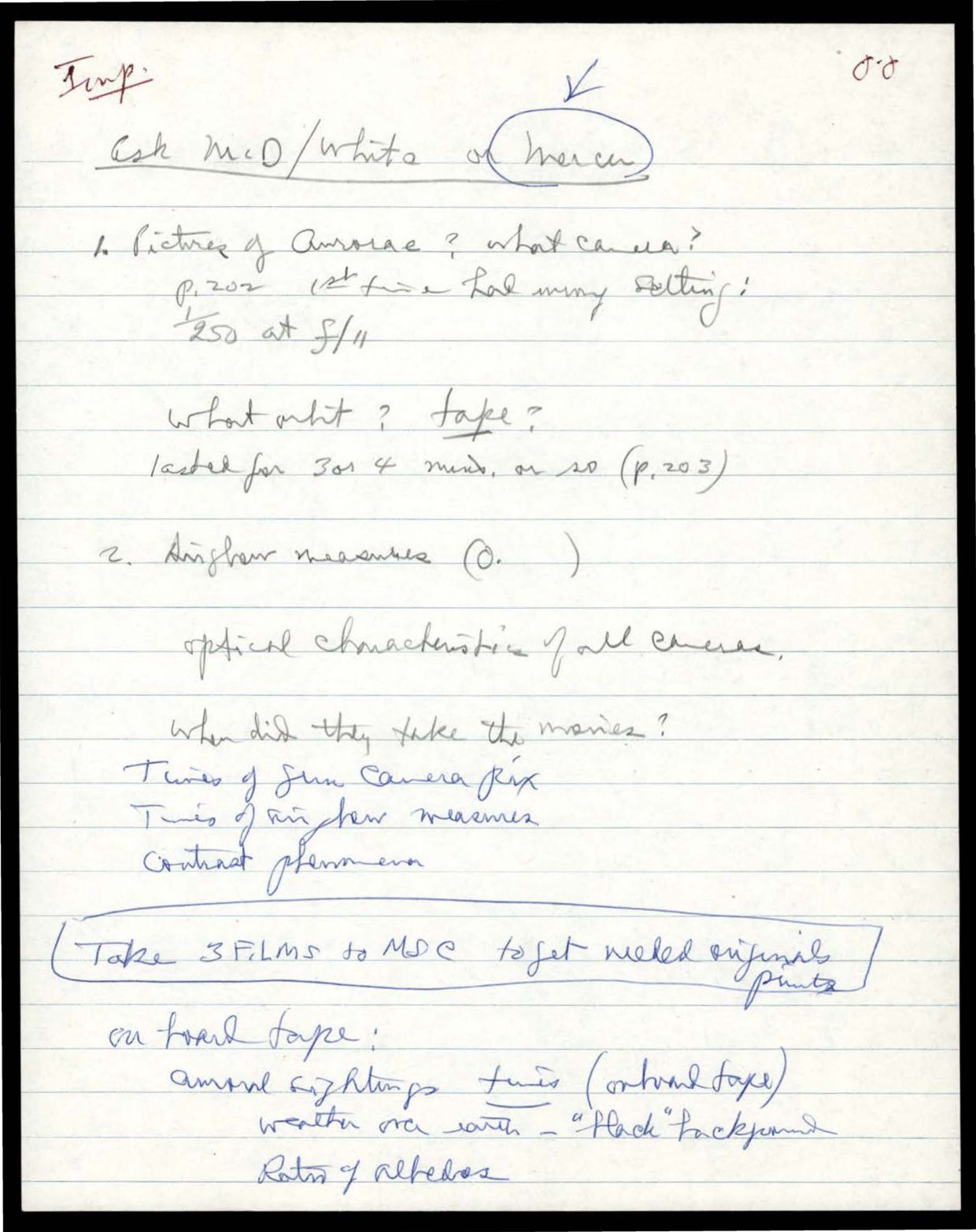
---- ------------- --------- ~* ~ ,ojw-LJ £~~ > ~~~ ~.S..-.-__::__:_--'-'(µ.d_~~ , _ _ _ - I 1+ ~- ~ ~Lh ~~-1~~~ - r ,-. I---¼ ~ Cr;;;Jz.....__ ,,3 f; LfV1 .s- :h, /v(,J) C:'. /2,
PAGE 155 / 224
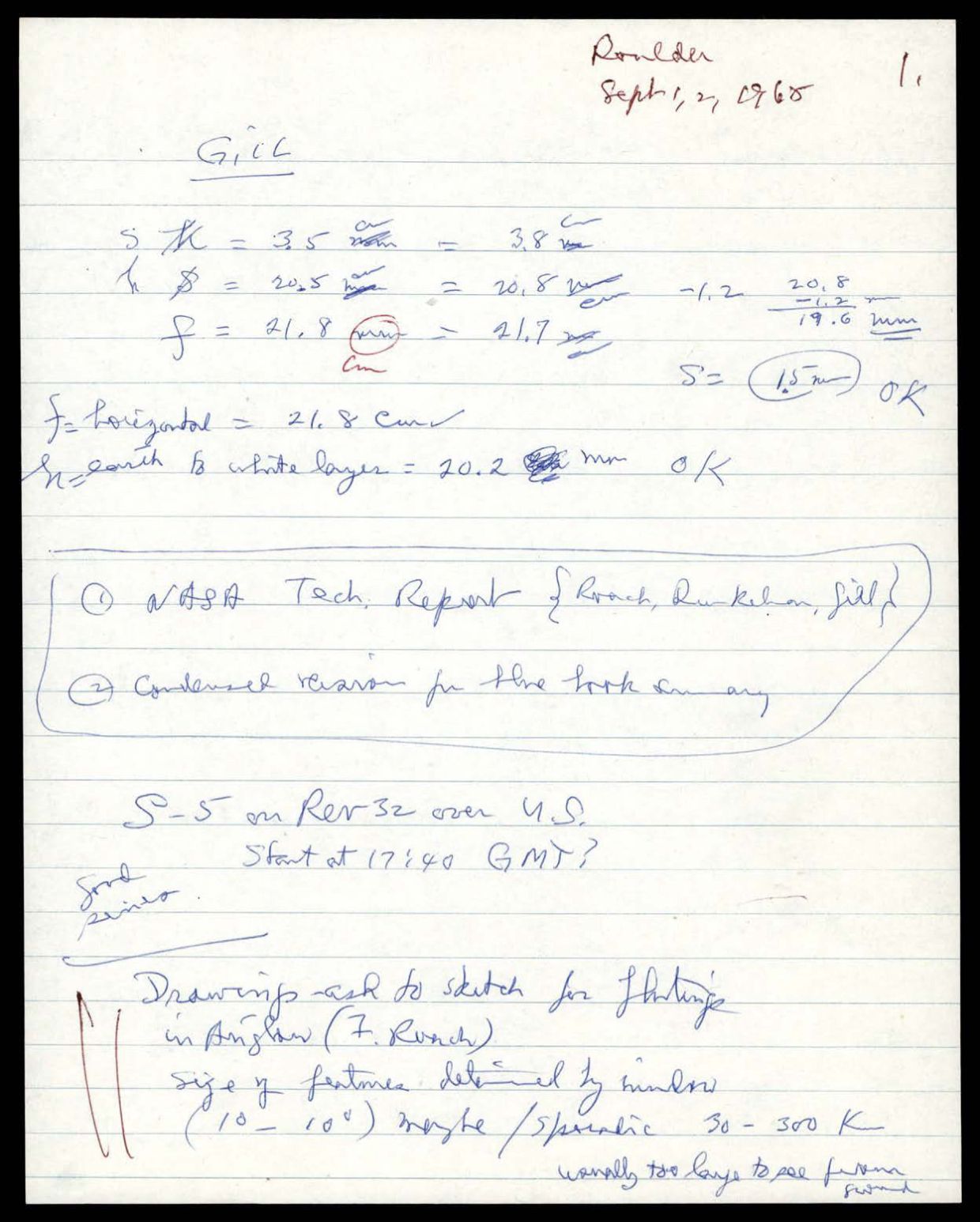
,..
-
~,({_
----
-( '2--
-i...o, ~
1
-, ')-
-,--
,<J .G ~--
-
;J_ I
-
IL
~
-
-
S- 5>- ~_&uv-~-z- ~
_51_.s;
~5'U~(71Cj-<J GM)-!
PAGE 156 / 224
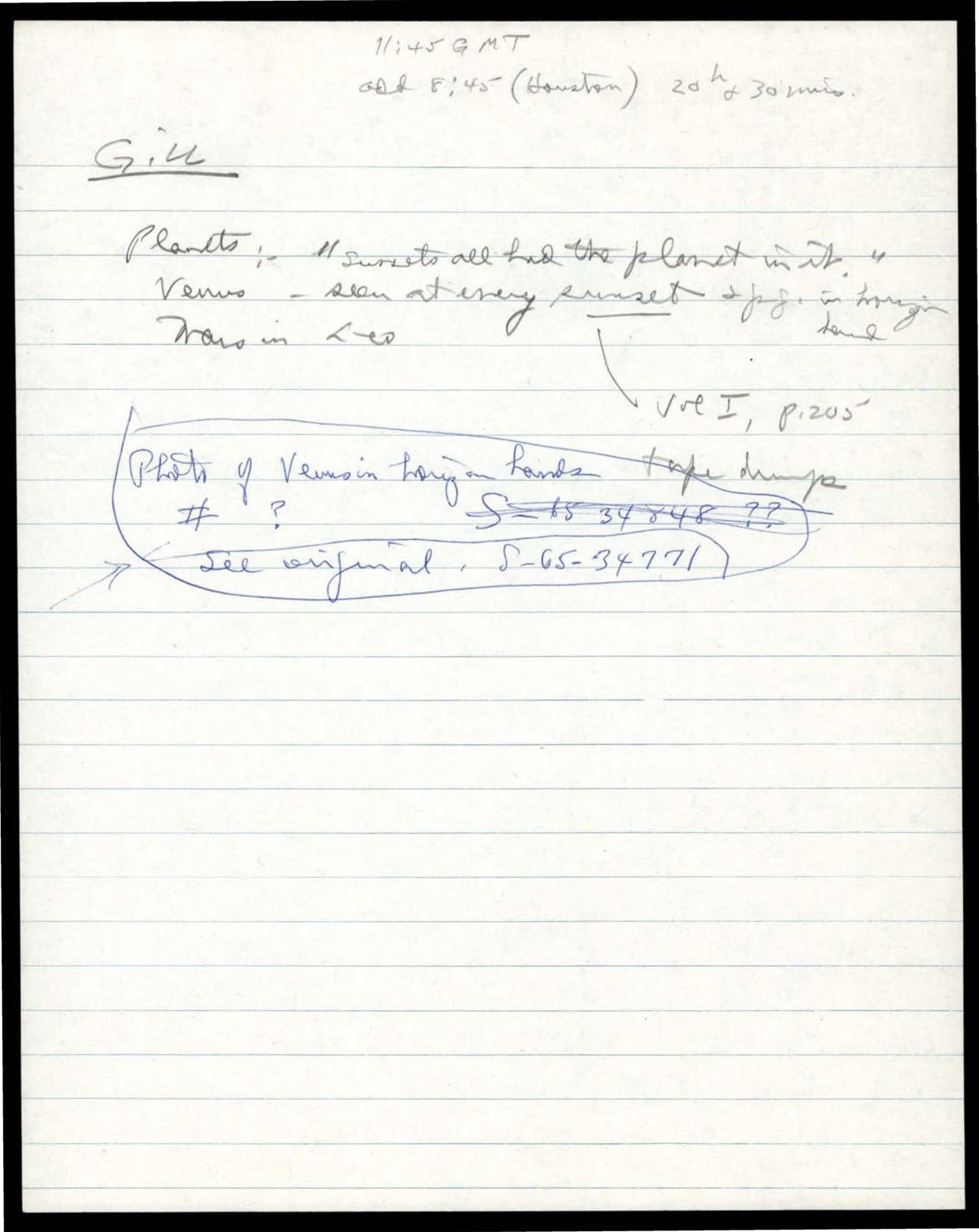
---- - -------------- _ _____i ~ - -~------
PAGE 157 / 224
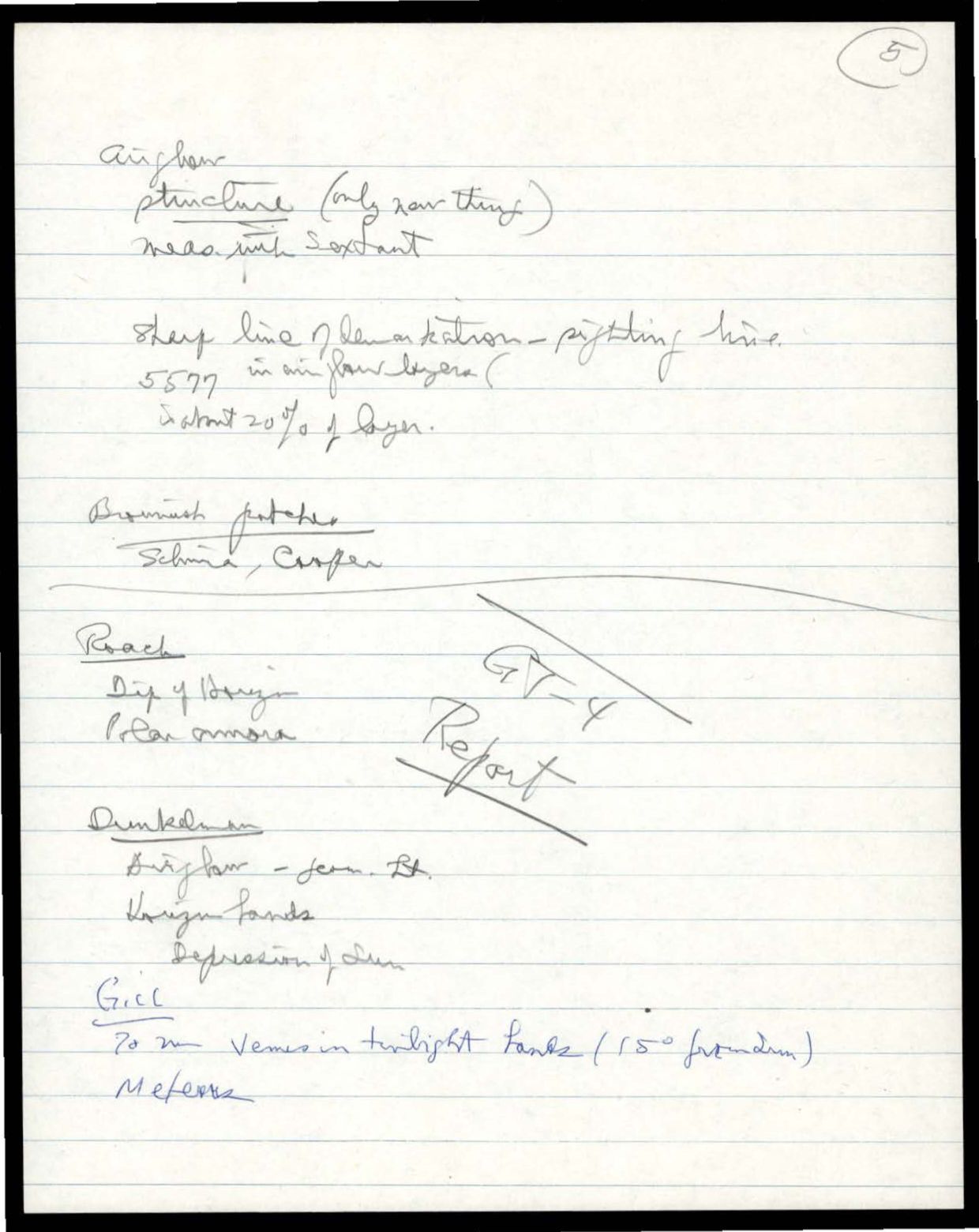
.
_
(~(c_(_
-
~
~
7
\}~
/14 ~
~k_
PAGE 158 / 224
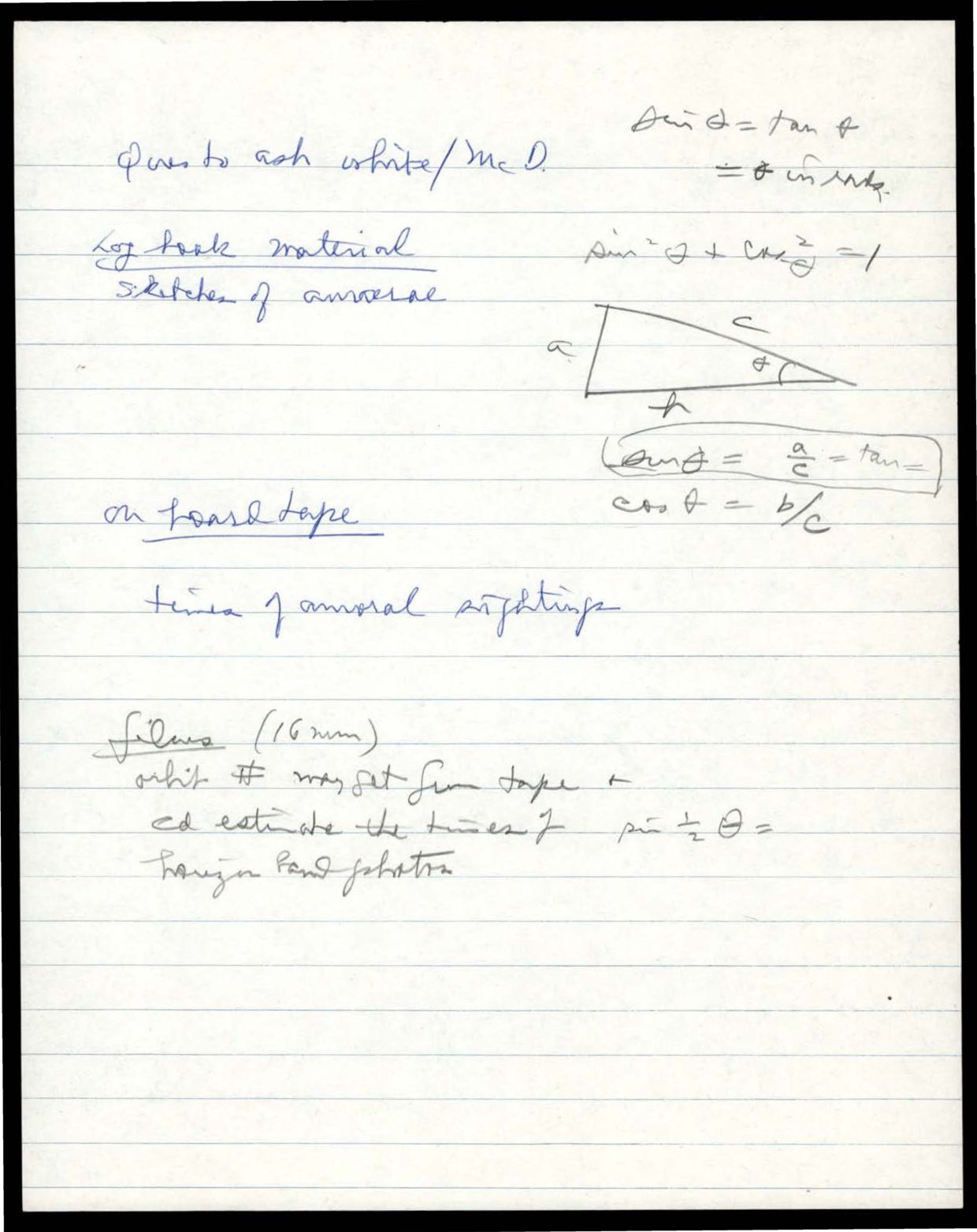
~
PAGE 159 / 224
--
-
-
-
-
- ----------
-
-- -
-
-
--- ------
---
-
C7T- <;
,01: ~►
~ - ~~4)µ-_ - _F
~
1---
~
· "- T
_ v.r--e _J =✓-
~_{1~
PAGE 160 / 224
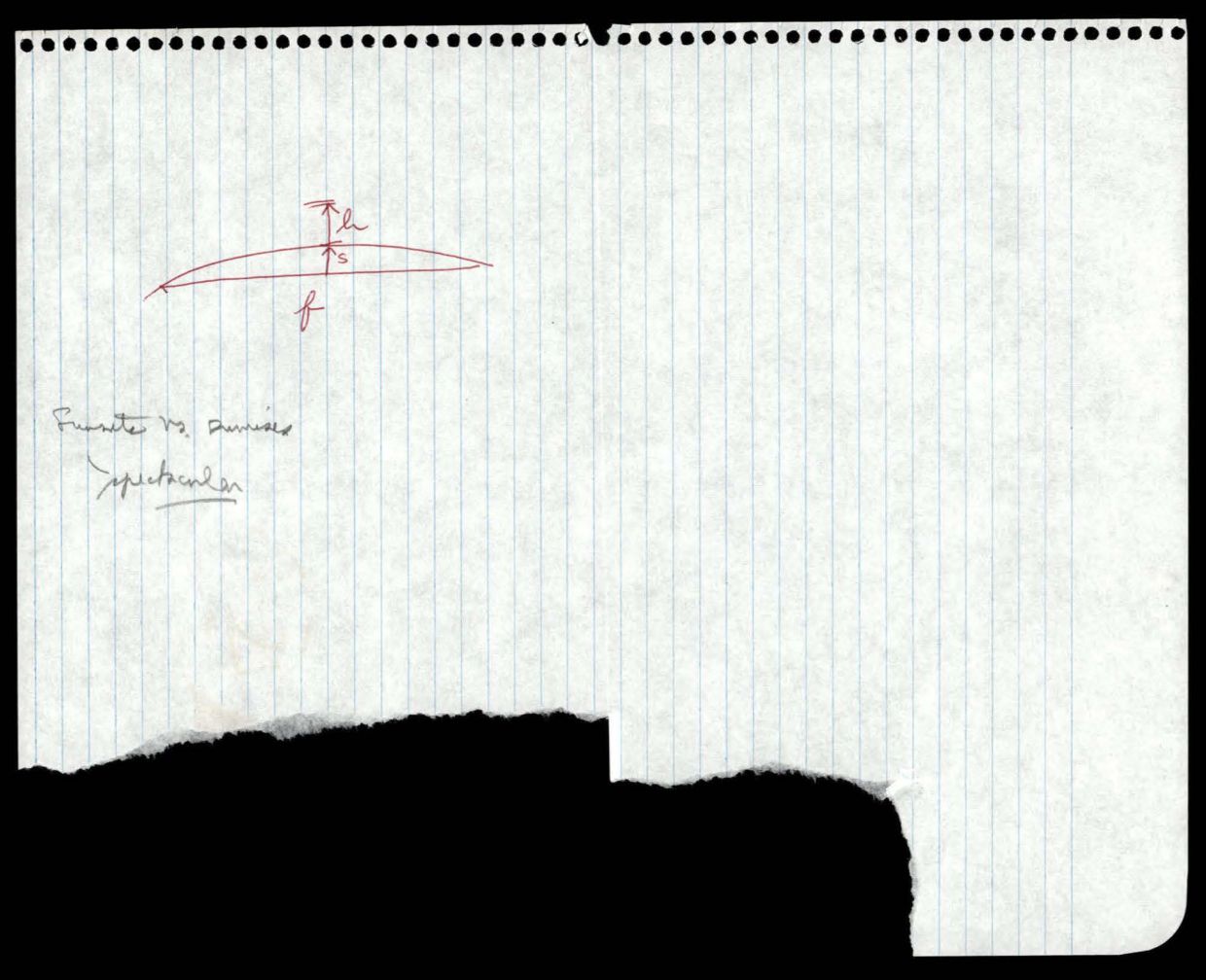
f
PAGE 161 / 224
(no extractable text)PAGE 162 / 224
--=::::,,
---~-:----
-------
_ _______c_
L
~
-
PAGE 163 / 224
(no extractable text)PAGE 164 / 224
U. S. GOV£ttNMENT PRl
OFll'
US3 or-t7184S
NASA ROUTI
SLIP
ACTION
CODE
NAME (if 111msary)
APPROVAL
CONCURRENCE
FILE
INFORMATION
INVESTIGATE AND ADVISE
NOTE AND FORWARD
NOTE AND RETURN
PH REQUEST
ltfCOIAA\ENDATION
SEE ME
SIGNATURE
REPLY FOR SIGNATURE Of,
NAME ,
h??s,,O
6.
7.
REMARKS:
FROM:
CODE ,
NASA Porro 26 (Rev. Jan. 1963)
U. S. GOV£ttNMENT PRl l"I Tl NG OFll' ICIE:
v. an. 19 3)
l"ITlNG
ICIE
US3 or-t7184S
PAGE 165 / 224
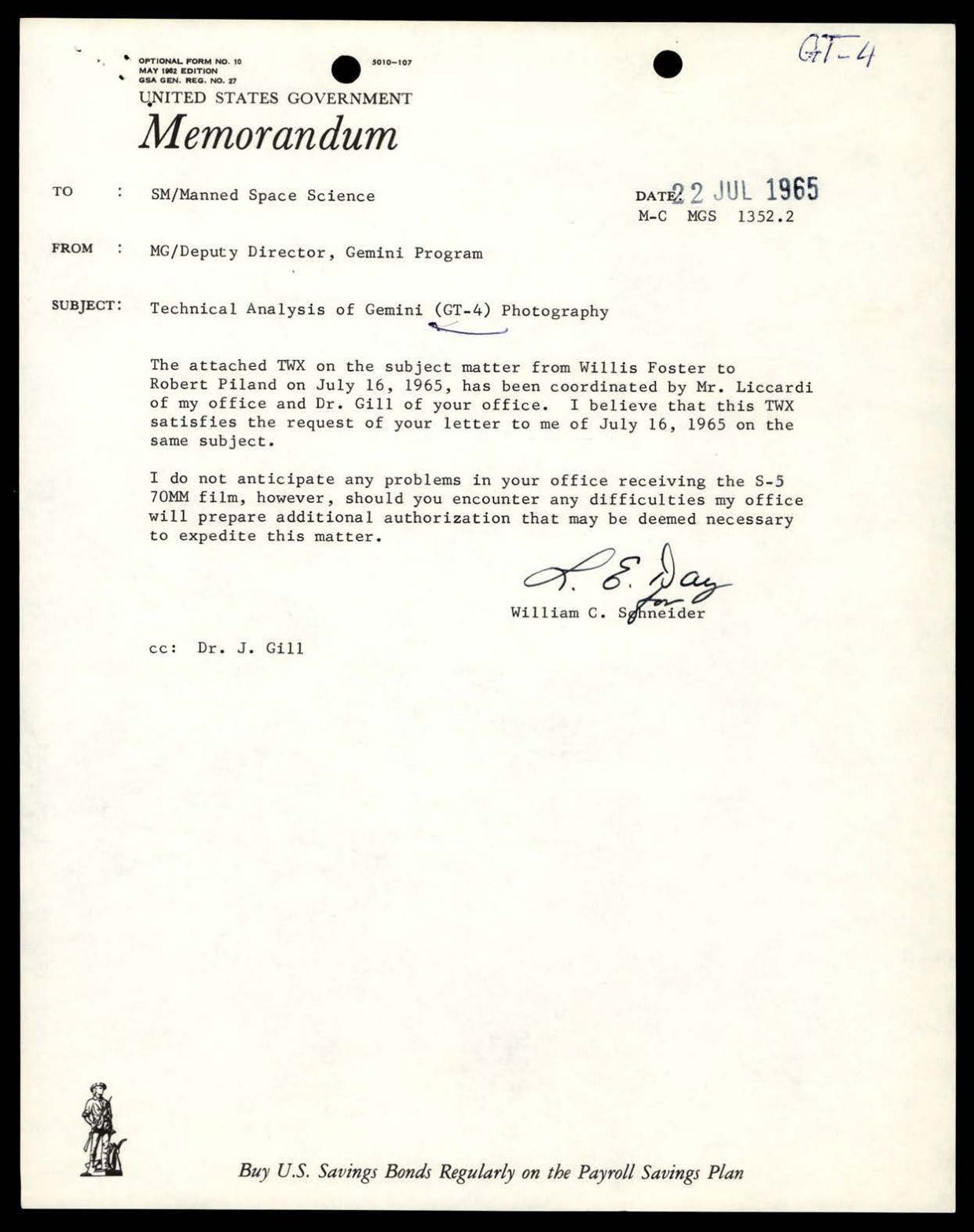
•
O~TIONAL. "°"M NO. 10
-
5010-107
MAY 1112 EDITION
"-
G-SA GEN. ftEG. NO. 27
4NITED STATES GOVERNMENT
Memorandum
TO
SM/Manned Space Science
DAT~ 2 JUL 1965
M- C
MGS
1352 . 2
FROM
MG/Deputy Director , Gemini Program
SUBJECT:
Technical Analysis of Gemini (GT- 4) Photography
~
The attached TWX on the subject matter from Willis Foster to
Robert Piland on July 16, 1965, has been coordinated by Mr. Liccardi
of my office and Dr. Gill of your office.
I believe that this TWX
satisfies the request of your letter to me of July 16, 1965 on the
same subject.
I do not anticipate any problems in your office receiving the S- 5
70MM film, however, should you encounter any difficulties my office
will prepare additional authorization that may be deemed necessary
to expedite this matter .
cc :
Dr. J . Gill
Buy U.S. Savings Bonds Regularly on the Payroll Savings Plan
PAGE 166 / 224
(no extractable text)PAGE 167 / 224
(no extractable text)PAGE 168 / 224
•
NATIONAL AERONAUTICS A D SPACE ADMINISTRATION
WAS HINGTON, 0 .C.
20546
IN REPLY REFER TO:
SM ( JRG : com )
Dr .
F . Sa ie dy
U. S .
We
t her Burea u
J tion al ~ea t her Sa t ellit e Center
S uitland ,
Maryl a n d
Dear Dr . Saie dy :
He are pleased to infor m you t1at t 11e Office of ";p dc e
Scie n c e and A p licati ons has r ccom en ded to th e 0.flicc
of Manne d Spa ce Fli g ht th t
t he fo llowine; cxper.irnent
be f lo wn on thee rly Gemini se ri es of man n ed ~p~c
flights :
Title :
Spectroph oto 1.; r aphy of Clou ds
,,,,
Princi pa l
In v e s tigator :
Dr . r . ~aiedy
Spons orin g Institution :
lJ . S •
.-le ;_i t her Bur e du
:~ tio nal \/~ather Sa t ellite Ce nter
Present p l ans c a ll fo r ten manned Gemi ni mi ~si ons , cp eccl
three months apart , beginnin g in t he last quar t er of C~lcn<l,r
Yea r
1 964 ,
Overall re sponsibility f or manned sµ, c c s c.i.cncc
investi gations i s assigned to Mr .
1,/ illi s
i3 .
fo::it e r ,
Director ,
Manne
Spa c e Science Di v ision ,
f /\ SA lleud, uc1rtur" .
Th e
M nne d ;.,pacecraft C~n t er , i!o u sto , !1a:::; lH?en as::,i.;ned
i mp le menta t i on respo1 s i b ility .for t he Gemini s ci e nti f ic
y lo ad u nde r the d irection of Dr .
,Jo c e l yn Gill ,
Cliie r ,
In - Fli g h t
Sciences , am mbe r o f
Mr .
Foster ' s :,t.:i ff .
'.-J i.11
yo u p le ase inform Dr . Gill by letter o f any co- inveG t ii.:,, tor { ~ )
officially
sociated witli your e xperiment .
Tc h nic ..i l
coo rd i n at i o n f o r y o u r
e x e r i ru c n t
w i 1 1 iJ e ll n d l c d by
i· r .
Roy Stokes , 'Ian e d
~
c c1~"1f t
r ,~nt ~
lo uston , Te;.:a::; ,
tele pho n e number , d U 3 - 7 6 3 3 •
In accord a nce with th e
N~ tio a l Aro~ ti cs ad ~P J u
i\.Jm i.11.i. :; tr a t i o,1 1 ~
t,olj ' Y lor the rel ~<.1..;.., of cl.1 L ...i ,
t::-: 1c 1'i.1n ntcr:;
are ,.,runteJ a pe ri od of tinie f'o r ex ~ Lu.;.i.vl! u:;e of Lil· d,..1 L,1.
For
em.i.ni. , you ..:ire ~ rant ..:d ,
c
i oJ of si.x month::;
reo 111
t he rec!c!i p t
o f
t he ,J.., ta .
l [ thi ~;
~me IJCr.i.ocl
.i. ., rot
s.:1. ti :;;fact ory , p l e.:isC? 2.et ..i.n touc,1
1-1ith Dr .
'ill t,J
li. ~:c u ..;:;
a
e r'j ,,l .. ·, · cl, \t ,iu l cl oe mu tu allJ
t: ru'-'u;>le to th,~
1l ,' ,;r1 ,t!i•l
/ Ourself .
PAGE 169 / 224
• -2 Experimenters a re encouraged to p ub.:'..isl1 experimental results promptly in order to inform the scientific community dS early as possible . II :, il:? f analysi~ of experimental re s ult s 1ith illus trations I here appropr i ate is required to be f urnishe d to the 8 Xperi mcn t co o rdinator within t1-10 reeks followin~ t he mission for the >u:::;tldu ch memorandum prepar ed by Ma nne d Space_raft Canter . Experi menters a re also encouraged t:, coordinate c1 n t1 exchange data amonu t hemsel v s in order' t o enhance to ti1e f ulle s t extent , the sc ienti f ic .;e nefitc o f e dch mission . It i s i mp ort a nt to th e co nduct of yo ur ex eriment that all emini s ched uled dli n s be m t and th t y ou kee p your HSC e xperi men t coordinator i n formed on progress of your experiment at all ti mes . We hope that t he plannin g o f your e x~e ri ment an d the constru ction and integration of your flight hard wa r e will be brought to sati sfactory completi on in or der that your experiment , a lon g with those o f t he other expe riment e r . on the attached list , may serve to make the Gemini scien ific payload a successful addition t o th e United S t a t es ~p ace Pro gram . S incere ly yours , !lamer E: . ::e;e ll Associ · t e lldrni ni s trat o r f or Spa ce Sc i e nce & llppl ic nt ion ~ Enc losure : List of Approved Cxperimenters
PAGE 170 / 224
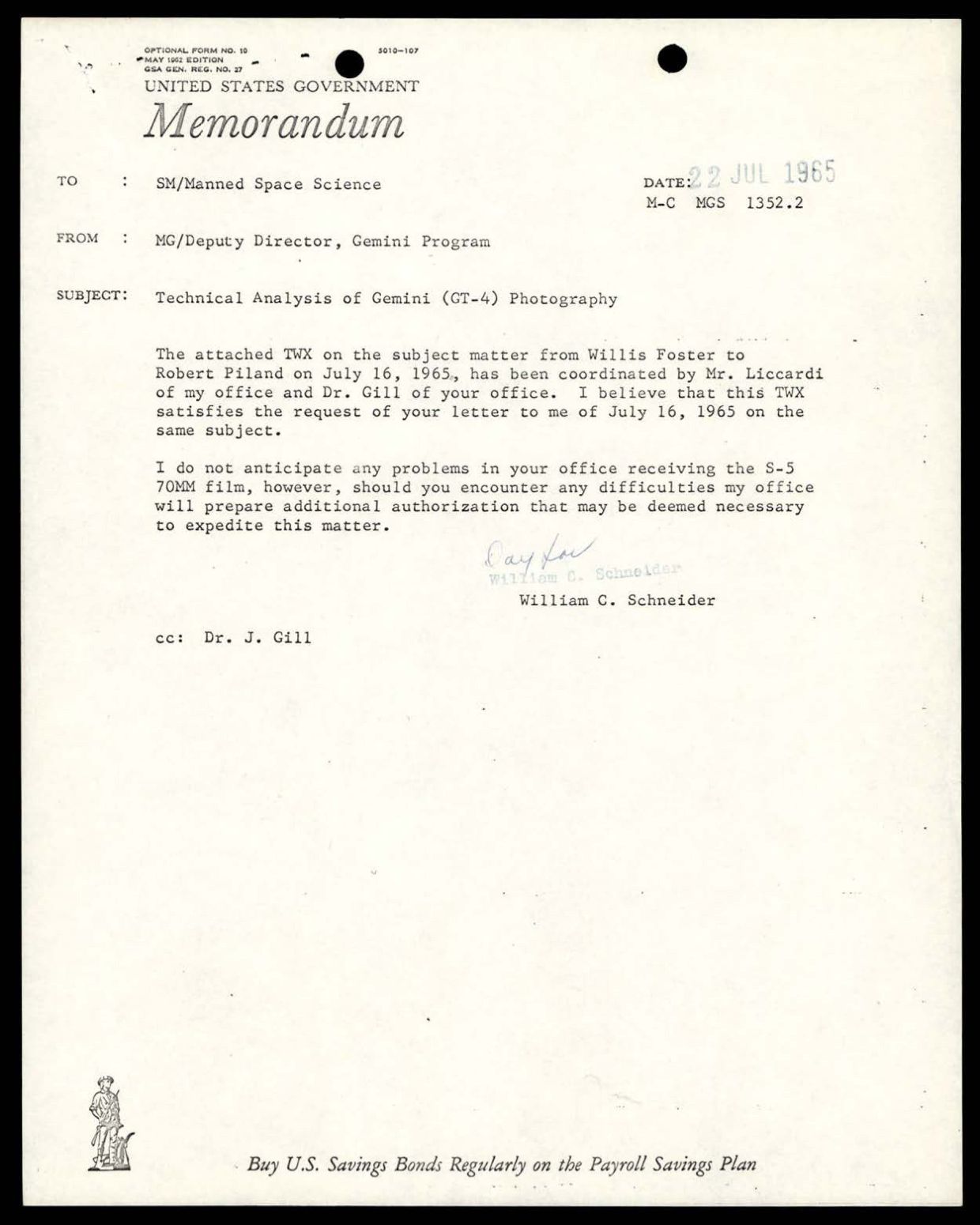
c,-T10NAL. f"'OflM NO. 10
-
.SOlG-107
_. MAY 1942 EDITION
Gs.\ C:EN , R G, NO. .2.1
NITED STATES GOVERNME
emorandum
TO
SM/Manned Space Science
DATE:
M- C
MGS
1352. 2
FROM
MG/Deputy Director, Gemini Program
SUBJECT:
Technical Analysis of Gemini (GT-4) Photography
The attached TWX on the subject matter from Willis Fos ter to
Robert Piland on July 16, 1965, has been coordinated by Mr . Liccardi
of my office and Dr. Gill of your office .
I believe that this TWX
satisfies the request of your letter to me of July 16, 1965 on the
same subject .
I do not anticipate
ny problems in your office receiving the S- 5
70MM film, however, should you encounter any difficulties my office
will prepare additional authorization that may be deemed necessary
to expedite this matter.
William C. Schneider
cc :
Dr . J . Gill
Buy U.S. Savings Bonds Regularly on the Payroll Savings Plan
PAGE 171 / 224
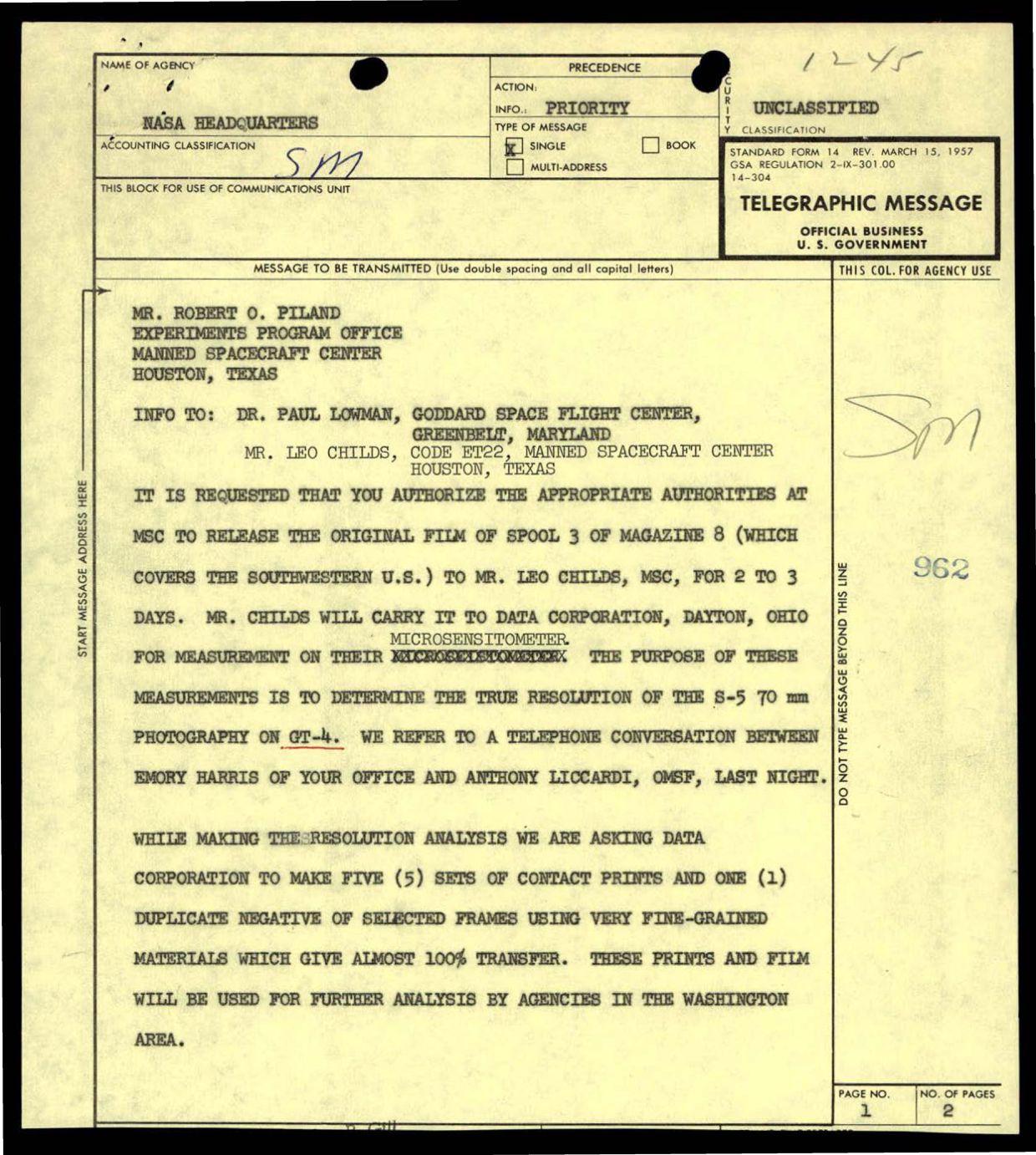
NAME OF AG8'1CY I PRECEDENCE ACTION, I INFO., PRIORITY UNCLASSIFIED NASA BEADQUAfm!RB THIS BLOCK FOR USE OF COMMUNICATIONS UNIT TELEGRAPHIC MESSAGE OFFICIAL aus,NESS U.S. GOVERNMENT MESSAGE TO BE TRANSMITTED (Use double spocing ond oll copitol letters) TH IS COL. FO R AGEN CY USE MR. ROBERT O, PILAND EXPERIMENI'S PROGRAM OFFICE MANNED BPACECRAFr CENI'ER HOUSTON, TEXAS I?iFO TO: DR. PAUL LOWMAN, GODDARD SPACE FLIGHT CEN•fi!B, GREENBELT, MARYLAND MR. LEO CHILDS, CODE ET22, MANNED SPACECRAFT CENTER Sn HOUSTON, TEXAS IT IS REQUESTED THAT YOU AUTHORIZE TBE APPROPRIATE AUI'HORITIES AT me TO RELEASE THE ORIGINAL FIIM OF SPOOL 3 OF MAGAZINE 8 (WHICH w COVERS TBE Sou.rBWESTERN O,S.) TO MB., LEO CHILDS, MSC, FOR 2 TO 3 2 5 "' x I DAYS. MR. CHILOO WILL CARRY IT TO DATA CORPORATION, DAYTON, OHIO 0 z • MICROSENSITOMETER. 0 > w FOR MEASUREMENT ON THEIR THE PURPOSE OF THESE .., w C) < MEASUREMENTS IS TO DETERMINE THE TRUE RESOLUTION OF THE _S-5 70 mm "' "' w l' w PHOTOGRAPHY ON GT-4. WE REFER 'ro A TELEPHONE CONVERSATION BE'lWEEN ... ~ ... 0 EMORY HARRIS OF YOUR OFFICE AND ANTHONY LICCARDI, OMSF, LAST NIGHT. z 0 0 WHIU: MAKING THE RESOLUTION ANALYSIS WE ARE ASKING DATA CORPORATION TO MAKE FIVE (5) SETS OF CONTACT P.Rml'S .AND ONE (l.) DUPLICATE NIDATIVE OF SEIECTED FRAMF.S UBING VERY FID-GRAINED MATERIALS WHICH GIVE .AIMOST 1~ TRANSFER. THESE PRINTS AND FIIM WILL BE USED FOR FURTHER ANALYSIS BY AGENCIES IN THE WASHINGTON AREA. PAGE NO.
PAGE 172 / 224
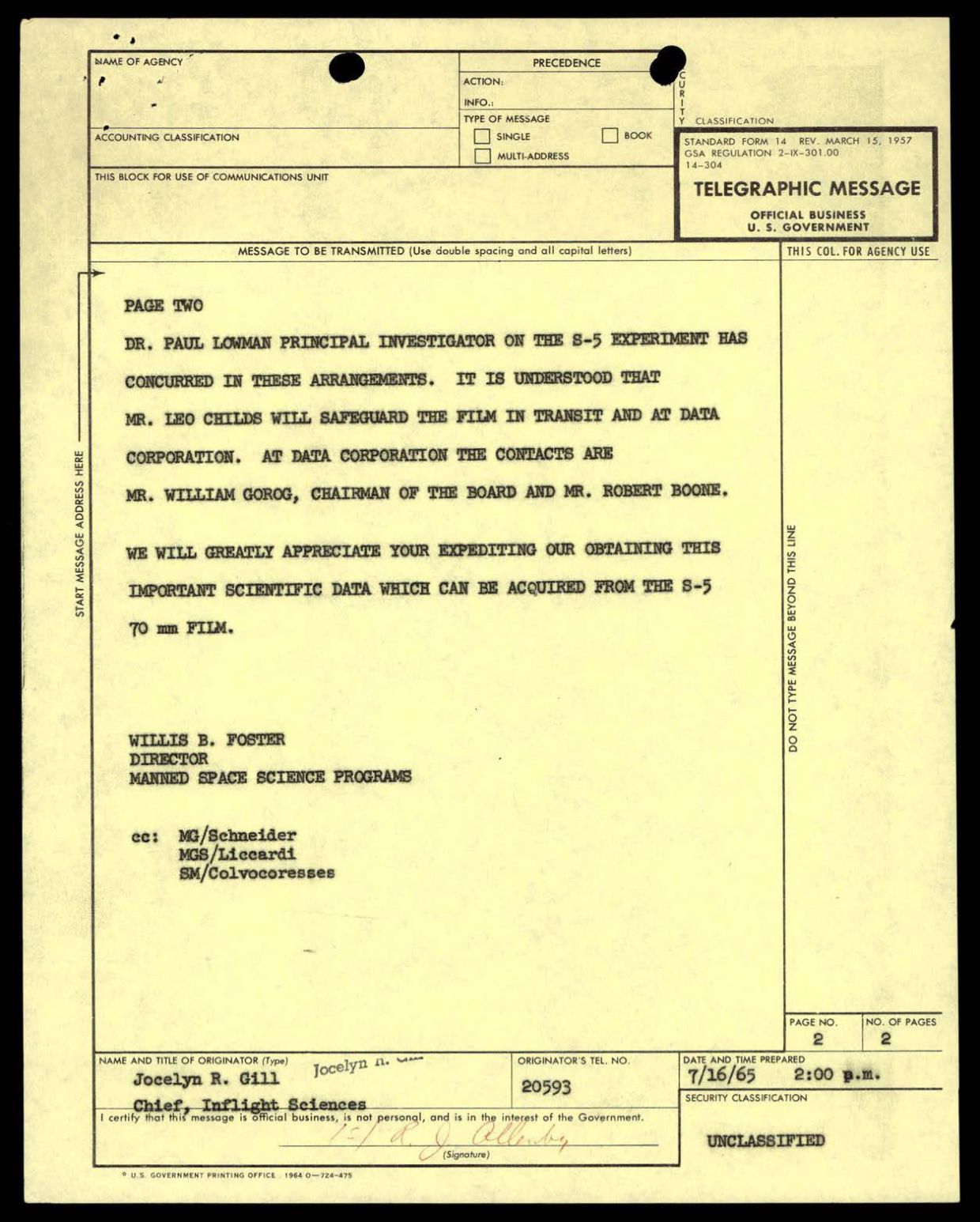
lllAME Of AGENCY
PRECEDENCE
ACTION :
INFO.:
a-,-----------------------l TYPE Of MESSAGE
Cl AS SI FICA TION
ACCOUNTING CLASSlflCA TION
0 SINGLE
D BOOK
STANDARD FORM I•
REV. MARCH 15, 1957
□
MUlTI-AOORESS
GSA REGULATION 2- IX-30 1.00
t::-:::-:~=-===:-:-::-:-::------=------------...l......!:::::......:.::.:...:.:.:.:.:.=------1 14-304
THIS BLOCK FOR USE OF COMMUNICATIONS UNIT
TELEGRAPHIC M ESSAGE
OFFICIAL BUSINESS
U. S. GOVERNMENT
MESSAGE TO BE TRANSMITTED (Use double spocing ond oil capitol leffen)
AGENCY USE
PAGE 'lWO
DB. PAUL UMWi PRI?fCIPAL DM'Sl'IGATOR ON TBE B-5 EXPERIMDT HAS
Coz«ruRRED :m THESE .ABRA.BGIMEN'l'.
IT IS 'URDJ!:RS'l'OOD TBAT
MR. LEO CHILDS WILL SAFEGUARD 'l'1IE FILM IN 'l'RAHSIT AND Mr DATA
CORPOBATIO •
AT DATA CO.RPOBATION THE CONTACTS .Am:
MB. WILUAM GOROG, CHAIRMAN OF THE BOARD AID MR. ROBERT BOOBE.
WE WILL GREA1'LY APPRmIATE YOOR EXPEDITING OUR OBTAIBI.BG THIS
~ SCIDTIFIC DATA WBICR CAB BB AC UIRID FROM THE S-5
70 mm FIIM.
WILLIS B. P'OS'l'ER
DIRICTOR
MARNED SPACE SCIENCE PROGRAMS
cc: Ml/Schneider
MJS/Liccardi
BM/Colvocores ee
PAGE NO.
NO. Of P4GES
2
2
NAME AND TITLE Of ORIGINATOR (Typ<t)
ORIGIN4TOR'S TEl. NO.
D4TE AND TIME PREP4RED
Jocel:.)'n R. Gill
7/16/65
2:00
•• •
UNCLASSIFIED
v" (Si9nolv,.)
• u.s GOVERHMEHl PRI NTING OfflC[ uu o-1u-u~
PAGE 173 / 224
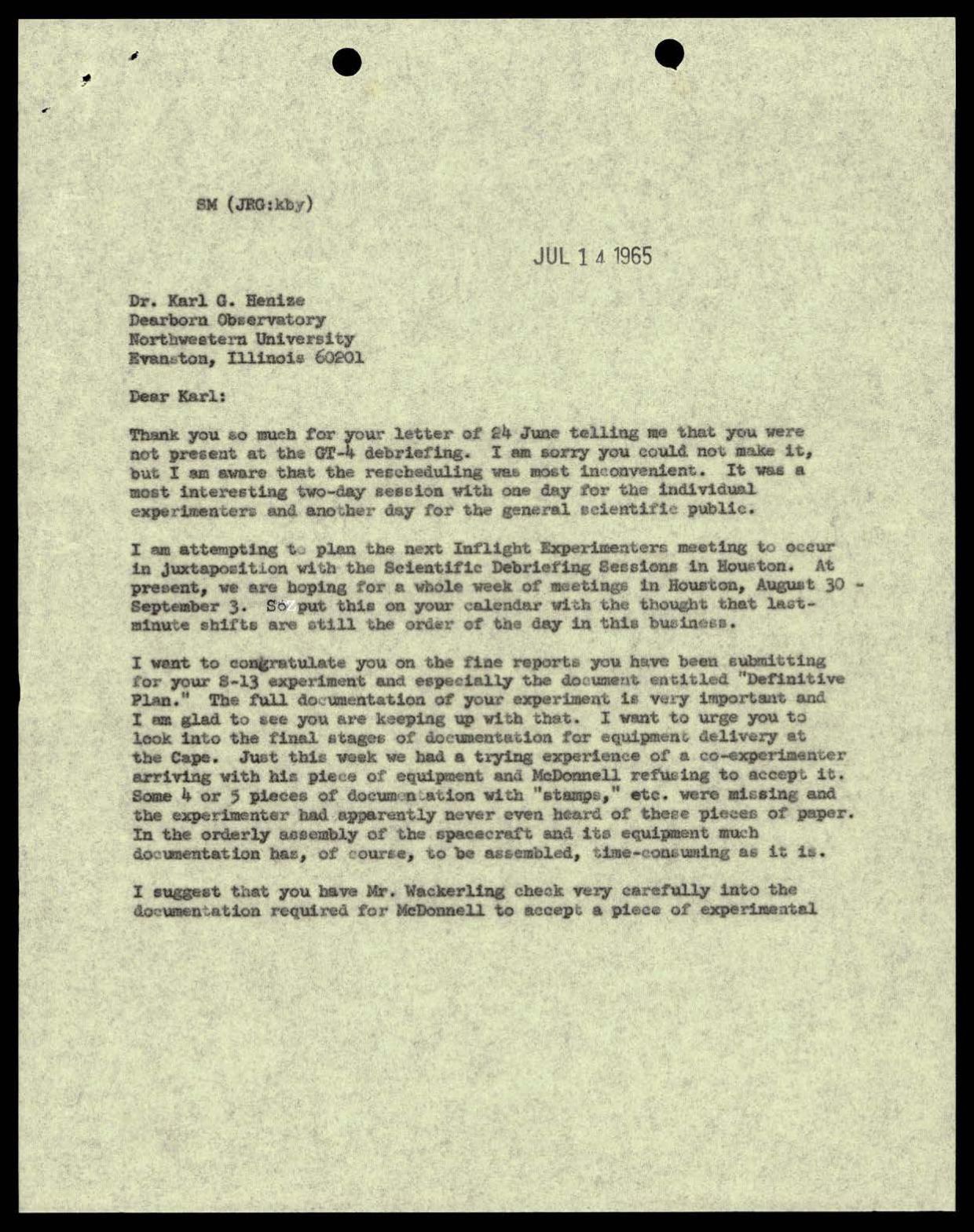
M (JRG.kb. )
JUL 1 .i 1965
PAGE 174 / 224
2
...
..,
equi
of
l3ogge 13 C
nxt
E,xperl.lncant
nt for an
r
l
.
hip on
h
Ast OllOlXIY Subc
ve a good s
r.
1ncerely yow:-a,
-Gfll
Jo ~
R. Gill
Chief, Inf'll
Mann d 6~
t
c~ence
Sci n
Progr
cc: Dr. Al Bo ess, m/08.FC
Willis B. Foster, SM
Subject File
Reading File
SM:JRGill:kby 20593
7/l2/65
PAGE 175 / 224
,
DEARBOR
OBSERVATORY
NORTHWESTERN UNIVERSITY
BVA STON, lLLINOIS 60201
24 June 1965
Dr. Jocelyn Gill
Chief, Inflight Sciences Branch
Code SM
Manned Space Science Programs
NASA Headquarters
Washington, D. C. 20546
Dear Jocelyn :
In connection with the astronaut debriefing conference ,
my lack of attendance has caused you any embarrassment .
I 'm sorry if
I simply
couldn 't make it on such short notice .
I was at the University of
Wisconsin when the news reached me on Wednesday morning.
Having just
driven for three hours to get there I was reluctant to turn around
and leave lmmediately as would have been required for me to catch a
late afternoon plane to Houston .
I hope that it might be possible for me to attend the next debriefing
in which the astronauts may be discussing either open hatch activities ,
spacecraft stabilization, or operation of the General Purpose Camera.
As you are probably alreaey aware , I have just received an invitation
from Dr. Newell to become a member of the Astronomy Advisory Subcommittee.
I am delighted both for the honor of having been so chosen and also by
the implication that astronomical observations from manned space vehicles
have at last been recognized as worthwhile scientific activities .
I
thank you for your very considerable efforts in backing my original
proposals and in making it possible for this whole situation to develop
so favorably .
Sincerely,
Karl G. Henize
KGH :mjw
PAGE 176 / 224
S (JRG:cvd) JUL 14 1965 TO: Manned Spacecr ft Center Chier. Photo r phic Division, Code NASA He dquarters Ch1ef, Infl1 ht Sciences SUBJECT: Request for duplicate movie films and color prints of all 70 mm, hand-held pictu~es One copy of each of color mevie ~1lms h1ch include sunsets, sunrises, horizon bands, limb of earth nd terrain views 1s re quested to be forwarded to Dr. J.R. Gill, Code SM,. NASA Head quarters. Please send these air mail sinoe this material 1s n eded soon for preparation o7'an7i'itrongmical re1ort on GT-~. One of the most important films for this purpose s Ma zine 9. Two sets or color prints of all color still pictures which were taken with sselblad 70 mm camera (on GT-4) are also requested. It will be adequate to send these by re ular mail. These prints pertain mainly to the S-5 and s-6 Gemini xperimenta. Jocelyn R. Gill Jocelyn R. Gill
PAGE 177 / 224
...
Deputy
cb
OFFICE CODE ►
SIGNATURE ►
(JRO;kby)
JUL 1
19 J
)
.
TO
.
cecraft Center
o.
,
r
po o Spacecr
:
oft
of voice ta
f
rsa ion o e
o, t
ng
ceipt o~ copies of subJe
ri t,
3.
Co
G
.
Dr
. Gill
C
____rter
.c. ro5-46
Jocelyn • Gill_
Joce:cyit R. Gill
cc :
MGS/Mr. Liccard.i
SM Reading Files
SM File : Sci . debriefing GT -4 file
CONCURRENCES: SM:JRGill : kb
20593
7 1 65
OFFICIAL FILE COPY
PAGE 178 / 224
)
JUN 171965
1p
not
GT;;.4
••
... ...,,..,,. yo
Jocelyn R. GiU
cc :
SM File s
~kby 20593
6/7/65
PAGE 179 / 224
(
)
Bet re rds,
cc:
SM Files
SM:JRGill:kby 20593
6/7/65
JUN 171965
C
1enc
rt w
no
PAGE 180 / 224
JUN 17 1965
cc i
SM 1'1:l.es
:J'BG1ll:
20593
6/7/65
PAGE 181 / 224
(
JUN 171965
c. S Fils
:JRGlll kby
6/7/ 5
PAGE 182 / 224
NATIONAL AERONAUTICS AND SPACE ADMINISTRATION
WASHI NGTON , D. C. 20546
IN REPLY REFER TO:
SM- ( JRG: kby)
Dear
We are enclosing,. lis t s of Gemini photographs f or Miss i on s I V
through VIII which you r e questedo
These include the numbers
t hat Creative Arts* can utilize in filling orderso
The
Gemtni IV material can be ordered by the magazine,I) spool,I)
and frame numbers . (Example :
Gemini IVs Magazine 16 s Spool 5,
Frame 3l ) o
The Gemini V, VI, VIIs and VIII material can be
ordered by the 11HC" number ( Example :
65- HC- 701 ) .
Note that the column " GET" signifies ground elapsed time and
can be converted to GMTi which is Greenwich Mean Tim o
We hope this information will answer your need.so
Thank you
f or your interest in the Gemini photographs.
Sincerely yours s
Jocelyn Ro Gill
Manned Flight Experiments Office
Enclosures :
Lists of Gemini IV, V, VI >
VII~ VIII photographs
* Creative Arts
Attn:
Mro Tinsley
814 H Street , NoW•
Washington,I) D.C.
PAGE 183 / 224
~1) C l' ~ ., \- ✓ . 1 r \ From NORTHERN ARIZONA SOCIETY OF SCIENCE AND ART, INC. flAGSTAfF, ARIZONA P. 0. Box 1389 O rder No . .. ........ .......-·-··-···· -···-··········CLASS MAIL EXPRESS D Insured D Prepaid D Parcel Post O C ollect D Book Post D Pieces D Printed Matter Value...........-....... . ~ . . ti cs &. Space Admih . Jocelyn . Gill Contents: POSTMASTER: This parcel may be opened for postal Inspection if necflJGry. RETURN POSTAGE GUARANTEED ~ I
PAGE 184 / 224

lo. 55
8 I 9
BELMONT CLASP
PAGE 185 / 224
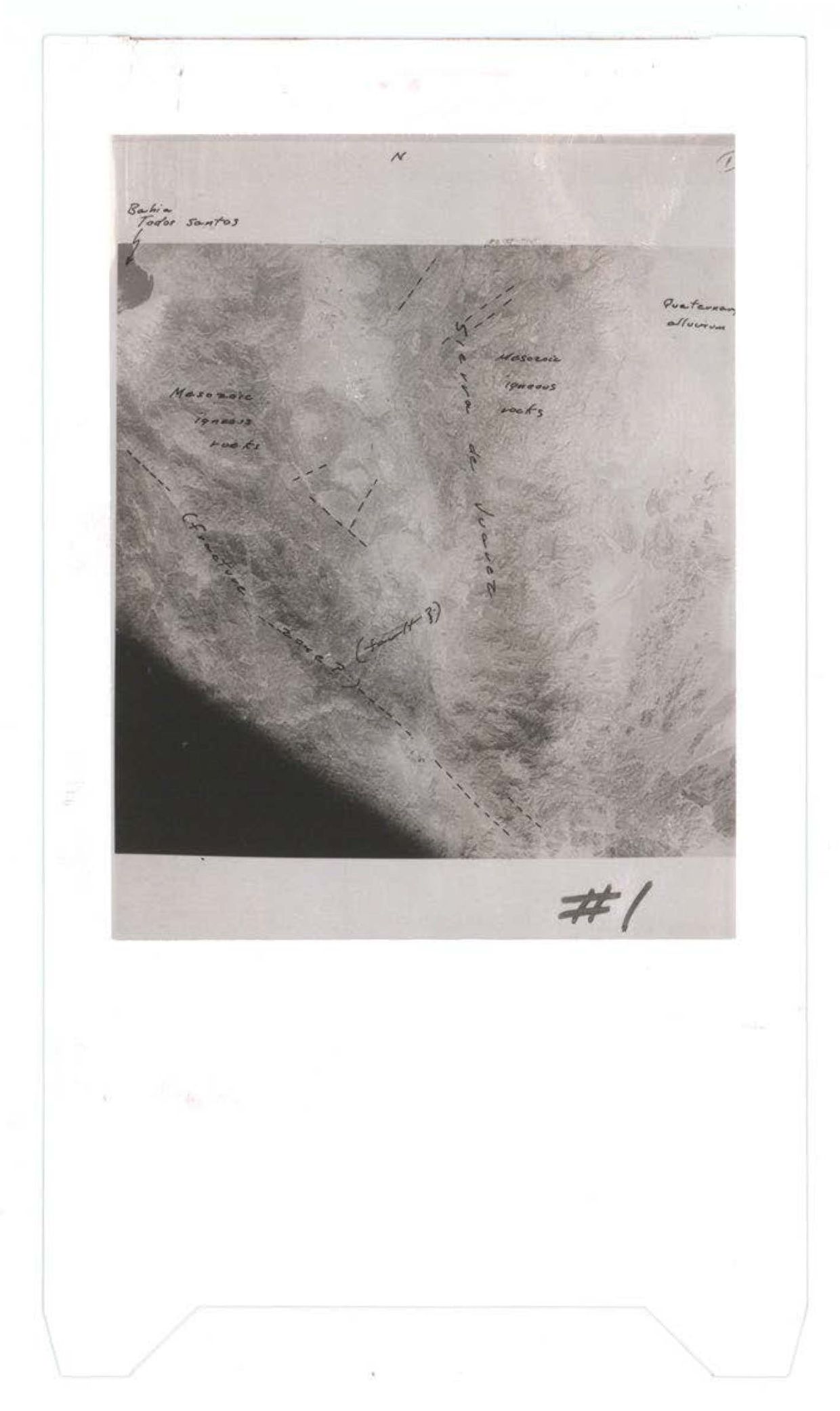
(no extractable text)PAGE 186 / 224
•'
I
>
J· R, S'J~
~A.<l $1-'\
/\I ftS tr- r-\ G
v.J~, v,c.
PAGE 187 / 224
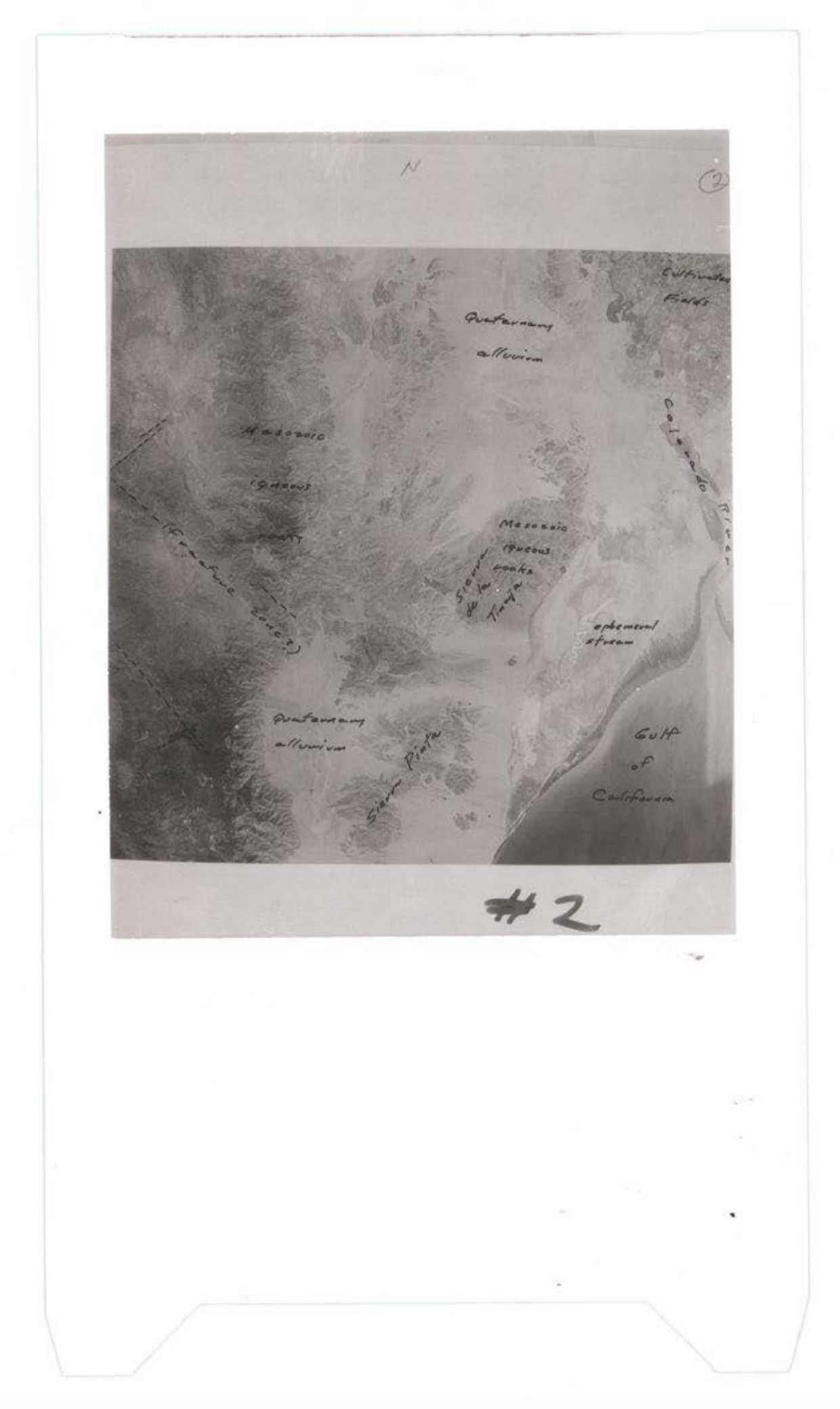
(no extractable text)PAGE 188 / 224
..
l l ., .
..., .' '
~.r. ~ JO
(~-e \.
-;:J {V\
(\/ Af I+ ~ (7
~-~.c ..
PAGE 189 / 224
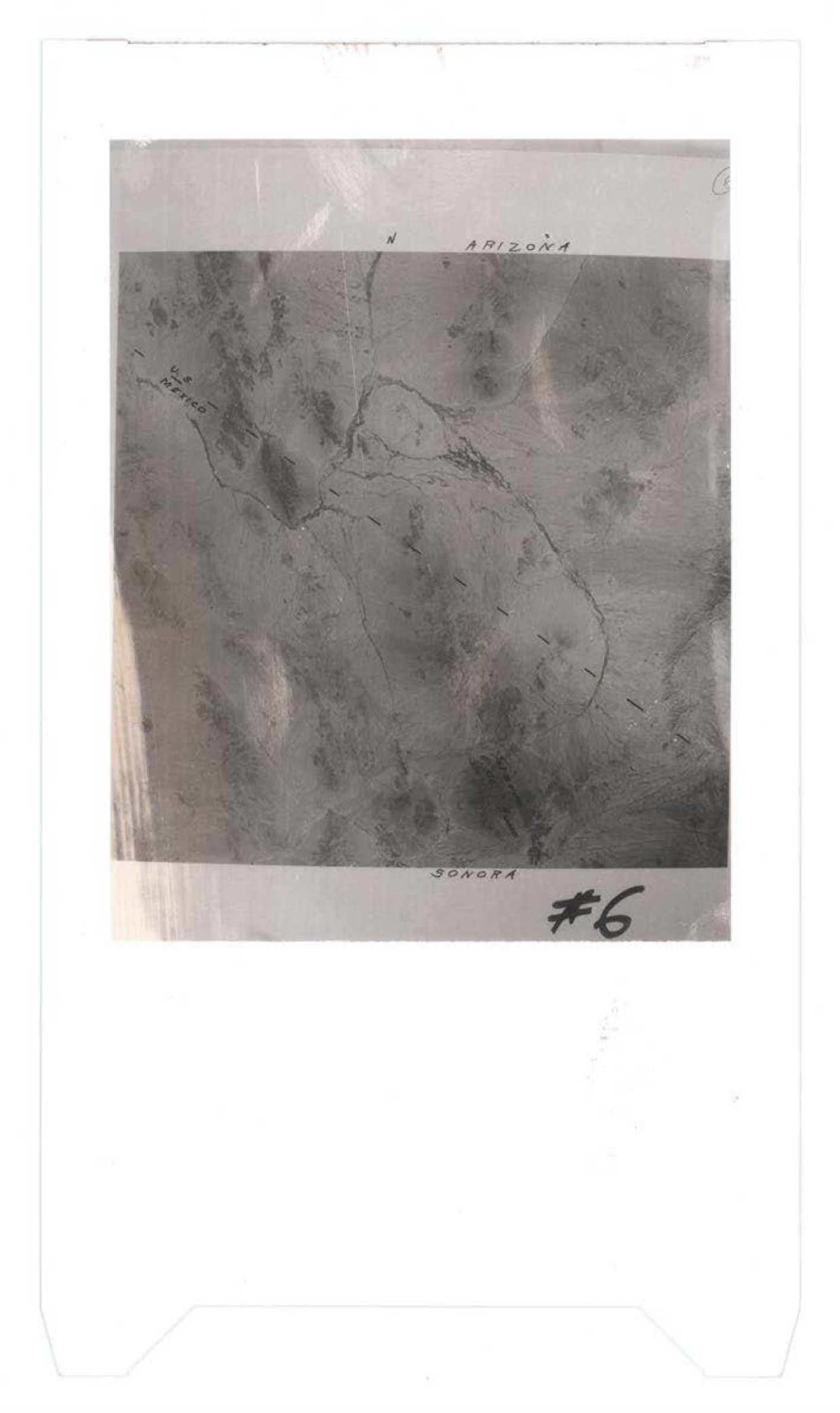
...---,- -----------
PAGE 190 / 224
I
..
'J
,J
"
\
~ - ~ - ~Q
o
~ S M
NA-Sf+-
Q
wv-h.~,~.
PAGE 191 / 224
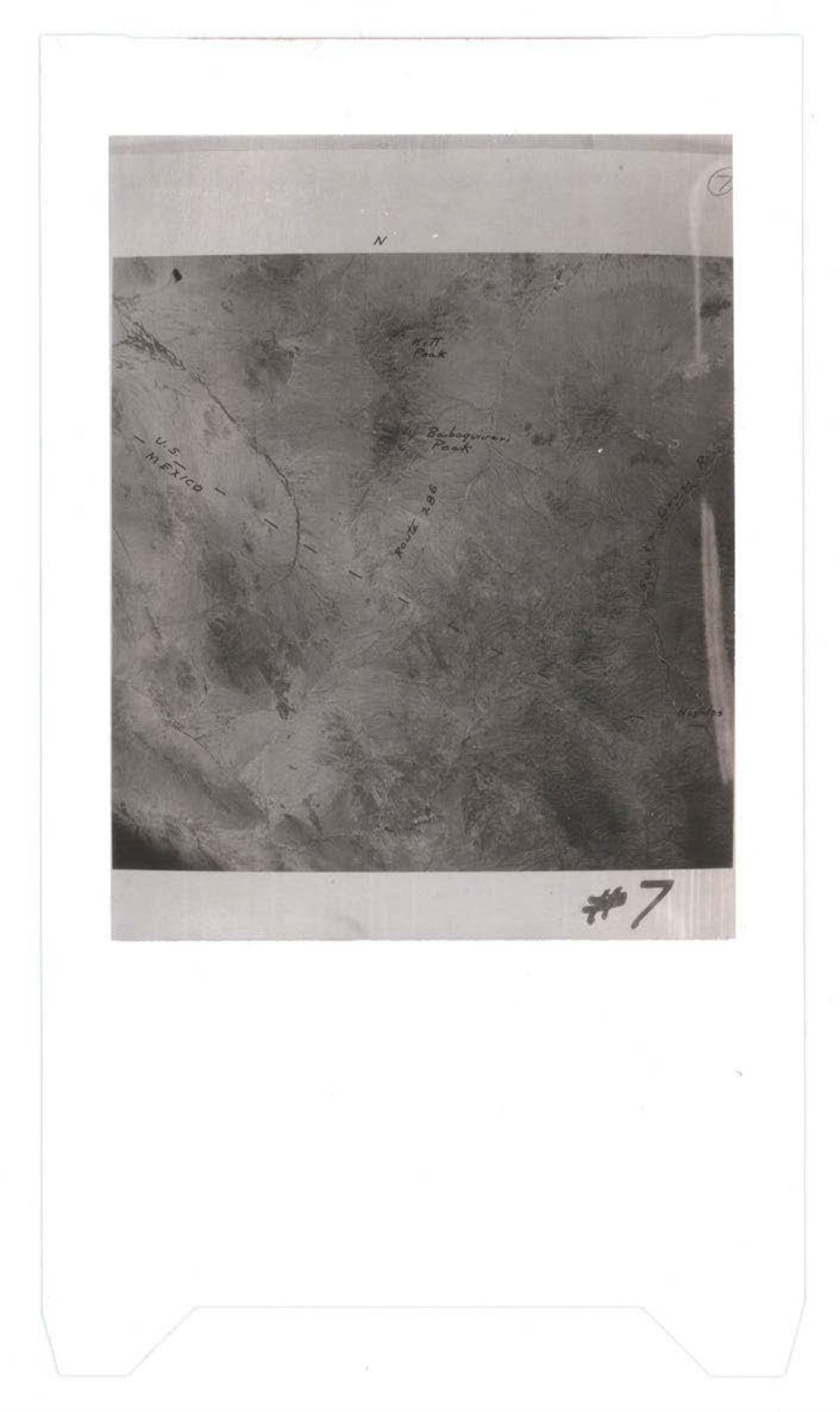
(no extractable text)PAGE 192 / 224
i . «. .
<::'('1
c-~ l <I
Jl~A Ac~
w~k. . t .c-,
PAGE 193 / 224
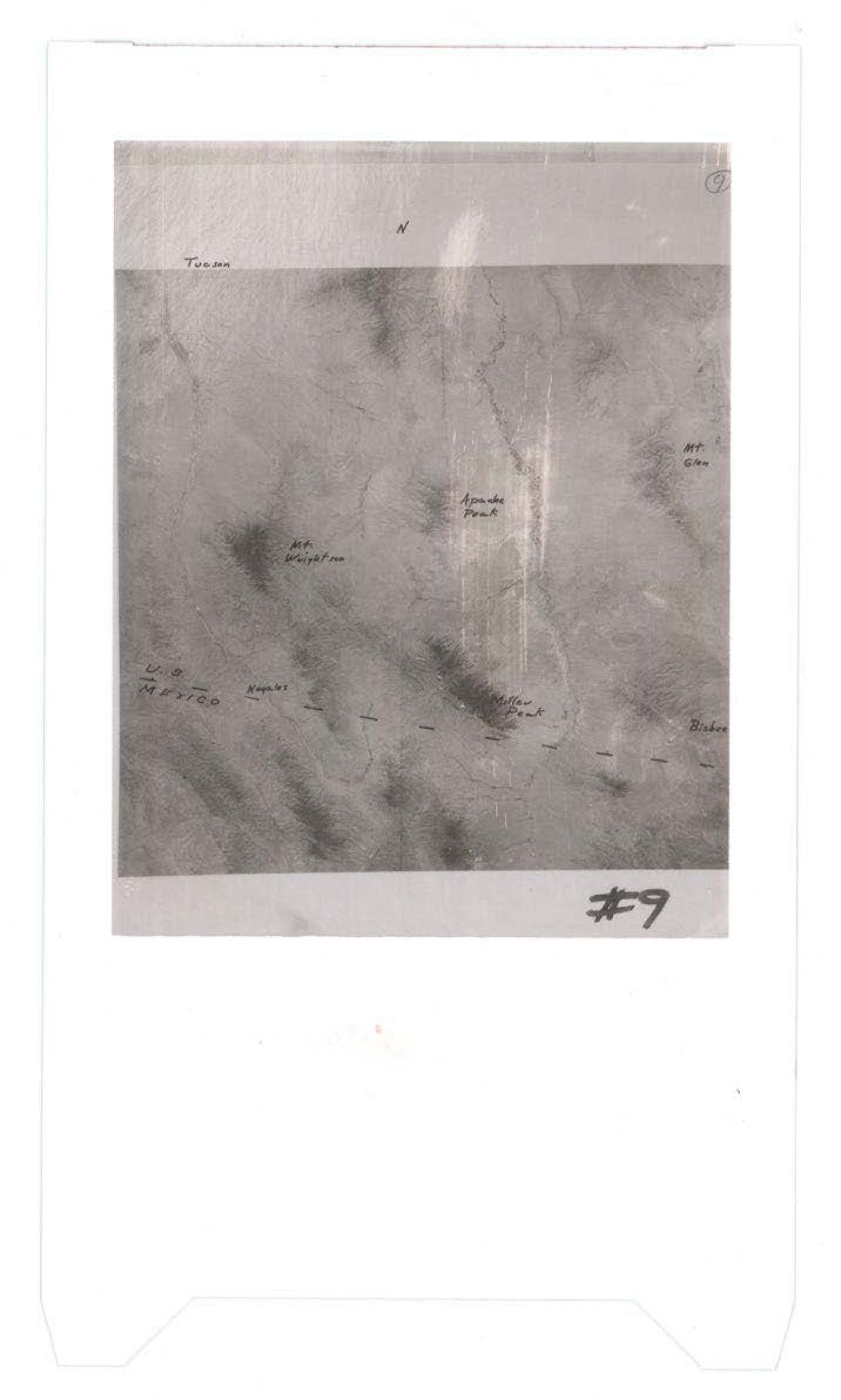
(no extractable text)PAGE 194 / 224

--,+94 ~
11
Cl
rl
..,
I:.
}, {!, ~
J
C~'-
S M
(v {4-~ rt # t?
,I'[~, §>,C-,
PAGE 195 / 224
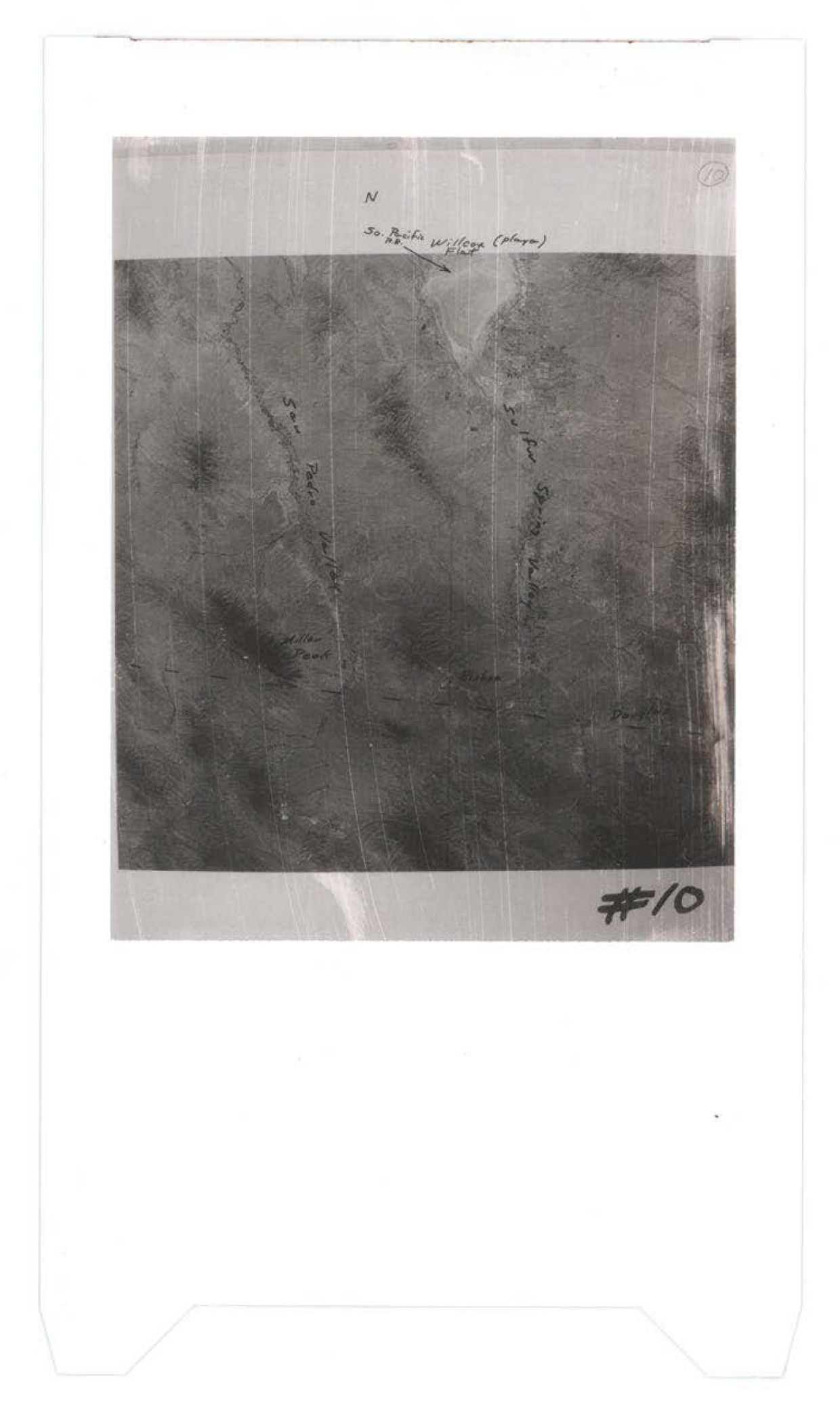
JV
PAGE 196 / 224
n.
PAGE 197 / 224
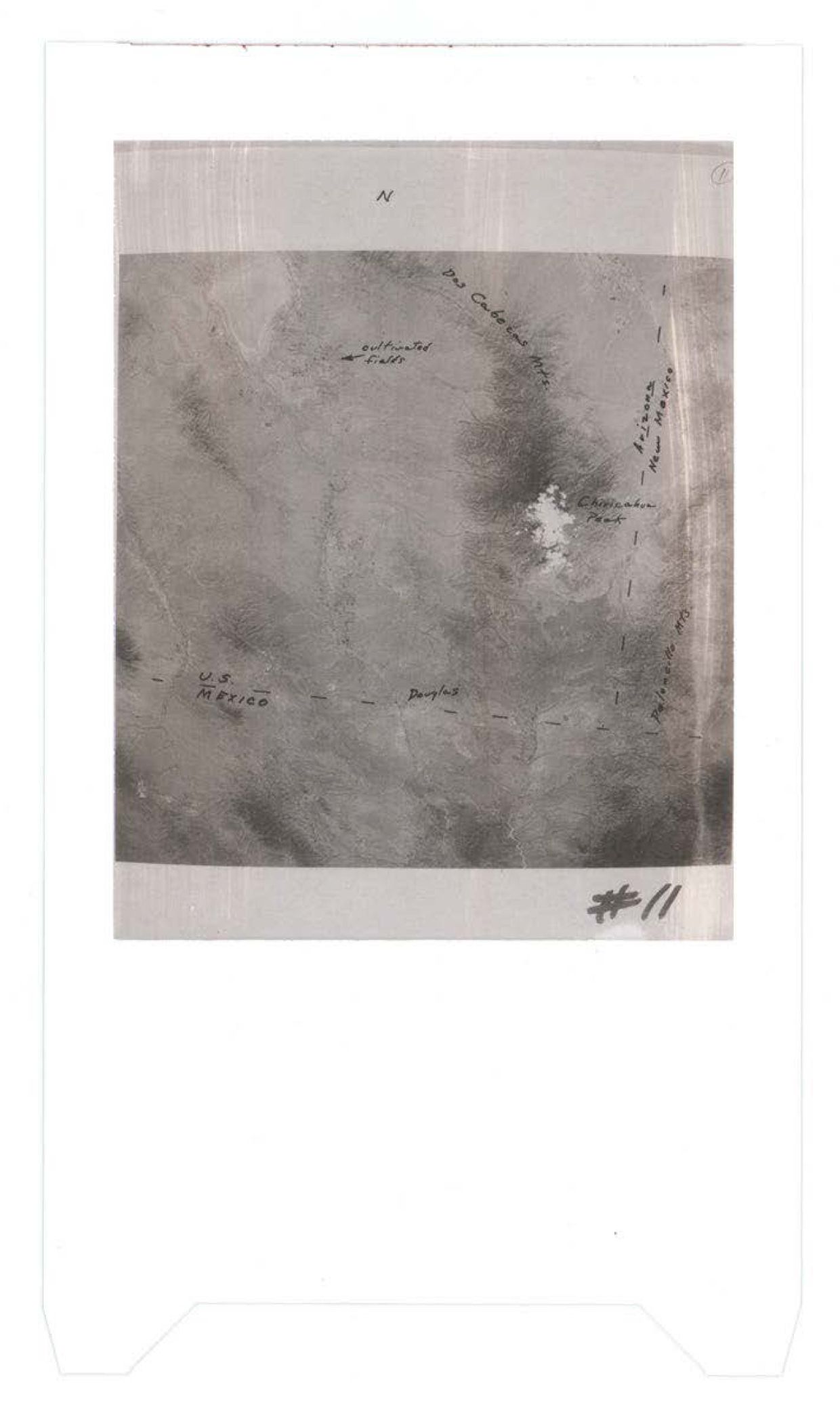
N
PAGE 198 / 224

I
I J
I
rl..
u..
n ,.
i·fZ, fJQ
U'l~l 5M
N#3A-
f--! Q
(r/o.,~ , ..0, 0 /
PAGE 199 / 224
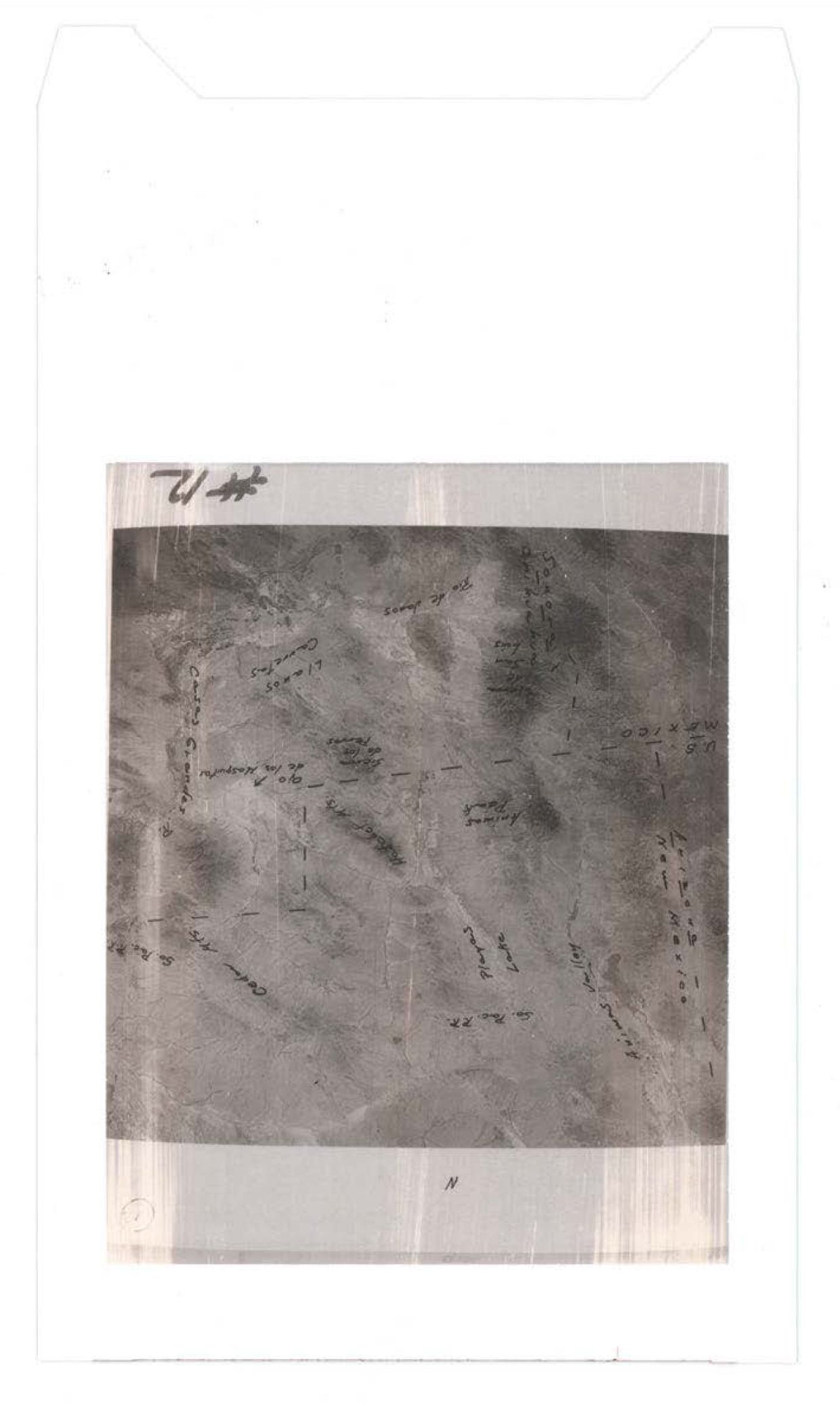
(no extractable text)PAGE 200 / 224
• l
I
LI
Cl
, I
II
d.(?.~g
(:,..
~
)
,V)
N ~A- H'Y
vJ~. J), 0 .
PAGE 201 / 224
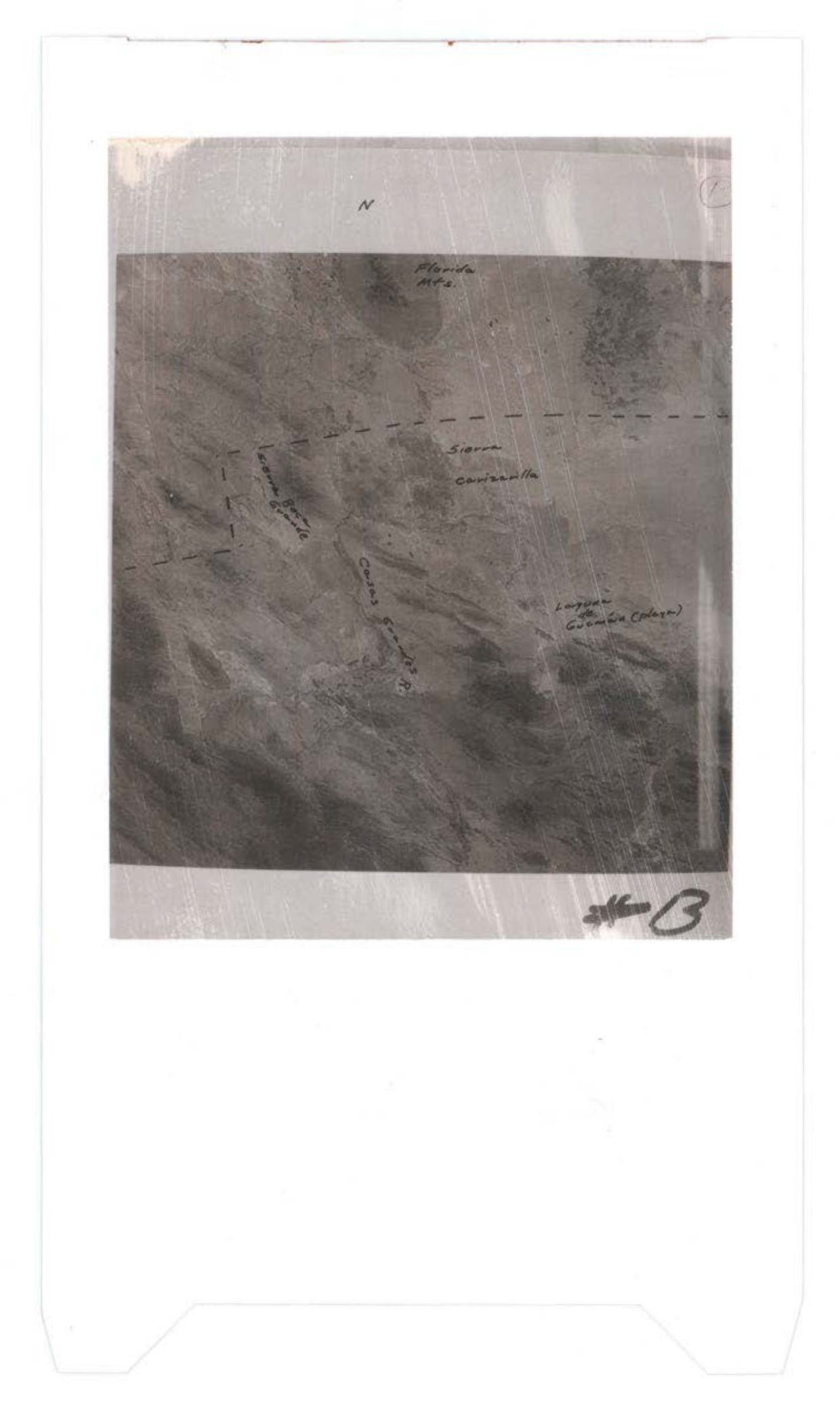
(no extractable text)PAGE 202 / 224

I
) -
~ ~ a. ~
(\..1-t ':Jt°'
1 l
NA-~ft- Hey
\J~. V, 0 ,
PAGE 203 / 224
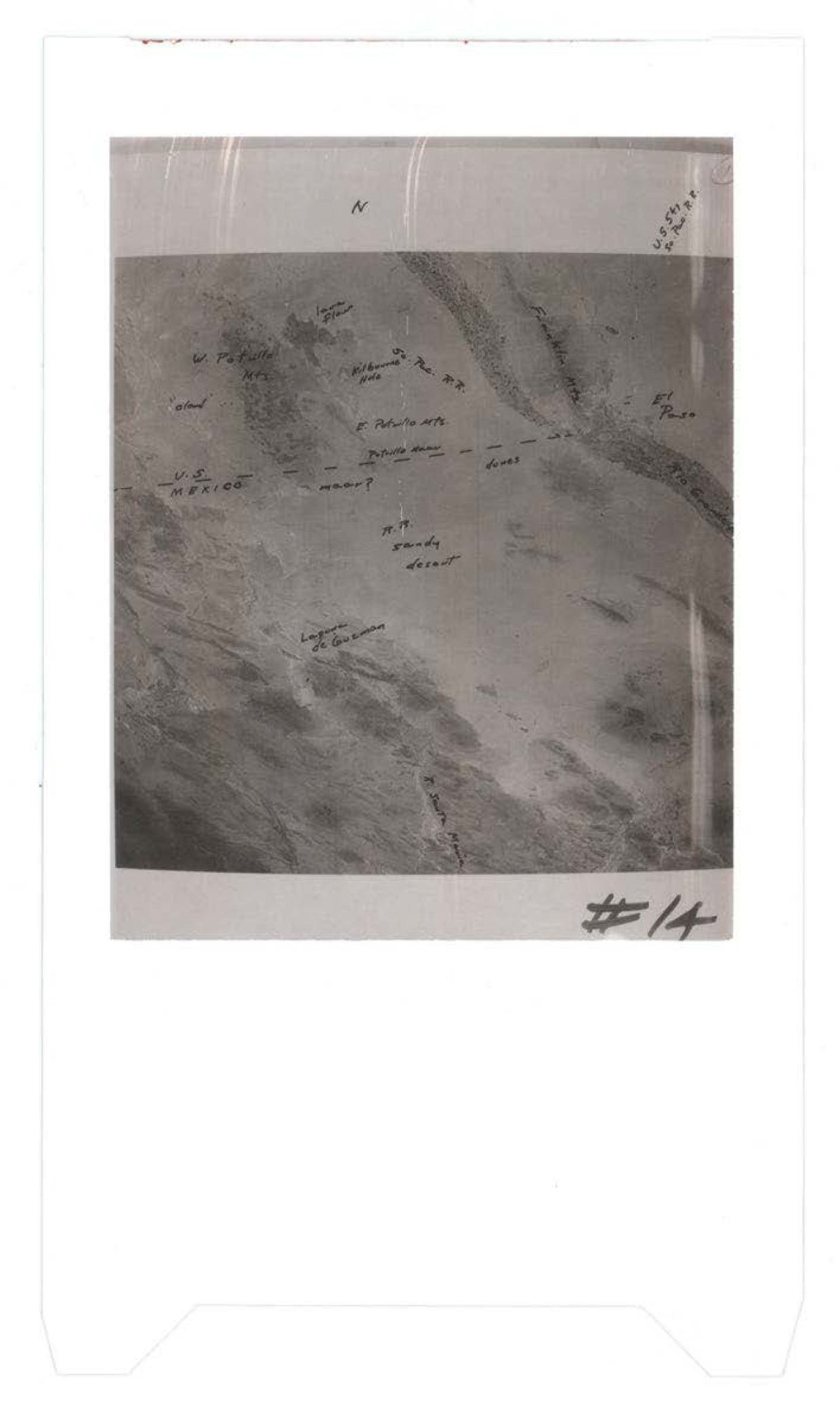
(no extractable text)PAGE 204 / 224

ti
V
• I
.....
u.
PAGE 205 / 224
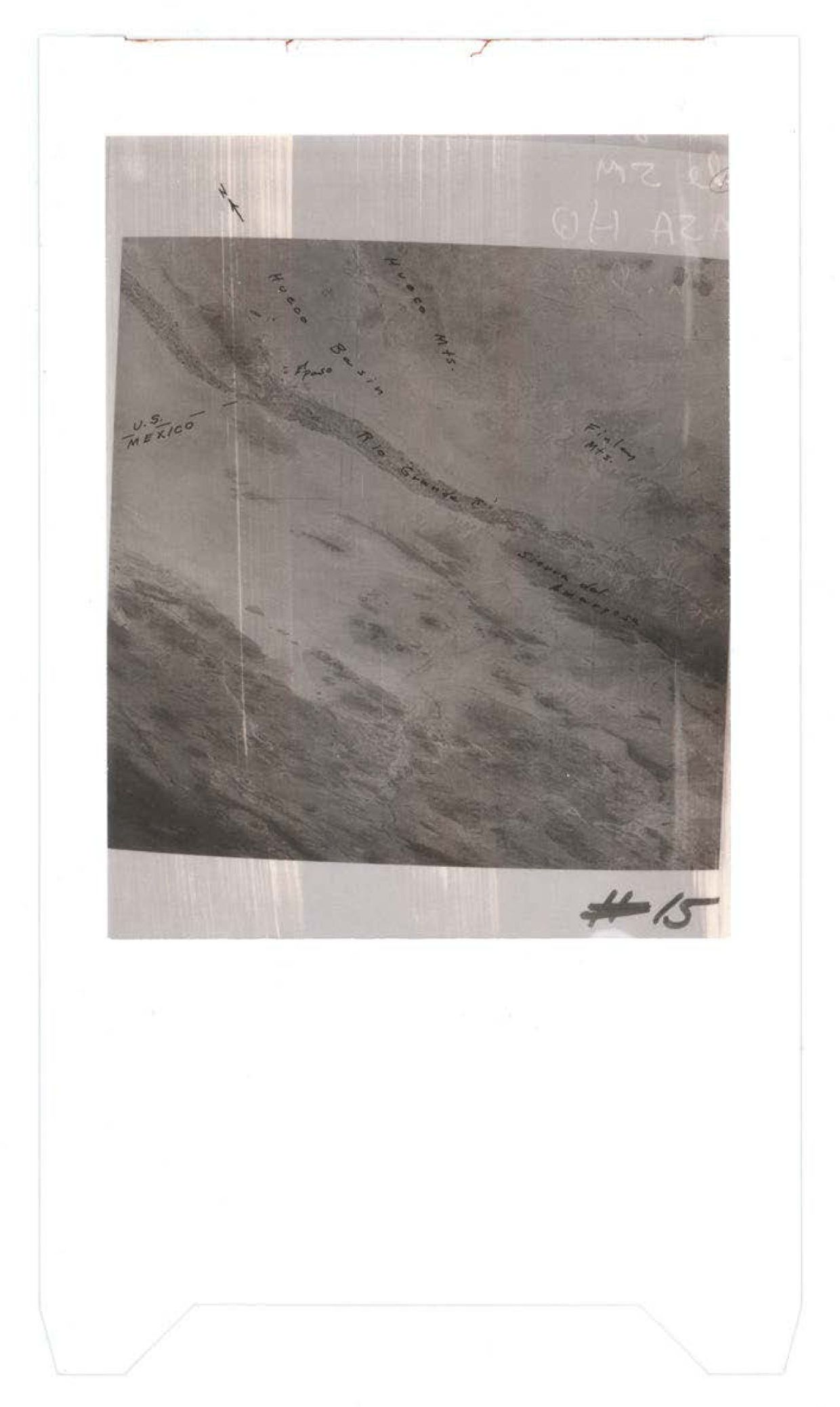
,.___
(·
PAGE 206 / 224
~- 1 - ~
C
~ .YM
fv'ft-SA (JQ
vJ,:,<J-~ ~
. c. ,
t
~ I
1 l
I
.(I
.'
PAGE 207 / 224
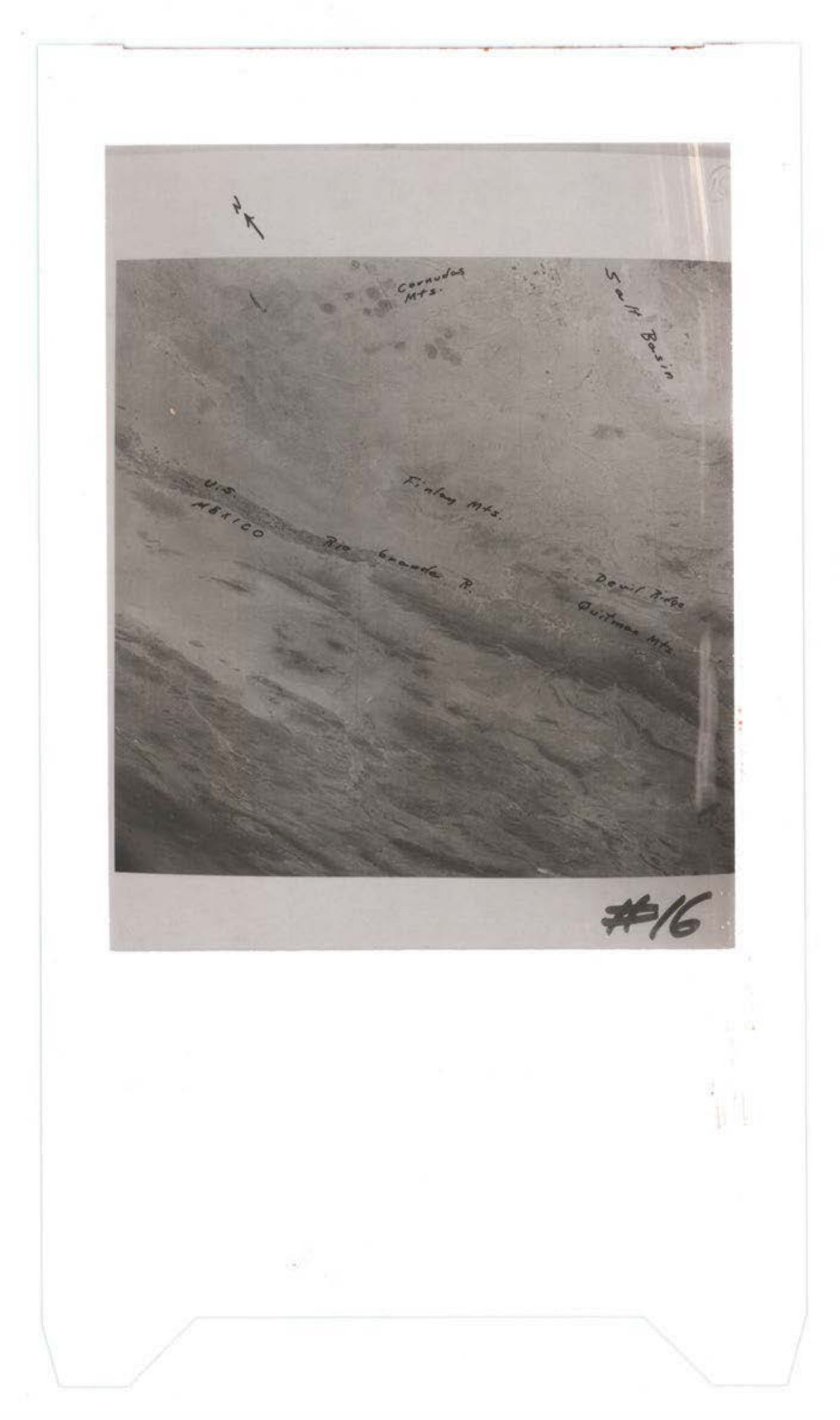
(no extractable text)PAGE 208 / 224

(no extractable text)PAGE 209 / 224
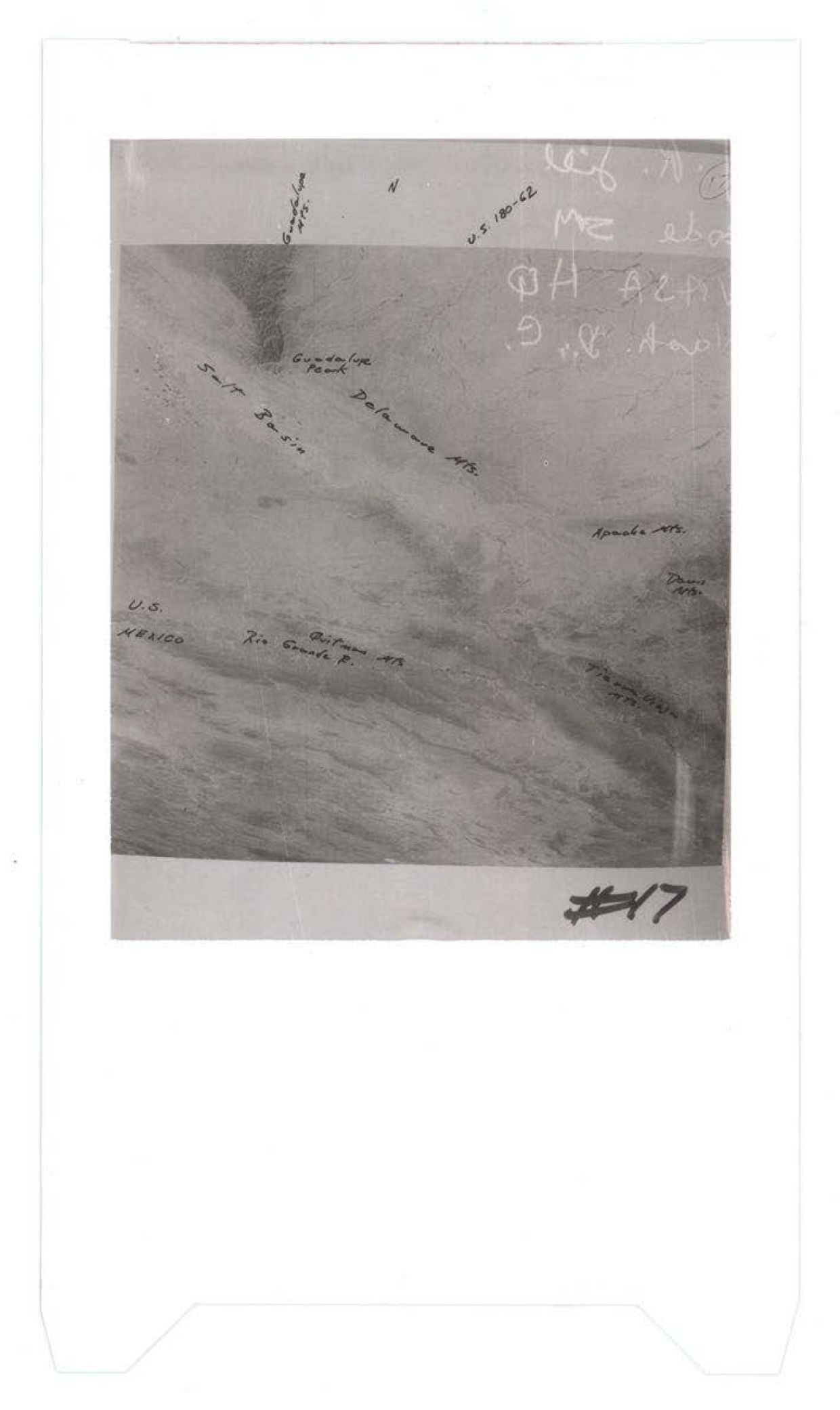
(no extractable text)PAGE 210 / 224
~(i( ~ ~
~~
"'5fV\
N' ft ~ f+
!---\ L1y
lN ~ - X) . 0 ,
t.
Cl
r
n.
PAGE 211 / 224
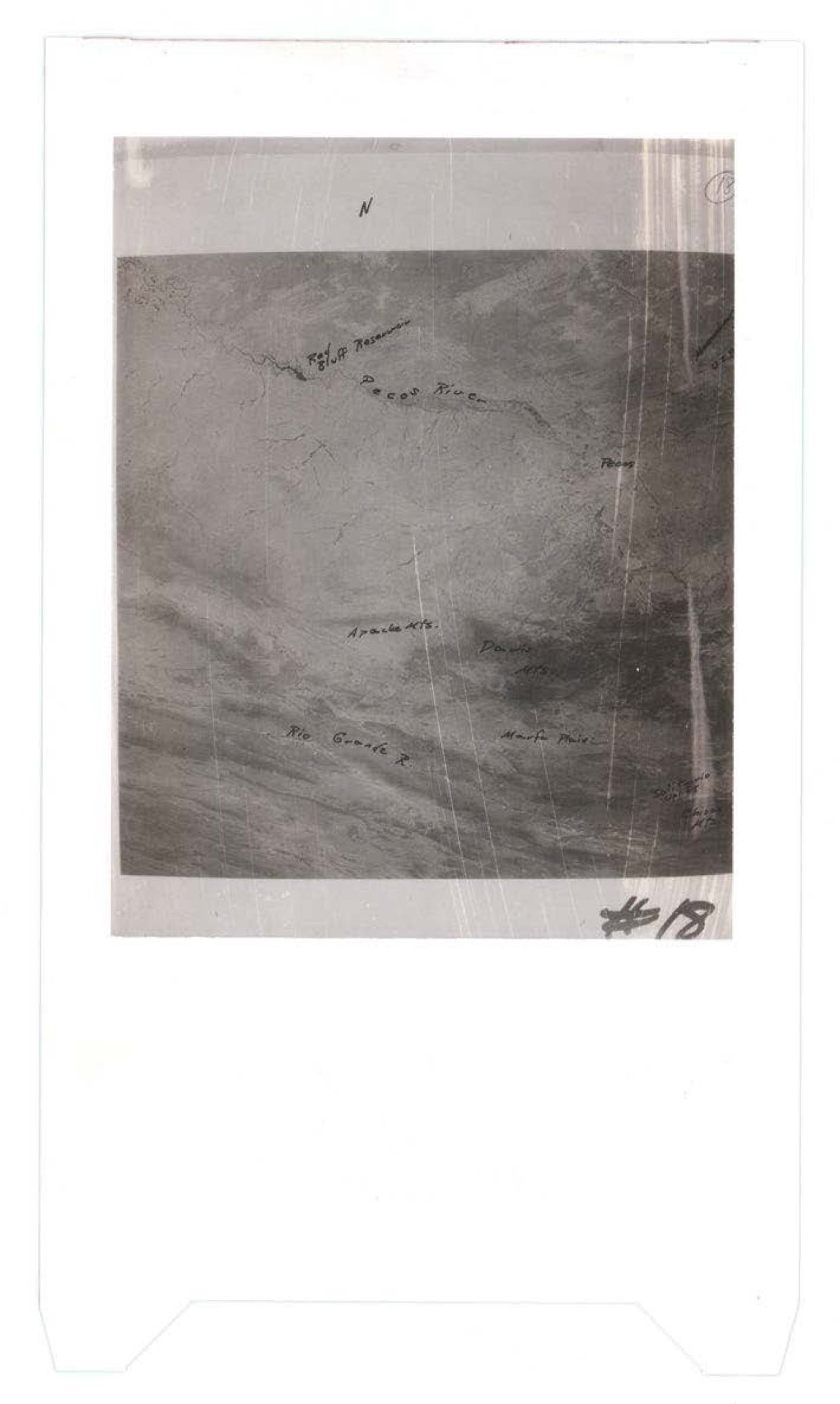
(no extractable text)PAGE 212 / 224

......,....
I
PAGE 213 / 224
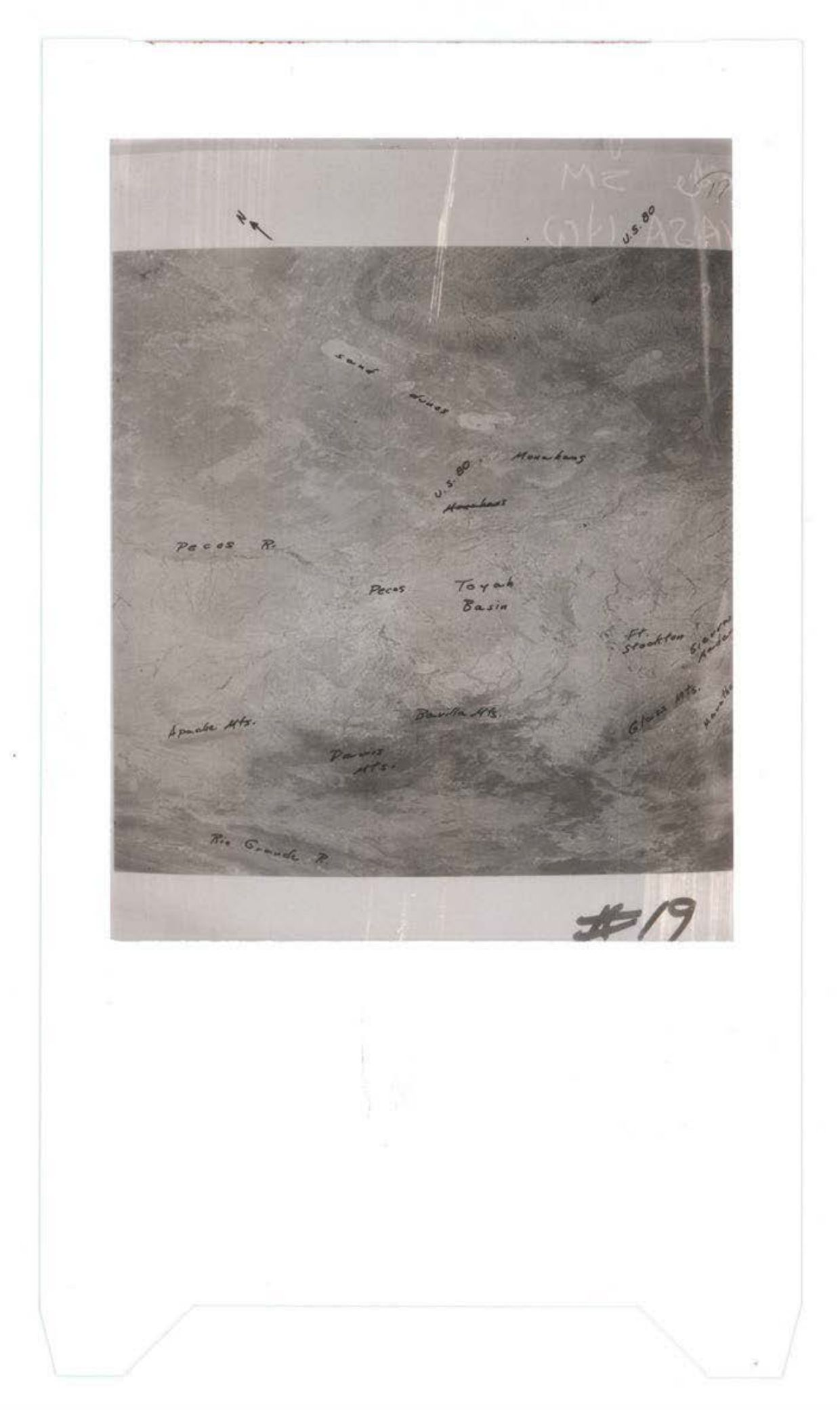
--------~L'!_
PAGE 214 / 224
}_P, p 1
~
::3 M
/V(+SA (~ y)
W~- {) ,C ,
' ti ...
n
r"'l.
PAGE 215 / 224
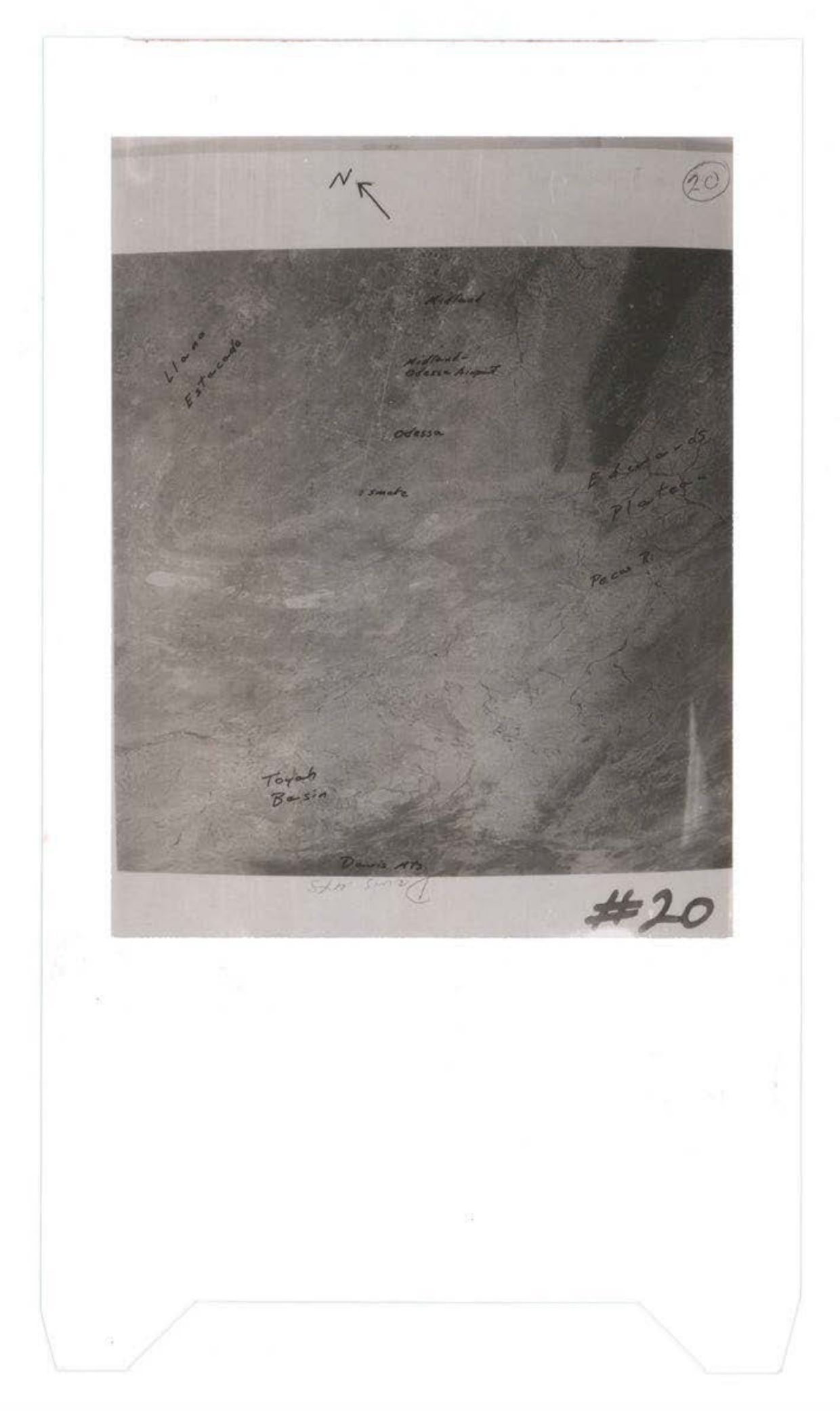
(no extractable text)PAGE 216 / 224

+
-
..
r,
•
PAGE 217 / 224
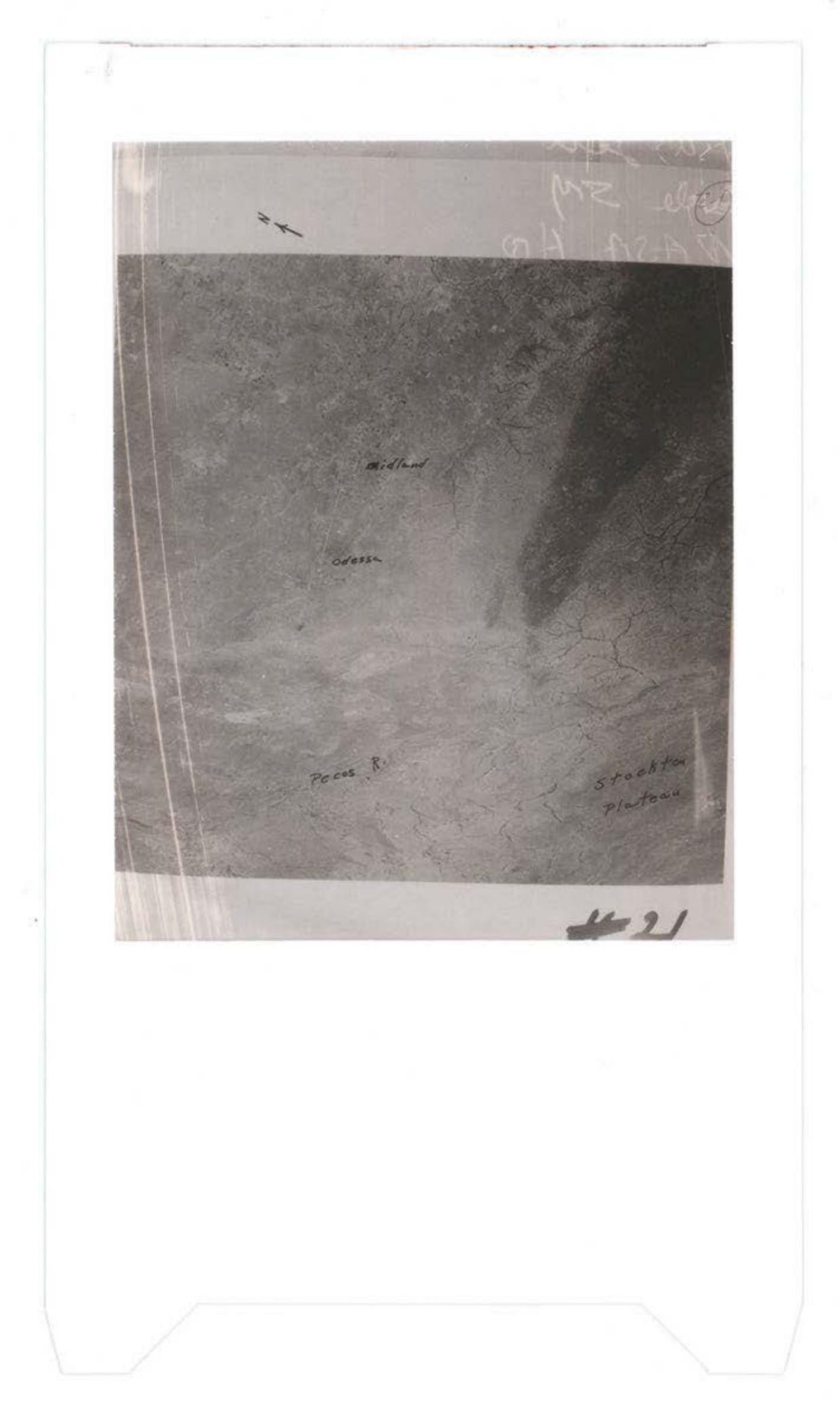
(no extractable text)PAGE 218 / 224
~-«.SJ}
q_. srv;
/1, ~j/t fl-rp
W<"\t~ . 67, C
l
I
11
Cl
.-1
..
I
I
~
PAGE 219 / 224
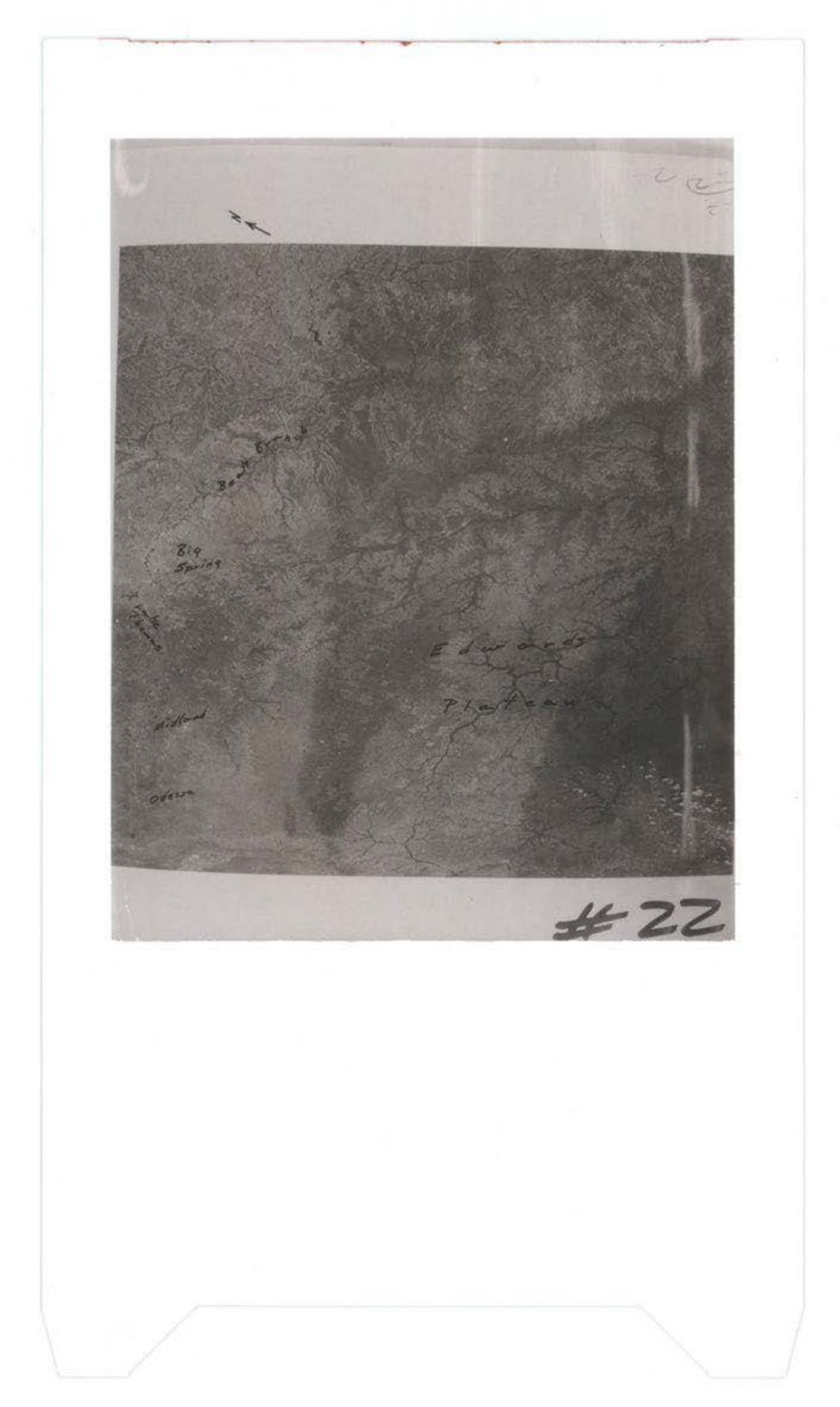
(no extractable text)PAGE 220 / 224

.:i
I
ti
(J
PAGE 221 / 224
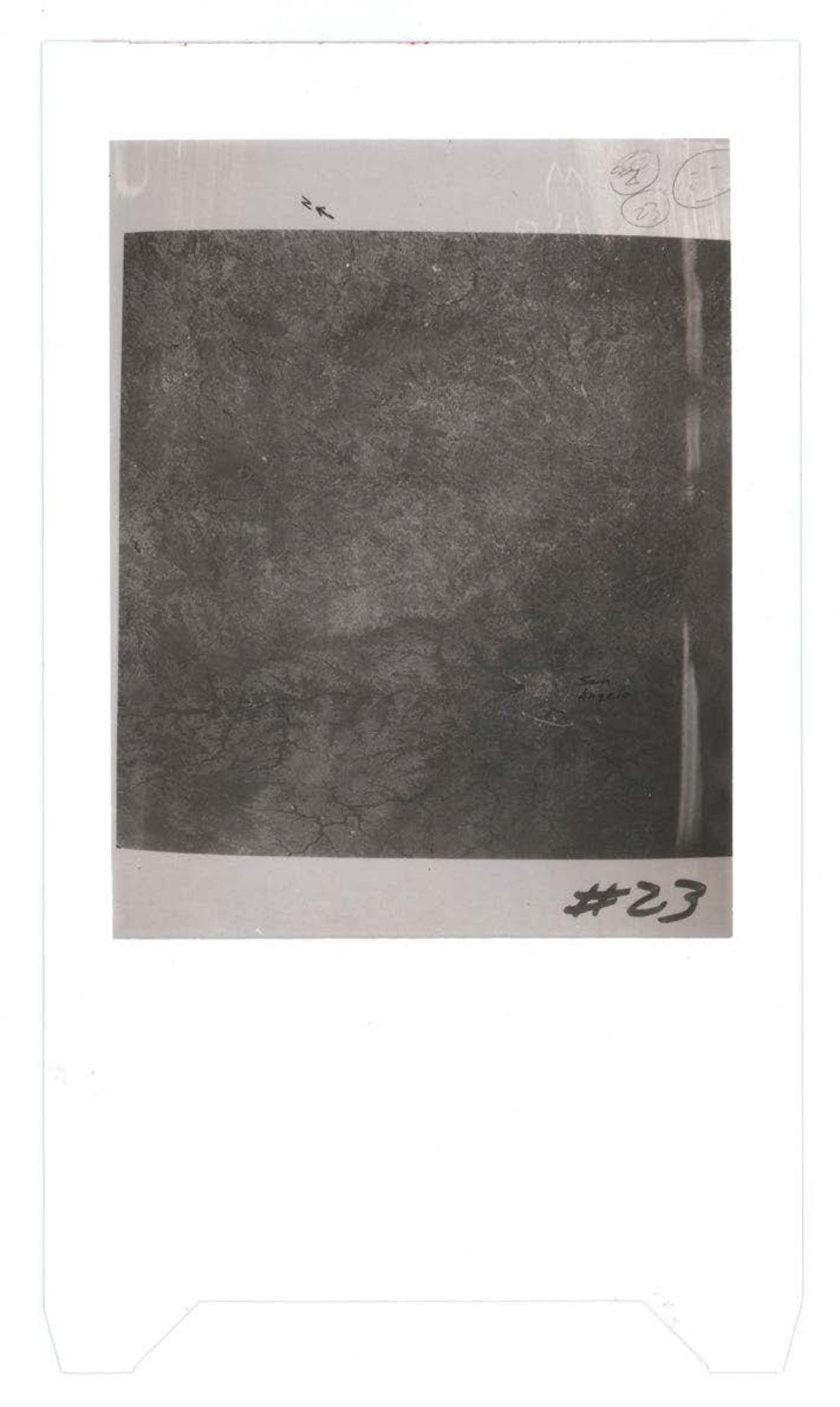
(no extractable text)PAGE 222 / 224
~-ts- ~ 1
~
ca_ S f/)
tJt+~fr !&Cr
W ~ - D, C? .
n..
PAGE 223 / 224
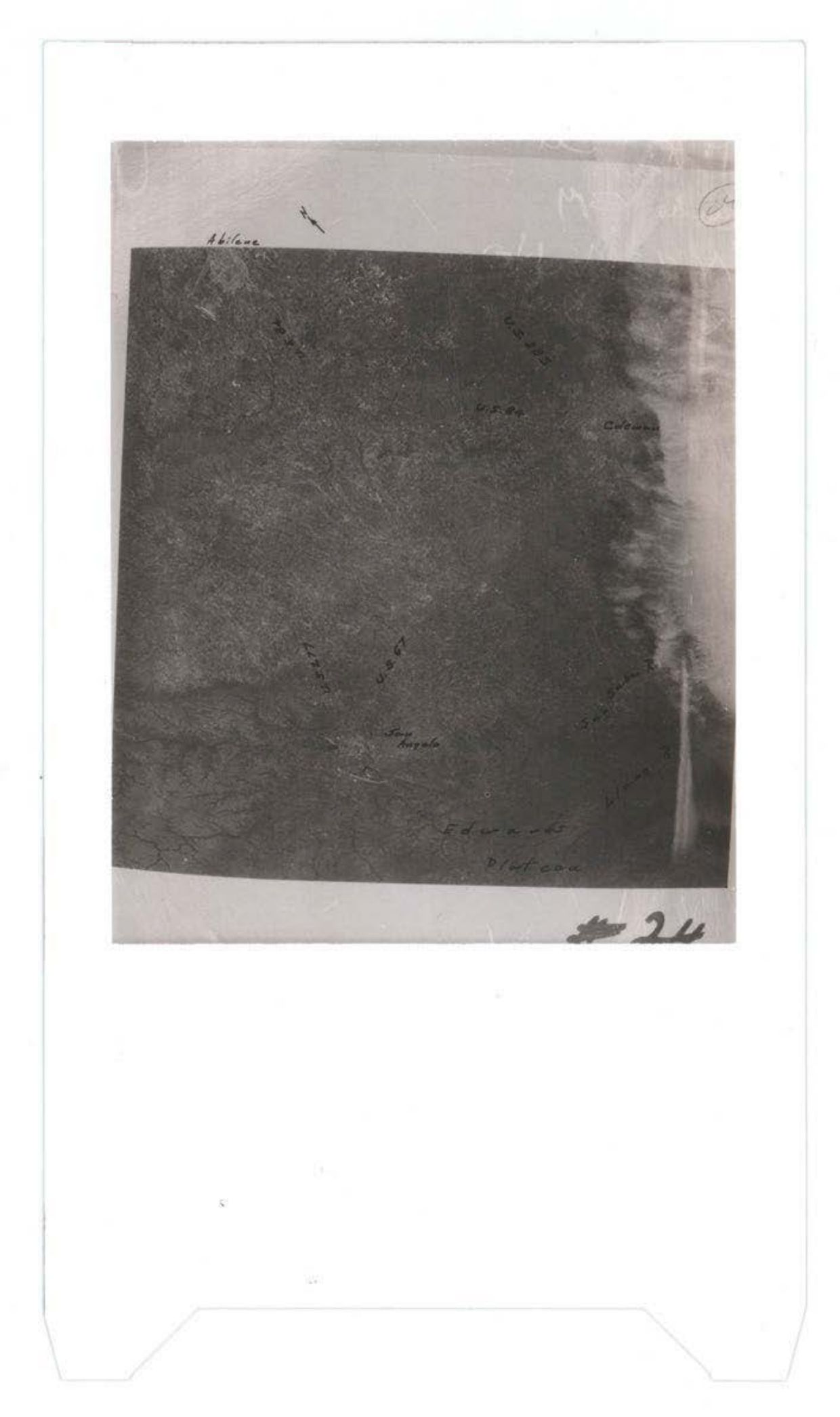
(no extractable text)PAGE 224 / 224
. f , ~
~~ .Sf1
ff F ~ fr I\~
\f'J
' i), (v
!
I ...
!I..
n..
( I
.1
I
J
Original document
Every page of this 153.4 MB document is shown in the transcription above. The full original PDF is hosted by the U.S. Government — view on War.gov ↗.
Record Data
Agency
NASA
Type
Document (pdf)
Year
1967
File size
153.4 MB
Release
Season 03
Hosting
Linked to War.gov
U.S. Government work · Public domain · Part of the AARO / PURSUE releases.